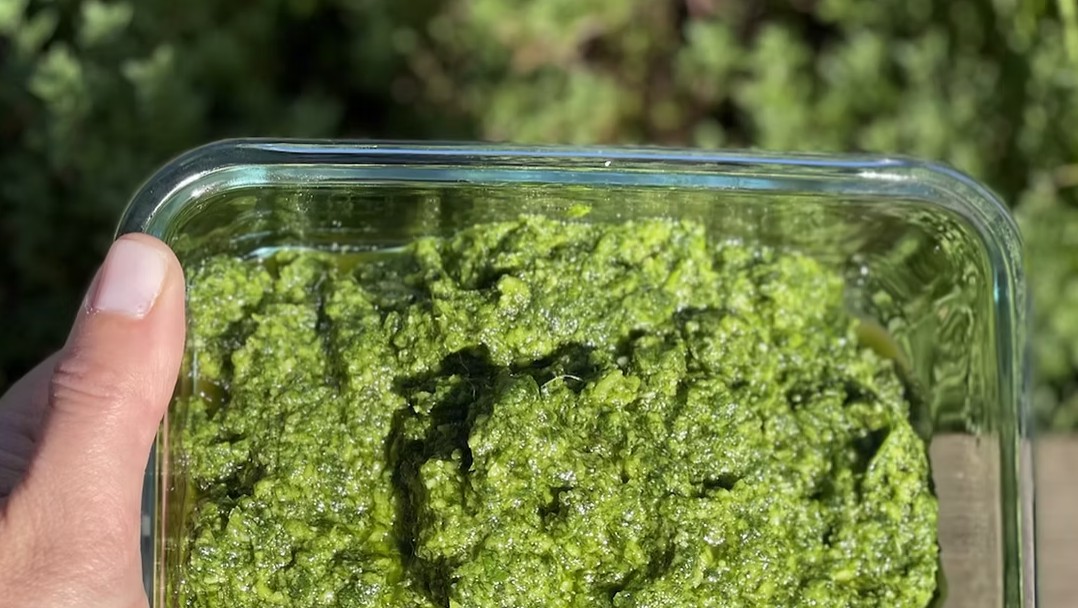
Make vibrant homemade pistou sauce in 10 minutes with fresh basil, garlic, olive oil, and Parmesan for an easy, flavorful nut-free pesto.
Fresh, vibrant, and bursting with basil flavor, this Vibrant Homemade Pistou Sauce Recipe is a simple French condiment made with fresh basil, garlic, extra-virgin olive oil, and Parmesan cheese. Unlike traditional Italian pesto, pistou is naturally nut-free, allowing its bright herbs and savory ingredients to take center stage.
Ready in just 10 minutes, this versatile nut-free pesto can be tossed with pasta, spooned over grilled vegetables, served with chicken or seafood, spread on sandwiches, or stirred into soup. Because the sauce requires no cooking, the basil retains its fresh flavor and beautiful green color.
Prep Time: 10 minutes
Cook Time: 0 minutes
Total Time: 10 minutes
Yield: About 1 cup
Ingredients
For the Pistou Sauce
2 cloves garlic, chopped
2 cups packed fresh basil leaves
1/2 cup extra-virgin olive oil
1/2 cup grated Parmesan cheese
1/4 teaspoon salt
Pinch of freshly ground black pepper
1 to 2 tablespoons water, optional, for thinning
Directions
Step 1: Prepare the Basil and Garlic
Place the fresh basil leaves and chopped garlic in a mortar or food processor. Crush the ingredients with a pestle or pulse them until a coarse paste begins to form.
Step 2: Add the Olive Oil
Slowly drizzle in the extra-virgin olive oil while continuing to crush, blend, or stir the mixture. Continue processing until the sauce is well combined but still retains some texture from the basil.
Step 3: Incorporate the Parmesan and Seasonings
Add the grated Parmesan cheese, salt, and freshly ground black pepper. Stir or pulse briefly until the cheese and seasonings are evenly incorporated.
Avoid overprocessing the sauce. Excessive blending can generate heat, which may affect the fresh flavor and vibrant green color of the basil.
Step 4: Adjust the Consistency
Check the consistency of the pistou. If the sauce is thicker than desired, add water 1 tablespoon at a time, mixing after each addition.
For a richer consistency, use a small amount of additional olive oil instead of water.
Step 5: Serve or Store
Use the pistou sauce immediately for the freshest flavor. Toss it with warm pasta, spoon it over grilled vegetables, serve it with chicken or seafood, or stir it into soup just before serving.
To store the sauce, transfer it to an airtight container and cover the surface with a thin layer of olive oil.
Refrigerate until ready to use.
Notes
Fresh basil is the star of this recipe, so choose vibrant, fragrant leaves without dark spots or signs of wilting.
Wash the basil gently and dry it thoroughly before preparing the sauce. Excess moisture can dilute the sauce and affect its texture.
A high-quality extra-virgin olive oil enhances the richness and overall flavor of homemade pistou.
Freshly grated Parmesan cheese usually incorporates more smoothly than packaged pre-grated cheese.
Traditional French pistou does not contain nuts, making it a flavorful alternative to conventional pesto for people avoiding nuts. When preparing the sauce for someone with a nut allergy, check all packaged ingredients and prevent cross-contact with nuts during preparation.
For a dairy-free adaptation, omit the Parmesan cheese and replace it with nutritional yeast to taste. This substitution changes the traditional flavor but adds a savory element to the sauce.
Pistou pairs beautifully with gluten-free pasta, roasted vegetables, grilled chicken, seafood, and rustic vegetable soups. When serving someone with celiac disease or gluten sensitivity, check all packaged ingredients for appropriate gluten-free labeling and prevent cross-contact during preparation.
Avoid cooking the sauce directly over high heat because prolonged heating can diminish the basil’s fresh flavor and vibrant color. When adding pistou to soup or another hot dish, stir it in shortly before serving.
The sauce may darken slightly during refrigeration. Covering its surface with a thin layer of olive oil helps reduce its exposure to air.