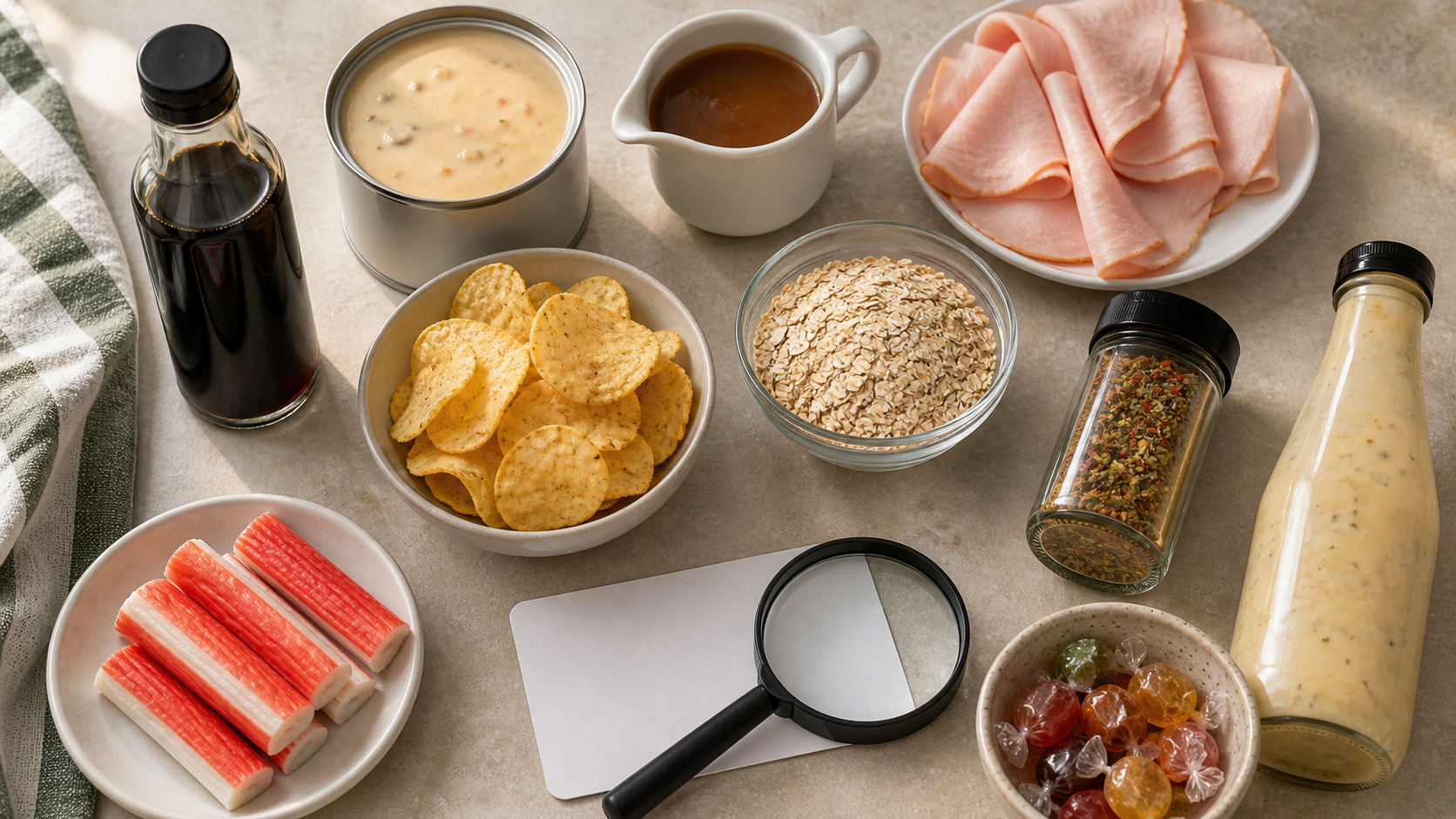
Common Hidden Sources of Gluten (You Might Be Surprised!)
Discover common hidden sources of gluten in sauces, soups, snacks, drinks, oats, medications, and restaurant foods, plus tips for avoiding exposure.
Living gluten-free can feel straightforward at first. Most people know to avoid traditional bread, pasta, cakes, pastries, and other foods made with wheat flour. However, gluten can appear in many less obvious products, including sauces, soups, seasonings, processed meats, beverages, and supplements.
Understanding where gluten hides can make shopping, cooking, and dining out much easier. This awareness is especially important for people with celiac disease, who must also consider cross-contact during manufacturing and food preparation.
What Is Gluten?
Gluten is a group of proteins naturally found in wheat, barley, rye, and related grains such as triticale. It provides elasticity and structure in baked goods, but grain-derived ingredients may also be used to thicken foods, carry flavors, improve texture, or bind ingredients together.
In the United States, wheat is a major allergen and must be identified on most FDA-regulated packaged foods when it is present as required by allergen-labeling rules. Barley and rye do not receive the same major-allergen declaration, so reading the entire ingredient list remains important.
According to the FDA, foods carrying a gluten-free claim must meet federal requirements, including having less than 20 parts per million of gluten. The claim is voluntary, however, so some naturally gluten-free foods may not display it. FDA gluten-free labeling guidance
Soy Sauce and Asian-Style Sauces
Traditional soy sauce is commonly fermented from soybeans and wheat. This makes it one of the best-known hidden gluten sources in restaurant meals, marinades, stir-fries, dipping sauces, and prepared foods.
Tamari is often suggested as an alternative, but tamari should not automatically be assumed to be gluten-free. Some varieties may contain wheat or experience cross-contact during production. Look for a product specifically labeled gluten-free.
Other sauces that deserve attention include teriyaki sauce, hoisin sauce, oyster sauce, fish sauce, chili sauce, and bottled marinades. Their ingredients vary significantly among brands, so check each label instead of relying only on the product name.
Salad Dressings and Condiments
Many simple vinaigrettes are naturally gluten-free, but bottled dressings can contain soy sauce, malt vinegar, wheat-based thickeners, or flavoring blends with gluten-containing ingredients.
Creamy dressings, barbecue sauce, ketchup, mustard, steak sauce, gravy mixes, and flavored mayonnaise can also vary by brand. Malt vinegar is particularly important to recognize because it is made from barley malt and is not considered gluten-free.
Condiments can also become contaminated after opening. In a shared household, knives used on regular bread may introduce crumbs into jars of butter, mayonnaise, jam, peanut butter, or mustard. Separate containers or clean squeeze bottles can help reduce this risk.
Soups, Broths, and Bouillon
Soup may seem like a simple combination of meat, vegetables, and broth, but packaged and restaurant soups can contain unexpected gluten. Wheat flour may be used to thicken cream soups, chowders, bisques, gravies, and stews.
Broths, bouillon cubes, soup bases, and seasoning packets may contain wheat, barley-derived ingredients, yeast extracts, or flavoring blends that require closer inspection. Noodles and barley are usually easier to spot, but thickeners and seasoning components may be less obvious.
Check the broth, soup base, and every seasoning product separately, even when preparing soup at home.
Processed Meats and Meat Alternatives
Plain, unseasoned meat, poultry, fish, and seafood are naturally gluten-free. Processed products are less predictable because manufacturers may add binders, coatings, fillers, sauces, or seasoning blends.
Deli meat, sausages, hot dogs, meatballs, burger patties, jerky, bacon, imitation seafood, and pre-marinated meats should be checked individually. Meat alternatives may contain wheat gluten, wheat protein, soy sauce, breadcrumbs, or other gluten-containing ingredients.
The deli counter presents an additional cross-contact concern. Shared slicers, cutting boards, knives, gloves, and work surfaces may come into contact with products containing gluten. Prepackaged meat labeled gluten-free may provide greater confidence for people who must avoid even small exposures.
Chips, Popcorn, and Flavored Snacks
Potatoes, corn, and popcorn are naturally gluten-free, but the seasonings added to snack foods can change that. Cheese powders, barbecue blends, malt flavoring, soy sauce powder, and other flavor coatings may contain gluten.
Plain chips are often simpler to evaluate, but they are not automatically safe. Some products are manufactured on shared equipment, and restaurant tortilla chips may be cooked in oil that is also used for breaded foods.
Snack mixes are another common source of accidental exposure. Even if most of the mix contains gluten-free ingredients, pretzels, cereal pieces, crackers, or seasoned components may make the entire product unsuitable.
Seasoning Blends and Packaged Mixes
Individual herbs and spices are naturally gluten-free, but seasoning blends may include wheat-based ingredients, malted ingredients, flavor carriers, or anti-caking components that require label review.
Taco seasoning, gravy mix, soup mix, flavored rice, stuffing mix, dry sauce packets, and seasoned coating mixes are products worth checking. Some spice containers may also be exposed to flour in a shared kitchen if they are handled while baking or used directly over gluten-containing foods.
Candy, Chocolate, and Ice Cream
Candy and chocolate can contain gluten through crisped cereal, cookie pieces, pretzels, wafers, barley malt, or flavoring ingredients. Seasonal and limited-edition versions may have different formulas from the standard product, even when sold under the same brand.
Ice cream can contain brownie pieces, cookie dough, cheesecake crust, malt flavoring, or other gluten-containing additions. Cross-contact may also occur at ice cream shops when scoops are shared among flavors or cones are handled over open containers.
Always check the exact flavor, size, and package rather than assuming every product from a familiar brand has the same gluten status.
Beer, Malt Beverages, and Drink Mixes
Traditional beer is usually brewed with malted barley or wheat and is not suitable for a gluten-free diet. Some beverages are marketed as gluten-removed or gluten-reduced, but these are different from products brewed entirely without gluten-containing grains. People with celiac disease should review labeling carefully and seek professional guidance if they are uncertain.
Malt beverages and drink products containing barley malt also require caution. Flavored drink mixes, powdered beverages, smoothie bases, and specialty coffee syrups may contain ingredients that vary by brand.
Pure distilled spirits are generally treated differently from fermented malt beverages because distillation separates gluten proteins from the finished distillate. However, flavors or other ingredients added after distillation should still be evaluated.
Must be 21 years of age or older to purchase or consume alcoholic beverages. Please drink responsibly.
Oats and Oat-Based Products
Oats do not naturally contain the gluten found in wheat, barley, and rye. The concern is that conventional oats may come into contact with gluten-containing grains during growing, harvesting, transportation, storage, or processing.
Choose oats and oat-based products labeled gluten-free when strict avoidance is necessary. Granola, oat milk, breakfast bars, oatmeal packets, and baked goods made with oats also need individual label checks because their other ingredients or manufacturing conditions may introduce gluten.
Some people with celiac disease do not tolerate oats well, even when the oats meet gluten-free standards. Anyone who experiences symptoms after eating gluten-free oats should discuss the issue with a qualified healthcare professional.
French Fries and Fried Foods
Potatoes are naturally gluten-free, but restaurant fries may be cooked in the same oil as breaded chicken, onion rings, mozzarella sticks, fish, or other gluten-containing foods.
The same concern applies to tortilla chips, chicken wings, hash browns, and unbreaded foods placed in a shared fryer. Asking whether a restaurant uses a dedicated gluten-free fryer is more informative than asking only whether the food contains wheat.
Seasoned fries may also contain flour or gluten-containing flavor blends, so both the ingredients and preparation method matter.
Restaurant Eggs and Breakfast Foods
Plain eggs are naturally gluten-free, but restaurant egg dishes may contain unexpected additions. Some omelets, scrambled egg mixtures, breakfast casseroles, and prepared fillings may include pancake batter, sauces, processed meats, or seasoning blends.
Breakfast griddles and spatulas may also be shared with pancakes, French toast, biscuits, and other wheat-based foods. Ask how the eggs are prepared and whether clean utensils and a separate cooking surface can be used.
Medications and Dietary Supplements
Medication labels can be confusing, but gluten in medicine should not be presented as a widespread danger. The FDA states that most oral drug products contain no gluten or virtually no gluten, and very few contain wheat starch.
For nonprescription medications, check the inactive ingredients listed on the Drug Facts label. Prescription-drug ingredients may be found in the product labeling, but formulas can differ by manufacturer and dosage. A pharmacist or manufacturer can help confirm information when a product’s ingredients are unclear. Do not stop or avoid a necessary medication without first consulting the prescribing healthcare professional. FDA information about medications and gluten
Dietary supplements are regulated as foods for purposes of the FDA gluten-free labeling rule. Even so, it is sensible to check the complete label and contact the manufacturer when the source of an ingredient is uncertain.
Restaurant and Kitchen Cross-Contact
A dish can be made without gluten-containing ingredients and still be exposed to gluten during preparation. Shared fryers, grills, toasters, colanders, cutting boards, utensils, baking sheets, and work surfaces can transfer crumbs or residue.
At restaurants, explain that you need a gluten-free meal and ask specific questions about sauces, marinades, breading, fryers, cooking surfaces, and utensils. If you have celiac disease, mentioning it clearly may help staff understand that the request involves more than a personal preference.
At home, separate toasters, clean cutting boards, dedicated colanders, and clearly labeled spreads can help prevent accidental exposure in a shared kitchen.
How to Read Labels for Hidden Gluten
Read the full ingredient list every time you purchase a product. Formulas can change, and a different flavor or package size may use different ingredients.
Watch for obvious grain names such as wheat, barley, rye, triticale, malt, malt extract, malt syrup, and malt vinegar. Do not rely only on the allergen statement because wheat must be declared as a major allergen in the United States, while barley and rye are not covered by the same requirement.
A gluten-free label can make packaged foods easier to evaluate. Third-party certification may offer additional reassurance, but the FDA does not require certification for a food to carry a compliant gluten-free claim.
Make Gluten-Free Living Simpler
Naturally gluten-free whole foods can form a dependable foundation for everyday meals. Fresh fruits, vegetables, plain meat, poultry, fish, eggs, beans, lentils, nuts, seeds, rice, potatoes, and many other naturally gluten-free foods usually have fewer complicated ingredients to evaluate.
Packaged food can still fit comfortably into a gluten-free lifestyle. The key is to check labels, understand the most common problem ingredients, and consider cross-contact when necessary.
Hidden gluten becomes much easier to manage once you know where to look. With consistent label reading, careful questions, and reliable gluten-free products, you can reduce accidental exposure while enjoying a varied and satisfying diet.
Common hidden sources of gluten can appear in sauces, soups, seasonings, processed meats, snacks, oats, and candy, making careful label reading essential.
Learn how to thicken gluten-free soup using starches, gluten-free flour, puréed vegetables, potatoes, dairy, coconut milk, and other easy options. A warm bowl of soup should feel rich, comforting, and satisfying. If your gluten-free soup turns out thinner than expected, there are several easy ways to improve its texture without using traditional wheat flour. The best thickener depends on the type of soup you are making. Starches can create a smooth, glossy consistency, while puréed vegetables produce a more natural, rustic texture. Cream, cheese, and coconut milk can add richness, and gentle simmering can concentrate a soup without adding another ingredient. Use a Gluten-Free Starch Cornstarch is one of the most familiar choices for thickening gluten-free soup. It has a neutral flavor and creates a smooth, slightly glossy finish that works especially well in clear soups, sauces, gravies, and Asian-inspired dishes. Potato starch thickens quickly and gives soup a silky texture. It is a useful option for creamy vegetable soups, chowders, and hearty stews. Because prolonged high heat may weaken its thickening power, it is generally best suited to soups that need only brief additional cooking. Arrowroot starch produces a clear, glossy consistency without affecting the flavor of the soup. It works well in lighter soups and dishes containing acidic ingredients. Dairy can sometimes make arrowroot appear less clear, so another thickener may be preferable for cream-based soups. Tapioca starch creates a glossy texture with a little more elasticity. It can be especially useful in rich stews or soups that need a substantial body. Too much can make the texture sticky, so a light hand produces the best results. Prevent Starch From Clumping Dry starch should not be sprinkled directly into hot soup because it can form stubborn lumps. It is usually blended with a cool liquid before being incorporated into the soup. After the starch mixture is added, the soup needs enough heat to activate its thickening properties. The final texture may take a moment to develop, so it is helpful to allow the soup to settle before deciding whether it needs additional thickener. Try Gluten-Free Flour A gluten-free all-purpose flour blend can provide a texture similar to soup thickened with conventional wheat flour. It is particularly useful for creamy soups, chowders, and dishes with a gravy-like base. Different blends contain different combinations of rice flour, tapioca starch, potato starch, and binding ingredients. These variations can affect the finished flavor and consistency. For the most reliable results, choose a blend labeled gluten-free and intended for general cooking. Rice flour is another practical option. It has a mild flavor and can produce a soft, creamy texture, although some varieties may feel slightly grainy if they are not cooked thoroughly. Purée Part of the Soup Blending a portion of the soup is one of the easiest ways to create body without relying on flour or starch. Beans, potatoes, lentils, squash, cauliflower, carrots, and other cooked vegetables become naturally creamy when puréed. This method preserves the soup’s main flavors while creating a fuller texture. It is particularly effective for bean soups, potato soups, lentil soups, and vegetable-based dishes. The entire soup can be blended for a completely smooth finish, or only part can be puréed to retain some texture. This approach also prevents the soup from developing the glossy appearance associated with some starches. Add Mashed Potatoes or Potato Flakes Cooked mashed potatoes can give thin soup a creamy, substantial consistency. Their mild flavor blends easily into chowders, vegetable soups, and hearty meat-based soups. Plain instant potato flakes can also thicken soup quickly. Check the ingredient label carefully because flavored or seasoned varieties may contain gluten, dairy, or other ingredients that do not suit the dish. Create Richness With Dairy or Coconut Milk Heavy cream, sour cream, cream cheese, and shredded cheese can make soup feel thicker and richer. These ingredients work particularly well in chowders, bisques, cheese soups, and creamy vegetable soups. Full-fat coconut milk is a useful dairy-free alternative. Its distinct flavor pairs naturally with curries, squash soups, sweet potato soups, and dishes featuring ginger, lime, or warm spices. Rich ingredients may improve the mouthfeel of a soup without making it dramatically thicker. They can be combined with puréed vegetables or a gluten-free starch when a more substantial consistency is desired. Reduce the Soup Naturally Allowing soup to simmer uncovered encourages excess liquid to evaporate. As the liquid reduces, the soup becomes thicker and its flavors grow more concentrated. Reduction works best when the ingredients are already properly cooked and additional simmering will not make them overly soft. It is also important to taste the soup as it reduces because salt and seasonings become more concentrated along with the liquid. Use Beans, Lentils, or Grains for More Body Beans and lentils naturally release starch as they cook, helping soups develop a thicker, heartier consistency. Mashing or blending some of them can increase this effect. Cooked rice can also add body, especially when it begins to soften and release starch into the broth. If using grains, pasta, or packaged legumes, verify that they are labeled gluten-free and have not been processed with gluten-containing ingredients. Choose the Right Thickener for the Soup Clear or delicate soups often pair best with cornstarch or arrowroot because these thickeners do not add much color or flavor. Chowders and creamy soups benefit from potato starch, gluten-free flour, puréed potatoes, cream, or cheese. Bean and lentil soups can often be thickened simply by blending some of their solid ingredients. Vegetable soups develop a creamy consistency when potatoes, squash, cauliflower, or root vegetables are puréed. For stews, gluten-free flour, cornstarch, tapioca starch, or mashed vegetables can provide a substantial texture that clings to the other ingredients. Avoid Making the Soup Too Thick A thickener should be added gradually because the soup may continue to firm as it rests or cools. Adding too much at once can create a gummy, pasty, or overly heavy texture. If the soup becomes too thick, additional gluten-free broth, milk, cream, coconut milk,
Discover the ultimate gluten-free flour blends for every baking need. From cakes and cookies to bread and pastries, learn how to create the perfect blend for your favorite recipes with easy ratios and expert tips.
Discover the secrets to perfect gluten-free baking with our comprehensive guide! From all-purpose to pizza flour, learn how each blend enhances your recipes. Whether you're a beginner or a seasoned baker, unlock the potential of gluten-free ingredients and elevate your culinary creations.