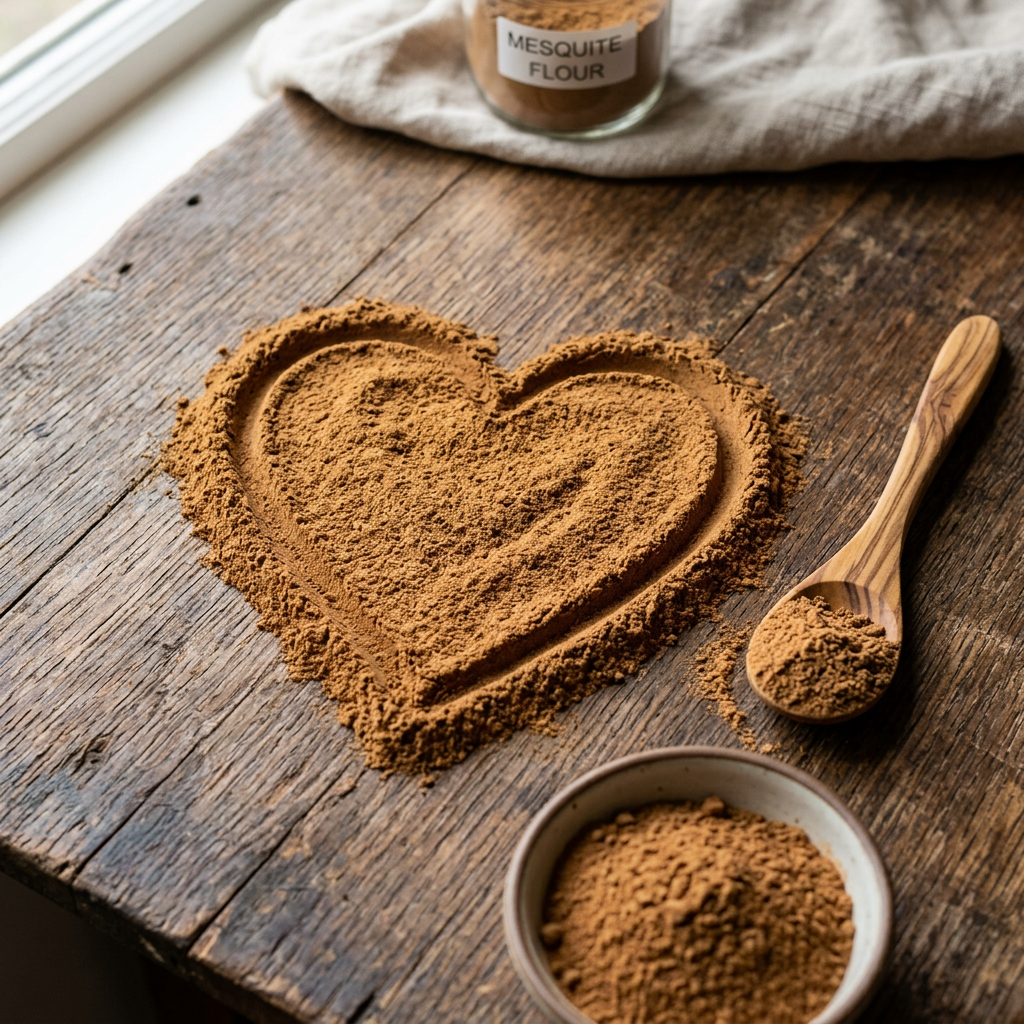
Discover the best mesquite flour substitutes and replacement ratios for gluten-free baking, including oat flour, brown rice flour, cassava flour, buckwheat flour, and gluten-free flour blends.
Mesquite flour is one of those ingredients that can completely change the personality of a recipe. Naturally gluten-free and intensely flavorful, it brings a distinctive sweetness with earthy, nutty, caramel-like notes that work especially well in cookies, muffins, pancakes, quick breads, cakes, brownies, and other baked goods.
But what happens when a recipe calls for mesquite flour and you do not have any?
Fortunately, there are several excellent mesquite flour substitutes. The important thing is to understand that mesquite flour is not simply another gluten-free flour. Its strong flavor, natural sweetness, and unique baking characteristics mean that the best replacement depends on how much mesquite flour the recipe uses and what you are making.
Some alternatives can replace mesquite flour at a 1:1 ratio, while others work better as part of a blend. You may also need to make a small adjustment to the liquid, sweetness, or flavoring in the recipe.
This guide explains the best substitutes for mesquite flour, practical replacement ratios, and how to choose an alternative that keeps your gluten-free baking flavorful and well balanced.
What Is Mesquite Flour?
Mesquite flour, sometimes called mesquite powder, is made from the dried pods of mesquite trees. The pods are ground into a fine powder that can be incorporated into both sweet and savory recipes.
Unlike conventional wheat flour, mesquite flour is naturally gluten-free. It is also known more for its flavor than for its ability to provide the primary structure in baked goods.
Mesquite has a naturally sweet, earthy flavor that may remind you of caramel, molasses, nuts, cocoa, or warm baking spices. Because the flavor is fairly pronounced, many recipes combine mesquite flour with another gluten-free flour rather than using it as the only flour.
This distinction is especially important when choosing a substitute.
If a recipe contains only a few tablespoons or 1/4 cup of mesquite flour, you are primarily replacing flavor and a small amount of dry ingredients. If mesquite makes up a larger percentage of the flour mixture, texture and structure become much more important.
Quick Mesquite Flour Replacement Ratios
These ratios are useful starting points when replacing mesquite flour in gluten-free recipes.
For every 1 cup mesquite flour, try:
Gluten-Free All-Purpose Flour: 1 cup
Oat Flour: 1 cup
Brown Rice Flour: 1 cup
Sweet Rice Flour: 3/4 cup sweet rice flour plus 1/4 cup tapioca flour
Cassava Flour: 3/4 to 1 cup, depending on the recipe
Buckwheat Flour: 3/4 cup buckwheat flour plus 1/4 cup tapioca flour
Coconut Flour: Do not substitute 1:1. Start with approximately 1/4 to 1/3 cup coconut flour and expect significant liquid and egg adjustments.
These ratios are starting points rather than universal formulas. Mesquite flour is often included for flavor, so the amount being replaced matters just as much as the substitute itself.
1. Gluten-Free All-Purpose Flour
Gluten-free all-purpose flour is one of the easiest mesquite flour substitutes when convenience and dependable baking performance are the priorities.
Replacement Ratio
Use 1 cup gluten-free all-purpose flour for 1 cup mesquite flour.
For smaller quantities:
1/4 cup mesquite flour = 1/4 cup gluten-free all-purpose flour
1/2 cup mesquite flour = 1/2 cup gluten-free all-purpose flour
3/4 cup mesquite flour = 3/4 cup gluten-free all-purpose flour
This works particularly well when mesquite flour is only one component of the recipe.
The primary difference will be flavor. A neutral gluten-free flour blend will not reproduce mesquite’s caramel-like sweetness or earthy character.
To bring some of that warmth back into a sweet recipe, consider adding a small amount of cinnamon, vanilla, maple syrup, molasses, or brown sugar when appropriate.
If your gluten-free flour blend already contains xanthan gum, additional xanthan gum may not be necessary.
2. Oat Flour
Oat flour is one of the most versatile alternatives because its mild sweetness and soft texture complement many of the same recipes that use mesquite.
Replacement Ratio
Use 1 cup oat flour for 1 cup mesquite flour.
Oat flour is especially useful for pancakes, muffins, cookies, quick breads, snack cakes, and breakfast bakes.
Although oat flour does not have mesquite’s pronounced caramel and earthy flavor, it has a gentle sweetness that prevents the finished recipe from tasting overly neutral.
For gluten-free cooking and baking, choose oat flour that is specifically labeled gluten-free to reduce the risk of cross-contact with gluten-containing grains.
3. Brown Rice Flour
Brown rice flour is another practical substitute when you want a mild, slightly nutty gluten-free flour.
Replacement Ratio
Use 1 cup brown rice flour for 1 cup mesquite flour.
Brown rice flour works particularly well when mesquite represents a relatively small percentage of the overall flour mixture.
Because brown rice flour can create a slightly drier or more noticeable texture than mesquite flour, it is often even better when paired with a starch such as tapioca flour.
For example, instead of 1 cup mesquite flour, you could try:
3/4 cup brown rice flour
1/4 cup tapioca flour
This combination creates a more balanced gluten-free replacement for cakes, muffins, cookies, and quick breads.
4. Sweet Rice Flour and Tapioca Flour
For baked goods where tenderness and structure matter, a combination of sweet rice flour and tapioca flour can be a particularly useful mesquite flour replacement.
Replacement Ratio
Replace 1 cup mesquite flour with:
3/4 cup sweet rice flour
1/4 cup tapioca flour
Sweet rice flour provides binding and a soft texture, while tapioca flour adds flexibility and helps keep baked goods from becoming excessively dense.
This combination works well for cookies, cakes, muffins, bars, and quick breads.
Keep in mind that the flavor will be considerably more neutral than mesquite. Vanilla, cinnamon, maple, brown sugar, cocoa, or another complementary flavor can help create more complexity.
5. Cassava Flour
Cassava flour is another naturally gluten-free option, but it should be used thoughtfully because it behaves differently from mesquite flour.
Replacement Ratio
Start with 3/4 cup cassava flour for every 1 cup mesquite flour.
Depending on the recipe, you may be able to increase the cassava flour to a full cup.
Cassava flour can absorb a considerable amount of moisture, so watch the consistency of the batter or dough rather than automatically adding the maximum amount.
For recipes such as cookies and quick breads, begin with the smaller quantity. If the batter appears unusually wet compared with what the recipe describes, gradually add more.
Cassava flour has a relatively neutral flavor, so the finished recipe will lose mesquite’s characteristic sweetness and earthy caramel notes.
6. Buckwheat Flour
Despite its name, buckwheat is naturally gluten-free. Its earthy, robust flavor makes it an interesting substitute when mesquite contributes an important flavor component to a recipe.
Replacement Ratio
For every 1 cup mesquite flour, use:
3/4 cup buckwheat flour
1/4 cup tapioca flour
The tapioca flour softens buckwheat’s heavier texture and helps create a more balanced baked good.
Buckwheat is especially suitable for pancakes, waffles, muffins, rustic quick breads, chocolate desserts, and baked goods with warm spices.
Its flavor is stronger than brown rice or oat flour, so it may not be the best choice for delicate vanilla cakes or recipes where you want a very mild background flavor.
7. Coconut Flour
Coconut flour can sometimes replace mesquite flour, but it is not a direct substitute.
Coconut flour is extremely absorbent. Replacing mesquite flour with an equal amount of coconut flour can produce a dry, crumbly, or unusually thick batter.
Replacement Ratio
For 1 cup mesquite flour, begin with approximately 1/4 to 1/3 cup coconut flour.
The recipe may also require additional liquid or eggs.
Because those adjustments depend heavily on the original formula, coconut flour is better considered an alternative for recipes that are flexible enough to accommodate changes rather than a universal mesquite flour substitute.
Its mild natural sweetness can complement cookies, muffins, breakfast recipes, and chocolate desserts, but its coconut flavor may also be noticeable.
Which Mesquite Flour Substitute Tastes the Most Similar?
There is no single flour that perfectly duplicates mesquite’s flavor.
Mesquite is unusual because its appeal comes from both its flour-like properties and its distinctive flavor. Replacing it with a neutral gluten-free flour can preserve the structure of a recipe while noticeably changing its flavor.
For a warmer, more complex result, oat flour or buckwheat flour can be useful choices. Brown rice flour provides a subtle nuttiness, while gluten-free all-purpose flour is better when you want a neutral replacement.
You can also recreate some of mesquite’s flavor profile by pairing a neutral flour with ingredients already compatible with the recipe.
Vanilla emphasizes sweetness.
Cinnamon provides warmth.
Brown sugar contributes caramel notes.
Maple syrup adds deeper sweetness.
A small amount of molasses can create a darker, more robust flavor.
Cocoa pairs particularly well with earthy flour substitutes in brownies, chocolate cakes, and cookies.
The goal is not necessarily to imitate mesquite exactly. Instead, think about the flavor mesquite was contributing and replace that quality in a way that makes sense for the particular recipe.
Replacing Small Amounts of Mesquite Flour
Replacing a small amount of mesquite flour is much easier than replacing an entire cup.
If your recipe calls for only 1 to 4 tablespoons of mesquite flour, you can usually replace it with the same amount of oat flour, brown rice flour, or gluten-free all-purpose flour without dramatically changing the structure of the recipe.
For example:
2 tablespoons mesquite flour = 2 tablespoons oat flour
1/4 cup mesquite flour = 1/4 cup gluten-free all-purpose flour
1/2 cup mesquite flour = 1/2 cup oat flour or brown rice flour
The main difference will usually be flavor rather than texture.
This is why it is helpful to check the percentage of mesquite flour in the recipe before choosing a substitute.
Replacing Mesquite Flour in Cookies
Cookies are generally forgiving when only a small portion of the flour is mesquite.
Oat flour is an excellent option because it contributes mild sweetness and creates a pleasant texture. A gluten-free all-purpose blend is another reliable choice when you want the original cookie structure to remain as predictable as possible.
Brown rice flour combined with tapioca flour can also work well.
If the original cookies rely on mesquite for caramel-like flavor, consider using brown sugar instead of white sugar when the recipe allows, or adding a little extra vanilla or cinnamon.
Replacing Mesquite Flour in Cakes and Muffins
For cakes and muffins, structure is especially important.
A gluten-free all-purpose flour blend is generally the easiest substitute. A combination of sweet rice flour and tapioca flour is another useful choice when you want to build your own replacement.
Use:
3/4 cup sweet rice flour
1/4 cup tapioca flour
for every 1 cup mesquite flour.
If mesquite flour represents only a small part of a larger gluten-free flour blend, you can often replace it measure for measure without making additional structural changes.
Replacing Mesquite Flour in Pancakes and Waffles
Oat flour is particularly well suited to pancakes and waffles because its mild sweetness works naturally with maple syrup, fruit, cinnamon, vanilla, and other breakfast flavors.
Use oat flour at a 1:1 ratio for mesquite flour.
Buckwheat is another flavorful option, particularly if you enjoy a more rustic pancake or waffle.
If using buckwheat, combining it with a little tapioca flour will generally produce a lighter result than using buckwheat alone.
Replacing Mesquite Flour in Chocolate Recipes
Mesquite and chocolate are natural flavor partners. The earthy caramel notes in mesquite can deepen chocolate desserts without making them taste obviously different.
When replacing mesquite in brownies, chocolate cookies, or chocolate cakes, buckwheat flour, oat flour, or a gluten-free all-purpose blend can all work.
Because cocoa already provides a strong flavor foundation, the absence of mesquite may be less noticeable than it would be in a lightly flavored vanilla recipe.
A small amount of espresso powder, cinnamon, vanilla, or brown sugar can add some of the depth that disappears when mesquite is removed.
Can You Replace Regular Flour With Mesquite Flour?
This is where mesquite substitutions become a little more complicated.
Mesquite flour generally works best as part of a flour blend rather than as a universal 1:1 replacement for wheat flour or a complete gluten-free flour blend.
If you are experimenting with mesquite in a recipe that does not originally contain it, begin by replacing a relatively small percentage of the flour.
A practical starting point is approximately 10 to 25 percent of the total flour.
For example, if a recipe uses 2 cups gluten-free flour, you might begin with:
1 1/2 cups gluten-free flour
1/2 cup mesquite flour
This provides noticeable mesquite flavor without asking the mesquite flour to supply all of the structure needed by the recipe.
How to Choose the Best Mesquite Flour Substitute
The best replacement depends on what mesquite is doing in the original recipe.
For the easiest all-purpose substitution, choose a gluten-free all-purpose flour blend.
For pancakes, muffins, cookies, and breakfast recipes, oat flour is an excellent option.
For a slightly nutty gluten-free alternative, use brown rice flour.
For cakes and tender baked goods, try sweet rice flour combined with tapioca flour.
For a stronger earthy flavor, use buckwheat flour combined with tapioca flour.
For cassava flour, start with a slightly smaller amount and adjust according to the consistency of the batter or dough.
Coconut flour should be reserved for recipes where you can make more substantial adjustments because it cannot reliably replace mesquite flour at a 1:1 ratio.
Tips for Successful Mesquite Flour Substitution
Whenever you substitute a gluten-free flour, pay attention to the consistency of the batter or dough before automatically adjusting it.
Give the flour a few minutes to hydrate when possible. Some gluten-free flours continue absorbing moisture after mixing, which means a batter that initially appears loose may thicken as it rests.
Also consider flavor separately from structure. A flour may successfully replace the physical role of mesquite while leaving the recipe less sweet or complex.
When that happens, a small amount of vanilla, cinnamon, maple syrup, brown sugar, cocoa, or molasses may be more effective than trying to find another flour that tastes exactly like mesquite.
Finally, when using a packaged gluten-free all-purpose flour, check whether the blend already contains xanthan gum before adding more.
A Simple Mesquite Flour Substitute to Remember
If you need the quickest solution, use gluten-free all-purpose flour or oat flour at a 1:1 ratio when mesquite flour represents a modest portion of the recipe.
If you want a homemade flour combination with a little more balance, replace 1 cup mesquite flour with:
3/4 cup sweet rice flour
1/4 cup tapioca flour
For a more rustic, earthy result, replace 1 cup mesquite flour with:
3/4 cup buckwheat flour
1/4 cup tapioca flour
No substitute will reproduce mesquite’s distinctive flavor perfectly, but choosing a replacement based on the type of recipe will give you a much better result than simply swapping in the first gluten-free flour available.
Whether you are making cookies, pancakes, muffins, cakes, brownies, or quick breads, there is usually a practical way to replace mesquite flour while maintaining the texture and flavor balance of your recipe.
Here is to fresh flavors, beautiful gardens, and all the little moments that make cooking and growing so rewarding.
Sending joy and happiness from my garden and kitchen to yours,