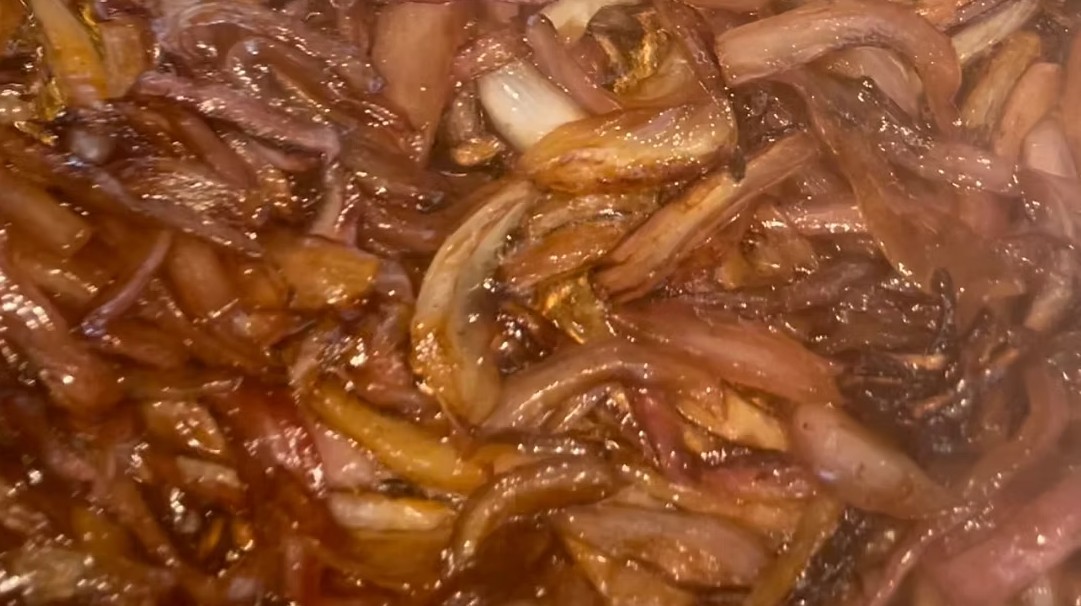
Make sweet and tangy balsamic glazed red onions with four simple ingredients for burgers, sandwiches, grilled meats, pizzas, salads, and more.
Sweet, tangy, and beautifully glossy, these Sweet and Tangy Balsamic Glazed Red Onions transform a handful of simple ingredients into a versatile homemade condiment. Slowly cooking the onions brings out their natural sweetness, while balsamic vinegar contributes rich acidity and a deep, complex flavor.
As the onions soften, the balsamic vinegar gradually reduces and clings to every tender slice. The finished onions have a soft, jammy texture and a striking color that makes them as appealing to look at as they are delicious. A small spoonful can add depth and balance to an otherwise simple meal.
Serve these balsamic glazed red onions on burgers, sandwiches, grilled meats, pizzas, grain bowls, salads, or roasted vegetables. They also pair especially well with creamy cheeses, including goat cheese, Brie, and fresh mozzarella. Because the onions can be prepared in advance and refrigerated, they are an excellent condiment to keep on hand for convenient meals and entertaining.
Directions
Step 1: Prepare the Red Onions
Peel the red onions and trim off the ends. Cut each onion in half from the root end to the top, then slice it into thin, even strips. Keeping the slices relatively uniform will help them soften at approximately the same rate and produce a more consistent finished texture.
Separate any slices that remain tightly connected so the oil, salt, and balsamic vinegar can coat the onions evenly.
Step 2: Combine the Ingredients
Place a large skillet or sauté pan over medium heat. Add the sliced red onions, salt, balsamic vinegar, and olive oil.
Stir thoroughly until all the onion slices are coated with the olive oil and vinegar. Spread the onions across the surface of the skillet in an even layer so they cook as uniformly as possible.
Step 3: Begin Cooking the Onions
Allow the onions to cook over medium heat, stirring occasionally. As the onions warm, they will begin to release moisture, soften, and decrease in volume.
Stir every few minutes, scraping across the bottom of the skillet to prevent the onions from sticking. Turn and redistribute the onions as needed so the slices around the edges do not cook more quickly than those in the center.
Step 4: Slowly Caramelize the Onions
Continue cooking the onions for 20 to 30 minutes. Reduce the heat slightly if the vinegar is evaporating too quickly or the onions are beginning to brown before they become tender.
As the onions cook, their natural sugars will develop, and the balsamic vinegar will reduce into a dark, glossy glaze. Continue stirring periodically so the onions caramelize evenly without scorching.
Step 5: Deglaze the Skillet if Needed
If the onions begin sticking to the skillet before they are fully tender, add a small splash of water. Stir well, using a wooden spoon or spatula to loosen the flavorful browned bits from the bottom of the pan.
Allow the added water to evaporate as the onions continue cooking. Add only a small amount at a time so the onions remain glazed rather than becoming watery.
Step 6: Check for Doneness
The onions are ready when they are very tender, deeply colored, and evenly coated in the reduced balsamic glaze. There should not be a large amount of thin liquid remaining in the skillet.
Taste carefully and evaluate the texture. If the onions are still too firm, continue cooking them over low to medium-low heat for a few more minutes. Stir frequently near the end because the thickened glaze can catch on the bottom of the skillet more easily.
Step 7: Cool and Serve
Remove the skillet from the heat and allow the onions to cool slightly. The balsamic glaze will continue to thicken as it cools.
Serve the onions warm over burgers, grilled chicken, steak, sausages, sandwiches, wraps, pizzas, or roasted vegetables. They may also be cooled completely and served with cheese, crackers, crostini, or other appetizers.
Notes
Thin, evenly sized onion slices produce the most consistent texture. Very thick slices may require additional cooking time, while extremely thin slices can soften and brown more quickly.
Cooking the onions gradually allows them to become tender while their natural sweetness develops. If they begin to darken too rapidly, lower the heat and continue cooking slowly.
Use a skillet with enough surface area to hold the onions comfortably. A crowded pan can trap excess moisture and cause the onions to steam for longer before they begin to caramelize.
For a sweeter variation, add 1 teaspoon of brown sugar during cooking. This is optional because red onions already contain natural sugars that become more noticeable as they cook.
The salt helps season the onions and encourages them to release moisture. The supplied recipe uses 1 tablespoon, which creates a prominently seasoned condiment. Measure carefully and consider how the onions will be served, especially when pairing them with other salty foods.
A good-quality balsamic vinegar will generally deliver a fuller flavor and richer color. Since the vinegar reduces during cooking, its flavor becomes concentrated in the finished glaze.
Yellow onions or sweet onions can be substituted for the red onions if desired. The flavor and final color will vary, but the same cooking method can be used.
For a simple burger topping, spoon the warm onions over a cooked beef, turkey, chicken, or plant-based burger. Their sweet acidity pairs especially well with sharp cheddar, blue cheese, Swiss cheese, or creamy goat cheese.
To enhance a sandwich or panini, spread the onions in a thin layer rather than piling them too heavily. They are particularly delicious with roasted vegetables, grilled chicken, sliced steak, turkey, or creamy cheese.
For an easy appetizer, serve the cooled onions with Brie, goat cheese, fresh mozzarella, or cream cheese. Add crackers, toasted bread, or crostini for serving.
The onions also make a flavorful addition to grain bowls and salads. Pair them with quinoa, farro, rice, roasted mushrooms, sweet potatoes, Brussels sprouts, or mixed greens. A small portion usually provides plenty of sweet and tangy flavor.
These balsamic glazed red onions can be prepared in advance. Let them cool completely before transferring them to a clean, airtight container.
Store leftovers in the refrigerator for up to 5 days. Enjoy them chilled, allow them to come to room temperature, or reheat them gently in a skillet over low heat.
When reheating, add a teaspoon of water if the glaze has become too thick. Stir gently until the onions are warmed through and glossy again.