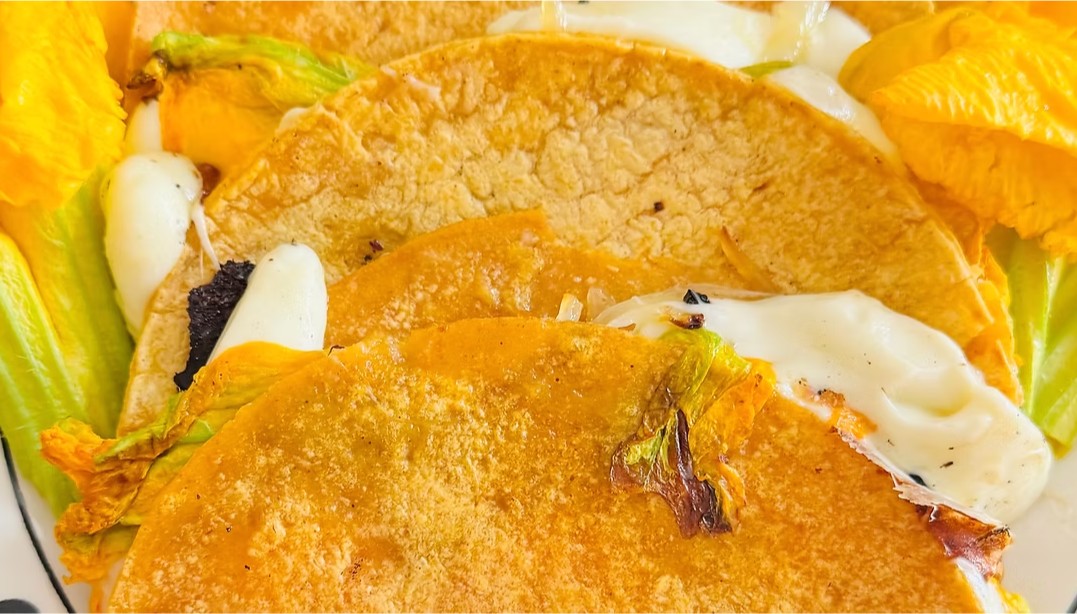
Make crispy gluten-free squash blossom quesadillas with corn tortillas, Oaxaca cheese, caramelized onions, and garlic for an easy vegetarian meal.
This Crispy Gluten-Free Squash Blossom Quesadillas Recipe combines delicate squash blossoms, melted Oaxaca cheese, caramelized onions, and sliced garlic inside golden corn tortillas. Known in Mexico as quesadillas de flor de calabaza, these seasonal quesadillas are an easy and flavorful way to enjoy fresh squash blossoms from the garden or farmers market.
Naturally gluten-free corn tortillas create crisp edges while keeping the recipe suitable for a gluten-free meal. Squash blossoms have a mild, fresh flavor that pairs beautifully with creamy Oaxaca cheese, while slowly cooked onion and garlic add a layer of savory sweetness. Using certified gluten-free tortillas and checking every packaged ingredient helps make the dish safer for guests with celiac disease or gluten sensitivity.
Serve these gluten-free squash blossom quesadillas as an appetizer, snack, light lunch, or easy summer dinner. They are especially delicious with gluten-free salsa, guacamole, pico de gallo, Mexican crema, or fresh lime wedges. The simple preparation allows the colorful edible flowers to remain the star of every warm, cheesy bite.
Directions
Step 1: Prepare a Gluten-Free Cooking Area
Clean the countertop, skillet, cutting board, knife, spatula, and other cooking tools before beginning. Make sure the work area is free from crumbs, flour, or residue left by foods containing gluten.
Use a clean skillet that has not recently been used to cook flour tortillas unless it has been thoroughly washed. Keep the certified gluten-free tortillas and other ingredients separate from products containing gluten.
Step 2: Prepare the Squash Blossoms
Gently inspect the squash blossoms for dirt or small insects. Carefully open each flower and remove the stem and stamen without tearing the delicate petals.
If the blossoms need to be cleaned, rinse them gently under cool water. Place them on a clean kitchen towel and pat them completely dry. Removing excess moisture will help the tortillas become crisp rather than soggy.
Step 3: Caramelize the Onion and Garlic
Heat the olive oil in a large cast iron or heavy-bottomed skillet over medium heat. Add the sliced white onion and garlic.
Cook for 10 to 12 minutes, stirring occasionally, until the onion is soft, golden, and lightly caramelized. Watch the garlic carefully and lower the heat if it begins to brown too quickly.
Season the onion and garlic mixture with the kosher salt. Transfer the mixture to a small bowl, then carefully wipe the skillet clean.
Step 4: Toast the First Corn Tortilla
Return the skillet to medium-high heat. Place one certified gluten-free corn tortilla in the dry skillet and cook it for about 1 minute, or until the bottom is lightly golden.
The tortilla should be warm and flexible enough to fold without cracking. If it becomes firm or deeply browned, reduce the heat before preparing the remaining quesadillas.
Step 5: Add the Oaxaca Cheese
Flip the tortilla with a clean spatula. Sprinkle one-quarter of the shredded Oaxaca cheese over one half of the tortilla.
Keep the cheese slightly away from the edge so it does not spill into the skillet as it melts. Shredding the cheese into thin pieces helps it melt quickly and evenly.
Step 6: Add the Squash Blossom Filling
Arrange two prepared squash blossoms over the cheese. Spoon one-quarter of the caramelized onion and garlic mixture over the blossoms.
Distribute the filling evenly across one half of the tortilla. Avoid overfilling the quesadilla because a moderate amount of filling makes it easier to fold, turn, and cook until crisp.
Step 7: Fold the Quesadilla
Fold the empty half of the tortilla over the squash blossom filling to create a half-moon shape. Press it gently with the spatula to help the melted cheese hold the filling together.
Do not press too firmly or the cheese and vegetables may come out of the sides.
Step 8: Cook Until Crisp and Golden
Continue cooking the folded quesadilla for about 3 minutes, turning it once or twice. Cook until both sides are lightly crisp and golden and the Oaxaca cheese has melted completely.
Reduce the heat if the tortilla begins to brown before the cheese melts. A controlled temperature gives the filling enough time to warm without scorching the tortilla.
Step 9: Repeat with the Remaining Ingredients
Transfer the finished quesadilla to a serving plate. Repeat the process with the remaining tortillas, cheese, squash blossoms, and caramelized onion mixture.
Stir the onion and garlic mixture before filling each tortilla so the ingredients remain evenly distributed. Adjust the skillet temperature between batches if necessary.
Step 10: Serve the Gluten-Free Quesadillas
Serve the squash blossom quesadillas immediately while the corn tortillas are crisp and the cheese is warm and melted. Leave them whole or cut each quesadilla into two wedges with a clean knife.
Serve with certified gluten-free salsa, guacamole, pico de gallo, Mexican crema, or lime wedges, if desired. Check the labels of prepared sauces and toppings before serving them with the quesadillas.
Notes
Use corn tortillas that are specifically labeled or certified gluten-free. Some tortillas may be produced on shared equipment or contain additives that are not suitable for every gluten-free diet.
Traditional corn tortillas are made with masa harina, water, and salt, but the ingredient list and allergen statement should still be checked. Do not substitute flour tortillas if the quesadillas need to remain gluten-free.
Check the labels on the Oaxaca cheese or mozzarella, kosher salt, packaged salsa, crema, and any other prepared toppings. Although these foods may not normally contain gluten, manufacturing practices and added ingredients can vary by brand.
Cross-contact is especially important when preparing this recipe for someone with celiac disease. Use clean cooking tools, serving plates, and preparation surfaces. Do not use a skillet, griddle, or spatula with flour residue.
Fresh squash blossoms are highly perishable. Use them as soon as possible after harvesting or purchasing them for the best flavor and texture.
Look for blossoms with bright color, fresh petals, and no excessive wilting or dark spots. Keep them refrigerated until shortly before preparing the recipe.
Handle squash blossoms carefully because their thin petals tear and bruise easily. Clean them shortly before cooking rather than washing them before storage.
Both male and female squash blossoms are edible. Male blossoms grow on long, slender stems, while female blossoms are attached to small developing squash. Gardeners commonly harvest male blossoms while leaving enough flowers for pollination.
Oaxaca cheese has a mild, buttery flavor and an excellent melting texture. Pull or shred it into small pieces so it melts evenly inside the quesadillas.
Fresh mozzarella is a suitable substitute when Oaxaca cheese is unavailable. Because fresh mozzarella contains more moisture, pat it dry before shredding or slicing it.
Use fresh, flexible corn tortillas whenever possible. Dry tortillas are more likely to crack when they are folded.
If the tortillas feel stiff, warm them briefly in the skillet before adding the filling. This makes them easier to fold and helps prevent splitting.
A cast iron or heavy-bottomed skillet holds heat well and encourages even browning. The skillet may become progressively hotter as the quesadillas cook, so adjust the heat between batches as needed.
Do not overcrowd the skillet. Cooking one quesadilla at a time makes it easier to monitor the tortilla, melt the cheese evenly, and turn the quesadilla without losing the filling.
For additional flavor, add a few thin strips of roasted poblano pepper or a small amount of fresh epazote before folding each quesadilla. Confirm that any packaged or prepared additions are gluten-free.
For extra heat, serve the quesadillas with a certified gluten-free roasted tomato salsa, salsa verde, or sliced fresh jalapeño.
These quesadillas are best enjoyed immediately. If you need to hold them briefly, place them on a clean wire rack instead of stacking them on a plate. Allowing steam to escape helps preserve their crisp texture.
Refrigerate leftovers promptly in an airtight container. Reheat them in a clean, dry skillet over medium heat until the filling is hot and the tortillas are crisp again.