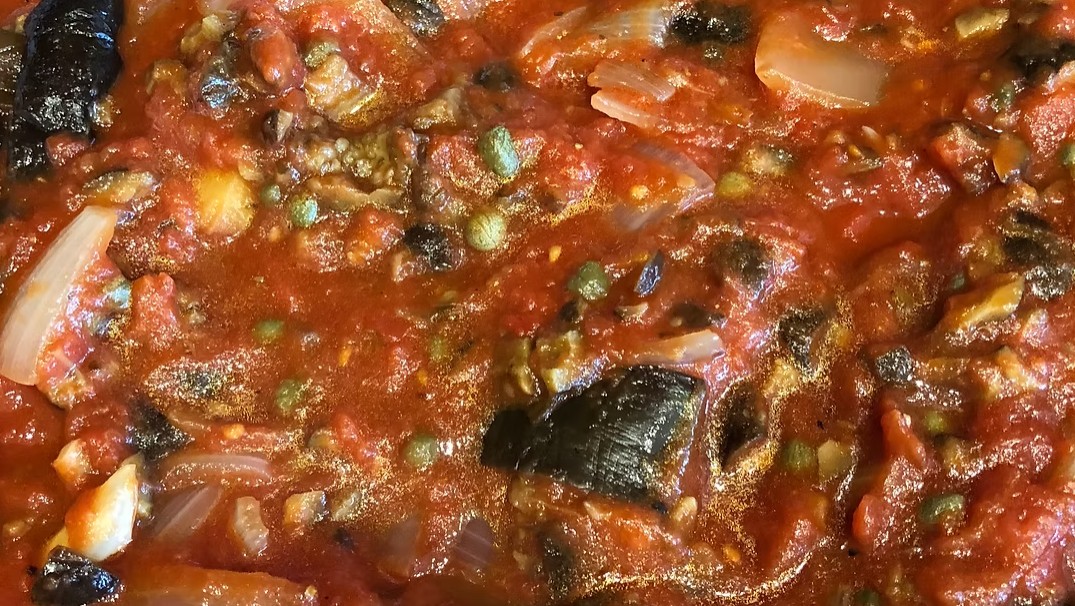
Make flavorful Sicilian eggplant caponata with tomatoes, olives, and capers for a sweet, savory, and tangy gluten-free Italian side dish.
Flavorful Sicilian Eggplant Caponata is a classic Italian side dish that brings sweet, savory, briny, and tangy flavors together in every bite. Tender eggplant cooks with tomatoes, onion, garlic, olives, and capers to create a rustic vegetable dish with bold Sicilian character. The ingredients are simple, but slow simmering turns them into a rich, satisfying mixture that tastes far more complex than the preparation suggests.
This versatile caponata can be served warm, at room temperature, or chilled. Spoon it onto crisp gluten-free crostini for an easy appetizer, add it to an antipasto platter, or pair it with grilled fish or roasted chicken. It is also delicious over pasta or creamy ricotta. Because the flavors deepen as the caponata rests, it is an excellent make-ahead choice for entertaining, meal preparation, and relaxed family dinners.
Traditional Sicilian caponata is known for its agrodolce, or sweet-and-sour, balance. This recipe gets gentle sweetness from sugar and tomatoes, while an optional addition of red wine vinegar creates a brighter, more traditional contrast. Salty olives and capers round out the sauce and complement the mild eggplant. Naturally gluten-free when prepared with appropriately labeled ingredients, this colorful Mediterranean dish is an easy way to make vegetables the highlight of the table.
Prep Time: 15 minutes
Cook Time: 30 minutes
Total Time: 45 minutes
Yield: 6 servings
Ingredients
1 large eggplant, chopped into 1-inch cubes, skin left on if desired
1/4 cup extra-virgin olive oil
1 medium onion, chopped
5 garlic cloves, minced
2 large tomatoes, chopped
1 (28-ounce) can whole plum tomatoes, crushed by hand
1 tablespoon granulated sugar
1/4 teaspoon salt
1/2 teaspoon freshly ground black pepper
3 tablespoons capers, drained
1/2 cup pitted black olives, roughly chopped
Directions
Step 1: Cook the Eggplant
Heat the extra-virgin olive oil in a large skillet or Dutch oven over medium heat. Once the oil is warm, add the eggplant cubes. Cook for 8 to 10 minutes, stirring occasionally so the pieces soften and brown evenly.
The eggplant should begin to look tender and lightly golden, but it does not need to be completely cooked at this stage. It will continue softening as the caponata simmers.
Step 2: Sauté the Aromatics
Add the chopped onion to the skillet with the eggplant. Cook for 4 to 5 minutes, stirring occasionally, until the onion has softened and looks translucent. Stir in the minced garlic and cook for 1 minute, just until fragrant. Watch the garlic carefully and keep it moving so it does not brown or develop a bitter taste.
Step 3: Add the Tomatoes
Add the chopped fresh tomatoes and the canned plum tomatoes that have been crushed by hand. Stir thoroughly, scraping across the bottom of the skillet to incorporate any flavorful browned bits. The combination of fresh and canned tomatoes gives the caponata both brightness and a rich sauce that coats the eggplant.
Step 4: Season the Caponata
Add the granulated sugar, salt, black pepper, drained capers, and chopped black olives. Stir until the seasonings and briny ingredients are distributed evenly throughout the tomato and eggplant mixture. The sugar should soften the tomatoes’ acidity without making the finished dish taste overly sweet.
Step 5: Simmer Until Thickened
Reduce the heat to low and simmer the caponata uncovered for 20 minutes. Stir occasionally to keep the mixture from sticking and to help the flavors blend. As it cooks, the tomatoes will break down, the sauce will thicken, and the eggplant will become tender. The finished caponata should be moist and spoonable rather than watery. If using red wine vinegar for a more traditional sweet-and-sour flavor, stir in 2 tablespoons during the final 5 minutes of cooking.
Step 6: Taste and Serve
Taste the caponata and adjust the salt or black pepper if needed. Serve it warm, allow it to cool to room temperature, or transfer it to the refrigerator and serve it chilled. For the fullest flavor, let the caponata rest for several hours or overnight before serving. Spoon it into a serving bowl and accompany it with gluten-free bread, crostini, or your preferred main course.
Notes
Leaving the skin on the eggplant helps the cubes hold their shape and adds color to the finished dish. If the skin is especially thick or you prefer a softer texture, peel the eggplant before chopping it.
Eggplant absorbs oil readily. Stir it often during the first stage of cooking so the olive oil is distributed across the pieces. Keep the heat at medium and allow the eggplant time to soften instead of adding more oil immediately.
For a more traditional Sicilian flavor, add 2 tablespoons of red wine vinegar during the final 5 minutes of cooking. The vinegar works with the sugar to create the characteristic agrodolce balance. Taste after adding it and adjust only if necessary.
Golden raisins and toasted pine nuts are popular optional additions. Raisins contribute extra sweetness, while pine nuts add a delicate crunch. Stir them in near the end of cooking so they retain their distinct texture and flavor.
Black olives provide a mild, savory character, but another pitted olive may be used if preferred. Keep in mind that the saltiness of olives and capers varies, so taste the caponata before adding extra salt.
Serve caponata with gluten-free crostini, grilled fish, roasted chicken, or pasta. It can also be spooned over creamy ricotta for a simple Mediterranean appetizer. For a colorful antipasto platter, pair it with roasted peppers, marinated artichokes, cheese, and gluten-free crackers.
Cool leftovers before transferring them to an airtight container. Refrigerate for up to 5 days. The flavors continue to develop while the caponata rests, so it is often even better the next day. Stir before serving and enjoy it chilled, at room temperature, or gently reheated.
This recipe is naturally gluten-free. When cooking for someone with celiac disease or gluten sensitivity, verify that all packaged ingredients, including the canned tomatoes, olives, and capers, have suitable gluten-free labeling. Use clean utensils and preparation surfaces to prevent cross-contact.