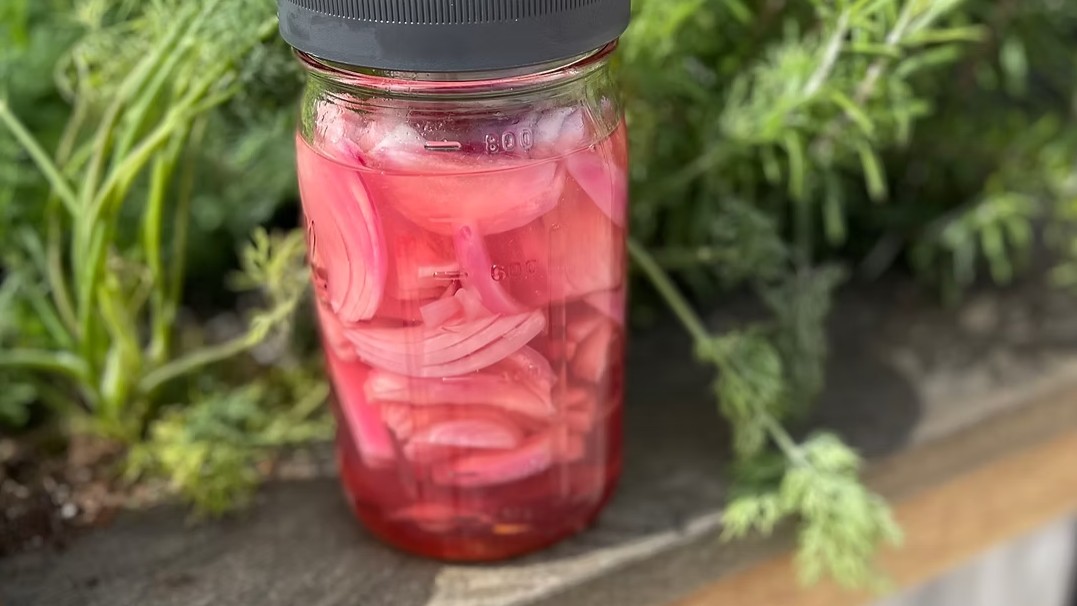
Make zesty quick pickled onions with five simple ingredients for a crisp, tangy topping that brightens tacos, burgers, salads, bowls, and more.
Bright, crisp, and bursting with tangy flavor, this Zesty Quick Pickled Onions Recipe is one of the easiest ways to add a fresh finish to everyday meals. Thinly sliced red onion softens in a simple warm brine made with red wine vinegar, water, sugar, and salt. The result is a colorful refrigerator condiment with a lively balance of acidity, gentle sweetness, and savory flavor.
These homemade pickled red onions are ready to enjoy after only 30 minutes in the refrigerator, although several hours or an overnight rest will deepen their flavor. They add refreshing contrast to rich, smoky, spicy, and creamy foods, making them especially delicious on tacos, burgers, sandwiches, avocado toast, salads, grain bowls, grilled vegetables, roasted meats, and seafood. Their vivid pink color also gives simple dishes an appealing finishing touch.
Because this recipe uses only five ingredients and makes approximately one pint, it is a practical way to preserve an extra red onion without committing to a traditional canning project. The onions are refrigerated rather than shelf-stable, so the process is approachable for beginners and convenient for weekly meal preparation. Keep a jar chilled and use a clean utensil each time you serve them for a quick burst of flavor whenever a meal needs brightness.
Prep Time: 10 minutes Cook Time: 5 minutes Cooling Time: 30 minutes Total Time: 45 minutes Yield: Approximately 1 pint
Make easy Citrus Pickled Onions with fresh lime, orange, and grapefruit juices for a colorful, tangy topping for tacos, burgers, salads, and bowls. Bright, tangy, and beautifully colorful, this Easy Citrus Pickled Onions Recipe With Lime, Orange, and Grapefruit brings fresh flavor and satisfying crunch to everyday meals. Thinly sliced red onions are briefly softened in hot salted water before being marinated in a vibrant blend of freshly squeezed citrus juices. Lime juice gives the onions a lively tartness, orange juice adds gentle sweetness, and grapefruit juice contributes a pleasantly bittersweet finish. As the onions marinate, the citrus mellows their sharp bite while helping them retain their crisp texture and develop an eye-catching pink hue. Unlike traditional quick pickled onions made primarily with vinegar, this citrus-forward version tastes light, fruity, and refreshing. It makes a flavorful topping for tacos, burgers, sandwiches, grain bowls, salads, avocado toast, grilled meats, seafood, roasted vegetables, and plant-based dishes. With just a few ingredients and minimal preparation, these Citrus Pickled Onions add restaurant-quality flavor and color without complicated preserving methods. They are quick enough to prepare for a weeknight meal and can also be made ahead for effortless serving. Prep Time: 10 minutesMarinating Time: 15 minutesTotal Time: 30 minutesYield: 1 cup
Make sweet and tangy balsamic glazed red onions with four simple ingredients for burgers, sandwiches, grilled meats, pizzas, salads, and more. Sweet, tangy, and beautifully glossy, these Sweet and Tangy Balsamic Glazed Red Onions transform a handful of simple ingredients into a versatile homemade condiment. Slowly cooking the onions brings out their natural sweetness, while balsamic vinegar contributes rich acidity and a deep, complex flavor. As the onions soften, the balsamic vinegar gradually reduces and clings to every tender slice. The finished onions have a soft, jammy texture and a striking color that makes them as appealing to look at as they are delicious. A small spoonful can add depth and balance to an otherwise simple meal. Serve these balsamic glazed red onions on burgers, sandwiches, grilled meats, pizzas, grain bowls, salads, or roasted vegetables. They also pair especially well with creamy cheeses, including goat cheese, Brie, and fresh mozzarella. Because the onions can be prepared in advance and refrigerated, they are an excellent condiment to keep on hand for convenient meals and entertaining. Prep Time: 10 minutesCook Time: 30 minutesTotal Time: 40 minutesYield: 6 servings
Make vibrant pink pickled pineapple with apple cider vinegar, cinnamon, and cloves for a sweet, tangy tropical condiment or topping. Sweet, tangy, and beautifully colorful, this Vibrant Pink Pickled Pineapple Recipe transforms fresh pineapple into a refreshing refrigerator pickle with tropical flavor and a warm, aromatic finish. Apple cider vinegar balances the natural sweetness of the fruit, while cinnamon and cloves infuse the pickling syrup with gentle spice. As the pineapple rests in the syrup, its color and flavor deepen, creating an eye-catching condiment for both savory and sweet dishes. This easy recipe requires only six ingredients and about 20 minutes of active preparation and cooking. Because it is a refrigerator pickle, there is no complicated canning process or special preserving equipment required. The most difficult part is waiting at least 24 hours for the pineapple to chill and absorb the sweet, tangy syrup. Preparing it a day before serving gives the vinegar, sugar, and spices enough time to blend into a balanced flavor. Serve pink pickled pineapple with grilled pork, glazed ham, roasted chicken, fish tacos, burgers, sandwiches, salads, or rice bowls. Its bright acidity can cut through rich meats and creamy cheeses, making it especially appealing on a charcuterie or cheese board. It can also be spooned over vanilla ice cream, yogurt, pound cake, or cheesecake for an unexpected tropical topping. Keep a chilled jar ready when you want to add color, sweetness, and acidity to an everyday meal. Prep Time: 10 minutesCook Time: 10 minutesCooling Time: 30 minutesChilling Time: At least 24 hoursTotal Time: 50 minutes, plus at least 24 hours chillingYield: About 1 quart
Ingredients
1 medium red onion, thinly sliced
1/2 cup red wine vinegar
1/2 cup boiling water
1 teaspoon granulated sugar
1/8 teaspoon salt
Directions
Step 1: Slice the Onion
Peel the red onion and slice it as thinly and evenly as possible with a sharp knife or mandoline. Thin slices absorb the pickling liquid quickly and develop a tender yet pleasantly crisp texture. If using a mandoline, work carefully and use the hand guard according to the manufacturer’s directions.
Step 2: Prepare the Pickling Brine
Place the red wine vinegar, boiling water, granulated sugar, and salt in a medium heat-safe bowl or measuring cup. Stir until the sugar and salt have completely dissolved. The warm liquid helps dissolve the seasonings and begins to gently soften the onion without cooking away its characteristic crunch.
Step 3: Add the Onion
Pack the sliced onion into a clean pint-size mason jar or another heat-safe container with a secure lid.
Carefully pour the warm pickling brine over the onions. Press the slices down gently with a clean spoon so they are completely submerged. If the onion is tightly packed, pause briefly to let the liquid settle between the layers before adding the remaining brine.
Step 4: Cool and Refrigerate
Leave the container uncovered until the onions and brine have cooled to room temperature. Once cool, seal the jar with its lid and place it in the refrigerator. Chill the onions for at least 30 minutes before serving. For a more developed sweet and tangy flavor, allow them to pickle for several hours or overnight.
Step 5: Serve
Remove the desired amount of onion from the jar with a clean utensil and let excess brine drip back into the container. Use the pickled onions to brighten tacos, burgers, wraps, sandwiches, salads, rice bowls, grain bowls, avocado toast, grilled vegetables, roasted meats, or seafood. Return the sealed jar promptly to the refrigerator and enjoy the onions within 2 weeks.
Notes
Slice the onion uniformly so all the pieces pickle at a similar rate. A sharp chef’s knife works well, but a mandoline is helpful when you want especially thin, consistent slices. Thicker slices may remain firmer and need more time in the refrigerator before their flavor fully develops.
For a slightly sweeter brine, increase the granulated sugar from 1 teaspoon to 2 teaspoons. Stir thoroughly while the water is hot so the additional sugar dissolves completely. Taste preferences vary, and the original amount produces a bright, lightly sweetened pickle rather than a distinctly sweet one.
Red wine vinegar contributes a robust tang and complements the color of the red onion. White vinegar or apple cider vinegar may be substituted if desired. White vinegar creates a sharper, cleaner flavor, while apple cider vinegar adds a softer acidity with subtle fruity notes.
For an optional flavor variation, add a few whole peppercorns, a peeled garlic clove, a small bay leaf, a pinch of dried oregano, or a small amount of red pepper flakes to the jar before pouring in the brine. Use additions sparingly so the fresh onion and tangy vinegar remain the main flavors.
Make sure the onions remain beneath the brine while they pickle. A clean spoon can be used to press down any slices that rise above the liquid. The onion will soften slightly as it rests, making it easier for the brine to surround the slices.
These are refrigerator pickles and are not processed for shelf-stable storage. Keep the sealed container refrigerated at all times and do not store it in the pantry. Always use a clean utensil when removing onions from the jar to help maintain freshness, and discard the batch if it develops an unusual odor, appearance, or texture.
The onions can be eaten after 30 minutes, but their flavor becomes more balanced after several hours. Preparing them the night before serving is an easy way to build flavor while saving time on the day of a meal. Their make-ahead convenience is particularly useful for taco nights, cookouts, packed lunches, and meal-prep bowls.
Use the onions as a bright counterpoint to rich ingredients such as cheese, avocado, mayonnaise-based sauces, grilled beef, pulled pork, or roasted chicken. They also pair well with beans, lentils, eggs, smoked fish, and roasted root vegetables. A small spoonful is often enough to add color, acidity, and crunch without overpowering the dish.
The leftover brine is intended to store and flavor this batch of onions during its recommended two-week refrigerated life. For the best and most consistent results, prepare a fresh batch of brine when making another jar rather than repeatedly adding raw onions to old liquid.
Originally published
April 2026
Updated
September 2026
Reviewed by
Culibloom