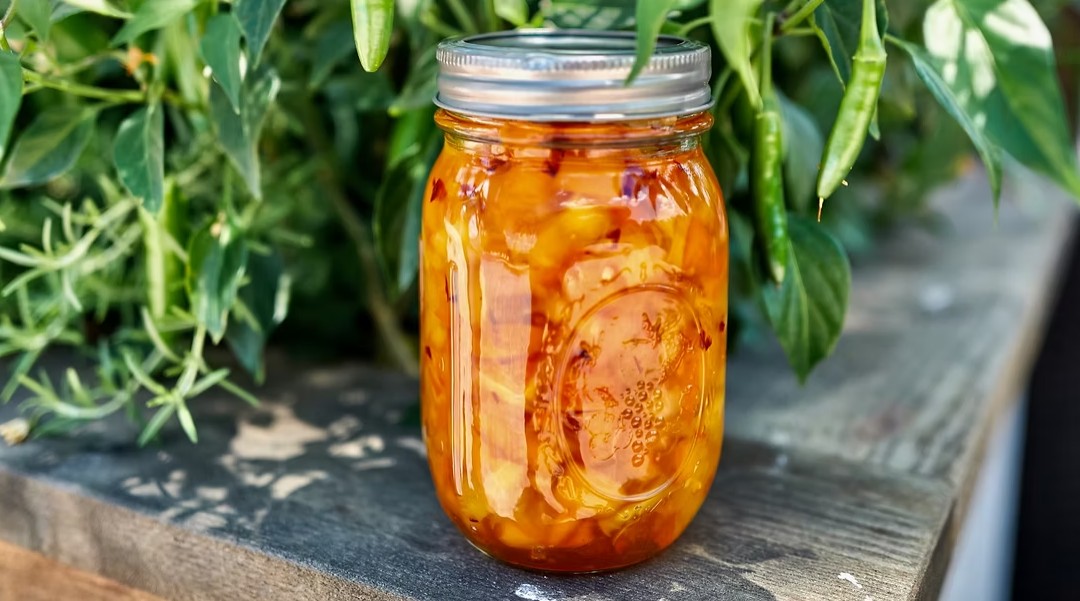
Make vibrant pineapple habanero pepper jelly with fresh pineapple, orange pepper, apple, vinegar, and fiery habaneros for irresistible sweet heat.
Sweet, tangy, and bursting with tropical flavor, this Vibrant Pineapple Habanero Pepper Jelly Recipe combines juicy fresh pineapple with the fiery warmth of habanero peppers. Crisp apple, orange bell pepper, apple cider vinegar, lemon juice, and crushed red pepper flakes add layers of fruitiness, acidity, color, and heat. The result is a glossy sweet and spicy jelly that brings bold flavor to appetizers, sandwiches, grilled meats, seafood, and vegetable dishes.
Homemade pineapple pepper jelly is especially delicious spooned over softened cream cheese and served with gluten-free crackers. It can also be spread on burgers, added to grilled cheese sandwiches, brushed over chicken or pork, or used as a flavorful glaze for shrimp and salmon. Because habanero peppers have a naturally fruity character, they complement the pineapple without overwhelming its bright tropical flavor.
This colorful jelly also makes a thoughtful homemade gift for holidays, birthdays, housewarming celebrations, and backyard gatherings. Wear gloves while handling the habanero peppers, measure the drained pineapple carefully, and read the food-safety information in the Notes before storing the jelly. Since fresh pineapple and peppers can vary in acidity, shelf-stable canning requires a scientifically tested recipe from a trusted canning authority.
Directions
Step 1: Prepare the Jars
Wash the jars, lids, bands, and canning equipment thoroughly. If you plan to process the jelly for shelf-stable storage, prepare the jars and boiling water canner according to current instructions from the jar manufacturer and a trusted home-canning authority.
Keep the jars warm until they are ready to be filled. Placing hot jelly in cold jars can cause the glass to crack.
Step 2: Drain the Pineapple
Place the finely chopped pineapple in a fine-mesh strainer set over a bowl. Press it gently with the back of a spoon to remove as much excess juice as possible. Allow the pineapple to continue draining while you prepare the apple and peppers.
Measure exactly 3 cups of drained pineapple for the jelly. Using more pineapple or adding the collected juice may alter the consistency of the finished preserve.
Step 3: Prepare the Peppers Safely
Put on food-safe gloves before handling the habanero peppers. Cut away the stems, then remove the seeds and interior membranes before finely chopping the peppers.
Avoid touching your face or eyes while working with habaneros. Wash the cutting board, knife, gloves, and any other surfaces that came in contact with the peppers. Removing the seeds and membranes moderates the heat, but the peppers will still give the jelly a noticeable spicy finish.
Step 4: Combine the Ingredients
In a large, heavy-bottomed pot, combine the granulated sugar, apple cider vinegar, chopped apple, orange bell pepper, habanero peppers, crushed red pepper flakes, butter, and 3 cups of drained pineapple.
Choose a pot with plenty of extra room because the mixture will rise as it boils. Stir continuously over medium heat until the sugar has completely dissolved and the fruit mixture is evenly combined.
Step 5: Boil the Jelly
Increase the heat to high and bring the mixture to a full rolling boil that cannot be stirred down. Continue boiling for 10 minutes, stirring occasionally with a long-handled spoon to prevent sticking or scorching.
Watch the pot carefully throughout the cooking time. If the mixture rises too close to the rim, reduce the heat slightly while maintaining a strong boil.
Step 6: Add the Gelatin and Lemon Juice
Gradually stir in the unflavored gelatin, making sure it dissolves completely without leaving any visible clumps. Add the fresh lemon juice and stir well.
Return the mixture to a full rolling boil. Cook for exactly 1 minute, stirring frequently so the jelly cooks evenly and does not stick to the bottom of the pot.
Step 7: Fill the Jars
Carefully ladle the hot jelly into the prepared half-pint jars, leaving 1/4 inch of headspace. Run a clean nonmetallic utensil around the inside of each jar to release trapped air bubbles, then adjust the headspace if necessary.
Wipe each jar rim with a clean, damp cloth. Center the lids over the jars and apply the bands according to the manufacturer’s directions. Do not over tighten the bands.
Step 8: Process or Refrigerate the Jelly
For shelf-stable storage, only use the 10-minute boiling water processing method if the entire formulation and processing time have been verified by a qualified canning authority for your altitude. Adjustments may be required at elevations above 1,000 feet.
If the recipe has not been scientifically verified for shelf-stable canning, treat it as refrigerator jelly. Transfer the filled jars to the refrigerator after they have cooled and keep them refrigerated rather than storing them in the pantry.
Step 9: Cool the Jars
Place the jars upright on a towel-lined countertop, leaving space between them for air circulation. Let them cool undisturbed for 12 to 24 hours. Do not retighten the bands or press the centers of the lids during this cooling period.
If the jars were processed using a verified canning method, check the seals after cooling. Refrigerate any jar that did not seal properly. Label each jar with the name of the jelly and the preparation date.
Step 10: Serve
Allow the jelly time to chill and finish setting before serving. Spoon it over cream cheese for an easy appetizer, or use it as a sweet and spicy condiment for sandwiches, burgers, grilled meats, seafood, and roasted vegetables.
Always use a clean spoon when removing jelly from the jar. Refrigerate the jelly after opening.
Notes
Fully ripe pineapple provides the sweetest flavor and the most pronounced tropical aroma. Drain it thoroughly and measure the required 3 cups after draining.
The source recipe specifies 3 ounces of unflavored gelatin. Gelatin package sizes vary, so measure by weight rather than assuming a certain number of envelopes.
Gelatin is not a standard thickener in most shelf-stable home-canning recipes. It may also lose some of its setting strength when subjected to prolonged heat. For that reason, this formulation should not be assumed safe or suitable for pantry storage unless it has been verified by a qualified food-preservation authority.
Fresh pineapple, apples, and peppers can vary in acidity. Lemon juice and vinegar contribute acidity, but their presence alone does not prove that an untested recipe is safe for boiling water canning. When no scientifically tested processing guidance is available for the complete recipe, refrigerate the finished jelly.
The teaspoon of butter helps reduce foaming as the mixture boils. It may be omitted if desired, although additional foam may need to be skimmed from the surface before the jars are filled.
Wear gloves whenever you cut habanero peppers. Pepper oils can remain on the skin even after washing and may cause significant irritation if transferred to the eyes or face.
Removing the seeds and membranes reduces some of the heat, but much of a habanero pepper’s capsaicin is concentrated in its pale interior ribs. Use care when preparing the peppers and avoid increasing the quantity without retesting the flavor.
Serve this pineapple habanero pepper jelly over cream cheese with gluten-free crackers for a quick party appetizer. It is also delicious on turkey sandwiches, burgers, grilled cheese, and charcuterie boards.
For a simple glaze, place a portion of jelly in a separate bowl and brush it over grilled chicken, pork, shrimp, or salmon near the end of cooking. Do not return a brush that has touched raw meat to the original jar.
When serving someone with celiac disease or gluten sensitivity, check the labels on the gelatin, vinegar, spices, and all accompanying foods. Use clean utensils and prevent cross-contact during preparation and serving.
Refrigerate refrigerator jelly promptly and discard it if you notice mold, fermentation, bubbling, an unusual odor, leakage, or any other sign of spoilage. Never taste a questionable home-preserved product.