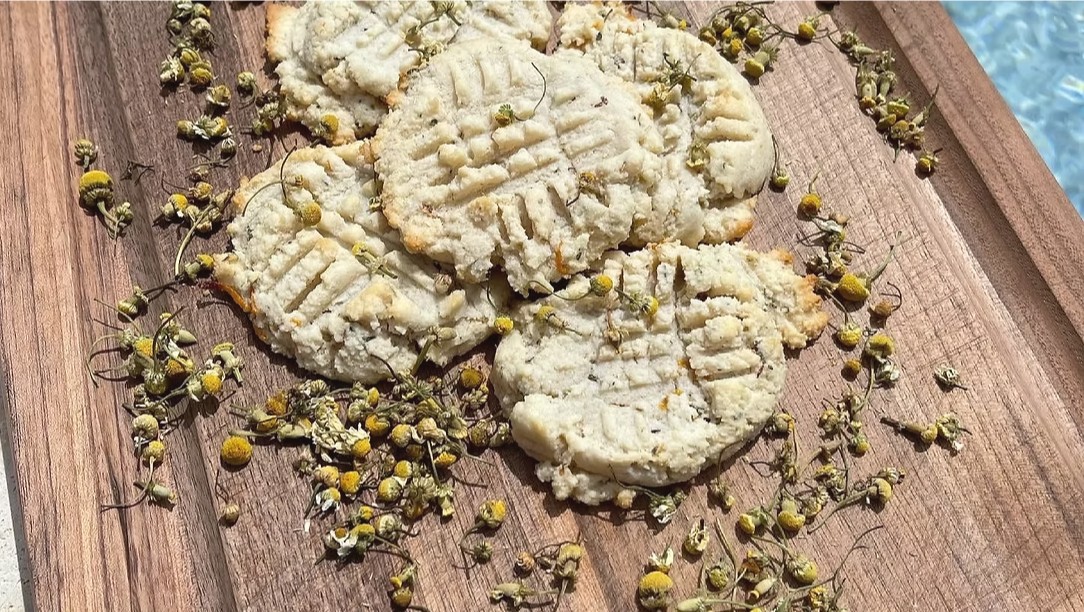
Make easy gluten-free chamomile citron shortbread cookies with almond flour, fragrant chamomile, buttery flavor, and bright citrus zest.
Delicate, buttery, and wonderfully fragrant, these Easy Gluten-Free Chamomile Shortbread Cookies With Citrus Zest combine floral chamomile, fresh lemon zest, and rich almond flavor. Each cookie has a tender, melt-in-your-mouth texture with lightly crisp edges and a subtle sweetness that allows the chamomile and citrus flavors to shine.
Almond flour creates the shortbread’s soft, rich base, while tapioca flour helps the dough hold together and contributes to its delicate texture. Confectioners’ sugar blends smoothly into the dough without making the cookies overly sweet. Dried chamomile provides a gentle floral aroma, and fresh citrus zest balances the richness of the butter with a bright, refreshing flavor.
This versatile recipe can be prepared as classic shortbread bars or individual cookies. The bars have a thicker, softer center, while the individual cookies bake more quickly and develop a slightly crisper texture. Both versions are lovely with afternoon tea, coffee, herbal infusions, or lemonade.
Serve these elegant gluten-free cookies at bridal showers, brunches, spring celebrations, holiday gatherings, or afternoon tea. They are also a thoughtful addition to homemade cookie boxes and edible gift baskets.
Directions
Step 1: Prepare the Oven
Preheat the oven to 350°F.
For shortbread bars, line a small baking pan or jelly roll pan with parchment paper or aluminum foil. Leave enough overhang on the sides to lift the cooled shortbread easily from the pan.
For individual cookies, line a baking sheet with parchment paper.
Step 2: Prepare the Chamomile
Lightly crush the dried chamomile flowers between your fingers or with the back of a spoon. Crushing the flowers helps release their aroma and distributes the delicate chamomile flavor more evenly throughout the dough.
If using a chamomile tea bag, open the bag and measure the contents before adding them to the recipe.
Step 3: Combine the Dry Ingredients
Place the almond flour, tapioca flour, confectioners’ sugar, sea salt, crushed chamomile flowers, and lemon zest in a medium mixing bowl or the bowl of a stand mixer.
Mix until the ingredients are evenly combined. Break apart any small clumps of almond flour or confectioners’ sugar and make sure the chamomile and citrus zest are distributed throughout the mixture.
Step 4: Make the Shortbread Dough
Add the butter to the dry ingredients. Mix until the butter is incorporated and the mixture resembles coarse crumbs.
Add the vanilla extract and almond extract. Continue mixing until a soft dough forms. The finished dough should hold together when pressed between your fingers.
Avoid overmixing after the dough comes together. Overworking the dough may affect the tender texture of the baked shortbread.
Step 5: Shape the Shortbread Bars
To prepare shortbread bars, transfer the dough to the prepared baking pan. Press it firmly and evenly across the bottom of the pan, making sure the edges and corners have a consistent thickness.
Smooth the surface with your fingers or the flat bottom of a measuring cup. An even layer will help the shortbread bake consistently.
If you are making individual cookies, skip this step and continue with Step 7.
Step 6: Bake and Cool the Shortbread Bars
Bake the shortbread bars for approximately 25 minutes, or until the edges and surface are lightly golden.
Transfer the pan to a wire rack and allow the shortbread to cool completely in the pan. Once cooled, use the parchment paper or aluminum foil overhang to lift the shortbread carefully from the pan.
Place the shortbread on a cutting board. Use a sharp knife to slice it into squares, rectangles, or wedges before serving.
Step 7: Shape the Individual Cookies
To make individual cookies, divide the dough into tablespoon-sized portions.
Gently roll each portion between your palms to form a 1-inch ball.
Arrange the dough balls on the prepared baking sheet, leaving approximately 1 1/2 to 2 inches between them.
Use the tines of a fork to flatten each cookie to approximately 1/4-inch thickness.
Press the fork into the dough in one direction and then in the opposite direction to create a decorative crosshatch pattern.
Step 8: Bake and Cool the Individual Cookies
Bake the cookies for 8 to 10 minutes, or until the tops and edges begin turning light golden brown.
Remove the baking sheet from the oven and allow the cookies to cool completely on the baking sheet. Almond flour shortbread is especially delicate while warm, but the cookies will become firmer as they cool.
Once completely cooled, carefully transfer the cookies to a serving platter or an airtight storage container.
Step 9: Serve
Serve the gluten-free chamomile shortbread cookies with hot tea, coffee, herbal infusions, or a chilled glass of lemonade.
The floral chamomile, citrus zest, and buttery almond flavor make these cookies especially enjoyable at afternoon tea, brunches, showers, holiday gatherings, or spring celebrations.
Notes
Lightly crushing the chamomile flowers before adding them to the dough helps release their fragrance and distributes their flavor more evenly.
Use plain chamomile tea rather than a flavored tea blend that could alter the flavor of the cookies.
Fresh lemon zest provides the citrus flavor in the original recipe. For a different citrus variation, use citron zest or replace part of the lemon zest with orange zest.
The dough should feel soft but hold together when pressed. Avoid adding extra liquid because it could change the delicate shortbread texture.
The shortbread bars require a longer baking time than the individual cookies.
Watch for a light golden color rather than allowing the edges to become deeply browned.
Allow the cookies or bars to cool completely before moving or slicing them. The almond flour base makes the warm shortbread tender and fragile.
For a more decorative finish, drizzle a simple lemon glaze over the completely cooled cookies. Allow the glaze to set before arranging or storing them.
The chamomile and citrus flavors may become more noticeable after the cookies rest overnight.
Store the cooled cookies in an airtight container at room temperature for up to 3 days.
For longer freshness, refrigerate the cookies in an airtight container for up to 1 week.
Baked cookies may be frozen for up to 3 months. Place them in a freezer-safe container with parchment paper between the layers. Thaw the cookies at room temperature before serving.
This recipe is gluten-free when prepared with properly labeled gluten-free ingredients and protected from cross-contact. When baking for someone with celiac disease or gluten sensitivity, check the labels on the almond flour, tapioca flour, confectioners’ sugar, extracts, chamomile tea, and other packaged ingredients.