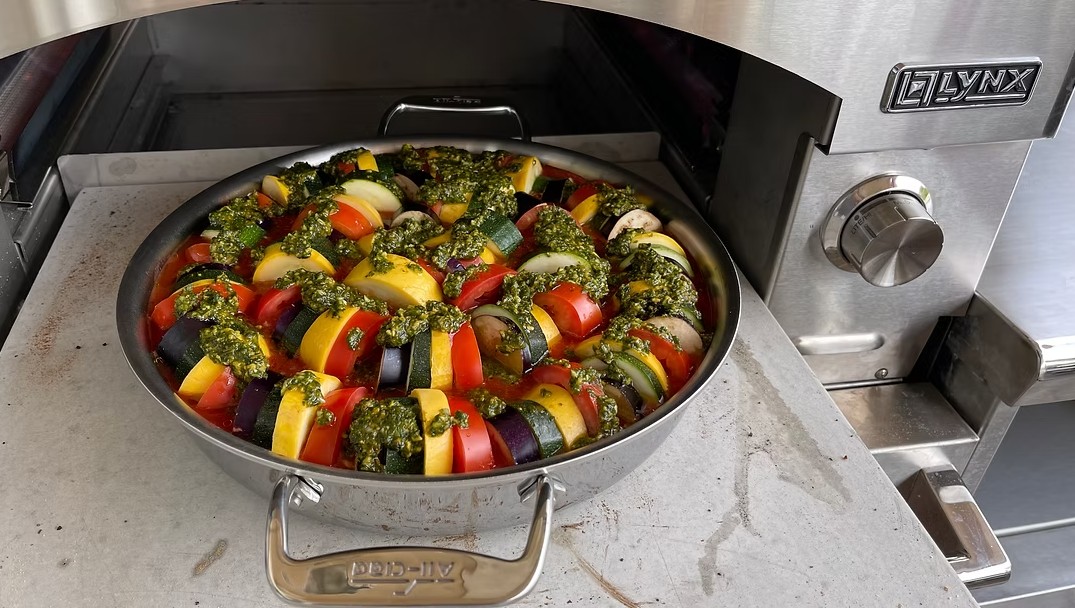
Make rustic Ratatouille Provençale with layered eggplant, zucchini, squash, tomatoes, peppers, garlic, and herbs for a classic French meal.
Bring the flavors of the French countryside to your table with this Rustic Ratatouille Provençale Recipe. Layers of tender eggplant, zucchini, yellow squash, and Roma tomatoes bake over a savory vegetable sauce filled with sweet bell peppers, garlic, ripe tomatoes, and fragrant herbs. The finished dish is naturally gluten-free, colorful, and full of Mediterranean flavor.
Although traditional ratatouille can be prepared as a loosely simmered stew, this elegant baked version arranges the vegetables in overlapping rows or a spiral. The careful presentation makes it beautiful enough for entertaining while preserving the comforting character of classic French country cooking. Slowly baking the vegetables allows them to soften, caramelize around the edges, and absorb the seasoned tomato sauce beneath them.
Serve this versatile ratatouille as a wholesome vegetarian main course or pair it with grilled chicken, roasted fish, creamy polenta, or gluten-free crusty bread. It is especially delicious during the summer when eggplant, squash, peppers, tomatoes, and fresh herbs are at their peak. The flavors become even richer after resting, making this an excellent make-ahead dish for family dinners, garden parties, and relaxed weekend meals.
Prep Time: 30 minutes
Cook Time: 1 hour
Resting Time: 10 minutes
Total Time: 1 hour 40 minutes
Yield: 6 to 8 servings
Ingredients
For the Vegetable Sauce
2 tablespoons extra virgin olive oil
1 medium onion, diced
4 cloves garlic, minced
1 red bell pepper, diced
1 yellow bell pepper, diced
4 cups chopped ripe tomatoes or 1 (28-ounce) can tomatoes, drained
1/4 cup tomato puree, optional
1/4 cup dry red wine, optional
1 teaspoon dried thyme
1 teaspoon dried oregano
1 tablespoon chopped fresh basil
1 bay leaf
1/2 teaspoon kosher salt
1/4 teaspoon black pepper
For the Layered Vegetables
2 medium eggplants, sliced into 1/8-inch rounds
2 medium zucchini, sliced into 1/8-inch rounds
2 yellow squash, sliced into 1/8-inch rounds
6 Roma tomatoes, sliced into 1/8-inch rounds
Additional kosher salt, to taste
Additional black pepper, to taste
For the Herb Olive Oil
4 tablespoons extra virgin olive oil
2 tablespoons chopped fresh basil
2 tablespoons chopped fresh parsley
2 teaspoons fresh thyme leaves
1 teaspoon minced garlic
1/2 teaspoon salt, or to taste
1/4 teaspoon black pepper, or to taste
For Serving
Additional chopped fresh basil, optional
Additional chopped fresh parsley, optional
Gluten-free crusty bread, grilled chicken, roasted fish, or polenta, optional
Directions
Step 1: Prepare the Oven
Preheat the oven to 375°F. Lightly grease a 12-inch oven-safe skillet or a similarly sized baking dish if needed. Choose a dish that gives you enough surface area to arrange the vegetable slices in overlapping rows or a spiral.
Step 2: Soften the Onion and Garlic
Heat 2 tablespoons of extra virgin olive oil in the oven-safe skillet over medium heat. Add the diced onion and cook for about 4 minutes, stirring occasionally, until it begins to soften and turn translucent.
Add the minced garlic and cook for 1 minute, stirring frequently. Do not allow the garlic to brown because browned garlic can give the finished sauce a bitter flavor.
Step 3: Cook the Bell Peppers
Add the diced red and yellow bell peppers to the skillet. Cook for 6 to 8 minutes, stirring occasionally, until the peppers are tender but still brightly colored. Their natural sweetness will help balance the acidity of the tomatoes.
Step 4: Simmer the Vegetable Sauce
Pour in the chopped tomatoes. Add the tomato puree and dry red wine if using. Stir in the dried thyme, dried oregano, fresh basil, bay leaf, kosher salt, and black pepper.
Bring the mixture to a gentle simmer and cook for 15 to 20 minutes, stirring occasionally, until the sauce thickens slightly. If the mixture begins to stick, reduce the heat and stir more frequently. Remove and discard the bay leaf.
If you prepared the sauce in the skillet that will go into the oven, spread it evenly across the bottom. If you used a separate saucepan, carefully transfer the sauce to the prepared baking dish and distribute it in an even layer.
Step 5: Arrange the Vegetables
Arrange the sliced eggplant, Roma tomatoes, zucchini, and yellow squash over the vegetable sauce.
Alternate the different vegetables and overlap the slices slightly so that their colorful edges remain visible.
Create concentric circles when using a round skillet, or arrange the slices in neat rows when using a rectangular baking dish. Continue until the entire surface is covered. Season the vegetables lightly with additional salt and black pepper.
Step 6: Prepare the Herb Olive Oil
In a small bowl, whisk together the extra virgin olive oil, chopped basil, parsley, fresh thyme leaves, minced garlic, salt, and black pepper. Mix until the garlic and herbs are evenly distributed throughout the oil.
Drizzle the herb olive oil evenly over the arranged vegetables. Use a pastry brush or the back of a spoon to distribute it gently if needed, making sure the exposed vegetable slices receive a light coating.
Step 7: Cover and Bake the Ratatouille
Cover the skillet or baking dish tightly with aluminum foil. Place it in the preheated oven and bake for 40 minutes. Covering the dish during this stage traps steam, helping the eggplant and squash become tender without drying out.
Step 8: Uncover and Finish Baking
Carefully remove the aluminum foil and continue baking for approximately 20 minutes, or until the vegetables are tender and lightly browned around the edges. A thin knife should slide easily into the eggplant and squash.
For additional caramelization, broil the uncovered ratatouille for 2 to 3 minutes after baking. Watch it continuously under the broiler because the vegetables and herbs can brown quickly.
Step 9: Rest and Garnish
Remove the ratatouille from the oven and let it rest for 10 minutes. This short resting period allows the vegetable juices and tomato sauce to settle, making the dish easier to portion.
Garnish with additional chopped fresh basil and parsley if desired. Serve the ratatouille warm as a vegetarian main course or as a flavorful side dish with gluten-free crusty bread, grilled chicken, roasted fish, or polenta.
Notes
Choose firm, ripe vegetables without soft spots. Eggplant, zucchini, yellow squash, and Roma tomatoes with similar diameters will create the most even and attractive layers.
Slice all the vegetables to a uniform 1/8-inch thickness so that they cook at approximately the same rate. A mandoline can help create even slices, but always use its safety guard and follow the manufacturer’s directions.
If your eggplants are especially large or mature, you may lightly salt the slices and let them rest in a colander for 20 to 30 minutes. Pat them dry before arranging them. This optional step can remove excess moisture and help the eggplant develop a tender texture.
The tomato puree adds body and richness to the vegetable sauce but may be omitted. If the sauce seems thin after simmering, continue cooking it for several additional minutes before arranging the sliced vegetables.
Dry red wine gives the sauce additional depth but is completely optional. For an alcohol-free variation, omit it or replace it with an equal amount of vegetable broth.
Must be 21 years of age or older to purchase or consume alcoholic beverages. Please drink responsibly.
Ratatouille often tastes even better the next day after the vegetables and herbs have had more time to mingle. Prepare it in advance, refrigerate it after cooling, and reheat it gently before serving.
Store leftover ratatouille in an airtight container in the refrigerator for up to 5 days. Reheat individual portions in the microwave or warm a larger quantity in a covered baking dish until heated through.
Freeze cooled leftovers in a freezer-safe container for up to 3 months. Thaw the ratatouille overnight in the refrigerator before reheating. The vegetables may become slightly softer after freezing, but the dish will retain its savory flavor.
This recipe is naturally gluten-free. When preparing it for someone with celiac disease or gluten sensitivity, check packaged tomatoes, tomato puree, broth if used, and other prepared ingredients for appropriate gluten-free labeling. Prevent cross-contact by using clean cookware, utensils, and work surfaces.