Essential Tips for Successful Raised Bed Gardening
Discover essential tips for successful raised bed gardening, from choosing a sunny location and healthy soil to watering, planting, and pest care.
Raised bed gardening is an effective way to grow vegetables, herbs, fruits, and flowers in a manageable space. These contained growing areas provide greater control over soil quality, drainage, plant spacing, and routine maintenance. They can also make gardening more accessible by reducing bending and limiting the need to work directly at ground level.
Whether you are starting your first garden or improving an established growing space, these essential tips for successful raised bed gardening can help you create healthier plants, reduce common problems, and enjoy more abundant harvests throughout the growing season.
Select the Best Location
A productive raised bed garden begins with the right location. Most fruiting vegetables, including tomatoes, peppers, cucumbers, squash, and beans, perform best when they receive at least six to eight hours of direct sunlight each day. Leafy greens and some herbs may tolerate a little less sunlight, especially in warm climates.
Choose a level, well-drained area with convenient access to water. Avoid placing beds in low spots where water collects after heavy rain. Large trees and shrubs can also create challenges because their roots may compete with garden plants for moisture and nutrients.
Spend time observing the site before building. Notice how sunlight moves across the area, where shadows fall, and how easily you can reach the garden with a hose or watering can. A sunny and accessible location makes everyday garden care much easier.
Choose Practical Raised Bed Dimensions
The dimensions of a raised bed affect plant growth and maintenance. A bed that is approximately four feet wide allows most gardeners to reach the center comfortably from either side. If the bed can be accessed from only one side, a narrower width is usually more practical.
Avoid making beds so wide that you need to step into them. Walking on the soil compacts it, reducing the air spaces that roots and beneficial soil organisms need.
Bed depth should reflect the crops you plan to grow and the condition of the ground underneath. Shallow-rooted greens and herbs may grow successfully in a moderately deep bed, while carrots, parsnips, potatoes, and other root crops benefit from more growing room. Taller beds may also be easier for gardeners with limited mobility to maintain.
Leave wide enough pathways for comfortable movement, garden tools, wheelbarrows, or mobility equipment. Practical pathways help prevent accidental damage to plants and make seasonal maintenance more enjoyable.
Build a Healthy Soil Foundation
Healthy soil is one of the most important elements of successful raised bed gardening. Because raised beds are filled rather than simply planted in existing ground, you can create a growing environment suited to your plants.
A balanced raised bed soil mix generally combines quality topsoil with finished compost and materials that support drainage and aeration. The finished soil should hold moisture without remaining soggy or becoming heavily compacted.
Compost improves soil structure, contributes nutrients, and supports beneficial organisms. Adding a layer of finished compost before each growing season can help replace nutrients used by previous crops. Avoid filling an entire bed with compost alone because plants need a balanced growing medium with suitable structure and drainage.
Soil naturally settles over time. Check the level each season and replenish the bed as needed. A soil test can provide more specific information about pH and nutrient levels, helping you make targeted improvements instead of adding unnecessary products.
Plan the Garden Layout Before Planting
Thoughtful vegetable garden planning helps make the most of every raised bed. Consider the mature size, height, growth habit, and sunlight requirements of each plant before deciding where it belongs.
Position tall or trellised crops where they are less likely to shade shorter plants. In many Northern Hemisphere gardens, this means placing taller crops along the northern side of the bed, although the best arrangement depends on the garden’s orientation and nearby structures.
Follow appropriate spacing recommendations rather than crowding plants in an effort to increase production. Adequate spacing promotes airflow and gives each plant better access to sunlight, water, and nutrients. It also makes it easier to inspect leaves, harvest produce, and identify potential problems.
Succession planting can increase productivity by replacing finished crops with new seasonal plantings. Fast-growing greens, radishes, and herbs can often be grown before or after longer-season vegetables, depending on the local climate.
Water Deeply and Consistently
Raised beds can dry out more quickly than in-ground garden plots, especially during hot, windy weather. Consistent watering helps prevent plant stress, blossom drop, cracked produce, and uneven growth.
Water deeply enough to moisten the root zone instead of wetting only the surface. Deep watering encourages roots to grow downward, creating stronger plants that are better prepared to handle short dry periods.
Morning is generally an effective time to water because temperatures are cooler and plant foliage has time to dry during the day. Directing water toward the soil also limits unnecessary moisture on the leaves. Drip irrigation and soaker hoses can make watering more efficient and consistent.
Check the soil before watering rather than relying only on a fixed schedule. Temperature, rainfall, plant size, soil composition, and the season all affect how quickly a bed loses moisture.
Apply Mulch to Protect the Soil
Mulch is a valuable tool for raised garden bed maintenance. A layer of clean straw, shredded leaves, untreated grass clippings, or another garden-appropriate material can help slow evaporation, moderate soil temperatures, and suppress weeds.
Keep mulch from resting directly against plant stems because constant moisture around the base may encourage rot or other problems. Replenish the layer as it decomposes or becomes thin.
Organic mulches gradually contribute material to the soil as they break down. This makes mulching especially useful in an organic raised bed gardening plan focused on long-term soil health.
Replenish Nutrients During the Season
Vegetables use nutrients as they develop leaves, roots, flowers, and fruit. Heavy-feeding crops may require additional support during the growing season, particularly when beds are planted intensively.
Finished compost and fertilizers selected for the crops being grown can replenish nutrients. If using manure, choose properly composted material and follow safe application practices for edible gardens. Fresh manure can damage plants and may introduce harmful pathogens.
Pay attention to plant growth before adding fertilizer. Pale leaves, weak growth, and poor production can have several causes, including nutrient deficiencies, excessive watering, root damage, or unsuitable soil pH. A soil test can help identify the actual problem and reduce the risk of overfertilizing.
Manage Weeds While They Are Small
Raised beds typically have fewer weeds than many traditional garden plots, but they are not completely weed-free. Seeds can arrive through wind, mulch, compost, birds, or surrounding plants.
Remove weeds when they are young and before they produce seeds. Small weeds are easier to pull and have had less time to compete with crops for water, nutrients, and sunlight.
Mulch can reduce the number of new weeds that emerge. Regular inspections also prevent a few scattered weeds from becoming a much larger maintenance problem.
Rotate Plant Families When Possible
Planting the same crop family in the same soil season after season can contribute to nutrient imbalances and allow certain pests or diseases to persist.
Crop rotation means moving related plants to a different bed or section of the garden in a future season. Tomatoes, peppers, eggplants, and potatoes belong to the same plant family, for example, so exchanging one for another does not provide a true rotation.
Rotation can be difficult in a small backyard garden, especially when there are only one or two beds. Even so, keeping a simple planting record can help you vary crop placement when space allows. Combining rotation with healthy soil, sanitation, resistant varieties, and regular monitoring provides a more complete approach to garden care.
Watch for Pests and Diseases
Inspect the garden regularly, including the undersides of leaves and areas near plant stems. Early signs of trouble are usually easier to manage than a widespread infestation or advanced disease.
Remove badly damaged or diseased plant material when appropriate, and keep fallen produce and decaying debris from accumulating. Provide adequate spacing so air can circulate around plants.
Flowers and herbs can attract pollinators and beneficial insects, adding beauty and biodiversity to the garden. When a pest appears, identify it accurately before choosing a treatment because many insects found in gardens are harmless or beneficial.
Use Supports Before Plants Become Large
Install stakes, cages, or trellises early for tomatoes, peas, cucumbers, pole beans, and other climbing or sprawling crops. Adding supports while plants are young reduces the risk of damaging established roots and stems later.
Vertical gardening can free valuable soil space and improve airflow. Secure structures carefully so they can withstand wind and the weight of mature plants and produce.
Extend the Growing Season
Raised bed soil often warms earlier in spring than surrounding ground, which may allow planting to begin sooner. Protective coverings can provide additional shelter during cool weather and help gardeners continue harvesting later in the year.
Row covers, low tunnels, and cold frames can protect plants from light frost, wind, and some pests. Monitor temperatures beneath covered structures because the enclosed space can become surprisingly warm on sunny days.
Choose crops suited to the season and local climate. Cool-season vegetables often perform well in spring and fall, while heat-loving crops should be planted after the soil and air have warmed sufficiently.
Prepare the Beds Between Seasons
Seasonal care supports long-term productivity. Remove unhealthy plant debris, clean reusable supports, add finished compost, and record what grew in each area.
Covering exposed soil with mulch or planting a suitable cover crop can reduce erosion and protect the soil when beds are not actively producing. Planning future crops during the quiet season also makes it easier to order seeds, adjust supports, and organize succession plantings.
Create a Productive Raised Bed Garden
A successful raised bed garden develops through thoughtful planning and consistent care. Selecting a sunny location, building practical beds, improving the soil, watering deeply, controlling weeds, and monitoring plants can make gardening more productive and enjoyable.
Begin with a manageable growing area and expand as your experience and confidence increase. By responding to the needs of your soil, plants, and local climate, you can build a thriving garden that produces fresh vegetables, fragrant herbs, colorful flowers, and rewarding harvests season after season.
Here is to fresh flavors, beautiful gardens, and all the little moments that make cooking and growing so rewarding.
Sending joy and happiness from my garden and kitchen to yours,
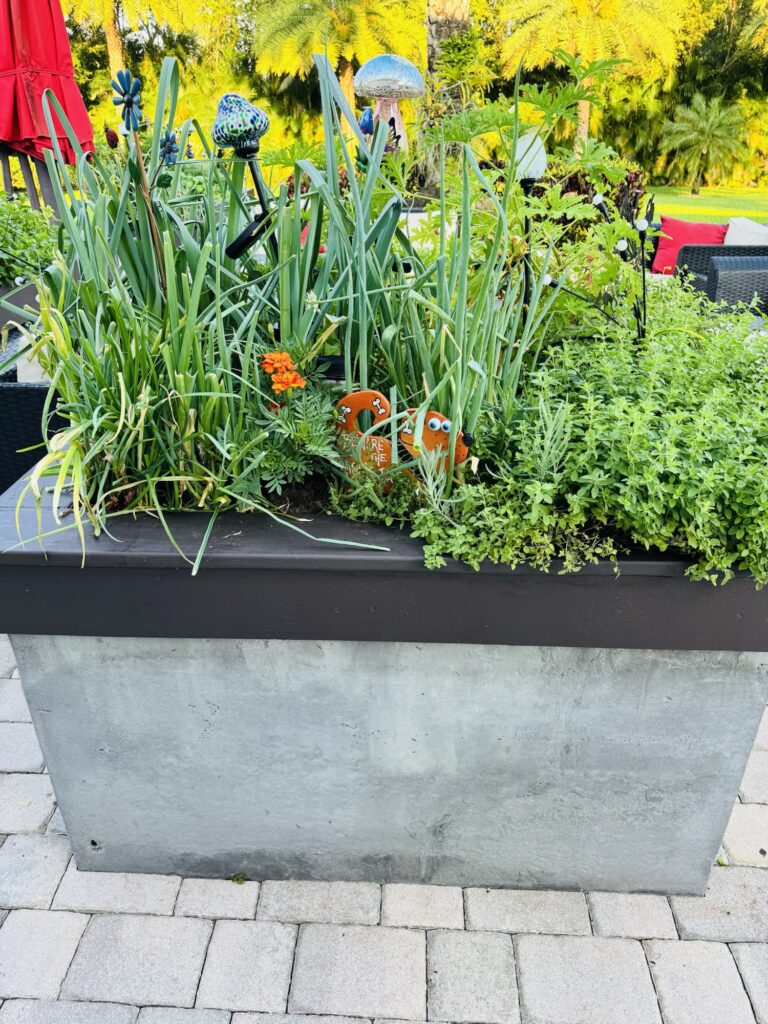
A thriving raised bed garden overflowing with fresh herbs and vegetables.
What Can You Grow in a Raised Bed? Discover the best vegetables, herbs, fruits, and flowers for a healthy, productive raised-bed garden. Raised beds offer a practical and productive way to grow food, herbs, and flowers at home. They provide better control over soil quality, drainage, watering, and garden layout, making them useful for both new and experienced gardeners. So, what can you grow in a raised bed? Almost any compact or moderately sized crop can thrive in one. Leafy greens, root vegetables, tomatoes, peppers, herbs, strawberries, and pollinator-friendly flowers are all excellent choices. Even larger plants can grow successfully when the bed provides enough soil depth and room for their roots. Choosing plants that suit the size, depth, sunlight, and climate of your garden will help you make the most of every available growing space. Why Grow Plants in a Raised Garden Bed? Raised beds allow gardeners to fill their growing areas with loose, fertile soil rather than relying entirely on the existing ground. This can be especially helpful in locations with compacted, rocky, poorly draining, or nutrient-deficient soil. Because raised beds are elevated, excess water can drain more easily. Their soil may also warm earlier in spring, allowing planting to begin sooner in some climates. The loose growing medium encourages roots to spread while making carrots and other underground crops easier to harvest. Raised beds can also be more comfortable to maintain because they require less bending and make weeds easier to reach. However, their soil may dry faster than the surrounding ground, particularly during hot or windy weather, so regular moisture checks are important. Best Vegetables to Grow in Raised Beds Vegetables are some of the best crops for raised beds. You can grow several types together as long as they have compatible sunlight, water, and spacing requirements. Leafy Greens Lettuce, spinach, arugula, kale, mustard greens, and Swiss chard grow especially well in raised beds. Their relatively shallow roots make them suitable for smaller beds, and many varieties mature quickly. Leafy greens generally prefer cool conditions and consistently moist soil. Succession planting can extend the harvest by replacing finished plants with new seedlings. In warm climates, afternoon shade may help slow bolting during the hotter parts of the season. Root Vegetables Loose, stone-free soil makes raised beds ideal for carrots, radishes, beets, turnips, onions, and garlic. Roots can develop more evenly when they do not have to push through hard or compacted ground. Choose shorter carrot varieties for shallow beds and longer varieties for deeper soil. Avoid adding excessive nitrogen, which can encourage leafy growth at the expense of well-developed roots. Tomatoes Tomatoes can thrive in raised garden beds when they receive full sun, fertile soil, regular water, and sufficient root space. Determinate tomatoes usually remain more compact, while indeterminate varieties continue growing and require tall, sturdy supports. Install cages, stakes, or trellises early so the roots are not disturbed later. Allow adequate space between plants to promote airflow and make harvesting easier. Peppers and Eggplants Sweet peppers, hot peppers, and eggplants appreciate the warm soil and sunny conditions that raised beds can provide. These crops perform best in fertile, well-draining soil with steady moisture. Compact varieties are useful for smaller gardens. Taller or heavily loaded plants may benefit from stakes to keep their branches upright. Cucumbers and Beans Cucumbers and climbing beans are productive choices when trained vertically. Growing them on a trellis saves ground-level space and can make the vegetables easier to find and harvest. Bush beans require less support but take up more horizontal room. Pole beans need a trellis, yet their upward growth can provide a generous harvest from a relatively small footprint. Zucchini and Summer Squash Zucchini and other summer squash can grow successfully in raised beds, but their large leaves require plenty of room. A single plant may occupy a substantial portion of a small bed. Compact or bush varieties are often the most manageable choice. Positioning the plant near an edge can allow some foliage to extend beyond the bed without shading smaller crops. Potatoes Potatoes can be grown in deep raised beds filled with loose, well-draining soil. They need enough room for the developing tubers and should not be crowded among crops with aggressive root systems. Growing potatoes in their own section can simplify planting, covering, and harvesting. Be careful when digging so the tubers are not damaged. Best Herbs for Raised Garden Beds Herbs are well suited to raised beds because many remain compact and can fill spaces between larger vegetables. Basil, parsley, cilantro, dill, chives, oregano, thyme, sage, and rosemary are popular options. Basil pairs naturally with warm-season crops because it enjoys similar sunny conditions. Parsley and chives can fit along bed edges, while cilantro and dill are useful cool-season selections. Not every herb prefers the same conditions. Basil and parsley generally appreciate regular moisture, while rosemary, thyme, oregano, and sage prefer faster-draining soil and drier conditions. Grouping herbs by their watering needs can make maintenance easier. Mint also grows vigorously and may spread through a raised bed. Keeping it in a separate container can prevent it from overwhelming neighboring plants. Fruits You Can Grow in Raised Beds Several compact fruiting plants can grow in raised beds, provided their soil and spacing requirements are met. Strawberries Strawberries are among the best fruits for raised beds. Their shallow roots and low-growing habit make them easy to place along edges, where runners and fruit can extend over the sides. The elevated growing area may help keep the berries away from wet soil. Mulch can further protect the fruit while helping the bed retain moisture. Blueberries Blueberries can grow in raised beds when the soil has the acidic conditions they require. They should not be planted in ordinary vegetable-bed soil without first checking whether the pH and growing medium are suitable. Because blueberries are perennial shrubs, give them a dedicated space where their long-term soil needs can be maintained without affecting vegetables that prefer a different pH. Raspberries and
Discover how raised bed gardening can transform small spaces and backyards into productive, beautiful gardens. Learn the benefits, planning tips, and best practices for growing vegetables, herbs, flowers, and fruits in raised garden beds. Whether you have a compact backyard, a tiny patio, or a limited outdoor space, raised bed gardening offers an easy and efficient way to grow a thriving garden. With thoughtful planning and smart design, even the smallest spaces can produce an impressive harvest of fresh vegetables, fragrant herbs, colorful flowers, and delicious fruits throughout the growing season. Raised bed gardening has become increasingly popular because it allows gardeners to maximize every square foot while creating an attractive and organized landscape. Instead of working with poor native soil or struggling with uneven ground, raised beds provide complete control over soil quality, drainage, and plant spacing. For beginner gardeners, raised beds simplify many common gardening challenges. For experienced gardeners, they create opportunities to experiment with succession planting, companion planting, and intensive growing methods that produce more food in less space. Why Raised Bed Gardening Works So Well in Small Spaces One of the greatest advantages of raised bed gardening is its ability to make every inch count. Traditional row gardening often leaves unused pathways and wasted growing areas. Raised beds eliminate much of that wasted space by concentrating plants into defined growing areas. Because the soil is never compacted by foot traffic, plant roots grow deeper and healthier. Healthy roots absorb water and nutrients more efficiently, resulting in stronger plants and larger harvests. Raised beds also warm up faster in spring, allowing many gardeners to begin planting earlier than they could with traditional in-ground gardens. Better drainage helps prevent root diseases while reducing problems caused by heavy rainfall. The clean, defined appearance of raised beds also makes gardens easier to maintain and far more visually appealing in small backyards. Choosing the Right Location Before building a raised bed, spend time selecting the ideal location. Most vegetables require at least six to eight hours of direct sunlight every day. Leafy greens and some herbs can tolerate partial shade, but fruiting crops such as tomatoes, peppers, squash, and cucumbers perform best in full sun. Choose an area that has easy access to water. Carrying watering cans across the yard quickly becomes tiresome during the heat of summer. Installing a nearby hose or drip irrigation system makes maintenance much easier. If possible, position beds where they are easy to reach from your home. Gardens that are visible from the kitchen window or back door are more likely to receive daily attention, making it easier to spot weeds, pests, or plants ready for harvest. Selecting the Right Size Raised beds come in many shapes and sizes, but certain dimensions make gardening easier. A width of about 4 feet allows you to comfortably reach the center from either side without stepping into the bed. Lengths can vary depending on your available space, with 6 to 8 feet being among the most popular options. Most raised beds are 10 to 18 inches deep, which provides plenty of room for vegetables, herbs, and flowers. Root crops such as carrots, parsnips, and potatoes often benefit from beds that are 18 to 24 inches deep. If mobility is a concern, taller raised beds can reduce bending while making gardening more comfortable. Building Materials Raised beds can be built from many durable materials. Natural untreated cedar is one of the most popular choices because it naturally resists decay and insects. Redwood is another long-lasting option that offers excellent durability. Composite boards provide a modern appearance while requiring little maintenance. Galvanized metal beds have become increasingly popular because they are durable, attractive, and resistant to rot. Stone, brick, or concrete block beds create a permanent landscape feature that can last for decades. Choose materials that match both your budget and the overall style of your landscape. The Importance of Quality Soil The success of any raised bed garden begins with the soil. A rich growing mix should provide excellent drainage while holding enough moisture to support healthy plant growth. An effective raised bed soil blend typically contains quality topsoil, finished compost, and coarse materials that improve aeration. Adding compost every season replenishes nutrients while improving soil structure naturally. Healthy soil encourages earthworms and beneficial microorganisms that support vigorous plant growth. Avoid filling raised beds entirely with inexpensive bagged garden soil, which can become compacted over time. Best Crops for Small Raised Beds Raised beds are remarkably versatile and can support a wide variety of edible crops. Leaf lettuce grows quickly and can be harvested repeatedly throughout the season. Spinach performs well during cooler weather and fits easily into compact spaces. Bush beans produce generous harvests without requiring large trellises. Tomatoes thrive in raised beds when supported with sturdy cages or stakes. Peppers enjoy the warm, well-drained soil that raised beds provide. Carrots, radishes, beets, and onions grow exceptionally well in loose, deep soil. Fresh herbs such as basil, parsley, thyme, oregano, rosemary, cilantro, dill, and chives fit perfectly into small gardens while providing fresh flavor for countless meals. Compact strawberry varieties also make excellent additions to raised beds. Maximize Every Square Foot One of the biggest advantages of raised bed gardening is the ability to grow intensively. Square foot gardening divides the bed into smaller planting sections, allowing different crops to grow together efficiently. Succession planting keeps beds productive by replacing harvested vegetables with new crops throughout the season. Vertical gardening allows cucumbers, peas, pole beans, squash, and even melons to grow upward using trellises, arches, or cages instead of spreading across valuable garden space. Interplanting fast-growing vegetables alongside slower crops ensures continuous harvests while making the most of every available inch. Companion Planting Companion planting helps maximize productivity while naturally reducing pest problems. Basil planted near tomatoes may help attract pollinators while creating a classic culinary pairing. Marigolds add vibrant color while encouraging beneficial insects throughout the garden. Nasturtiums attract pollinators and can also serve as trap
Discover the perfect plants for your USDA Hardiness Zone with our comprehensive gardening guide. From lettuce and tomatoes to herbs and flowers, learn how to maximize your raised beds and enjoy continuous harvests throughout the year.