Make this crispy Parmesan herb roasted acorn squash recipe with garlic, olive oil, and Italian herbs for an easy, flavorful gluten-free side dish.
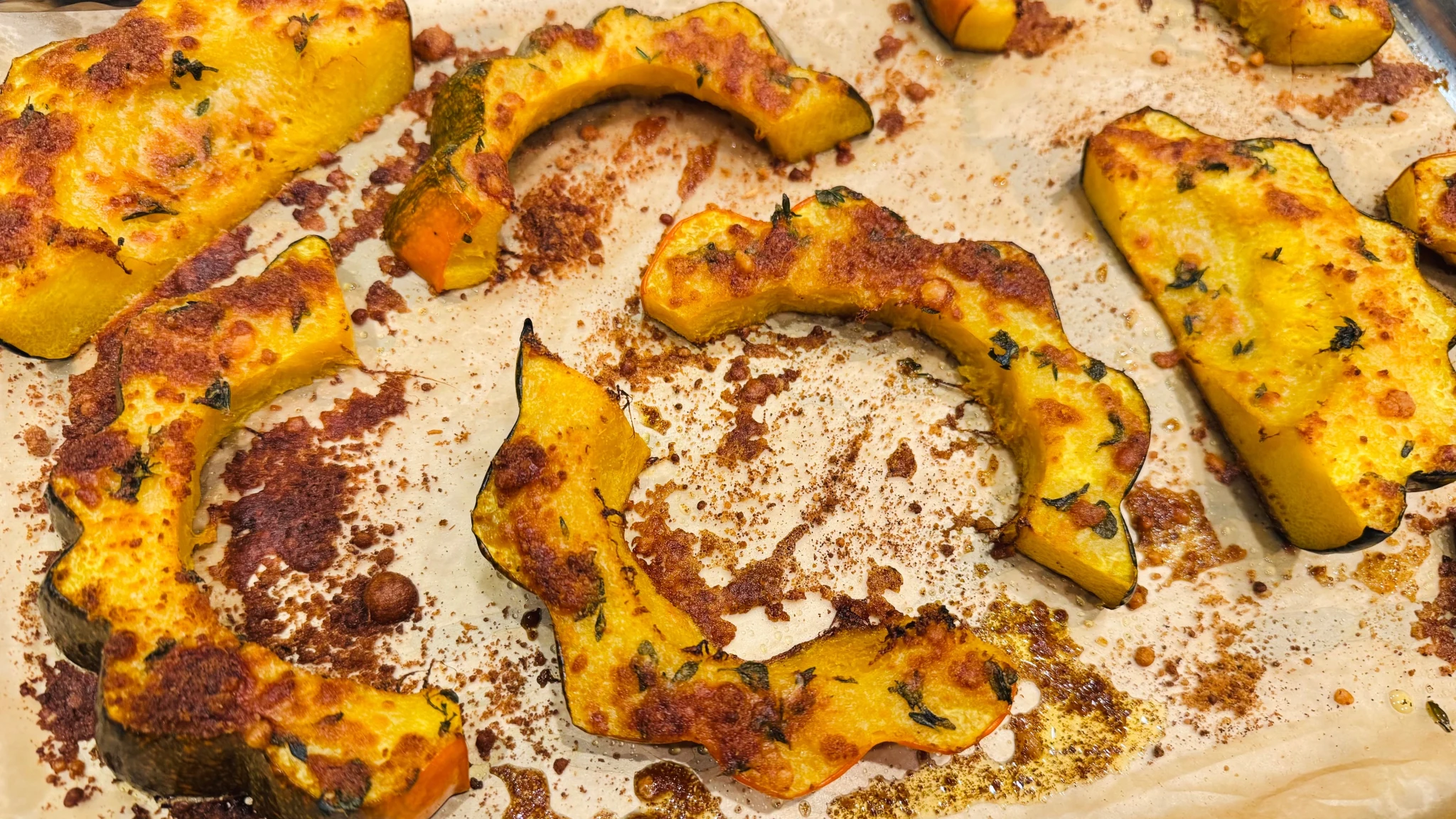
This Crispy Parmesan Herb Roasted Acorn Squash Recipe is a delicious way to enjoy the natural sweetness of acorn squash with a savory, golden Parmesan crust.
Fresh acorn squash is sliced into tender wedges, tossed with extra-virgin olive oil, freshly grated Parmesan cheese, garlic, and aromatic Italian herbs, then roasted until beautifully golden and lightly crispy around the edges.
Roasting brings out the squash’s naturally sweet, nutty flavor, while Parmesan cheese adds a rich, savory finish. Dried basil, thyme, and oregano create a wonderful balance of flavors that complements the creamy texture of the roasted squash without overpowering it.
This easy gluten-free acorn squash recipe is perfect for fall dinners, Thanksgiving celebrations, holiday gatherings, or anytime you want a flavorful vegetable side dish. It requires just a few simple ingredients and comes together in approximately 40 minutes, making it an excellent choice for both busy weeknights and special occasions.
One of the most appealing things about this Parmesan roasted acorn squash is the contrast between the tender squash and the golden cheese coating. As the squash roasts, the Parmesan develops lightly crisp edges while the herbs become wonderfully fragrant. The result is a beautiful, satisfying side dish that pairs especially well with roasted chicken, turkey, pork tenderloin, grilled fish, or vegetarian main courses.
Whether you are preparing a seasonal holiday menu or simply looking for a new way to enjoy winter squash, this Parmesan herb roasted acorn squash is an easy and flavorful addition to your table.
Prep Time: 15 minutes
Cook Time: 25 minutes
Total Time: 40 minutes
Servings: 6
Yield: Approximately 24 roasted acorn squash slices
Ingredients
2 small to medium acorn squash
1/4 cup extra-virgin olive oil
1 cup finely grated Parmesan cheese
1 teaspoon garlic powder
1/2 teaspoon kosher salt
1/2 teaspoon dried basil
1/2 teaspoon dried thyme
1/2 teaspoon dried oregano
Directions
Step 1: Preheat the Oven
Preheat the oven to 425°F. Line a large rimmed baking sheet with parchment paper to prevent sticking and make cleanup easier.
Choose a baking sheet large enough to accommodate the squash slices in a single layer. If necessary, use two baking sheets to avoid overcrowding, which can cause the squash to steam rather than roast.
Step 2: Prepare the Acorn Squash
Wash the acorn squash thoroughly under cool running water and pat dry with a clean kitchen towel.
Using a sharp knife, carefully trim a small portion from the top and bottom of each squash to create stable, flat surfaces.
Stand each squash on one of its flat ends and slice it in half lengthwise. Scoop out the seeds and stringy centers with a spoon.
Place each squash half cut-side down on a cutting board and slice into approximately 1-inch-thick half-moon wedges.
There is no need to peel the squash. The skin is edible and becomes tender during roasting while helping the slices maintain their shape.
Step 3: Prepare the Parmesan Herb Coating
Place the prepared acorn squash slices in a large mixing bowl.
Add the extra-virgin olive oil, finely grated Parmesan cheese, garlic powder, kosher salt, dried basil, dried thyme, and dried oregano.
Using clean hands or a large spatula, gently toss the squash until each slice is evenly coated with the Parmesan herb mixture.
Make sure the seasoning reaches both sides of the squash. The olive oil helps the Parmesan and herbs adhere to the surface while encouraging a golden finish during roasting.
Step 4: Arrange the Squash on the Baking Sheet
Transfer the coated squash slices to the prepared baking sheet, arranging them in a single layer with a little space between each piece.
If any Parmesan herb mixture remains in the mixing bowl, gently press it onto the exposed surfaces of the squash slices.
This additional coating creates a flavorful, golden Parmesan crust as the squash roasts.
Step 5: Roast Until Golden and Tender
Place the baking sheet on the center rack of the preheated oven.
Roast for 20 to 25 minutes, or until the squash is fork-tender and the Parmesan cheese is lightly golden.
The squash should have soft, creamy centers with beautifully roasted edges. Cooking time may vary slightly depending on the thickness of the slices.
If the squash is tender but the Parmesan needs additional color, continue roasting for another 2 to 3 minutes, watching carefully to prevent burning.
Step 6: Rest and Serve
Remove the baking sheet from the oven and allow the roasted squash to rest for 3 to 5 minutes.
This brief resting period allows the Parmesan coating to firm up slightly, making the slices easier to transfer without losing their flavorful crust.
Carefully arrange the squash on a serving platter and serve it warm.
For an elegant presentation, arrange the golden squash slices in overlapping rows or a circular pattern. The lightly caramelized edges and savory Parmesan coating make this dish especially beautiful for fall and holiday entertaining.
Notes
Select small to medium acorn squash that feels heavy for its size, with firm skin and no soft spots.
Freshly grated Parmesan cheese provides the best flavor and creates a golden, lightly crispy coating.
The skin is edible and becomes tender during roasting. Leaving it intact helps the slices maintain their shape.
Cut the squash into approximately 1-inch-thick slices for even roasting.
Substitute 1 1/2 teaspoons of finely chopped fresh herbs for each 1/2 teaspoon of dried herbs.
Arrange the squash in a single layer without overcrowding the baking sheet. Allow it to rest briefly after roasting so the cheese can firm up.
Wash, seed, and slice the squash up to 24 hours in advance. Refrigerate in an airtight container and add the Parmesan herb coating just before roasting.
Refrigerate leftovers in an airtight container for up to 3 to 4 days.
Reheat in a 400°F oven for 8 to 12 minutes, or until heated through.
Freezing is not recommended because the squash may become watery and the Parmesan coating can lose its crisp texture.