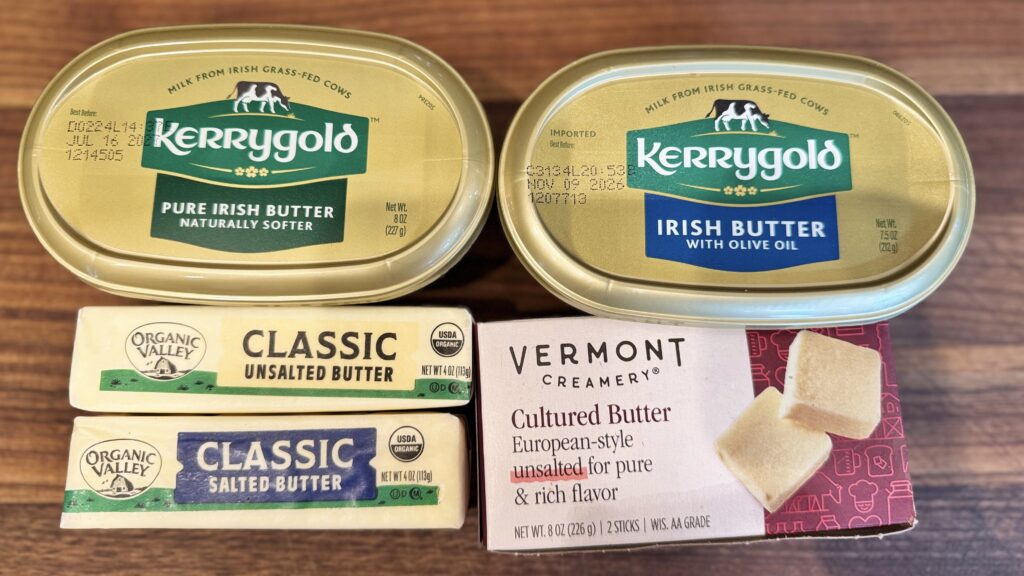
Different Types of Butter: A Complete Guide to Choosing the Best Butter for Baking, Cooking, and Spreading
Learn about the different types of butter, including unsalted, salted, cultured, Irish, European-style, clarified, ghee, and plant-based butter.
Butter can transform even the simplest food. A pat melting over warm bread, a spoonful stirred into mashed potatoes, or a generous amount worked into pastry dough adds richness, tenderness, flavor, and comfort.
Choosing butter can become confusing when the dairy aisle is filled with unsalted, salted, cultured, Irish, European-style, clarified, plant-based, and other specialty options. Although these products may look similar, differences in salt, butterfat, water content, flavor, and production methods can influence the finished dish.
Some types of butter create exceptionally flaky pastries. Others taste best spread over warm biscuits or used to finish vegetables. Clarified butter and ghee are particularly useful when cooking at higher temperatures.
Understanding the different types of butter makes it easier to select the right product for baking, cooking, and serving.
Why the Type of Butter Matters
Butter does much more than add flavor. In baking, it contributes moisture, tenderness, structure, and browning. It helps create crisp cookie edges, delicate cake crumbs, flaky pie crusts, and rich frostings.
Butter is equally valuable in savory cooking. It gives sauces a silky consistency, enriches mashed potatoes, encourages browning, and adds a smooth finish to pasta, vegetables, seafood, and meat.
Salt content affects seasoning, while butterfat and water content can influence texture. This is why professional bakers and chefs often select butter according to the particular dish they are preparing.
Unsalted Butter
Unsalted butter is made from cream without added salt. Its clean flavor and predictable seasoning make it the preferred choice for most baking recipes.
Using unsalted butter gives the baker complete control over the salt in cakes, cookies, brownies, pie crusts, pastries, and buttercream. It is especially helpful when following recipes that require precise measurements.
Unsalted butter is also extremely versatile in savory cooking. It can be melted into pasta, whisked into sauces, stirred into mashed potatoes, or used to finish steamed vegetables.
When a baking recipe calls for butter without identifying a specific variety, unsalted butter is generally the most reliable choice.
Salted Butter
Salted butter combines cream with added salt, creating a rich and pleasantly seasoned flavor. It is a convenient everyday option for spreading over toast, bagels, pancakes, waffles, biscuits, and dinner rolls.
It also works well on corn, baked potatoes, cooked vegetables, and other foods that benefit from a buttery finish.
Salted butter can be used in baking, but the amount of salt varies among brands. When substituting salted butter for unsalted butter, the additional salt in the recipe may need to be reduced. For the most consistent baking results, use the butter specified by the recipe whenever possible.
Cultured Butter
Cultured butter is made by fermenting cream with beneficial bacterial cultures before churning. This process develops a complex flavor that may be pleasantly tangy, nutty, or exceptionally creamy.
Its distinctive taste is easy to appreciate in dishes where butter is a prominent feature. Cultured butter is particularly delicious spread over artisan bread, croissants, biscuits, and scones.
It can also bring added depth to pound cake, shortbread, mashed potatoes, roasted vegetables, and butter-based sauces. Because flavor varies among producers, trying different brands is a good way to discover a favorite.
Irish Butter
Irish butter is known for its golden color, creamy consistency, and full flavor. Many Irish butters are produced with milk from grass-fed cows and contain more butterfat than standard American butter.
The higher butterfat content contributes to its smooth, luxurious texture. Irish butter tastes wonderful on fresh bread, dinner rolls, croissants, and baked potatoes. It also adds richness to mashed potatoes, roasted vegetables, shortbread, and special-occasion baked goods.
Although Irish butter can be used in many recipes, its distinctive flavor is best appreciated when it remains one of the main attractions.
European-Style Butter
European-style butter generally contains more butterfat and less water than standard American butter. Its rich flavor and pliable texture make it a favorite for pastry preparation.
The higher butterfat content can help produce flaky croissants, tender pie crusts, delicate Danish pastries, crisp butter cookies, and beautifully layered puff pastry.
European-style butter is not limited to products imported from Europe. Some domestic butter makers produce butter using similar methods and butterfat standards. Product labels can help shoppers compare butterfat percentages and choose the best option for a particular baking project.
Clarified Butter
Clarified butter is made by gently melting regular butter and separating the pure butterfat from the water and milk solids.
Removing the milk solids gives clarified butter a higher smoke point than whole butter. This makes it better suited to sautéing, pan-frying, searing, and other higher-heat cooking methods.
Clarified butter provides rich flavor without burning as quickly as regular butter. It works particularly well with seafood, chicken, steak, eggs, and vegetables.
Because most milk solids are removed, clarified butter differs from regular butter in both cooking performance and flavor. People with milk allergies should not assume it is allergen-free, since trace milk proteins may remain.
Ghee
Ghee is related to clarified butter, but it is cooked longer. During preparation, the milk solids brown before they are strained away, producing a deeper color and a rich, toasted, nutty flavor.
It has a long culinary history in South Asian cooking and is commonly used in curries, rice dishes, lentils, vegetables, and flatbreads. Its high smoke point also makes it useful for frying, roasting, grilling, and sautéing.
Ghee can add depth to many dishes outside traditional South Asian cuisine, particularly when a pronounced buttery flavor is welcome. Like clarified butter, it may retain trace milk proteins and should not automatically be considered suitable for someone with a milk allergy.
Plant-Based Butter
Plant-based butter offers an alternative for people who avoid dairy. These products may be made with avocado, olive, sunflower, coconut, canola, or other vegetable oils.
Some varieties are developed primarily for spreading, while others are formulated for baking. Plant-based sticks designed for baking generally provide more predictable results in cookies, cakes, quick breads, frostings, and pastries than soft spreads sold in tubs.
Flavor, water content, and melting behavior can vary considerably among brands. Checking the package for recommended uses is important before substituting plant-based butter in a favorite recipe.
Plant-based does not automatically mean allergen-free. Some products contain soy, coconut, nuts, or other allergens, so labels should be reviewed carefully when cooking for someone with dietary restrictions.
Sweet Cream Butter
Sweet cream butter is made from fresh, pasteurized cream rather than cultured or fermented cream. Despite its name, it does not necessarily contain added sugar.
Most standard American salted and unsalted butters are sweet cream butters. They have a mild, creamy flavor that works well in everyday cooking and baking.
Sweet cream butter is an excellent all-purpose choice for cookies, cakes, sauces, vegetables, pasta dishes, and spreading.
Whipped Butter
Whipped butter contains air that has been incorporated to create a softer, lighter consistency. It spreads easily, even when cool, making it convenient for toast, muffins, pancakes, and table service.
Because air changes its volume and density, whipped butter is not always an equal substitute for regular butter in baking. Recipes that measure butter by volume may receive less actual fat than intended.
Whipped butter is best reserved for spreading and finishing unless a recipe specifically calls for it.
Compound Butter
Compound butter is regular butter blended with flavorful additions such as herbs, garlic, spices, citrus zest, honey, or fruit.
Savory compound butter can be served over steak, seafood, corn, potatoes, or roasted vegetables. Sweet versions pair well with toast, waffles, pancakes, muffins, and warm biscuits.
Compound butter is an easy way to add concentrated flavor at the table. Since its additional ingredients may affect storage, it should be refrigerated and handled according to the most perishable ingredient it contains.
Which Butter Is Best for Baking?
Unsalted butter remains the most dependable choice for general baking because it allows precise control over seasoning.
European-style butter is particularly helpful for laminated doughs and other pastries that benefit from higher butterfat and lower moisture. Cultured or Irish butter can add exceptional flavor to shortbread, pound cake, butter cookies, and other baked goods in which butter plays a leading role.
Plant-based butter can work well in dairy-free baking, especially when the product is sold in sticks and labeled for baking. Soft tub spreads may contain more water and are less predictable in recipes that depend on solid fat for structure.
Which Butter Is Best for Cooking?
Unsalted butter is a versatile option for sauces, pasta, vegetables, and gentle stovetop cooking. Salted butter works well when its added seasoning complements the dish.
For sautéing, frying, and searing at higher temperatures, clarified butter and ghee are better choices because their milk solids have been removed. Ghee contributes a deeper, nuttier flavor, while clarified butter has a cleaner buttery taste.
Regular butter can still be used for stovetop cooking, but moderate heat helps prevent the milk solids from browning or burning too quickly.
Which Butter Is Best for Spreading?
Salted butter is a classic choice for toast, biscuits, muffins, pancakes, and dinner rolls. Its seasoning makes the butter taste especially rich without requiring any additional ingredients.
Cultured and Irish butters offer more distinctive flavors and can turn a simple slice of warm bread into something memorable. Whipped butter is convenient when an especially soft, easy-to-spread texture is desired.
Plant-based spreads are useful dairy-free options, although their flavors and textures differ among brands.
Which Butter Should You Keep in Your Kitchen?
For maximum versatility, unsalted butter is the best single variety to keep on hand. It works in both sweet and savory recipes and gives the cook complete control over seasoning.
Salted butter is a practical companion for spreading and everyday table use. Cultured, Irish, or European-style butter is worth keeping for special baking projects and occasions when butter flavor deserves extra attention.
Clarified butter or ghee is useful for higher-heat cooking. A baking-style plant-based butter is a valuable option when accommodating a vegan diet or avoiding dairy.
Keeping two or three varieties available provides enough flexibility for everything from flaky pastries and tender cookies to warm bread and seared vegetables.
How to Store Butter
Butter should be kept well wrapped in the refrigerator to preserve freshness and prevent it from absorbing odors from nearby foods. The original wrapper can be placed inside a covered container or resealable storage bag for additional protection.
Extra butter can be frozen for longer storage. Wrapping it securely helps protect its flavor and prevents freezer odors from affecting it. For the best quality, follow the storage guidance and date information printed on the package.
A small amount of butter may be kept in a covered butter dish for easier spreading. Room temperature storage depends on the type of butter, the temperature of the kitchen, and how quickly it will be used. Salted butter generally holds up better than unsalted butter at room temperature, but any butter that develops an unusual smell, flavor, color, or appearance should be discarded.
Plant-based butter and specialty butter products may have different storage requirements, so package instructions should always take priority.
Choosing Butter With Confidence
The best butter depends on how it will be used. Unsalted butter provides control and versatility, while salted butter excels as an everyday spread. Cultured, Irish, and European-style butters bring distinctive flavor and texture to special dishes. Clarified butter and ghee are practical choices for higher temperatures, and plant-based butter makes dairy-free cooking and baking more accessible.
Once you understand these differences, selecting butter becomes much simpler. Matching the butter to the dish can improve flavor, texture, browning, and consistency, helping every meal and baking project reach its full potential.
Discover creative garden entertaining ideas with homemade herb butter, beautiful garden ice cubes, and herb-infused cheese spreads. Learn how fresh herbs, edible flowers, and seasonal ingredients can transform appetizers, drinks, and charcuterie boards into unforgettable garden-to-table experiences Fresh herbs, edible flowers, and seasonal produce are some of the easiest ways to make your gatherings feel special. Whether you are hosting a backyard barbecue, holiday dinner, bridal shower, brunch, or casual family get-together, simple garden-inspired touches can transform ordinary food and drinks into beautiful conversation pieces. Garden ice cubes filled with colorful blooms, creamy herb butter bursting with fresh flavor, and homemade herb-infused cheeses are inexpensive to make, easy to prepare ahead of time, and guaranteed to impress your guests. Best of all, these creative entertaining ideas allow you to showcase the freshest ingredients from your own garden while adding vibrant colors and unforgettable flavors to your table. If you are looking for fresh entertaining inspiration, these simple ideas will help you create an elegant garden-to-table experience that your guests will remember long after the party ends. Why Garden-to-Table Entertaining Is More Popular Than Ever Garden-to-table entertaining has become a favorite for home cooks because it combines fresh ingredients with beautiful presentation. Instead of relying on expensive decorations or elaborate centerpieces, you can let herbs, edible flowers, and fresh produce become part of the décor. The result is a table that feels welcoming, seasonal, and naturally elegant. Some of the biggest benefits include: Fresh, vibrant flavors Natural colors that brighten every table Affordable ingredients grown at home Easy make-ahead recipes Less food waste by using herbs before they spoil A memorable presentation that feels both sophisticated and inviting These small details can elevate even the simplest gathering. Create Stunning Garden Ice Cubes That Wow Your Guests Garden ice cubes are one of the easiest ways to add elegance to beverages. They instantly make sparkling water, lemonade, iced tea, mocktails, cocktails, sangria, and infused water look restaurant worthy. Simply freeze edible flowers, herbs, fruit, or vegetables inside ice cube trays for a beautiful finishing touch. Some of the best ingredients include: Fresh mint leaves Lemon balm Rosemary sprigs Thyme Basil leaves Lavender buds Chamomile flowers Calendula petals Pansies Violas Nasturtiums Lemon slices Lime slices Orange zest Blueberries Raspberries Blackberries Cucumber slices Pomegranate seeds For crystal-clear ice cubes, use filtered water that has been boiled and cooled before freezing. Fill each compartment halfway and freeze until partially set. Add your herbs or flowers, then top with additional water before freezing completely. This simple method keeps the ingredients suspended throughout the cube for a much prettier presentation. Pair Garden Ice Cubes with Your Favorite Drinks Different herbs naturally complement different beverages, allowing you to customize drinks for every season and celebration. Mint and cucumber create refreshing sparkling water and mojitos. Lavender adds a delicate floral note to lemonade and champagne. Rosemary pairs beautifully with citrus cocktails and grapefruit spritzers. Basil enhances strawberry lemonade and Italian sodas. Chamomile gives iced tea a soft floral touch. Edible flower ice cubes also make wonderful additions to bridal showers, baby showers, Mother’s Day brunches, summer parties, and holiday gatherings. Homemade Garden Butter Adds Gourmet Flavor Few things are easier or more impressive than homemade compound butter. With just a few fresh herbs and quality butter, you can create a spread that tastes like it came from a fine dining restaurant. Start with softened unsalted butter and blend in finely chopped herbs, citrus zest, garlic, or spices. Popular flavor combinations include: Garlic and parsley Rosemary and thyme Basil with lemon zest Dill and fresh chives Roasted garlic and sage Tarragon and shallots Chives with cracked black pepper Honey and lavender Roll the butter into logs using parchment paper, press it into decorative molds, or pipe it into serving bowls for an elegant presentation. Delicious Ways to Use Herb Butter Homemade herb butter can elevate almost any meal. Spread it over warm artisan bread. Melt it onto grilled steaks. Top roasted vegetables. Finish baked potatoes. Serve with grilled seafood. Toss with fresh pasta. Brush onto corn on the cob. Slip it beneath chicken skin before roasting. Finish sautéed mushrooms. Add richness to baked fish. Because compound butter freezes beautifully, you can prepare several varieties well before your event. Herb-Infused Cheese Spreads Make Easy Elegant Appetizers Fresh herbs instantly transform ordinary cheese into something worthy of a special occasion. Cream cheese, goat cheese, ricotta, mascarpone, whipped feta, and even cottage cheese become flavorful spreads with just a handful of fresh herbs. Some favorite combinations include: Goat cheese with thyme and honey Cream cheese with dill and chives Ricotta with basil and roasted garlic Whipped feta with oregano and parsley Mascarpone with lavender and lemon zest Cream cheese with rosemary and cracked pepper Allow the cheese to chill for several hours before serving so the herbs have time to infuse their flavor. Build a Beautiful Garden-Inspired Charcuterie Board Homemade herb cheeses become the centerpiece of an unforgettable grazing board. Pair them with colorful fresh ingredients like cucumbers, cherry tomatoes, radishes, snap peas, berries, grapes, figs, and seasonal fruit. Add gluten-free crackers, artisan breads, roasted nuts, olives, fig preserves, honey, and fresh herbs to complete the display. Scatter edible flowers across the board just before serving for an eye-catching finishing touch that looks as beautiful as it tastes. Grow Herbs That Make Entertaining Easy You do not need a large vegetable garden to enjoy fresh herbs throughout the year. Many herbs thrive in containers, window boxes, and raised beds, making them perfect for gardeners of every skill level. Some of the most versatile herbs for entertaining include basil, mint, rosemary, thyme, parsley, sage, chives, dill, oregano, tarragon, lemon balm, and lavender. Having these herbs growing nearby makes it easy to prepare fresh butters, cheeses, garnishes, infused beverages, and appetizers whenever guests stop by. Decorate Naturally with Edible Flowers Edible flowers are one of the simplest ways to create a memorable presentation. Their vibrant colors instantly brighten drinks, appetizers, desserts, salads, and charcuterie
Learn the best lard replacement ratios for baking and cooking. Discover how to substitute butter, shortening, coconut oil, olive oil, avocado oil, and other alternatives while maintaining flavor, texture, and perfect results in every recipe. Whether you are baking a flaky pie crust, frying crispy chicken, or preparing homemade biscuits, lard has long been one of the most trusted cooking fats. Its high fat content and smooth texture make it a favorite ingredient for creating tender pastries, golden crusts, and flavorful savory dishes. However, there are many reasons you may need to replace lard. Dietary preferences, ingredient availability, or simply running out of lard can all leave you searching for the best alternative. Fortunately, replacing lard is easier than many people think. The key is understanding how different fats behave during cooking and baking. Since lard is nearly 100 percent fat with virtually no water, some substitutes perform almost identically while others require slight adjustments to maintain the desired texture and consistency. By learning the proper lard replacement ratios, you can confidently adapt your favorite recipes without sacrificing flavor or quality. Why Lard Performs So Well Lard is rendered pork fat that has been used in kitchens around the world for generations. It is prized because it creates exceptionally flaky pie crusts, tender biscuits, crisp pastries, and moist baked goods. Unlike butter, lard contains almost no water, allowing doughs to remain light and less prone to gluten development. Its relatively high smoke point also makes it an excellent choice for frying, roasting, and sautéing. These qualities make lard difficult to duplicate exactly, but several common ingredients come remarkably close. Replacing Lard with Butter Butter is often the first substitute people reach for because it is readily available in most kitchens. It contributes a rich, creamy flavor that enhances cookies, cakes, pie crusts, biscuits, and pastries. Because butter contains approximately 80 percent fat and 20 percent water, baked goods may be slightly softer and less flaky than those made with lard. Even so, butter remains one of the easiest and most reliable substitutions for everyday baking. Use butter in an equal amount when replacing lard in most recipes. Using Vegetable Shortening Vegetable shortening is widely considered the closest substitute for lard because it shares a similar texture and nearly identical fat content. Since it contains very little moisture, it creates pastries and pie crusts with excellent flakiness while maintaining tenderness. Unlike lard, shortening has a neutral flavor, making it an excellent option when you want other ingredients to stand out. Replace lard with an equal amount of vegetable shortening for the closest results. Coconut Oil as a Plant Based Alternative Coconut oil has become increasingly popular for both baking and cooking. Because it solidifies at cooler temperatures, it behaves much like lard in many recipes. Refined coconut oil has very little flavor, making it suitable for both sweet and savory dishes. Virgin coconut oil has a more noticeable coconut aroma that works especially well in tropical desserts and baked treats. For pastries and pie dough, chill the coconut oil before mixing it into the flour to help create flaky layers. Use coconut oil in equal amounts when replacing lard. Cooking with Vegetable Oil Liquid oils such as vegetable oil, canola oil, avocado oil, sunflower oil, and light olive oil are excellent choices for sautéing, roasting, marinades, and many cakes or quick breads. However, because these oils remain liquid at room temperature, they cannot create the same flaky texture as solid fats. When substituting liquid oil for lard, using slightly less oil generally produces better results while preventing baked goods from becoming overly greasy. Liquid oils are best reserved for recipes where moisture is more important than flakiness. Avocado Oil Avocado oil has a mild flavor and a high smoke point, making it an outstanding replacement for lard in frying, roasting, grilling, and sautéing. It also works well in savory baked goods where a neutral taste is desired. Because avocado oil is liquid, it is not the best option for pie crusts or laminated pastries. Olive Oil Olive oil adds richness and depth to breads, pizza dough, focaccia, savory muffins, and Mediterranean-inspired recipes. Mild or light olive oil works better in baking than extra virgin olive oil because its flavor is less pronounced. Olive oil performs exceptionally well in recipes where moisture is preferred over flakiness. Vegan Butter Modern vegan butter has improved dramatically and has become an excellent substitute for traditional lard in many baking recipes. Most brands contain a balance of plant oils that closely mimic the performance of dairy butter. Vegan butter works particularly well in cookies, biscuits, pie crusts, and pastries while providing a dairy-free and plant based alternative. Bacon Fat For savory recipes, rendered bacon fat can provide a delicious replacement for lard. It delivers a smoky richness that enhances cornbread, roasted vegetables, fried potatoes, biscuits, and Southern-style cooking. Because bacon fat has a pronounced flavor, it is generally not recommended for desserts or delicate pastries. Choosing the Best Lard Substitute There is no single substitute that works perfectly for every recipe. The ideal replacement depends on what you are preparing and the final texture you hope to achieve. Butter is ideal when flavor is the priority. Vegetable shortening provides the closest match to lard for flaky pastries. Coconut oil is an excellent plant based alternative. Avocado oil is perfect for high-heat cooking. Olive oil shines in breads and savory dishes. Vegan butter offers excellent versatility for dairy-free baking. Bacon fat adds incredible flavor to savory comfort foods. Understanding these differences allows you to choose the best ingredient for every recipe rather than relying on a single substitute for every situation. Making Successful Recipe Substitutions Whenever you replace lard, remember that every fat behaves differently. Solid fats create flaky layers because they remain firm until they melt during baking. Liquid oils coat flour differently, resulting in softer, more tender baked goods. The more closely a substitute matches the fat content and consistency of lard, the more
Explore the world of strata and bread pudding, two dishes that celebrate the beauty of simple ingredients and the joy of home cooking. From their savory layers to their comforting textures, each dish offers a unique culinary experience.