Thyme Growing Guide: How to Grow Healthy, Flavorful Thyme in Your Herb Garden
Discover essential planting, sunlight, soil, watering, pruning, harvesting, and seasonal care tips in this complete Thyme Growing Guide for garden beds and containers.
Thyme is a fragrant perennial herb that brings beauty, flavor, and versatility to the garden. Its tiny leaves deliver an earthy, savory taste that complements vegetables, poultry, fish, soups, sauces, breads, and many other dishes. When allowed to flower, thyme also produces delicate blossoms that attract bees and other beneficial pollinators.
One of thyme’s greatest strengths is its ability to thrive with relatively little attention once established. This Mediterranean herb prefers abundant sunshine, excellent drainage, and lean soil. It generally needs less water and fertilizer than moisture-loving herbs, making it a practical choice for water-conscious gardens, raised beds, rock gardens, and containers.
Although thyme is often described as easy to grow, it can struggle in wet, compacted soil. Choosing the right planting location and avoiding excessive watering are the most important steps for maintaining healthy, flavorful plants. With suitable conditions and occasional pruning, thyme can provide fresh harvests throughout the growing season and return for several years in many climates.
Understanding the Thyme Plant
Thyme belongs to the mint family and includes hundreds of species and cultivars with different growth habits, fragrances, flavors, flower colors, and levels of cold tolerance. Some plants form upright, shrubby mounds, while others spread close to the ground.
Common thyme, botanically known as Thymus vulgaris, is one of the most familiar culinary types. It develops small, aromatic leaves on slender stems that gradually become woody as the plant matures. English, French, German winter, and lemon thyme are also popular in culinary gardens, although flavor and growing habits vary by cultivar.
Creeping thyme is generally grown as an ornamental ground cover, edging plant, or filler between stepping stones. Some creeping varieties are aromatic, but not every ornamental thyme has the flavor or texture desired for cooking. If culinary use is your priority, choose a plant specifically labeled as an edible culinary thyme.
Is Thyme an Annual or a Perennial?
Most thyme varieties are evergreen or semi-evergreen perennials in suitable climates. Common thyme is often hardy in approximately USDA Zones 5 through 9, but winter survival depends on the cultivar, regional weather, soil drainage, exposure, and protection from severe cold.
Wet winter soil can be more damaging to thyme than cold temperatures alone. In colder or particularly rainy regions, planting thyme in a raised bed, rock garden, slope, or well-draining container may improve its chances of surviving winter.
Gardeners outside a variety’s recommended growing range can treat thyme as an annual or bring container-grown plants into a bright, protected location during cold weather. Always check the label for the particular species or cultivar you are growing, since hardiness is not identical across all types of thyme.
Choosing the Best Thyme Variety
Common thyme is an excellent all-purpose selection for an herb garden. It has the familiar savory flavor associated with many Mediterranean and European dishes.
English thyme typically has a strong, traditional flavor and works well in soups, stews, roasted vegetables, stuffing, and meat dishes. French thyme is often selected for its refined fragrance and slightly sweeter flavor. German winter thyme is valued in many gardens for its culinary quality and improved cold tolerance.
Lemon thyme offers a bright citrus fragrance that pairs especially well with fish, poultry, vegetables, marinades, and herbal beverages. Variegated cultivars can add visual interest, but their growth rate and cold tolerance may differ from solid-green varieties.
Creeping and woolly thyme create attractive mats around stones, pathways, and borders. These low-growing plants are usually selected for their ornamental qualities rather than dependable culinary harvests.
How Much Sun Does Thyme Need?
Plant thyme in a location that receives at least six hours of direct sunlight each day. Full sun encourages compact growth, strong fragrance, abundant leaves, and better flowering. Plants grown in too much shade may become thin, leggy, or less flavorful.
In extremely hot climates, thyme may tolerate some light afternoon shade, especially when grown in a container that heats up quickly. Even in warm regions, the plant should still receive several hours of bright, direct sunlight.
Good air circulation is also beneficial. Avoid squeezing thyme between dense plants that trap moisture around its foliage and stems. A sunny, open location allows leaves and soil to dry more efficiently after rain or watering.
The Best Soil for Growing Thyme
Excellent drainage is essential for growing healthy thyme. The plant performs well in light, loose, or somewhat gritty soil that does not remain saturated. Heavy clay and low areas where water collects can expose the roots and crown to rot.
Before planting in dense soil, improve the planting area by creating a raised bed or selecting another naturally well-drained location. Adding organic matter may improve soil structure, but avoid creating an overly rich, moisture-retentive bed. Thyme generally develops satisfactory flavor and compact growth in moderately fertile or relatively lean soil.
A slightly acidic to neutral soil is suitable for many varieties. A soil test can provide more useful guidance than guessing, particularly if thyme and other herbs have struggled in the same garden area.
When and How to Plant Thyme
Thyme can be planted outdoors in spring after the danger of severe frost has passed and the soil has begun to warm. In mild climates, fall planting may also be successful if the roots have enough time to establish before stressful weather arrives.
Dig a hole approximately as deep as the plant’s root ball and slightly wider. Position the crown at or just above the surrounding soil level. Planting too deeply can trap moisture around the base of the stems and increase the risk of decay.
Spacing depends on the cultivar’s mature width. Many upright culinary thyme plants can be spaced approximately 10 to 12 inches apart, while spreading varieties may require additional room. Consult the plant label for mature dimensions and allow enough space for air to circulate.
Water the new plant thoroughly after planting. Keep the soil lightly moist while the roots become established, but do not leave it continually wet.
Growing Thyme From Seed
Thyme can be grown from seed, although germination and early growth may be slow. Starting with a nursery plant, rooted cutting, or division usually produces a usable plant more quickly.
To start thyme indoors, sow the tiny seeds on the surface of a light seed-starting mix and press them gently into place. Because the seeds need light for germination, cover them only minimally, if at all. Keep the medium lightly moist rather than soggy and provide warmth and bright light.
After the seedlings develop several sets of leaves, thin or transplant them carefully. Harden indoor-grown seedlings gradually before moving them into the garden. Seed-grown plants may vary in flavor, fragrance, appearance, and growth habit, especially when the seeds come from hybrid or open-pollinated garden plants.
Watering Thyme Correctly
Newly planted thyme needs regular moisture while it develops roots, but established plants are relatively drought tolerant. Allow the upper portion of the soil to dry before watering again.
Water deeply enough to moisten the root zone, then let excess water drain away. Frequent shallow watering can encourage weak roots, while constant moisture can lead to yellow foliage, poor growth, and root or crown rot.
Container-grown thyme usually dries faster than thyme planted in the ground. Check the potting mix with your finger rather than following a rigid schedule. Water when the mix feels dry below the surface, and empty any saucer that collects standing water.
Does Thyme Need Fertilizer?
Thyme generally needs little supplemental fertilizer. Excess nitrogen may produce soft, floppy growth with a weaker fragrance and can make the plant less resilient.
In average garden soil, a modest application of compost around the planting area may provide sufficient nutrition. Avoid piling compost or mulch against the crown. Container plants may benefit from a diluted, balanced fertilizer during active growth, but frequent heavy feeding is unnecessary.
If the plant has pale leaves or weak growth despite proper sunlight and drainage, consider testing the soil before adding more fertilizer. Overwatering, root damage, insufficient light, and poor drainage can resemble nutrient problems.
Pruning Thyme for Healthy Growth
Regular light trimming helps thyme remain compact and encourages tender new stems. Harvesting the growing tips during spring and summer often provides much of the pruning a healthy plant needs.
After flowering, lightly shape the plant and remove spent blossoms if desired. Avoid cutting deeply into old, bare wood because some mature plants may not regrow reliably from leafless stems. Leave green growth on the plant whenever possible.
Older thyme plants naturally become woody and less productive. Spring pruning can stimulate fresh growth, but a severely woody plant may be easier to replace with a rooted cutting, division, or new transplant. Renewal every few years can keep a culinary thyme patch tender and productive.
Growing Thyme in Containers
Thyme adapts beautifully to containers, making it suitable for patios, balconies, sunny windows, and small gardens. Select a pot with an unobstructed drainage hole and fill it with a loose, fast-draining potting mix.
Avoid using a container that is excessively large for the root system, since a large volume of damp potting mix can remain wet for too long. Terracotta pots are useful in humid or rainy climates because their porous walls allow moisture to evaporate more readily, although they may require more frequent watering during hot weather.
Place outdoor containers where they receive abundant sunlight. Indoor thyme needs the brightest available window and may benefit from a suitable grow light when natural daylight is limited. Keep indoor plants away from heat vents and inspect the leaves periodically for spider mites and other pests.
Container-grown thyme may be less cold hardy than the same variety planted in the ground because its roots are more exposed to temperature changes. Move the pot to a sheltered location or provide appropriate winter protection based on your climate and cultivar.
Common Thyme Problems
Overwatering and poor drainage cause many of the problems associated with thyme. Yellowing leaves, dark stems, wilting in wet soil, or a declining center may indicate root or crown rot. Correct the drainage problem promptly, reduce watering, and remove badly damaged material. Severely affected plants may not recover.
Sparse, stretched growth usually indicates insufficient light. Move container plants to a sunnier location, or transplant garden thyme if nearby plants are creating too much shade.
Spider mites can occasionally affect thyme, particularly when plants are grown indoors in hot, dry conditions. Fine webbing, stippled leaves, or faded foliage may signal an infestation. Isolate affected indoor plants and identify the pest before selecting an appropriate treatment.
Crowded foliage and persistently wet conditions can also encourage fungal problems. Proper spacing, morning watering, good air movement, and clean pruning tools help reduce disease pressure.
Propagating Thyme
Thyme can be propagated through cuttings, division, layering, or seed. Cuttings and divisions are especially useful because they preserve the characteristics of a favorite cultivar.
To propagate from a cutting, select a healthy, nonflowering shoot with tender new growth. Remove the lower leaves and place the stem in a moist, well-draining propagation medium. Keep it in bright, indirect light while roots develop.
Established plants can be divided in spring. Lift the plant carefully and separate it into smaller rooted sections, making sure each division has both roots and healthy top growth. Replant the divisions promptly and keep them lightly moist while they become established.
Low stems may also root where they touch the soil. Once a layered stem has formed its own roots, it can be separated from the parent plant and transplanted.
Harvesting Thyme for the Best Flavor
Thyme can be harvested throughout active growth. For the most concentrated fragrance, gather stems shortly before the plant flowers. Harvest on a dry morning after the dew has evaporated.
Use clean scissors or garden snips to cut the tender upper stems. Avoid removing too much of a young or stressed plant at one time. Leaving plenty of green growth allows the plant to continue producing energy and recover quickly.
Flowers can be left on some stems to support bees and other small pollinators. Other stems can be harvested before blooming for their flavorful leaves. This approach provides both culinary harvests and ecological value.
Fresh thyme can be wrapped loosely in a slightly damp paper towel and refrigerated for short-term use. For longer storage, freeze the leaves or dry small bundles in a shaded, dry, well-ventilated location. Store completely dried thyme in an airtight container away from heat, moisture, and direct light.
Cooking With Garden-Fresh Thyme
Fresh thyme has an earthy, woodsy flavor with subtle floral, minty, and clove-like notes. Lemon thyme adds a distinctly citrusy fragrance. The small leaves can be stripped from tender stems, while whole sprigs can be added to slowly cooked dishes and removed before serving.
Thyme pairs naturally with tomatoes, mushrooms, potatoes, beans, carrots, onions, garlic, poultry, fish, lamb, eggs, and many cheeses. It also complements soups, sauces, roasted vegetables, breads, savory baked dishes, and herbal infusions.
Unlike some delicate herbs, thyme holds its flavor well during longer cooking. Add whole sprigs early when you want the herb to season a soup, braise, or stew gradually. Use tender fresh leaves near the end when a brighter herbal finish is preferred.
Only consume plants that are positively identified as culinary thyme and have not been treated with products unsuitable for edible crops. Ornamental plants purchased without edible-use labeling should not automatically be assumed safe for the kitchen.
Using Thyme in the Garden
Thyme works well along sunny herb-garden borders, in raised beds, beside stone paths, and near vegetables that will not shade it. Its compact form softens hard edges while keeping aromatic leaves within easy reach.
Low-growing varieties can spread between stepping stones or form small-scale ground covers. Their tolerance for occasional foot traffic varies, so place them where they will not be crushed repeatedly. Good drainage remains essential, especially around stones where water may collect.
The small pink, lavender, or white flowers add seasonal color and provide nectar for bees and other beneficial insects. Allowing part of the plant to bloom creates an attractive transition between a culinary garden and a pollinator-friendly landscape.
Caring for Thyme Through the Seasons
In spring, inspect established plants for winter damage and remove dead stems once new growth begins. Lightly shape healthy plants, divide crowded clumps, and replace specimens that have become excessively woody.
During summer, harvest regularly and water only when the soil has dried sufficiently. Container plants need closer monitoring during hot or windy weather, but they should never remain in standing water.
In fall, avoid severe pruning that could encourage tender growth before freezing weather. In cold regions, protect the roots with a light, airy mulch after the ground becomes cold, keeping heavy material away from the plant’s crown.
Winter care depends on the variety and climate. In-ground plants need protection from waterlogged soil and repeated freeze-and-thaw cycles. Indoor thyme should receive strong light, restrained watering, and good air circulation.
A Flavorful and Dependable Garden Herb
Thyme rewards gardeners who give it sunshine, drainage, and room to breathe. Once established, this compact perennial asks for little more than careful watering, regular harvesting, and occasional pruning.
Whether grown in a sunny garden bed, tucked beside a pathway, or placed in a container near the kitchen, thyme provides attractive foliage, pollinator-friendly flowers, and deeply aromatic leaves. Selecting an appropriate cultivar and recreating the plant’s preferred dry, sunny conditions will help you enjoy healthier plants and more flavorful harvests year after year.
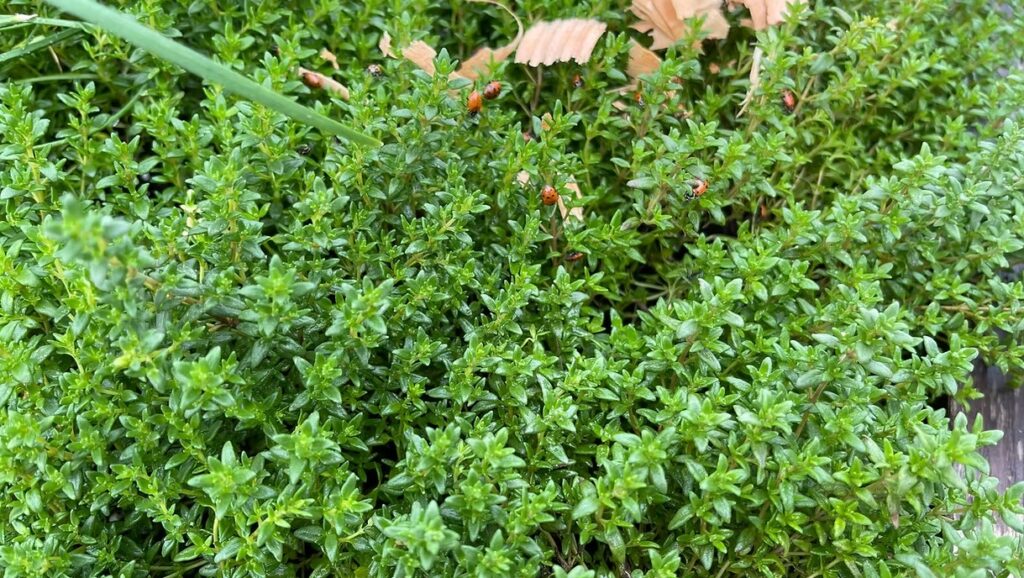
Ladybugs gather throughout a lush patch of fresh garden thyme.
Learn how to grow variegated thyme with guidance on sunlight, soil, watering, pruning, harvesting, containers, propagation, and garden design. Variegated thyme brings color, fragrance, texture, and culinary versatility to the garden. Its tiny green leaves are edged or splashed with shades of cream, silver, white, or gold, creating a bright contrast against darker foliage. When brushed or gently crushed, the leaves release the familiar herbal scent of thyme, sometimes with hints of lemon depending on the variety. This compact herb works beautifully along sunny borders, beside pathways, in rock gardens, between ornamental plants, and in patio containers. Many varieties retain their foliage throughout much or all of the year in suitable climates, providing interest even when other garden plants are dormant. Small flowers appearing in late spring or summer can also supply nectar and pollen for bees and other beneficial insects. Despite its delicate appearance, variegated thyme is generally a resilient, low-maintenance plant when given abundant sunlight and excellent drainage. Understanding its specific variety, growth habit, and regional hardiness will help you choose the right planting location and enjoy healthy growth for years. What Is Variegated Thyme? Variegated thyme refers to thyme varieties with leaves displaying more than one color. Rather than having solid green foliage, these plants may feature creamy margins, silvery edges, golden patches, or irregular color patterns. Different variegated cultivars can vary in fragrance, flavor, size, growth habit, and cold tolerance. Some grow as small, upright mounds, while others spread close to the ground. Lemon-scented selections contribute a fresh citrus fragrance, while other varieties have the earthy, peppery character associated with traditional culinary thyme. Popular examples include ‘Silver Posie,’ ‘Doone Valley,’ ‘Golden Lemon,’ and ‘Lemon Variegated.’ Plant names and classifications may vary among nurseries, so read the plant label carefully to understand the cultivar’s mature size, hardiness, and recommended uses. Why Grow Variegated Thyme? Variegated thyme is both ornamental and useful. Its multicolored foliage adds definition to garden edges and helps brighten gravel gardens, patios, and mixed herb beds. The leaves provide visual interest on a small scale, making the plant particularly appealing beside stones, pavers, terracotta pots, and plants with deep green or purple foliage. The fragrance is another important benefit. Planting thyme near a walkway, seating area, or raised bed allows its aromatic foliage to be appreciated whenever the plant is touched. Its flowers can support visiting pollinators, while its leaves may provide fresh flavor for cooking when the selected cultivar is sold as a culinary herb. Choosing the Right Variety Begin by deciding whether appearance, culinary flavor, ground coverage, or container performance is your priority. A compact, upright variety is usually easier to harvest, while a low-growing selection can soften the edge of a pathway or spill gracefully over a container. Leaf color also influences garden design. Silver and cream varieties pair beautifully with lavender, sage, ornamental grasses, and pale stone. Golden varieties bring warmth to borders and create an attractive contrast with purple basil, dark-leaved ornamentals, or blue-green foliage. If you want to cook with the plant, purchase it from a reputable nursery and confirm that the specific variety is intended for culinary use. Avoid harvesting plants treated with products that are not approved for edible crops. The Best Location for Variegated Thyme Variegated thyme performs best in a warm location with full sun. Aim for at least six hours of direct sunlight each day whenever possible. Strong light encourages dense growth, supports the foliage coloration, and helps keep the soil from remaining wet for extended periods. A sheltered location can be helpful in areas with cold winds, heavy winter rain, or high humidity. Good air circulation is still important, so avoid crowding thyme beneath vigorous neighboring plants. Variegated thyme is especially well suited to rock gardens, gravel beds, raised beds, sunny slopes, and containers. These settings often provide the fast drainage that Mediterranean herbs prefer. Soil and Drainage Requirements Drainage is one of the most important factors in growing healthy thyme. The plant generally prefers light, lean soil that does not remain soggy after rain or watering. Sandy, gravelly, or loamy soil can work well when excess water drains away quickly. Heavy clay or persistently damp soil can lead to root and stem deterioration, particularly during winter. Instead of trying to grow thyme in a waterlogged location, plant it in a raised bed or container where moisture is easier to manage. Thyme usually grows well in neutral to alkaline conditions, although exact preferences can vary. If you are uncertain about your garden soil, a soil test can help identify its pH and drainage characteristics. Avoid enriching the planting area with excessive fertilizer or large amounts of moisture-retentive organic matter. Very fertile conditions can encourage weak, floppy growth and may reduce the plant’s compact appearance. How to Plant Variegated Thyme Spring through early summer is an excellent time to plant thyme in many climates because the roots have time to become established before winter. In warmer regions, fall planting may also be suitable if the plant will not face prolonged cold or saturated soil shortly afterward. Dig a hole approximately as deep as the plant’s root ball and slightly wider. Place the thyme at the same depth it was growing in its nursery pot. Planting the crown too deeply can trap moisture around the stems and encourage decay. Allow enough room for the cultivar’s mature spread. A compact variety may remain relatively small, while a creeping selection can form a wider mat. Check the plant label for cultivar-specific spacing guidance. Water thoroughly after planting to settle the soil around the roots. Continue monitoring moisture while the plant becomes established, but do not keep the soil continually wet. Growing Variegated Thyme in Containers Containers provide excellent drainage and make it easier to position variegated thyme where its fragrance and colorful leaves can be enjoyed. Choose a pot with unobstructed drainage holes and use a loose potting mix formulated for herbs, Mediterranean plants, or other plants that require free-draining conditions. A container should be
Discover everything you need to know about growing Italian parsley. Learn how to plant, care for, harvest, and use this versatile culinary herb with expert gardening tips, companion planting advice, and delicious kitchen inspiration in this Italian Parsley growing guide. Italian parsley is one of the most rewarding herbs you can add to your garden. Loved by home gardeners and professional chefs alike, this fragrant herb produces lush green foliage, thrives in a variety of growing conditions, and delivers fresh flavor throughout the growing season. Whether you have a spacious backyard, a raised garden bed, or a sunny windowsill, Italian parsley is easy to grow and provides a continuous supply of fresh herbs for countless recipes. Unlike curly parsley, which is often used as a garnish, Italian parsley is prized for its bold, fresh flavor and tender leaves. It is a staple in Mediterranean cooking and enhances everything from soups and sauces to salads, roasted vegetables, seafood, and pasta dishes. Beyond its culinary value, Italian parsley is rich in vitamins, minerals, and antioxidants, making it one of the healthiest herbs you can grow. If you are searching for an herb that is productive, beautiful, and incredibly versatile, Italian parsley deserves a permanent place in your garden. What Is Italian Parsley? Italian parsley, also known as flat-leaf parsley, is a biennial herb in the carrot family. Although it naturally lives for two years, most gardeners grow it as an annual to enjoy its abundant foliage during the first growing season. Native to the Mediterranean region, Italian parsley has smooth, flat leaves that are darker green and more aromatic than curly parsley. The plant typically reaches between 12 and 24 inches tall and develops sturdy stems filled with flavorful leaves. During its second year, it produces clusters of tiny yellow-green flowers that attract bees, butterflies, hoverflies, ladybugs, and other beneficial insects before eventually producing seed. Its dependable growth habit, exceptional flavor, and ornamental appearance have made Italian parsley one of the most popular herbs in gardens around the world. A Brief History of Italian Parsley Italian parsley has been cultivated for thousands of years. Ancient civilizations in Greece and Rome valued parsley for both culinary and medicinal purposes. While the Greeks often associated parsley with celebrations and ceremonies, the Romans incorporated it into everyday cooking, appreciating both its flavor and health benefits. As Mediterranean cuisine spread across Europe and eventually around the world, Italian parsley became an essential ingredient in countless traditional recipes. Today, it remains one of the most widely grown culinary herbs and is considered indispensable in kitchens everywhere. Why Grow Italian Parsley? Italian parsley offers far more than fresh herbs for cooking. It is an attractive addition to vegetable gardens, herb beds, and decorative containers while providing months of continuous harvests. Gardeners appreciate Italian parsley because it grows quickly, requires relatively little maintenance, attracts pollinators, and pairs well with many vegetables and herbs. Its lush foliage adds texture and vibrant green color to the garden, while frequent harvesting encourages even more vigorous growth. Fresh parsley also provides a flavor that simply cannot be matched by dried herbs. Having a plant just steps from your kitchen means you can harvest exactly what you need whenever inspiration strikes. Choosing the Perfect Growing Location Selecting the right location is one of the most important steps toward growing healthy Italian parsley. This herb grows best in an area that receives six to eight hours of sunlight each day. In regions with especially hot summers, afternoon shade helps protect the leaves from scorching while keeping the plants productive. Italian parsley also appreciates locations with good air circulation. Proper airflow helps reduce humidity around the foliage, lowering the risk of fungal diseases while promoting healthier growth. Whether planted directly in the ground, in raised beds, or in decorative containers, parsley performs best in a location that combines sunlight, well-drained soil, and consistent moisture. Soil Requirements Healthy soil creates healthy parsley plants. Italian parsley thrives in fertile, well-draining soil enriched with organic matter. Before planting, mix compost or well-aged manure into the soil to improve fertility, increase moisture retention, and encourage strong root development. The ideal soil pH ranges from 6.0 to 7.0, which allows the plant to absorb nutrients efficiently. Avoid planting in compacted soil or areas where water tends to collect. Excessively wet conditions can lead to root rot and other fungal problems that reduce the plant’s vigor. How to Plant Italian Parsley Italian parsley can be started from seed or purchased as young nursery plants. Growing from seed requires a bit of patience because parsley seeds naturally germinate slowly. It often takes two to four weeks before seedlings emerge. Soaking the seeds overnight before planting helps soften the seed coat and encourages faster germination. Plant seeds about one-quarter inch deep in moist soil and keep the planting area consistently damp until seedlings appear. Once plants are several inches tall, thin or space them approximately 8 to 12 inches apart. Proper spacing encourages healthy air circulation and gives each plant enough room to mature. If transplanting nursery-grown parsley, water thoroughly immediately after planting to reduce transplant shock and encourage root establishment. Watering Italian Parsley Consistent watering is the secret to lush, productive parsley plants. Italian parsley prefers evenly moist soil, especially during warm weather. Water deeply whenever the top inch of soil begins to dry, allowing moisture to penetrate into the root zone. Applying a layer of organic mulch around the base of the plants helps conserve moisture, suppress weeds, and regulate soil temperatures throughout the growing season. Container-grown parsley dries out faster than plants growing in garden beds, so check the soil regularly and water whenever necessary. Fertilizing for Continuous Growth Because parsley is grown primarily for its leafy foliage, regular feeding helps maintain healthy production. Incorporate compost into the soil before planting to provide slow-release nutrients. Throughout the growing season, apply a balanced organic fertilizer every four to six weeks. Compost tea or fish emulsion can also provide gentle nutrition while
Lavender and chamomile companion planting is one of the easiest and most rewarding ways to create a beautiful, fragrant, and productive herb garden. These two beloved herbs have been cultivated for centuries for their ornamental beauty, calming aromas, culinary uses, and medicinal properties. Together, they form a stunning combination that not only enhances your landscape but also supports pollinators, attracts beneficial insects, and contributes to a healthier garden ecosystem. Whether you are planning a cottage garden, designing a pollinator-friendly landscape, or creating an edible herb garden, lavender and chamomile companion planting offers countless benefits. Their complementary growth habits, similar cultural requirements, and long-lasting blooms make them an ideal pairing for gardeners of all skill levels. What Is Lavender and Chamomile Companion Planting? Lavender and chamomile companion planting is the practice of growing these two herbs together because they thrive under similar growing conditions and provide mutual benefits within the garden. While companion planting cannot eliminate every gardening challenge, it encourages biodiversity, supports beneficial insects, and creates a balanced growing environment. Lavender adds striking vertical spikes of fragrant purple flowers, while chamomile produces delicate white blossoms with cheerful yellow centers. Together they create a classic cottage garden display that is both elegant and functional. Their flowers bloom over an extended period, providing a continuous source of nectar for pollinators while filling the garden with color and fragrance. Benefits of Lavender and Chamomile Companion Planting One of the greatest advantages of lavender and chamomile companion planting is the abundance of pollinators it attracts. Honeybees, native bees, butterflies, hoverflies, and other beneficial insects are drawn to their nectar-rich flowers throughout the growing season. As pollinators visit these herbs, they also improve the pollination of nearby vegetables, fruit trees, berry bushes, and flowering ornamentals. A garden filled with pollinators is often healthier, more productive, and more resilient. Lavender and chamomile also attract beneficial insects such as ladybugs, lacewings, parasitic wasps, and hoverflies. These natural predators help control aphids, whiteflies, spider mites, and other common garden pests, reducing the need for chemical pesticides. Lavender’s aromatic foliage contains naturally fragrant essential oils that may help discourage mosquitoes, moths, fleas, and certain flying insects. While no single plant completely prevents pests, incorporating aromatic herbs into your landscape contributes to a more balanced garden ecosystem. Another advantage of lavender and chamomile companion planting is its simplicity. Since both herbs enjoy similar growing conditions, caring for them together is easy and efficient. Growing Conditions for Lavender and Chamomile Successful lavender and chamomile companion planting begins with choosing the right location. Both herbs grow best in full sun and require at least six to eight hours of direct sunlight each day. Plenty of sunshine encourages compact growth, abundant blooms, and stronger fragrance. Well-drained soil is essential for healthy plants. Lavender thrives in sandy or gravelly soil that drains quickly, while chamomile prefers fertile, loose soil with good drainage. Incorporating compost before planting improves soil structure without sacrificing drainage. Lavender becomes highly drought tolerant once established and prefers the soil to dry slightly between waterings. Chamomile appreciates moderate moisture during dry periods but should never remain in waterlogged soil. Providing adequate spacing between plants encourages good airflow, reduces humidity around the foliage, and minimizes the risk of fungal diseases. The Best Companion Plants for Lavender and Chamomile Although lavender and chamomile thrive together, they also pair beautifully with many other herbs, vegetables, flowers, and fruit-producing plants. Excellent companion plants include rosemary, thyme, sage, oregano, basil, calendula, borage, yarrow, echinacea, roses, strawberries, blueberries, tomatoes, peppers, eggplant, broccoli, cabbage, cauliflower, and many drought-tolerant flowering perennials. These companions benefit from increased pollinator activity while creating a diverse and visually appealing garden. Plants to Avoid To ensure successful lavender and chamomile companion planting, avoid placing lavender near plants that require constantly moist soil. Mint, celery, hostas, watercress, and other moisture-loving plants have watering requirements that differ significantly from lavender. Excess moisture around lavender roots can lead to root rot and poor plant performance. Grouping plants with similar moisture needs simplifies watering and promotes healthier growth throughout the garden. Culinary Uses of Lavender and Chamomile Lavender and chamomile companion planting provides more than ornamental beauty. Both herbs are edible and offer a variety of culinary possibilities. Lavender flowers add delicate floral notes to teas, shortbread cookies, cakes, muffins, scones, ice cream, custards, infused honey, lemonade, simple syrups, sugar blends, and Herbes de Provence seasoning. Lavender also complements roasted vegetables, poultry, lamb, seafood, and grilled dishes. Chamomile flowers are widely enjoyed in herbal teas, infused honey, syrups, jellies, cakes, cookies, fruit salads, custards, smoothies, and homemade desserts. Their mild apple-like flavor makes them a versatile ingredient for both sweet and savory recipes. Growing both herbs together provides a convenient harvest of fresh flowers throughout the growing season. Harvesting Lavender and Chamomile Harvest lavender stems when approximately one-third to one-half of the flowers have opened. At this stage, the blossoms contain the highest concentration of aromatic oils and dry exceptionally well. Chamomile flowers should be harvested once they are fully open. Frequent harvesting encourages additional blooms, providing a continuous supply throughout the season. Dry the flowers in a cool, shaded location with good air circulation before storing them in airtight containers away from direct sunlight. Growing Lavender and Chamomile in Containers Lavender and chamomile companion planting is not limited to garden beds. These herbs also thrive in containers, making them excellent choices for patios, balconies, porches, and small-space gardens. Select containers with drainage holes and fill them with a high-quality, well-draining potting mix. Place containers where they receive plenty of sunlight, and water carefully, allowing the soil to dry slightly between waterings. Container-grown herbs bring fragrance, beauty, and fresh culinary ingredients within easy reach. Why Lavender and Chamomile Companion Planting Belongs in Every Garden Lavender and chamomile companion planting combines ornamental beauty with practical gardening benefits. Their shared growing requirements make them easy to cultivate together, while their abundant flowers support pollinators, attract beneficial insects, and enhance biodiversity throughout the landscape. Whether you are growing herbs for
Originally published
March 2026
Updated
August 2026
Reviewed by
Culibloom