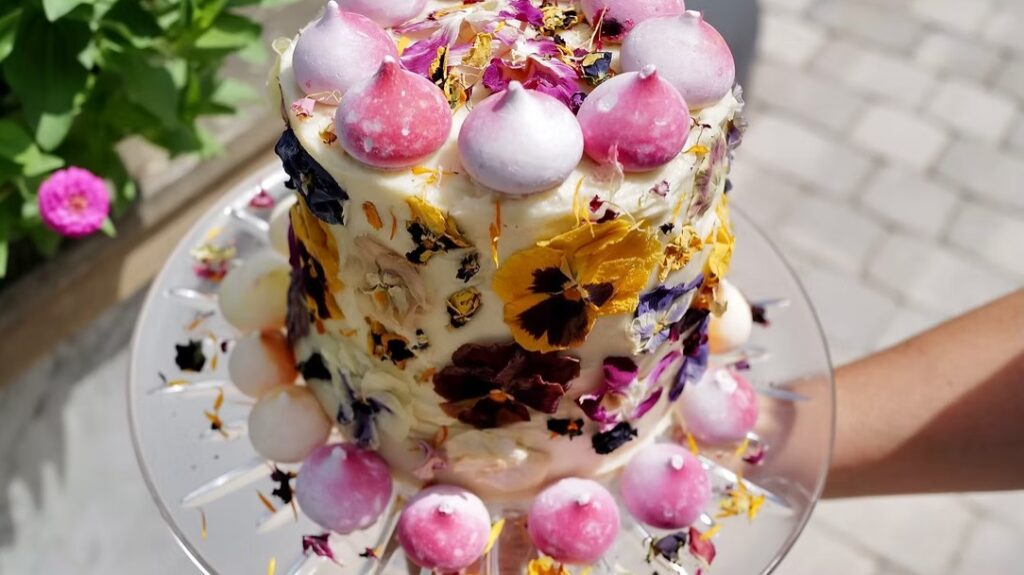
Bright, elegant, and beautifully fragrant, this Gluten-Free Yuzu Cake with Lavender Buttercream combines refreshing citrus flavor with delicate floral notes. Yuzu brings a lively blend of lemon, mandarin orange, and grapefruit flavors, while the silky lavender buttercream gives the cake a sophisticated finish.
This cake offers a refreshing change from more traditional chocolate or vanilla layer cakes. The vibrant yuzu flavor balances the sweetness of the frosting, creating a dessert that tastes light, aromatic, and memorable.
Decorated with edible flowers and filled with a colorful surprise center, this cake is perfect for birthdays and other joyful celebrations. It also makes a beautiful centerpiece for bridal showers, garden parties, Mother’s Day gatherings, spring events, and elegant afternoon teas.
A Special Cake for My Birthday
I chose this Gluten-Free Yuzu Cake with Lavender Buttercream for my birthday because I wanted a dessert that felt elegant, joyful, and a little different from a traditional celebration cake. The bright citrus flavor of yuzu gave every bite a refreshing quality, while the delicate lavender buttercream added a beautiful floral finish.
Decorated with edible flowers and filled with a colorful surprise center, the cake looked just as special as the occasion felt. Revealing the hidden sprinkles when I cut the first slice added a playful moment to the celebration.
This beautiful gluten-free cake made my birthday even more memorable. I loved how the fresh citrus flavor, delicate floral frosting, and cheerful decorations came together, and I especially enjoyed sharing it with everyone around the table.
What Makes Yuzu Special
Yuzu is an aromatic citrus fruit known for its complex flavor and intensely fragrant peel. Although it shares qualities with several familiar citrus fruits, its flavor is distinctive. It can be tart, floral, slightly bitter, and wonderfully refreshing.
The bright acidity of yuzu keeps a sweet layer cake from feeling too heavy. It also complements rich buttercream by adding a clean citrus finish to every bite.
Fresh yuzu can be difficult to find in some areas, but culinary-grade yuzu juice and yuzu oil make its flavor more accessible. Any oil used in food should be specifically labeled for culinary use. Fragrance oils and products intended for aromatherapy are not suitable for baking or eating.
Choosing a Gluten-Free Flour Approach
A gluten-free yuzu cake can be made with a custom combination of individual flours and starches or with a measure-for-measure gluten-free flour blend. These are two separate approaches, so it is important to choose one option rather than combining them.
A custom gluten-free flour blend offers more control over the texture of the cake. Sweet rice flour can help create softness and flexibility, while white and brown rice flours contribute structure. Tapioca flour can make the crumb lighter and help the ingredients hold together.
A measure-for-measure gluten-free flour blend offers a simpler approach because the necessary flours, starches, and binders are generally combined in one package. Results can Ring vary among brands, so choosing a blend intended for cakes and similar baked goods is important.
Regardless of the flour option selected, the goal is a tender cake that supports the frosting without becoming dry, dense, or crumbly.
The Delicate Flavor of Lavender Buttercream
Lavender has a strong natural aroma, so a subtle touch is often all that is needed. When used carefully, it gives buttercream a gentle botanical quality without making the frosting taste perfumed.
Vanilla softens the floral character of lavender, while butter and cream create a smooth, familiar foundation. Together, these flavors form a silky frosting that complements the bright yuzu cake.
Only culinary-grade lavender oil or lavender specifically sold for food should be used in desserts. Decorative dried lavender should also be labeled for culinary use.
The balance between yuzu and lavender is what makes this cake so distinctive. The citrus keeps the floral notes feeling fresh, and the lavender gives the yuzu a softer, more elegant finish.
A Colorful Surprise Inside
The hidden center brings a playful element to an otherwise sophisticated cake. From the outside, the cake appears elegant and polished. Once the first slice is removed, colorful sprinkles or edible flower confetti spill from the center.
This unexpected detail is especially fun for a birthday cake. It creates a memorable moment when the cake is cut and gives guests another reason to gather around the dessert table.
The surprise filling can coordinate with the colors used on the outside of the cake. Soft pastels create a romantic spring look, while brighter colors give the cake a lively birthday-party personality.
Edible flower confetti and candied petals can continue the botanical theme. Traditional sprinkles offer a more playful contrast to the refined yuzu and lavender flavors.
Decorating with Edible Flowers
Fresh edible flowers are a natural choice for decorating a yuzu and lavender cake. Their colors and delicate shapes complement the floral frosting while helping the cake feel connected to spring and garden-inspired celebrations.
Pansies, violas, calendula, borage, and certain varieties of roses are often used as edible decorations. However, a flower should never be placed on food simply because the variety is sometimes edible. It should be positively identified, grown without unsafe chemicals, and sold or harvested specifically for culinary use.
Florist flowers may be treated with pesticides or preservatives that are not intended for consumption. They should not be used on the cake unless they are confirmed to be food-safe.
Candied flower petals, dried culinary lavender, edible flower confetti, and colorful sprinkles are attractive alternatives when fresh edible flowers are unavailable. These decorations can add color and texture while preserving the cake’s elegant botanical theme.
A Beautiful Cake for Spring Entertaining
The fresh flavor and floral appearance of this cake make it ideal for spring and summer entertaining. Its soft colors look beautiful alongside seasonal flowers, pastel table linens, delicate serving pieces, and citrus-inspired decorations.
For a bridal shower or afternoon tea, the cake can be styled with pale flowers and subtle lavender accents. For a birthday, brighter sprinkles and cheerful edible decorations can make it feel more playful and personal.
The cake also fits naturally into garden-party celebrations. The combination of yuzu, lavender, and edible flowers reflects the freshness and color of an outdoor setting.
Although its appearance is elegant, the cake does not need an elaborate table arrangement. A simple cake stand, a few carefully selected decorations, and a clean background allow the colors and floral details to stand out.
Serving and Pairing Ideas
Gluten-Free Yuzu Cake with Lavender Buttercream pairs beautifully with tea, coffee, and refreshing citrus beverages. Earl Grey tea highlights the citrus and floral flavors, while green tea provides a lighter and more delicate pairing.
Jasmine or chamomile tea can emphasize the botanical character of the lavender buttercream. A simple cup of coffee offers a familiar contrast to the cake’s unusual flavor combination.
Fresh berries are another lovely accompaniment. Strawberries, blueberries, raspberries, and blackberries add natural color, gentle sweetness, and a touch of acidity.
Because the cake already has several aromatic elements, simple accompaniments work best. A few berries, an edible flower, or a small spoonful of citrus curd can enhance the presentation without overwhelming the yuzu and lavender.
Keeping the Cake Gluten-Free
Every packaged ingredient should be checked for appropriate gluten-free labeling. Flour blends, baking powder, confectioners’ sugar, flavoring oils, sprinkles, edible confetti, candied petals, and other decorations can vary by manufacturer.
Clean equipment and preparation areas are also essential when serving someone with celiac disease or gluten sensitivity. Mixing bowls, cake pans, utensils, mixers, decorating tools, cake stands, and work surfaces should be clean and free from crumbs or residue containing gluten.
Cross-contact can also occur through shared containers and serving utensils. Careful preparation and presentation help ensure that the finished cake remains suitable for the intended guests.
A Birthday Cake to Remember
This Gluten-Free Yuzu Cake with Lavender Buttercream brought together everything I wanted for my birthday. It was colorful, elegant, fragrant, and filled with a little surprise.
The lively yuzu flavor made the cake feel refreshing, while the lavender buttercream added just enough floral sweetness. Edible flowers created a beautiful finish, and the hidden sprinkles brought an extra sense of celebration when the cake was sliced.
Most importantly, it was a cake made for sharing. Enjoying it with the people around me turned a beautiful dessert into a meaningful birthday memory.
A vibrant gluten-free yuzu cake decorated with floral lavender buttercream, edible blossoms, and delicate meringue kisses.
Discover how to add texture to cakes with sprinkles and edible glitter. Learn simple cake decorating techniques, creative design ideas, and expert tips for beautiful homemade cakes. A beautifully decorated cake is often the centerpiece of a celebration, capturing attention before the first slice is ever served. While smooth buttercream and elegant piping create a classic finish, adding texture gives a cake extra dimension, personality, and charm. One of the simplest ways to achieve this is with sprinkles and edible glitter. These easy-to-use decorations can transform even the most basic cake into a bakery-worthy masterpiece. At Culibloom, we believe that cake decorating should be both creative and approachable. Whether you are baking a gluten-free birthday cake, an elegant wedding dessert, or a festive holiday treat, learning how to add texture to cakes with sprinkles and edible glitter for stunning cake decorations will help you create desserts that are every bit as beautiful as they are delicious. Why Texture Makes a Cake More Beautiful Texture is one of the most overlooked elements of cake decorating. It creates depth, catches the light, and gives every cake a more polished appearance. A smooth layer of buttercream provides the perfect canvas, but adding decorative accents creates visual interest that makes your cake stand out. Texture also makes cakes feel more inviting. Layers of color, sparkle, and decorative finishes draw guests in and make the dessert feel like the highlight of any celebration. Decorating with Sprinkles Sprinkles remain one of the easiest and most versatile cake decorating tools available. They come in countless colors, shapes, and finishes, making them suitable for birthdays, weddings, baby showers, holidays, and everyday celebrations. Classic jimmies create a cheerful look, while tiny nonpareils provide a delicate textured coating. Confetti sprinkles add playful color, sugar pearls offer timeless elegance, and sanding sugar creates beautiful sparkle without overpowering the design. One of the easiest techniques is pressing sprinkles onto the sides of a freshly frosted cake. While the buttercream is still soft, gently press the sprinkles against the cake until the sides are evenly coated. This simple method instantly transforms a plain cake into a colorful showpiece. Sprinkles can also be arranged around the top edge of the cake, scattered over piped frosting, or used to create decorative borders and patterns. Mixing different sprinkle sizes and colors creates additional dimension and makes the design feel more custom. How Edible Glitter Adds Sparkle Edible glitter creates an entirely different type of texture by adding shimmer rather than crunch. Available in shimmering dusts, flakes, and fine powders, edible glitter reflects light beautifully and gives cakes an elegant finish. A light dusting over buttercream creates a subtle glow that looks stunning in photographs. For a bolder appearance, edible glitter can be concentrated on decorative flowers, drip cakes, piped borders, or fondant details. Even a small amount adds elegance and enhances the overall design. Combine Sprinkles and Edible Glitter for Maximum Impact Some of the most beautiful cakes combine both sprinkles and edible glitter. Sprinkles provide colorful texture while edible glitter adds sparkle and depth. Together they create layers of visual interest that make homemade cakes look professionally decorated. Imagine a smooth vanilla buttercream cake decorated with pastel confetti sprinkles around the base and finished with a soft dusting of iridescent edible glitter across the top. The combination feels festive, elegant, and balanced without becoming overwhelming. Choose Colors That Match Your Celebration Color selection plays a major role in creating a cohesive cake design. Coordinating sprinkles and edible glitter with your celebration theme helps produce a polished finished look. Soft pastel colors work beautifully for spring celebrations, baby showers, and Easter desserts. Gold, silver, and pearl accents create timeless elegance for weddings and anniversaries. Bright rainbow sprinkles paired with shimmering glitter make cheerful birthday cakes that delight both children and adults. Seasonal colors also make decorating easier. Rich reds and greens are perfect for Christmas, orange and black create festive Halloween cakes, while soft pinks, yellows, and lavender shades celebrate spring. Add Texture Beyond the Visual Appeal Texture is not only about appearance. Sprinkles introduce a satisfying crunch that contrasts beautifully with soft cake layers and creamy buttercream frosting. This combination creates a more enjoyable eating experience while making every bite feel special. Layering different decorative elements also gives cakes more depth and dimension, making them appear more detailed and thoughtfully designed. Tips for Decorating Success Apply sprinkles while the frosting is still fresh so they adhere easily without falling away from the cake. Use edible glitter sparingly. A light dusting often creates a more elegant appearance than applying too much. Decorate over a baking sheet or parchment paper to catch excess sprinkles so they can be reused. Step back occasionally while decorating to evaluate the overall balance of color and texture before adding more decorations. Storing Decorated Cakes Proper storage helps preserve both the appearance and texture of your decorations. Keep cakes in a cool, dry location away from direct sunlight. Excess humidity can soften sprinkles and reduce the sparkle of edible glitter. If refrigerating the cake, allow it to come to room temperature before serving for the best flavor and texture. Let Your Creativity Shine One of the greatest advantages of decorating with sprinkles and edible glitter is the freedom to experiment. Mix colors, combine textures, and try different decorating techniques until you find a style that reflects your personality. There are no strict rules, only endless creative possibilities. Whether you are decorating a simple family dessert or an elaborate celebration cake, these decorative touches make every cake feel extra special. At Culibloom, we believe every homemade cake deserves a beautiful finishing touch. With just a handful of sprinkles, a touch of edible glitter, and a little creativity, you can transform an everyday cake into a stunning centerpiece that your family and guests will remember long after the last slice has been enjoyed.
Learn how to use edible flowers for a natural touch in cake decorating. Discover the best edible blooms, decorating tips, and garden-inspired ideas for elegant homemade cakes. Turn Garden Blooms into Stunning Cake Decorations There is something truly magical about decorating a cake with fresh edible flowers. Their delicate petals, vibrant colors, and natural elegance create desserts that feel both sophisticated and welcoming. At Culibloom, we love finding ways to bring the beauty of the garden into the kitchen, and edible flowers are one of our favorite ways to create memorable cakes for every occasion. Whether you are baking for a birthday, wedding, baby shower, brunch, or family gathering, edible flowers can transform even the simplest frosted cake into a breathtaking centerpiece. They add color, texture, and seasonal charm while celebrating the connection between gardening and baking. Best of all, decorating with edible flowers does not require years of cake decorating experience. With a little planning and a handful of carefully chosen blooms, anyone can create a dessert that looks professionally decorated while maintaining a fresh, natural appearance. Why Edible Flowers Make Beautiful Cake Decorations Fresh flowers have long been used to decorate celebration cakes, but edible flowers offer something even more special because they are both beautiful and safe to enjoy. Their soft textures and naturally occurring colors create an organic look that pairs perfectly with homemade desserts. Unlike plastic decorations or brightly colored candy toppings, edible flowers provide elegance without overwhelming the cake. They complement buttercream, whipped cream, cream cheese frosting, and even simple powdered sugar finishes. Each bloom tells a story of the season, making every cake feel unique and connected to nature. The Best Edible Flowers for Decorating Cakes Choosing the right flowers is the first step toward creating a beautiful floral cake. Many edible flowers are prized for their appearance as well as their mild flavors. Pansies and violas are among the most popular because they bloom in a wide variety of colors and maintain their shape well after decorating. Roses offer timeless beauty, especially when individual petals are scattered across buttercream or arranged around the top of a cake. Lavender adds both fragrance and elegance while pairing beautifully with vanilla, honey, and lemon flavored cakes. Nasturtiums introduce bold shades of orange, yellow, and red, making them ideal for vibrant summer desserts. Chamomile creates a charming cottage garden appearance with its tiny white blossoms and sunny yellow centers. Calendula provides cheerful golden petals that brighten cakes while adding a subtle herbal note. Cornflowers bring rich blue hues that create striking contrast against white frosting. Harvest Flowers with Care One of the most important aspects of decorating with flowers is making sure they are safe to eat. Never use flowers from florists or garden centers unless they are specifically labeled for culinary use. These flowers may have been treated with pesticides or preservatives that are not suitable for food. If you grow edible flowers in your own garden, harvest them early in the morning when they are fully open and well hydrated. Select blossoms that are fresh, vibrant, and free from insect damage. Homegrown edible flowers allow you to decorate cakes with ingredients you have nurtured from seed to bloom, making each dessert even more meaningful. Preparing Flowers Before Decorating Fresh flowers should always be cleaned before they touch your cake. Rinse each blossom gently under cool running water to remove dust and tiny insects. Lay them on a clean towel and allow them to dry completely before arranging them on the cake. Remove any damaged petals and trim stems as needed. When stems will be inserted into a cake, always use food safe floral picks or wrap them with food safe floral tape to create a protective barrier. Proper preparation helps preserve both the beauty of the flowers and the quality of your dessert. Pair Flowers with Seasonal Flavors One of our favorite ways to decorate cakes at Culibloom is by combining edible flowers with fresh fruits and herbs harvested from the garden. Bright strawberries, juicy blueberries, fresh raspberries, figs, peaches, and citrus slices create colorful displays alongside edible flowers. Fresh herbs such as mint, thyme, rosemary, and lemon balm introduce greenery that enhances the natural arrangement without overpowering the flowers. These combinations create cakes that celebrate the flavors and beauty of each season while offering guests an unforgettable presentation. Decorating Ideas for Every Cake Style Edible flowers complement nearly every style of cake. A smooth buttercream cake provides the perfect backdrop for dramatic floral arrangements. Semi naked cakes allow flowers to become the focal point while showcasing the texture of the cake layers. Rustic naked cakes pair beautifully with wildflowers and herbs, creating a relaxed garden inspired design. Cupcakes become instantly elegant with a single edible blossom placed gently on top. Loaf cakes, cheesecakes, pavlovas, and tarts also benefit from a few carefully arranged flowers that highlight their homemade charm. Create Natural Color Without Artificial Decorations One of the greatest advantages of edible flowers is their incredible range of naturally occurring colors. Soft blush pinks, sunny yellows, brilliant oranges, rich purples, deep blues, and crisp whites provide endless decorating possibilities. Instead of relying on food coloring, you can let nature provide a palette that changes throughout the growing season. This creates cakes that feel fresh, authentic, and beautifully unique. Keep Floral Designs Simple When decorating with edible flowers, simplicity often creates the most elegant result. Rather than covering the cake completely, allow each bloom enough room to stand out. A small cluster placed along one edge or a gentle cascade flowing down one side often creates a more sophisticated appearance than an overly crowded arrangement. Think of your flowers as the finishing touch rather than the entire decoration. The cake itself should still remain part of the overall design. Store Flower Decorated Cakes Properly Fresh flowers are delicate and should be added shortly before serving whenever possible. If the cake requires refrigeration, keep it chilled until serving to help the flowers remain fresh.
Discover Blueberry Lavender Lemon Jam, a fragrant homemade fruit spread with sweet berries, bright citrus, and culinary lavender for breakfast and desserts. Blueberry Lavender Lemon Jam brings a delicate floral twist to the familiar flavor of homemade fruit preserves. This colorful spread combines sweet blueberries, refreshing lemon, and aromatic culinary lavender for a flavor that feels comforting, bright, and sophisticated. Blueberries provide a rich, juicy foundation and a naturally beautiful purple color. Lemon adds a lively citrus note that balances the sweetness, while lavender creates a subtle botanical finish. Each flavor remains distinctive without overpowering the others. This elegant fruit spread is a delightful addition to breakfasts, brunches, desserts, afternoon teas, and seasonal gatherings. It can transform everyday toast into something special, complement a carefully arranged cheese board, or add vibrant fruit flavor to a favorite dessert. The Flavor of Blueberry Lavender Lemon Jam Blueberries have a naturally sweet flavor with mild tart and earthy undertones. Their familiar character makes them an excellent foundation for more distinctive ingredients such as lavender. Culinary lavender introduces a fragrant floral quality with gentle herbal notes. When used thoughtfully, it enhances the blueberries without making the finished jam taste overly perfumed. Lemon connects the berries and lavender by contributing freshness and acidity. Its bright citrus character lifts the blueberry flavor and prevents the sweetness from becoming too heavy. The resulting combination begins with rich berry flavor, followed by fresh lemon and a delicate lavender finish. Why Blueberries and Lavender Pair So Well Blueberries and lavender share subtle earthy qualities that allow them to complement one another naturally. The sweetness of the berries softens lavender’s herbal character, while the lavender adds complexity to the fruit. This pairing feels especially appropriate for spring and summer, when blueberries are plentiful and lavender is in bloom. However, frozen blueberries and dried culinary lavender make it possible to enjoy this flavor combination throughout the year. Lavender should remain a supporting flavor rather than the dominant one. A gentle floral aroma creates elegance, while too much can overpower the fruit and citrus notes. Choosing Flavorful Blueberries Fresh blueberries are an excellent choice when they are in season. Look for plump, firm berries with a deep blue or blue-purple color. A natural silvery coating on the surface is normal and can indicate that the berries have not been excessively handled. Avoid containers with leaking juice, mold, or noticeably shriveled berries. Fresh fruit with balanced sweetness and acidity will create a more flavorful homemade jam. Frozen blueberries are also suitable for fruit spreads. Because they are usually frozen close to peak ripeness, they can provide excellent flavor and color when fresh berries are unavailable. Wild blueberries are smaller than many cultivated varieties but often have a more concentrated flavor. Their balance of sweetness and tartness can give homemade blueberry jam an especially bold berry character. Always Choose Culinary Lavender Lavender used in food should always be specifically labeled for culinary use. Decorative lavender and lavender intended for crafts, fragrances, or personal-care products may not have been grown or processed according to food standards. Culinary lavender has a floral, slightly herbal flavor that varies in strength. Its intensity can depend on the variety, growing conditions, freshness, and storage method. A high-quality lavender product should smell fresh and floral rather than dusty or musty. Because the aroma can be powerful, restraint is important. The goal is to create a gentle botanical finish that complements the blueberries and lemon. A Bright Addition to Breakfast Blueberry Lavender Lemon Jam can bring vibrant color and flavor to a simple breakfast. It pairs beautifully with toast, English muffins, bagels, biscuits, croissants, and freshly baked scones. The jam can also be swirled into yogurt, oatmeal, chia pudding, or cottage cheese. Its rich purple color makes an everyday breakfast feel more inviting, while the combination of berries, citrus, and lavender provides a refreshing alternative to traditional fruit preserves. For a leisurely weekend breakfast, serve it with pancakes, waffles, or French toast. The bright citrus and floral notes create an elegant contrast to buttery baked goods and creamy toppings. Elegant Brunch and Afternoon Tea Pairings The floral character of Blueberry Lavender Lemon Jam makes it particularly well suited to brunches, afternoon teas, bridal showers, garden parties, and spring celebrations. Displaying it in a small glass jar or decorative serving bowl allows its jewel-toned color to become part of the presentation. Serve it alongside a selection of breads, pastries, gluten-free crackers, and mild cheeses. Fresh blueberries, lemon slices, and edible flowers can help create a coordinated seasonal display. When decorating food with flowers, use only varieties that have been correctly identified and specifically sold as edible. Flowers from florists, garden centers, or roadside locations may have been exposed to unsuitable chemicals. Pairing Blueberry Jam with Cheese Creamy cheeses provide a delicious contrast to the sweet, tart, and floral flavors in blueberry lavender jam. Brie, goat cheese, mascarpone, ricotta, and cream cheese are especially appealing choices. Mild cheeses allow the lavender aroma to remain noticeable, while tangier cheeses emphasize the natural sweetness of the berries. Soft cheese spread over a cracker or slice of bread creates a creamy base for the bright fruit flavor. The jam can also serve as a colorful centerpiece on a cheese board. Pair it with toasted nuts, fresh berries, sliced fruit, and a selection of mild and tangy cheeses for a variety of flavors and textures. Delicious Dessert Pairings Blueberry Lavender Lemon Jam can add color and flavor to a wide range of desserts. Spoon it over vanilla ice cream, cheesecake, panna cotta, rice pudding, or pound cake for a simple finishing touch. The fruit spread also complements chocolate. Dark chocolate provides a rich contrast to the bright berries, while white chocolate highlights the floral and citrus flavors. Blueberry, lavender, and lemon pair naturally with vanilla, almond, and lightly spiced desserts. The jam can bring a flavorful fruit accent to cakes, cupcakes, thumbprint cookies, tarts, and pastries. A Thoughtful Homemade Gift A small jar of Blueberry Lavender