Garden-Grown Rainbow Heart Focaccia Art: A Colorful Bread That Brings Love to Every Table
Explore Garden-Grown Rainbow Heart Focaccia Art, a colorful bread featuring vibrant garden vegetables, edible artistry, creative styling, and a joyful heart design.
Food has the power to express creativity, bring people together, and communicate emotions without words. My Garden-Grown Rainbow Heart Focaccia Art is a colorful celebration of all three. Designed as both artisan bread and edible art, this garden-inspired focaccia combines vibrant vegetables, cheerful floral accents, and thoughtful food styling in a heart-shaped composition made for sharing.
For this project, I wanted to transform classic focaccia into a joyful centerpiece that immediately communicates love and hospitality. The heart provided the perfect foundation for the design, while the rainbow of colorful toppings allowed me to create the feeling of a flourishing garden across the bread.
The finished piece is expressive, playful, and inviting. It celebrates the beauty of garden-grown ingredients while showing how an everyday bread can become a memorable work of culinary art.
Transforming Focaccia Into a Rainbow Garden
Garden focaccia art uses vegetables, herbs, and other edible decorations as artistic materials. Each topping contributes color, shape, texture, and flavor while becoming part of a larger visual composition.
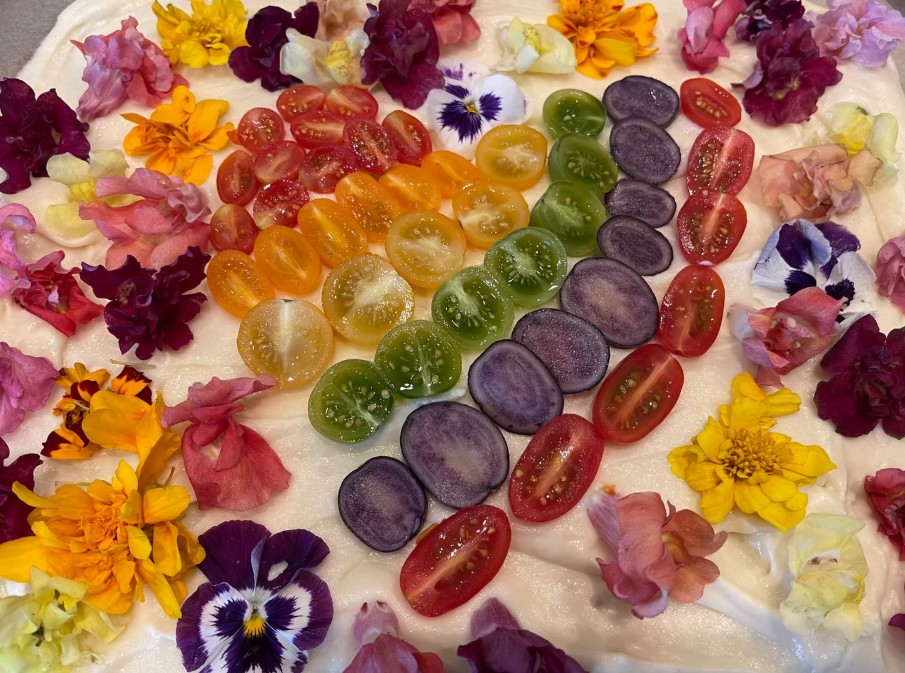
For Garden-Grown Rainbow Heart Focaccia Art, I arranged the toppings in curved bands that follow the movement of the heart. Rows of purple, green, yellow, orange, and red ingredients create a bright rainbow effect across the surface. Small floral details add softness and whimsy, while the natural variation in the vegetables gives the design an organic, garden-inspired appearance.
The curved arrangement helps guide the eye through the composition. Instead of creating a rigid pattern, I allowed the natural shapes of the ingredients to influence the design. This gives the focaccia a handmade character and captures the relaxed abundance of a colorful garden.
Designing With Shape, Color, and Movement
The heart shape is the emotional center of this project. It turns the focaccia into more than a decorative bread. It becomes a symbol of care, generosity, and connection.
Creating a successful heart-shaped composition required careful attention to proportion and balance. The colorful rows needed to emphasize the shape while allowing enough of the dough to remain visible. Each topping was positioned to support the overall movement of the design without making the surface feel crowded.
Color played an equally important role. Deep purple vegetables provide a rich contrast against the pale dough, while bright green, yellow, orange, and red elements bring energy and warmth. Repeating circular and curved shapes creates rhythm across the focaccia and ties the individual ingredients together.
The result is a design that feels organized but still natural. Every section has its own personality, yet the colors and shapes remain connected as part of one complete rainbow heart.
Flavor and Texture Within the Artwork
Although visual presentation is essential to focaccia art, the bread must still be enjoyable to eat. The toppings are not simply decorative elements. They contribute flavor and texture to every slice.
As the focaccia bakes, the vegetables soften and their flavors become more concentrated. Tomatoes grow tender and juicy, peppers develop sweetness, and herbs release their fragrance into the bread. Olive oil adds richness and helps create a lightly crisp, golden surface.
The airy interior of the focaccia provides a soft foundation for the colorful toppings. Tender vegetables, roasted edges, and the bread’s gently crisp exterior create an appealing variety of textures. Since the toppings are arranged in distinct rainbow bands, each portion offers its own combination of colors and flavors.
This balance between appearance and taste is one of the most important parts of edible-art development. The finished piece should be beautiful enough to display while remaining warm, flavorful, and inviting enough to share.
Creative Food Styling With a Garden-Grown Story
This project allowed me to combine recipe development, artistic composition, food styling, and culinary storytelling. From shaping the dough to arranging the smallest decorative details, each decision supported the central theme of love growing in a colorful garden.
The food styling highlights the natural beauty of the ingredients. Rather than disguising their individual forms, I used their recognizable shapes as part of the artwork. Sliced vegetables become borders and ribbons, while blossoms and smaller accents bring delicacy to the arrangement.
The rainbow color progression brings movement and energy to the design. It also creates a strong connection between the garden-grown ingredients and the joyful message represented by the heart.
The overhead presentation captures the complete composition and makes the progression of colors easy to appreciate. It allows the viewer to notice the careful placement of each topping and the relationship between the different sections.
Through photography, the finished focaccia becomes a lasting record of a temporary edible artwork. The image preserves the design before the bread is sliced and shared, documenting the colors, patterns, and handcrafted details that define the project.
A Colorful Centerpiece Made for Sharing
Garden-Grown Rainbow Heart Focaccia Art would make a memorable centerpiece for Valentine’s Day, Mother’s Day, anniversaries, bridal showers, engagement celebrations, garden parties, brunches, birthdays, and family gatherings. Its heart-shaped design makes it especially meaningful for occasions centered on love, friendship, and togetherness.
The concept can also be adapted for different seasons. Bright vegetables and floral accents create a lively spring or summer presentation, while deeper colors can give the heart a warm autumn character. Changing the arrangement makes it possible to create a personalized version for a particular celebration, color palette, harvest, or seasonal table.
Focaccia is naturally suited to communal dining. It can be displayed whole so guests can appreciate the artwork before it is sliced and passed around the table. That transformation from visual centerpiece to shared food is part of the project’s charm.
A Meaningful Addition to My Culinary Portfolio
Garden-Grown Rainbow Heart Focaccia Art: A Colorful Bread That Brings Love to Every Table represents my passion for turning approachable food into an expressive visual experience. It demonstrates how shape, color, texture, ingredient placement, and photography can work together to tell a cohesive story.
This project also reflects my ability to develop a creative culinary concept from its earliest idea through the finished presentation. It required an understanding of breadmaking, ingredient behavior, visual balance, food styling, and the way colors and textures change during baking.
Most importantly, this garden-grown rainbow heart captures the happiness that thoughtfully presented food can bring to a table. It is colorful, imaginative, and created to be shared. The finished focaccia celebrates breadmaking as a culinary craft while expressing a simple message of love through edible art.
Featured Project: Garden-Grown Rainbow Heart Focaccia Art: A Colorful Bread That Brings Love to Every Table
Discover Garden Crossroads Focaccia Art with Purple Asparagus, a beautiful bread inspired by seasonal gardens, shared paths, and connection. Food has a remarkable way of bringing people together. Garden Crossroads Focaccia Art with Purple Asparagus was created to express that connection through a beautifully styled bread inspired by garden paths, seasonal vegetables, and the moments when different journeys meet. For this portfolio project, I wanted to transform focaccia into an edible landscape. The surface of the bread became a canvas where color, texture, movement, and thoughtful ingredient placement could tell a visual story. Purple asparagus served as the defining element, creating the crossroads that give the piece its name and meaning. The finished focaccia celebrates more than seasonal food. It represents creativity, connection, and the idea that every path can lead toward a shared table. The Inspiration Behind the Garden Crossroads Design Gardens are filled with natural lines and intersections. Rows of vegetables meet winding paths, stems cross beneath leaves, and plants reach toward one another as they grow. I used that imagery as the foundation for this focaccia art concept. Purple asparagus was especially well suited to the design. Its long, sculptural shape made it possible to establish strong visual pathways across the bread. By arranging the spears so they meet near the center, the composition creates a recognizable crossroads while maintaining the organic character of a garden. The design feels structured without appearing rigid. Each ingredient contributes to the larger scene, but the natural differences in shape, color, and size keep the focaccia expressive and inviting. Purple Asparagus as the Visual Centerpiece Purple asparagus brings an unexpected sense of drama to focaccia art. Its deep violet coloring stands out beautifully against the warm golden tones of baked bread, giving the composition contrast and a clear visual focal point. The asparagus also adds height, direction, and texture. Whole or carefully arranged spears guide the eye across the surface, while the tips introduce delicate detail. Even when some of the purple color softens during baking, the asparagus retains enough character to remain central to the finished design. Choosing purple asparagus allowed me to highlight a seasonal vegetable in a way that feels artistic while remaining connected to the food itself. It is not simply a decorative addition. It becomes the element that defines the composition and communicates the story behind the project. Creating an Edible Garden on Focaccia Creating focaccia art requires a thoughtful approach to both texture and appearance. The bread needs enough structure to support the vegetable design while remaining tender, flavorful, and enjoyable to eat. For this project, I considered the bread and artwork as one complete composition. The arrangement had to complement the natural rise and movement of the focaccia rather than compete with it. Every visual element needed to feel intentional while allowing the bread to retain its rustic, handmade quality. The dimples and uneven contours traditionally associated with focaccia became part of the garden landscape. Instead of concealing those features, I used them to create depth and movement. The result is a bread that feels approachable and homemade while still presenting beautifully for photography, entertaining, and portfolio display. A Story About Paths, Connection, and Community The crossroads motif gives this project an emotional dimension beyond its appearance. A crossroads can represent a choice, a meeting place, or the moment when separate journeys become connected. That meaning feels especially appropriate for bread. Bread is often placed at the center of a table and shared among friends, family members, and guests. It welcomes conversation and encourages people to gather. In this design, the asparagus paths lead toward a common point, reflecting the way food can bring different people and experiences together. The garden theme strengthens that idea. Growing, preparing, styling, and sharing food are all connected parts of a larger story. Garden Crossroads Focaccia Art with Purple Asparagus captures those relationships in one edible centerpiece. Seasonal Food Styling and Photography The visual direction for this project centered on preserving the natural character of the ingredients. The bold color of the purple asparagus, the golden surface of the bread, and the botanical arrangement provided the foundation for the styling. I wanted the focaccia to look polished without losing the warmth of something made by hand. Its natural texture, gently irregular edges, and garden-inspired decoration helped create a presentation that feels both artistic and welcoming. The styling was designed to keep the crossroads immediately visible. Supporting details enhance the composition while allowing the asparagus pathways to guide the viewer through the image. This balance helps the finished photographs communicate the concept clearly, even before the story behind the design is explained. A Versatile Centerpiece for Seasonal Gatherings Garden Crossroads Focaccia Art with Purple Asparagus would make a memorable addition to a spring gathering, garden party, brunch, afternoon lunch, or creative bread display. It can serve as both a centerpiece and a conversation starter, encouraging guests to notice the individual vegetables, follow the pathways, and interpret the design in their own way. The garden theme also makes the focaccia a natural fit for celebrations centered on seasonal produce, homegrown ingredients, and outdoor dining. Its visual impact comes from thoughtful arrangement rather than excessive decoration, allowing the vegetables and bread to remain recognizable and appetizing. The Creative Work Behind the Project This portfolio feature brings together recipe development, seasonal concept creation, food styling, food photography, and written storytelling. Each element supports the same central idea: creating a beautiful bread that represents different paths coming together. The project demonstrates how familiar food can be reimagined through intentional design. It also reflects my approach to food content, where flavor, presentation, creativity, and storytelling receive equal attention. Garden Crossroads Focaccia Art with Purple Asparagus is ultimately an edible expression of connection. It celebrates the beauty of garden-grown ingredients, the creative possibilities of breadmaking, and the meaningful experiences that begin when people meet around the table. Project: Garden Crossroads Focaccia Art with Purple Asparagus: A Beautiful Bread That Brings Every Path Together Services: Recipe Development,
Explore Garden of Love Focaccia Art, a colorful garden-inspired bread project featuring creative recipe development, food styling, photography, and storytelling. Garden of Love Focaccia Art brings together two of my favorite forms of creative expression: food and nature. Inspired by the beauty of a flourishing garden, I designed this decorative bread as an edible work of art filled with color, texture, and fresh flavor. The finished focaccia captures the feeling of walking through a cheerful summer garden. Colorful vegetables, fragrant herbs, and carefully arranged details transform the bread’s surface into a charming botanical scene. Every element contributes to the design while complementing the savory flavor of the focaccia. This project gave me an opportunity to combine recipe development, food styling, photography, and storytelling in one visually engaging presentation. The result is more than a loaf of bread. It is a memorable centerpiece designed to spark curiosity, conversation, and joy. Turning Focaccia Into Edible Art Focaccia provides a beautiful canvas for artistic food styling. Its broad surface creates space for arranging ingredients into flowers, stems, leaves, and other garden-inspired shapes. For Garden of Love Focaccia Art, I approached the arrangement as I would a natural garden. I considered the balance of color, the direction of each stem, the placement of every flower, and the open spaces between the decorative elements. The goal was to create a design that felt abundant and lively without appearing crowded. The slightly rustic character of focaccia adds warmth to the presentation. It does not need to look overly polished or perfectly symmetrical. Small variations in shape, color, and texture help the finished bread feel natural, inviting, and handmade. A Celebration of Color and Flavor The decorative ingredients were chosen for both appearance and taste. Vibrant vegetables bring fresh color to the design, while herbs create graceful greenery and aromatic depth. As the bread bakes, the toppings soften, deepen in color, and become part of the golden surface. The result is a satisfying contrast of textures. The focaccia has a golden exterior and tender interior, while the vegetables and herbs add savory flavor throughout the loaf. A final touch of olive oil enhances the richness of the bread and gives the surface an appealing sheen. This balance is especially important in food art. A beautiful arrangement should not exist only for decoration. Every ingredient should contribute something meaningful to the eating experience. Designed to Bring People Together Garden of Love Focaccia Art is made for sharing. Its colorful design makes it a wonderful centerpiece for spring celebrations, summer gatherings, garden parties, bridal showers, brunches, and family meals. It can be presented whole so guests can appreciate the complete artwork before the bread is sliced. Once served, it pairs naturally with soups, salads, roasted vegetables, dips, cheese boards, and Mediterranean-inspired meals. It can also stand on its own as a welcoming appetizer or savory snack. The garden theme can be adapted for different seasons and occasions. Bright flowers create a cheerful spring or summer presentation, while herbs and vegetables in deeper shades can give the bread a warm autumn appearance. The design can also be personalized with initials, hearts, or meaningful botanical details. The Creative Process Behind the Project Developing this project required me to think about flavor, structure, color, and composition at the same time. Ingredients needed to retain enough definition during baking for the garden design to remain visible. Their placement also had to work with the natural expansion of the dough. Food styling played an important role in communicating the story. I wanted the photography to highlight the bread’s golden texture, colorful toppings, and handcrafted botanical details. The final images were styled to feel bright, fresh, and welcoming while keeping the focaccia at the center of the visual narrative. The written content supports that same story by connecting the beauty of a garden with the comfort of homemade bread. Search-friendly language helps readers discover the project, while the warm editorial approach encourages them to see focaccia as both a delicious food and a creative experience. A Project Rooted in Creativity What I love most about Garden of Love Focaccia Art is the way it turns simple food into something personal and expressive. The project celebrates seasonal inspiration, thoughtful presentation, and the pleasure of making something beautiful by hand. It also reflects my approach to food content creation. I want every project to offer more than an attractive finished dish. The recipe concept, styling, photography, and written story should work together to create an experience that feels cohesive, useful, and memorable. Garden of Love Focaccia Art captures that philosophy in a joyful edible garden. It is colorful enough to make a striking centerpiece, approachable enough to inspire home cooks, and flavorful enough to be enjoyed long after the photographs are finished. Featured Project: Garden of Love Focaccia Art: A Beautiful Garden Bread Full of Color and Flavor Services: Recipe Development, Food Styling, Food Photography, Creative Direction, SEO Content Writing, Editorial Storytelling
Explore the craftsmanship behind Homemade Lasagna Sheets, featuring delicate pasta, decorative ruffled edges, thoughtful food styling, and culinary photography. There is something deeply rewarding about transforming a simple pasta dough into long, delicate sheets of handmade pasta. This Homemade Lasagna Sheets project celebrates that transformation, focusing on the beauty, craftsmanship, and character that make fresh pasta so memorable. For this culinary project, I wanted the pasta itself to become the visual centerpiece. Instead of hiding the lasagna sheets beneath sauce, cheese, and other fillings, I photographed them before assembly so their smooth surfaces, graceful folds, and decorative ruffled edges could be fully appreciated. The repeated rows create a sense of rhythm and movement while highlighting the care involved in shaping each sheet. Homemade pasta has a warmth and personality that commercially produced pasta cannot always replicate. Small variations in the edges and folds are part of its appeal. They reveal the human touch behind the food and turn an everyday ingredient into something worthy of being featured as a culinary subject. Celebrating the Art of Fresh Pasta Fresh lasagna sheets represent one of the most versatile forms of handmade pasta. Their broad surfaces are designed to hold layers of sauce, cheese, vegetables, meat, or other fillings, but they also possess a quiet beauty before they ever become part of a finished dish. In this project, the long sheets are arranged side by side to emphasize their shape and texture. The smooth centers contrast with the ruffled edges, giving the pasta a refined decorative quality. Those delicate borders introduce visual interest without taking attention away from the simplicity of the dough. The neutral color palette keeps the composition soft and understated. Creamy pasta tones and gentle shadows allow the craftsmanship to remain the focus. This restrained presentation reflects the traditional character of handmade pasta while giving the image a polished, editorial appearance. Handmade Character and Craftsmanship Making lasagna sheets by hand requires patience, attention, and an understanding of how pasta dough behaves. The dough must be worked until it becomes smooth and elastic, then rolled into thin, even sheets that remain strong enough to handle without tearing. The finished pasta should feel delicate while still having enough structure for layering. Its surface needs to be even, but it does not have to look manufactured. Handmade pasta is most appealing when it retains subtle signs of the process used to create it. The ruffled edges shown in this project add a distinctive finishing touch. They frame each sheet, create separation between the rows, and introduce an ornamental element to the composition. This detail gives the pasta an elegant personality while preserving its rustic, handcrafted spirit. Texture Designed for Layering Fresh pasta brings a tender texture to lasagna and absorbs surrounding flavors beautifully. Because handmade sheets can be rolled to a desired thickness, they allow the finished dish to feel balanced rather than overly heavy. The broad surface of each sheet provides space for sauces and fillings to spread evenly. The ruffled edges add definition around the layers and can create attractive contours along the sides of a prepared lasagna. This combination of function and visual appeal is part of what makes homemade lasagna sheets such a satisfying culinary project. Although the final assembled dish is not shown here, the image suggests the possibilities ahead. These sheets could become the foundation for a classic meat lasagna, a creamy vegetable lasagna, a seasonal garden-inspired preparation, or an elegant dish created for a special gathering. Food Styling with Repetition and Movement The styling for Homemade Lasagna Sheets relies on repetition, texture, and directional lines. Arranging the pasta in parallel rows creates a strong visual pattern, while the natural folds soften the composition and prevent it from feeling rigid. The decorative edges guide the eye through the photograph. Light catches the raised ridges and creates shadows between the sheets, helping each piece remain visually distinct. The result is an image that feels tactile and dimensional, even within a simple arrangement. This approach demonstrates how a single ingredient can become a compelling subject when its most interesting qualities are carefully emphasized. The pasta does not need elaborate garnishes or a busy background. Its form, texture, and craftsmanship provide all the visual detail the composition requires. Photographing the Preparation Process Process photography gives viewers a meaningful look at the work that takes place before a dish reaches the table. By documenting the lasagna sheets at this stage, I can show the handmade foundation of the finished meal and tell a more complete culinary story. The photograph captures the pasta after shaping and before it is layered into a lasagna. This moment reveals details that would disappear once the sheets were covered with sauce and fillings. The smooth surfaces, ruffled borders, and careful arrangement all communicate freshness and attention to detail. Images like this are valuable for culinary portfolios, food editorials, pasta features, educational content, and social media storytelling. They help audiences understand the craft behind a familiar dish and invite them to appreciate the individual components that contribute to the finished result. A Versatile Culinary Portfolio Project Homemade Lasagna Sheets reflects my interest in celebrating food at every stage of preparation. The project combines pasta craftsmanship, food styling, photography, and editorial storytelling in a way that feels both approachable and refined. It also shows how traditional food can be presented with a fresh visual perspective. Lasagna is comforting and familiar, but the handmade pasta behind it offers an opportunity to explore pattern, detail, and texture. By focusing on the sheets themselves, this project brings attention to an essential element that is often overlooked. This portfolio feature is designed to support recipe development projects, pasta-focused editorial content, culinary publications, educational features, and visual campaigns centered on handmade food. It demonstrates my ability to develop a clear creative concept, recognize the most photogenic stage of a culinary process, and translate that moment into inviting visual and written content. Featured Project: Homemade Lasagna Sheets Project Type: Handmade Pasta Culinary Feature
Originally published
March 2026
Updated
August 2026
Reviewed by
Culibloom