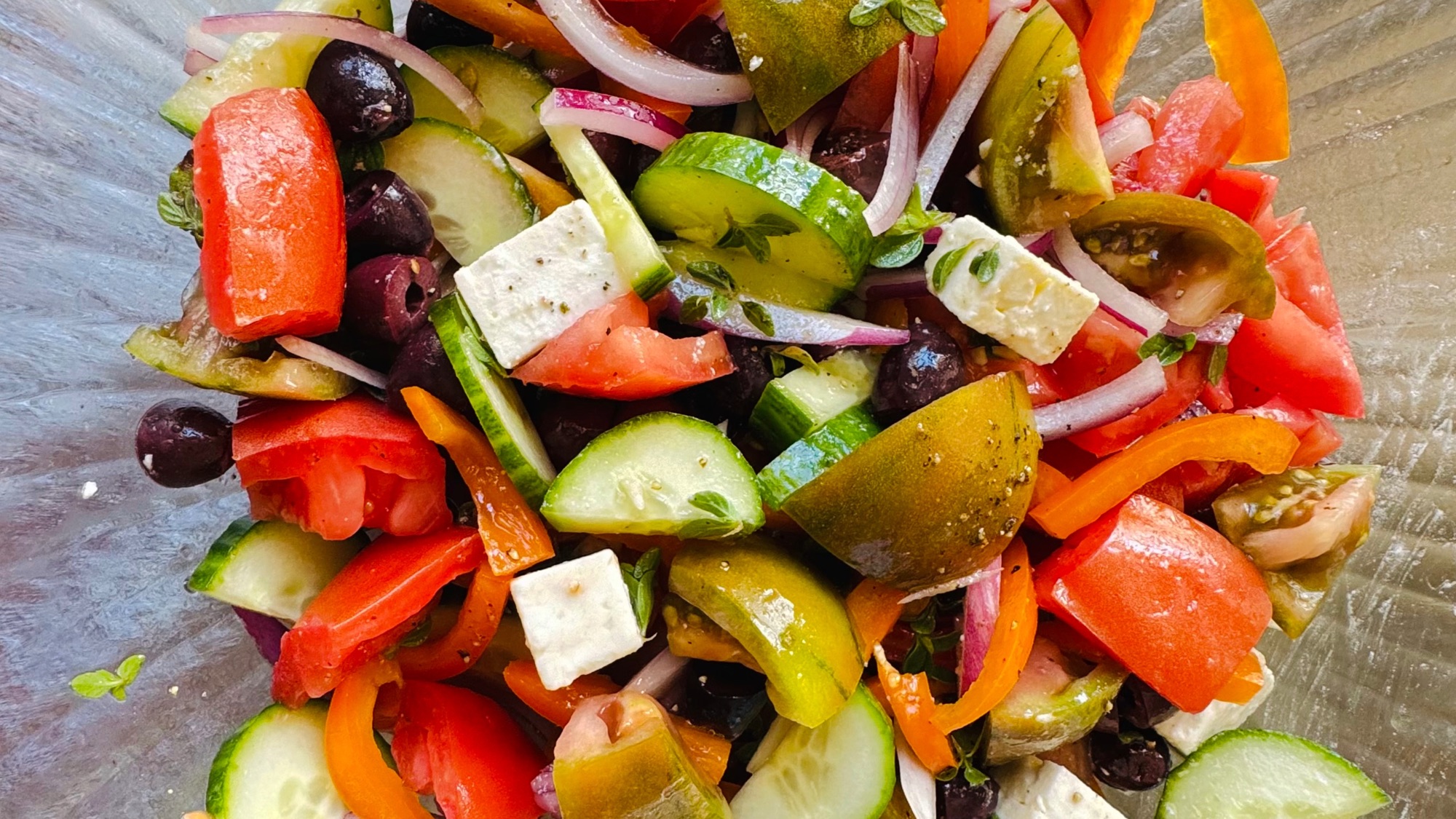
Make this fresh Greek Salad Recipe with heirloom tomatoes, cucumber, bell pepper, Kalamata olives, feta, and an easy homemade Greek dressing.
Fresh, colorful, and full of Mediterranean flavor, this Greek Salad Recipe combines juicy heirloom tomatoes, crisp cucumber, bell pepper, red onion, briny Kalamata olives, and creamy cubes of feta cheese. Everything is tossed with a simple homemade Greek dressing made with extra-virgin olive oil, red wine vinegar, fresh lemon juice, garlic, and oregano.
The beauty of a traditional Greek-inspired salad is its simplicity. There is no need for lettuce or a complicated dressing. Instead, ripe vegetables take center stage, complemented by salty feta and olives and a bright vinaigrette that brings everything together. Using heirloom tomatoes makes the salad especially beautiful, since their different colors, shapes, and flavors create a vibrant presentation.
Green bell pepper is the traditional choice and adds a pleasantly crisp, slightly grassy flavor, but you can use red, yellow, or orange bell pepper if you prefer a sweeter salad. Cutting the feta into cubes rather than crumbling it gives the salad a rustic appearance and allows you to enjoy distinct bites of creamy, salty cheese alongside the vegetables.
This easy Greek salad is naturally gluten-free and makes a refreshing side dish for grilled fish, chicken, lamb, or other Mediterranean-inspired meals. It is also substantial enough for a light lunch, especially when served with gluten-free bread or warm gluten-free pita.
Directions
Step 1: Prepare the Cucumber
Slice the cucumber in half lengthwise, then cut it crosswise into thin half-moons. The cucumber provides much of the salad’s refreshing crunch, so avoid slicing it too thinly. Place the cucumber in a large serving bowl.
If your cucumber has particularly thick or waxy skin, you can peel it completely or remove alternating strips of peel before slicing. English and Persian cucumbers generally do not need to be peeled.
Step 2: Prepare the Tomatoes, Onion, and Bell Pepper
Cut the heirloom tomatoes into generous chunks rather than small pieces. Keeping the tomatoes relatively large helps them maintain their shape and gives the finished Greek salad its characteristic rustic appearance.
Thinly slice the red onion and bell pepper. Add the tomatoes, onion, and bell pepper to the bowl with the cucumber.
Green bell pepper provides the most traditional flavor, but any color bell pepper works well. Red, yellow, and orange peppers will give the salad a slightly sweeter flavor.
Step 3: Add the Kalamata Olives and Feta
Add the halved Kalamata olives to the vegetables. Gently scatter the feta cubes over the salad.
Cutting the feta into approximately 1/2-inch cubes keeps the cheese from disappearing into the dressing and vegetables. Some cubes may naturally break apart as the salad is tossed, which creates a nice combination of larger pieces and smaller bits of feta throughout the salad.
Step 4: Prepare the Greek Dressing
In a small bowl, combine the red wine vinegar, minced garlic, fresh lemon juice, and oregano. Season lightly with kosher salt and freshly ground black pepper.
Slowly pour in the extra-virgin olive oil while whisking until the dressing is well combined. Taste and adjust the salt, pepper, lemon juice, or vinegar if needed.
Remember that both feta and Kalamata olives are naturally salty, so begin with a modest amount of salt. You can always add more after the salad has been dressed.
Step 5: Dress the Greek Salad
Pour the dressing over the cucumber, tomatoes, bell pepper, red onion, Kalamata olives, and feta.
Using two large spoons, gently toss the salad just until the vegetables are evenly coated. Avoid vigorous tossing, which can break down the ripe tomatoes and feta.
As the salad is tossed, the tomato juices will mingle with the olive oil, vinegar, lemon, oregano, and feta, creating a flavorful dressing at the bottom of the bowl.
Step 6: Taste and Serve
Taste the salad and adjust the seasoning with additional kosher salt, freshly ground black pepper, or oregano as desired.
Serve immediately for the crispest texture, or allow the Greek salad to rest for about 10 minutes before serving. A short rest gives the vegetables an opportunity to absorb some of the vinaigrette while still maintaining their fresh texture.
Serve the salad family-style in a large bowl or arrange it on a wide serving platter so the colorful heirloom tomatoes, cucumber, peppers, olives, and feta remain visible.
Notes
For the best Greek salad, use ripe, flavorful tomatoes. Heirloom tomatoes are especially good because they provide varying colors, textures, and levels of sweetness and acidity. If heirloom tomatoes are unavailable, ripe garden tomatoes, vine-ripened tomatoes, or Roma tomatoes can also be used.
Green bell pepper is the traditional choice for Greek salad and provides a fresh, slightly bitter contrast to the sweet tomatoes. If you prefer a milder or sweeter flavor, substitute red, orange, or yellow bell pepper.
Use feta with a firm yet creamy texture so it can be cut into cubes without immediately crumbling. Feta packed in brine works particularly well. Drain it before cutting and adding it to the salad.
The red onion should be sliced very thinly so it adds flavor without overwhelming the other ingredients. If your red onion is particularly strong, place the slices in cold water for about 10 minutes, then drain and pat them dry before adding them to the salad. This softens some of the onion’s sharpness while preserving its crunch.
Fresh oregano gives the salad a brighter herbal flavor, while dried oregano provides a more concentrated Mediterranean flavor. Either works beautifully. If using dried oregano, rubbing it gently between your fingers before adding it to the dressing can help release its aroma.
Because the feta and Kalamata olives contribute considerable saltiness, season conservatively at first. Toss the salad with the dressing, taste it, and then add additional kosher salt only if necessary.
Extra-virgin olive oil is an important component of the dressing, so choose one with a flavor you enjoy. A fruity, peppery olive oil pairs especially well with the tomatoes, lemon, oregano, and feta.
This Greek salad is best enjoyed shortly after it is prepared. The vegetables will continue releasing moisture as they sit, especially after they have been salted and dressed. Leftovers can be refrigerated in an airtight container for up to 2 days, although the cucumber and tomatoes will gradually soften.
For advance preparation, slice the cucumber, bell pepper, and onion and prepare the dressing separately. Cut the tomatoes and feta closer to serving time. Assemble and dress the salad shortly before serving for the freshest texture.
Serve this gluten-free Greek salad with grilled chicken, salmon, shrimp, lamb, or white fish. It is also delicious alongside rice, roasted potatoes, gluten-free pita, or other Mediterranean-inspired dishes.