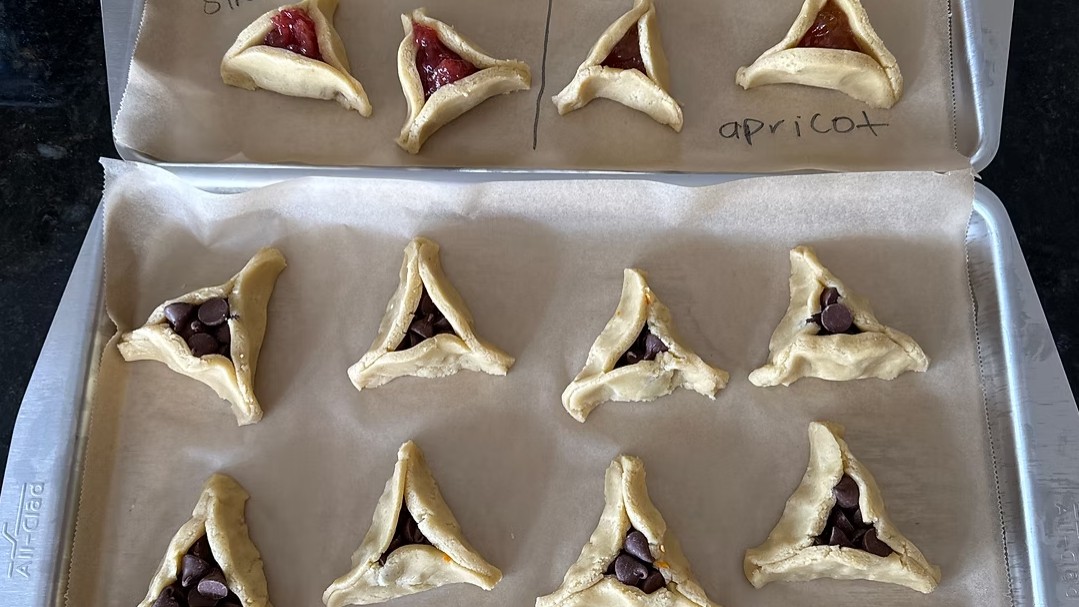
Make easy gluten-free hamantaschen for Purim with citrus or classic butter dough and your favorite prune, poppy seed, jam, or chocolate filling.
These festive gluten-free hamantaschen feature tender cookie dough wrapped around colorful fruit, poppy seed, prune, or chocolate fillings. Their traditional triangular shape makes them an instantly recognizable treat for Purim celebrations, holiday dessert platters, gift boxes, and family gatherings.
This recipe includes two delicious dough options. The first combines individual gluten-free flours and starches with orange juice and fresh orange zest for a bright citrus flavor. An overnight chill gives the flours time to hydrate and helps the soft dough become easier to roll and shape.
The second option uses gluten-free all-purpose flour to create a classic butter cookie with crisp edges, a soft center, and a rich flavor that complements almost any filling. Both doughs can be prepared ahead of time, making it easier to divide the baking process between two days.
Fill the cookies with traditional prune butter or poppy seed filling, or create a colorful assortment with apricot preserves, raspberry jam, fig preserves, cherry preserves, or chocolate spread. Keep the filling portions small and pinch the corners securely so the hamantaschen retain their beautiful shape in the oven.
Directions
Option 1: Make the Gluten-Free Citrus Hamantaschen
Step 1: Combine the Dry Ingredients
In a large mixing bowl, whisk together the brown rice flour, potato starch, tapioca starch, gluten-free oat flour, sweet rice flour, baking powder, xanthan gum, and salt. Mix thoroughly so the xanthan gum and leavening are distributed evenly throughout the flour mixture.
Step 2: Beat the Eggs and Sugar
Place the eggs in the bowl of a stand mixer or a large bowl suitable for a hand mixer. Beat on high speed for about 1 minute, or until the eggs are thick and slightly frothy.
Add the granulated sugar and continue mixing for another minute, or until the mixture becomes lighter in color.
Step 3: Add the Remaining Wet Ingredients
Add the oil, softened butter, orange juice, orange zest, and vanilla extract. Continue mixing until the ingredients are thoroughly combined and the mixture appears smooth.
Step 4: Form the Citrus Dough
Reduce the mixer speed to low. Gradually add the dry ingredients to the wet mixture, mixing just until a soft dough forms.
The dough will be sticky and softer than traditional wheat-based cookie dough. Avoid adding extra flour unless the chilled dough remains excessively sticky and difficult to handle.
Step 5: Chill the Citrus Dough
Transfer the dough to plastic wrap or waxed paper and wrap it tightly. Refrigerate overnight. This extended chilling period allows the gluten-free flours to hydrate and significantly improves the dough’s texture and handling.
Step 6: Prepare the Oven and Filling
When ready to bake, preheat the oven to 350°F. Line two baking sheets with parchment paper.
Combine the prune butter or poppy seed filling with the cinnamon and orange zest. Stir until evenly blended.
Step 7: Roll and Cut the Citrus Dough
Remove one-quarter of the dough from the refrigerator, leaving the remaining dough chilled.
Place the dough between two sheets of parchment paper. Roll it to approximately 1/8 to 1/4 inch thick. Use a 3-inch round cookie cutter or drinking glass to cut circles from the dough.
Carefully transfer the circles to the prepared baking sheets.
Step 8: Fill and Shape the Citrus Hamantaschen
Place approximately 1 teaspoon of filling in the center of each circle. Do not overfill the cookies.
Fold one side of the circle upward. Fold a second side toward the center, overlapping it slightly. Fold the third side upward to create a triangle. Pinch all three corners firmly while leaving a small opening in the center so the filling remains visible.
Step 9: Bake and Cool the Citrus Hamantaschen
Bake for 12 to 17 minutes, or until the edges are lightly golden brown. For even browning, rotate the baking sheets halfway through the baking time.
Let the cookies cool on the baking sheets for 5 minutes. Transfer them to a wire rack and allow them to cool completely.
Option 2: Make the Classic Gluten-Free Butter Hamantaschen
Step 10: Cream the Butter and Sugar
Place the softened butter and granulated sugar in the bowl of a stand mixer. Beat on high speed for 2 to 3 minutes, or until the mixture is light and fluffy.
Step 11: Add the Eggs and Vanilla
Add the eggs one at a time, mixing thoroughly after each addition. Add the vanilla extract and mix until incorporated.
Step 12: Combine the Dry Ingredients
In a separate bowl, whisk together the baking powder, baking soda, salt, and gluten-free all-purpose flour.
Step 13: Form the Butter Dough
Reduce the mixer speed to low. Gradually add the dry ingredients to the butter mixture. Mix until a soft, smooth dough forms.
Step 14: Divide and Chill the Butter Dough
Divide the dough into four equal portions. Shape each portion into a ball and wrap it individually in plastic wrap.
Refrigerate the dough for at least 1 hour.
Step 15: Prepare for Baking
Preheat the oven to 350°F. Line the baking sheets with parchment paper.
Remove one dough ball from the refrigerator. Keep the remaining portions chilled while you work.
Step 16: Roll and Cut the Butter Dough
Place the dough between two sheets of parchment paper and roll it to approximately 1/4 inch thick. Use a 2-inch round cookie cutter to cut circles.
Step 17: Fill and Shape the Butter Hamantaschen
Place approximately 1/4 teaspoon of filling in the center of each dough circle.
Fold the three edges toward the center to create a triangle. Pinch the corners securely, leaving a small amount of filling visible in the middle.
Arrange the shaped cookies on the prepared baking sheets, leaving about 2 inches between them.
Step 18: Bake and Cool the Butter Hamantaschen
Bake for approximately 15 minutes, or until the edges are lightly golden.
Allow the cookies to cool on the baking sheets for several minutes before transferring them to a wire rack to cool completely.
Notes
Always chill the dough before rolling it. Cold dough is easier to handle, holds its shape more effectively, and is less likely to tear.
The overnight chilling period is especially important for Option 1. It gives the individual gluten-free flours and starches time to hydrate, producing a smoother and more manageable dough.
Place the dough between two sheets of parchment paper before rolling. This prevents sticking without requiring large amounts of additional flour.
Do not overfill the cookies. Excess filling can leak during baking or prevent the corners from sealing properly.
Pinch each corner firmly. If necessary, pinch the corners a second time immediately before placing the cookies in the oven.
If the dough becomes too warm or soft while you are working, return it to the refrigerator for 10 to 15 minutes.
If the filling is thin or runny, refrigerate it before assembling the cookies.
Prune butter and poppy seed filling are traditional choices. Apricot preserves, raspberry jam, fig preserves, cherry preserves, and chocolate spread also make flavorful fillings.
Different gluten-free flour brands can absorb moisture differently. If the chilled citrus dough remains excessively sticky, knead in a small amount of brown rice flour. Add only enough to make the dough workable.
When purchasing oat flour, all-purpose flour, baking powder, fillings, preserves, chocolate spread, and other packaged ingredients, check every label for appropriate gluten-free labeling. Prevent cross-contact by using clean equipment, utensils, work surfaces, baking sheets, and storage containers.
Allow the hamantaschen to cool completely before storing them. Store the cooled cookies in an airtight container at room temperature for up to 4 days or refrigerate them for up to one week.
For longer storage, arrange the cooled cookies in a freezer-safe container with parchment paper between the layers. Freeze for up to 3 months. Thaw at room temperature for approximately 30 minutes before serving.
For a festive presentation, prepare several fillings and arrange the finished cookies on a serving platter so guests can sample different flavors.