Make gluten-free miso glazed sea bass with maitake mushrooms, spring onions, and a fragrant homemade dashi broth for an elegant seafood dinner.
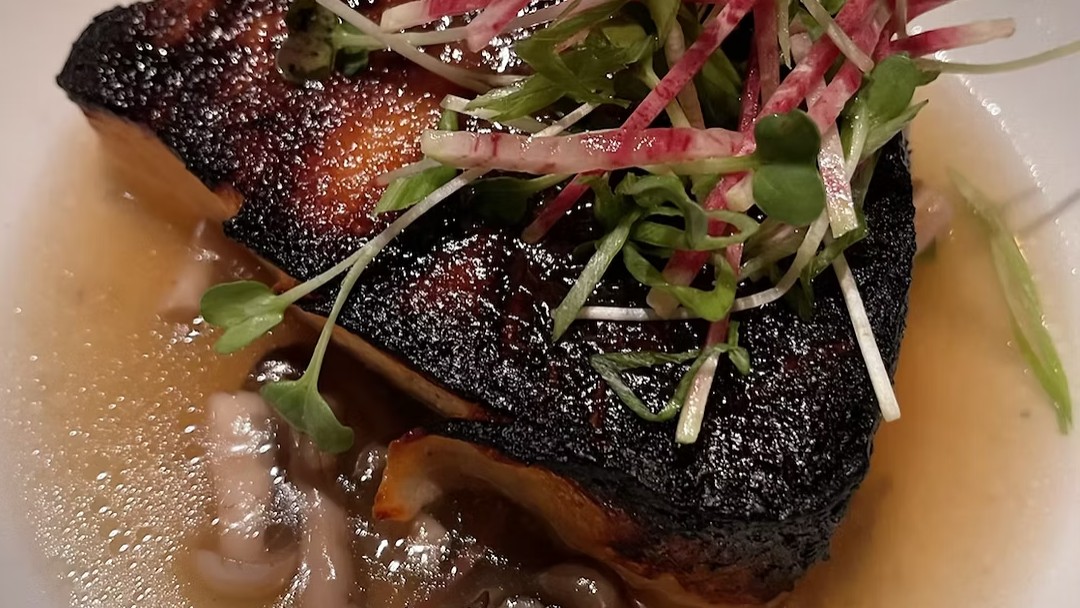
Elegant and deeply flavorful, this Gluten-Free Miso Glazed Sea Bass with Scallion Maitake Mushroom Dashi Recipe brings restaurant-inspired Japanese flavors to your home kitchen. Tender sea bass or black cod is marinated in a sweet and savory white miso glaze, seared until caramelized, and finished in the oven.
The glazed fish is served over a fragrant dashi broth with tender maitake mushrooms and spring onion. Rich umami flavors, delicate textures, and a beautiful presentation make this seafood dish perfect for date nights, dinner parties, holidays, and other special occasions.
Directions
Step 1: Prepare the Homemade Dashi
Place the water and kombu in a large saucepan. Let the kombu soak for 20 to 30 minutes to help extract its flavor.
Set the saucepan over medium heat and warm the water until it is almost simmering. Remove the kombu just before the water begins to boil.
Add the bonito flakes and simmer gently for 1 minute. Remove the saucepan from the heat and let the bonito flakes steep for 5 minutes.
Strain the broth through a fine-mesh sieve. Discard the solids and reserve the dashi broth.
Step 2: Make the Miso Marinade
Combine the sake and mirin in a small saucepan. Bring the mixture to a boil over medium-high heat and cook for approximately 20 seconds.
Reduce the heat to low. Whisk in the white miso paste and granulated sugar until the mixture is smooth and the sugar has dissolved.
Remove the saucepan from the heat and allow the marinade to cool completely before adding it to the fish.
Step 3: Marinate the Sea Bass
Pat the sea bass or black cod fillets dry with paper towels. Arrange them in a single layer inside a shallow container or resealable food-storage bag.
Pour the cooled miso marinade over the fillets. Gently turn the fish until every piece is evenly coated.
Cover the container tightly or seal the bag. Refrigerate the fish for 2 to 3 days, turning the fillets occasionally so they marinate evenly.
Step 4: Prepare the Dashi Broth
Combine the prepared dashi broth, mirin, gluten-free tamari, and the remaining 2 tablespoons sesame oil in a large soup pot.
Bring the broth to a gentle boil over medium heat. Reduce the heat to low, cover the pot, and simmer for 5 minutes. Keep the broth warm while preparing the mushrooms and fish.
Step 5: Cook the Spring Onion and Mushrooms
Heat 1 tablespoon sesame oil in a large skillet over medium-high heat.
Add the sliced spring onion and cook for about 2 minutes, or until softened and fragrant.
Add the maitake mushrooms and toss gently to coat them with the oil. Cover the skillet and cook for 3 to 4 minutes, or until the mushrooms are tender and lightly golden.
Transfer the mushrooms and spring onion to a bowl and keep them warm.
Step 6: Prepare the Oven and Fish
Position an oven rack in the center of the oven and preheat the oven to 400°F.
Remove the fish from the marinade. Gently scrape away the excess marinade while leaving a thin, even coating on each fillet. Discard the used marinade.
Season the fish lightly with kosher salt.
Step 7: Sear the Sea Bass
Heat the vegetable oil in a large oven-safe skillet over medium-high heat until shimmering.
Carefully place the fillets in the skillet. Cook for 2 to 3 minutes, or until the first side is deeply golden and lightly caramelized.
Turn the fillets carefully and cook for another 2 to 3 minutes.
Step 8: Roast the Sea Bass
Transfer the skillet to the preheated oven. Roast the fish for 5 to 10 minutes, depending on the thickness of the fillets.
The fish is ready when the thickest portion reaches 145°F and separates easily with a fork. Avoid overcooking it so the flesh remains moist and tender.
Step 9: Assemble the Bowls
Divide the cooked maitake mushrooms and spring onion among four shallow serving bowls.
Ladle approximately 1½ cups of the hot dashi broth into each bowl. Carefully place one miso-glazed fish fillet over the mushrooms in each serving.
Step 10: Garnish and Serve
Garnish each bowl with thinly sliced green onion tops and fresh microgreens. Serve immediately while the broth is hot and the fish is tender.
Notes
Sea bass and black cod are both excellent choices because their rich, buttery texture complements the sweet and savory miso glaze.
This version scales the homemade dashi ingredients to provide the 6 cups of broth needed for four servings.
Check the labels on the miso paste, tamari, mirin, sake, and bonito flakes to confirm that they are gluten-free. Prevent cross-contact when preparing the recipe for someone with celiac disease or gluten sensitivity.
Some miso pastes contain barley or other gluten-containing ingredients. Choose a product specifically labeled gluten-free.
Maitake mushrooms provide an earthy flavor and pleasantly tender texture. Shiitake or oyster mushrooms may be substituted, although they will slightly change the flavor of the finished broth.
Marinate the fish in the refrigerator, never at room temperature. Discard the marinade after removing the raw fish and do not reuse it as a sauce.
The miso glaze contains sugar and can darken quickly. Watch the fish closely while searing to prevent the surface from burning.
Refrigerate leftover fish and broth in separate airtight containers within 2 hours of serving. Enjoy the fish within 3 to 4 days. The broth may be refrigerated for up to 3 days.
Serve this dish with steamed jasmine rice, sushi rice, roasted vegetables, or certified gluten-free soba noodles.
Must be 21 years of age or older to purchase or consume alcoholic beverages. Please drink responsibly.