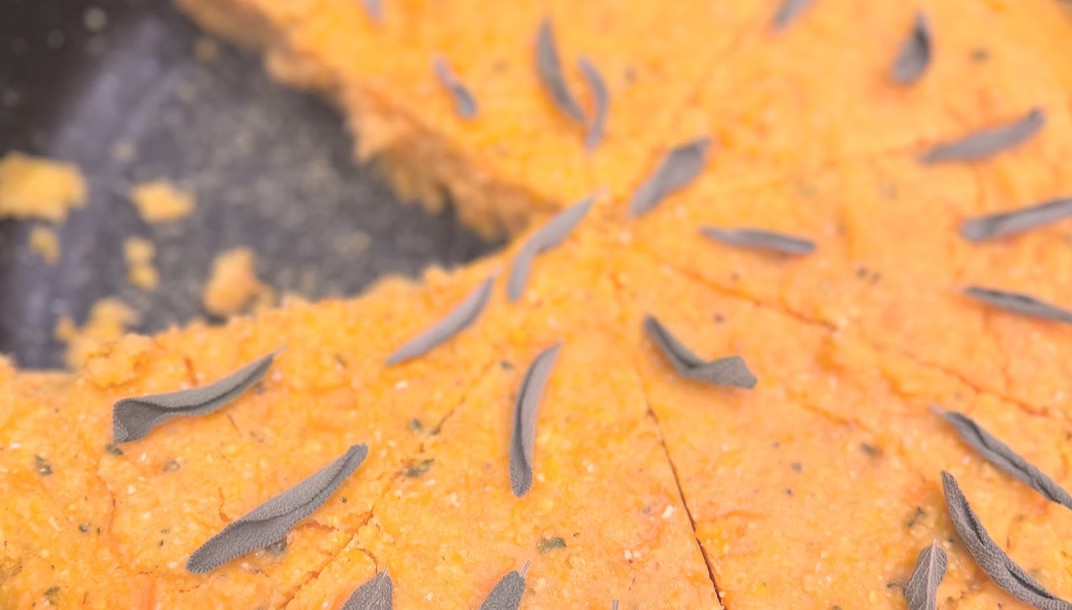
Make savory gluten-free sweet potato and sage cornbread with a crisp cast-iron crust and a tender, flavorful center for holidays or family meals.
This Savory Gluten-Free Sweet Potato and Sage Cornbread Recipe transforms a classic side dish with naturally sweet roasted sweet potatoes and fragrant fresh sage. The sweet potatoes give the cornbread a rich golden color, gentle sweetness, and tender texture, while the sage adds an earthy flavor that complements every bite.
Baking the batter in a preheated cast-iron skillet creates a crisp, beautifully browned crust while keeping the center moist and fluffy. Serve this homemade cornbread alongside soups, stews, chili, roasted meats, or your favorite holiday dishes. It also makes a flavorful addition to autumn dinners, family gatherings, and seasonal celebrations.
Directions
Step 1: Roast the Sweet Potatoes
Preheat the oven to 400°F. Place the scrubbed and pierced sweet potatoes on a baking sheet.
Roast for about 1 hour, or until the sweet potatoes are very tender when pierced with a knife. Remove them from the oven and let them cool until they can be handled comfortably.
Step 2: Mash the Sweet Potatoes
Cut the roasted sweet potatoes in half lengthwise. Scoop the flesh into a bowl and discard the skins.
Mash the sweet potato until completely smooth, breaking up any firm pieces or lumps. Measure 1 cup of mashed sweet potato for the cornbread batter and set it aside.
Step 3: Preheat the Cast-Iron Skillet
Increase the oven temperature to 425°F. Pour the canola oil into a 10-inch cast-iron skillet, tilting the skillet to distribute the oil across the bottom.
Place the skillet in the oven while the oven heats to 425°F. Preheating the oiled skillet helps the cornbread develop its crisp, golden crust.
Step 4: Combine the Dry Ingredients
In a large mixing bowl, whisk together the yellow cornmeal, white rice flour, brown rice flour, tapioca starch, potato starch, baking powder, minced fresh sage, kosher salt, and baking soda.
Continue whisking until the individual flours, starches, leavening agents, and seasonings are evenly distributed.
Step 5: Combine the Wet Ingredients
In a separate medium bowl, whisk together the mashed sweet potato, buttermilk, melted butter, and eggs.
Whisk until the mixture is smooth and the eggs and sweet potato are fully incorporated.
Step 6: Make the Cornbread Batter
Pour the wet mixture into the bowl containing the dry ingredients. Stir gently until a thick, evenly combined batter forms and no dry streaks remain.
Avoid overmixing the batter. Stirring only until the ingredients are combined helps the finished cornbread remain tender and fluffy.
Step 7: Fill the Hot Skillet
Carefully remove the hot cast-iron skillet from the oven and place it on a heat-resistant surface. Take care when handling the skillet because both the handle and the oil will be very hot.
Spoon the cornbread batter into the skillet and spread it into an even layer. If desired, gently press fresh sage leaves onto the surface of the batter for a decorative finish.
Step 8: Bake the Cornbread
Return the skillet to the oven. Bake the cornbread at 425°F for 25 to 30 minutes, or until the top is golden brown and a wooden pick inserted into the center comes out clean.
Step 9: Cool and Serve
Let the cornbread cool in the skillet for 5 minutes before slicing. Serve it warm with butter or honey, or pair it with soup, chili, stew, roasted meat, or a favorite holiday meal.
Notes
For sweeter cornbread, add 2 to 3 tablespoons of honey or maple syrup to the wet ingredients before combining them with the dry ingredients.
A preheated cast-iron skillet provides the best crust and texture. If a cast-iron skillet is unavailable, the cornbread may be baked in a 10-inch baking dish.
Fresh sage provides the most vibrant flavor. If necessary, substitute 1 teaspoon of dried sage for the 1 tablespoon of minced fresh sage.
Measure the mashed sweet potato after roasting and removing the skins. The cornbread batter requires 1 cup of smooth mashed sweet potato.
For additional richness, brush the warm cornbread with melted butter immediately after it comes out of the oven.
Store leftover cornbread in an airtight container at room temperature for up to 2 days or in the refrigerator for up to 5 days.
To freeze the cornbread, wrap individual slices tightly and freeze them for up to 3 months.
When preparing this recipe for someone with celiac disease or gluten sensitivity, check the labels on the cornmeal, rice flours, starches, baking powder, and other packaged ingredients to ensure they meet the appropriate gluten-free requirements. Prevent cross-contact by using clean preparation surfaces, utensils, bowls, and cookware.