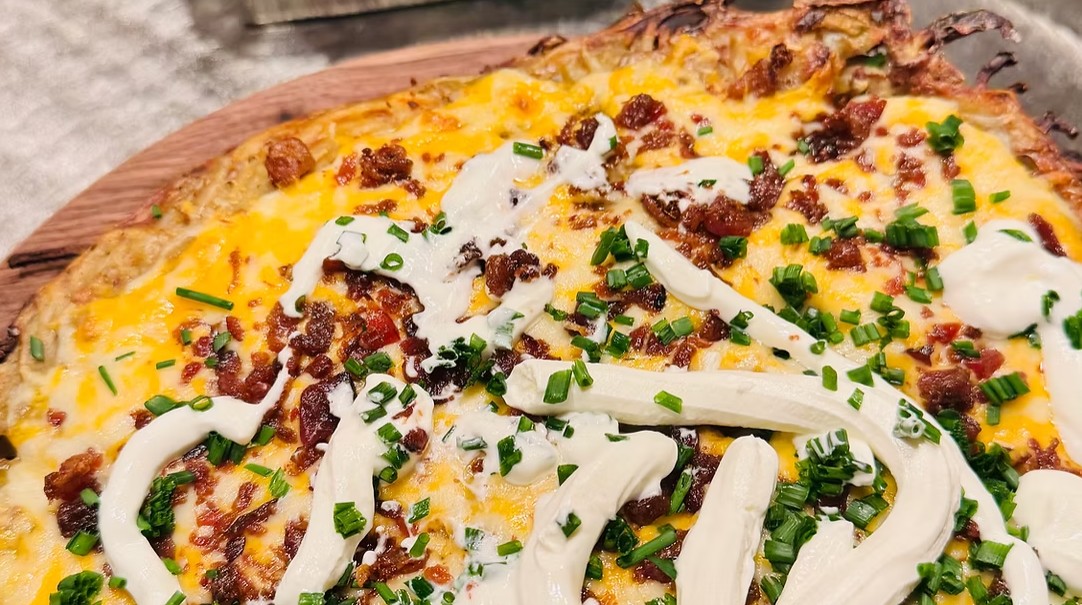
Enjoy crispy loaded potato pizza made with a shredded potato crust, melted cheese, smoky bacon, fresh chives, and cool sour cream.
Crispy, cheesy, and packed with classic baked potato toppings, this Crispy Loaded Potato Pizza with Shredded Potato Crust Recipe transforms simple russet potatoes into an irresistible comfort-food meal. The crust is made without traditional pizza dough. Instead, freshly shredded potatoes are combined with egg, cheese, Parmesan, and savory seasonings before being baked until firm and golden.
Once the potato crust is ready, it is covered with melted cheese and smoky crumbled bacon. Fresh chives add color and a mild onion flavor, while a drizzle of cool sour cream completes the familiar loaded potato experience. The result is a hearty pizza with crisp edges, a tender center, and plenty of rich, satisfying flavor in every slice.
Serve this potato crust pizza for a family dinner, weekend lunch, game day gathering, or casual party. It can also be prepared as a gluten-free meal when every packaged ingredient is checked for appropriate gluten-free labeling. The key to a successful crust is removing as much liquid as possible from the shredded potatoes before mixing and baking them.
Directions
Step 1: Preheat the Oven
Preheat the oven to 425°F. Line a large baking sheet or pizza pan with parchment paper. Lightly brush the parchment with the olive oil, spreading it over the area where the potato crust will be placed. The oil will help the bottom of the crust brown and prevent it from sticking.
Step 2: Prepare the Potatoes
Spiralize or shred the russet potatoes. If you use a spiralizer and the potato strands are very long, cut them into shorter pieces so the finished crust will be easier to shape and slice.
Place the shredded potatoes in a clean kitchen towel or cheesecloth. Gather the towel around the potatoes and squeeze firmly over the sink to remove the liquid. Open the towel, rearrange the potatoes, and squeeze them again. Removing as much moisture as possible is essential for creating a crust that becomes firm and crisp rather than soft or watery.
Step 3: Combine the Crust Ingredients
Transfer the squeezed potatoes to a large mixing bowl. Add the egg, 1/2 cup shredded mozzarella or cheddar cheese, Parmesan cheese, garlic powder, salt, and black pepper.
Stir until the egg, cheeses, and seasonings are distributed evenly throughout the potatoes. The egg and cheese help bind the shreds together, while the Parmesan adds savory flavor to the crust.
Step 4: Shape the Potato Crust
Spoon the potato mixture onto the prepared baking sheet or pizza pan. Spread it into a circle approximately 10 to 12 inches in diameter.
Press the mixture together firmly, creating an even layer without large gaps. Keep the thickness as consistent as possible from the center to the edges. A tightly packed and evenly shaped crust is more likely to hold together when it is topped, sliced, and served.
Step 5: Bake the Crust
Place the potato crust in the preheated oven and bake for 25 to 30 minutes. The crust should be firm in the center with golden-brown edges.
For an even crispier crust, carefully loosen it from the parchment using a wide spatula. Gently flip the crust and bake it for an additional 10 minutes. Take care while turning it because the hot crust can be delicate.
Step 6: Add the Loaded Potato Toppings
Remove the crust from the oven. Sprinkle 1 cup of shredded mozzarella or cheddar cheese evenly over its surface. Leave a small border around the edge so the golden potato crust remains visible.
Scatter the cooked, crumbled bacon over the cheese. Spread the bacon evenly so each serving has a balanced combination of potato, cheese, and smoky bacon.
Step 7: Finish Baking the Pizza
Return the topped pizza to the oven. Bake for 8 to 10 minutes, or until the cheese is fully melted and bubbling.
Check the edges of the crust during the final few minutes. Remove the pizza once the cheese is melted and the crust has reached your preferred level of browning.
Step 8: Add the Chives and Sour Cream
Allow the pizza to rest on the pan for a few minutes after removing it from the oven. Resting helps the melted cheese settle and makes the crust easier to slice without pulling the toppings away.
Sprinkle the finely diced fresh chives evenly over the pizza. Drizzle sour cream across the top just before serving. If the sour cream is too thick to drizzle easily, stir it until smooth before spooning it over the pizza.
Step 9: Slice and Serve
Use a sharp knife or pizza cutter to divide the pizza into six servings. Transfer the slices carefully to plates and serve them warm.
The pizza can be enjoyed as a complete comfort-food meal or served with a simple green salad or roasted vegetables. For an appetizer or game day snack, cut it into smaller wedges and provide additional sour cream for dipping.
Notes
Squeezing the moisture from the potatoes is the most important step in this recipe. Potatoes contain a considerable amount of water, and leaving too much of it behind may prevent the crust from becoming crisp.
A box grater, food processor with a shredding attachment, or spiralizer can be used to prepare the potatoes. Regardless of the method, aim for pieces that are fairly consistent in size so they cook evenly.
Russet potatoes are ideal for the crust because their naturally starchy texture helps the shredded pieces bind together during baking.
Mozzarella produces a mild flavor and stretchy melted texture. Cheddar creates a sharper, richer taste that closely resembles a traditional loaded baked potato. Use either option in the crust and on top of the pizza.
The bacon should be completely cooked before it is placed on the pizza. The short final baking time will heat and crisp the bacon slightly, but it is not long enough to cook raw bacon safely.
For additional flavor, customize the pizza with caramelized onions, sautéed mushrooms, diced jalapeños, or extra bacon. Cook vegetables before adding them and drain away excess liquid so they do not make the crust soggy.
Add the sour cream shortly before serving. Applying it before the pizza goes into the oven may cause it to separate or lose its cool, creamy contrast.
To prepare a fully gluten-free meal, check the labels on the bacon, cheeses, seasonings, and sour cream. Choose products with appropriate gluten-free labeling and protect the ingredients from cross-contact with gluten-containing foods, utensils, and preparation surfaces.
Store leftover pizza in an airtight container in the refrigerator for up to 3 days. Reheat it in a 375°F oven until warmed through and crisp. Oven reheating will preserve the potato crust’s texture better than microwaving.