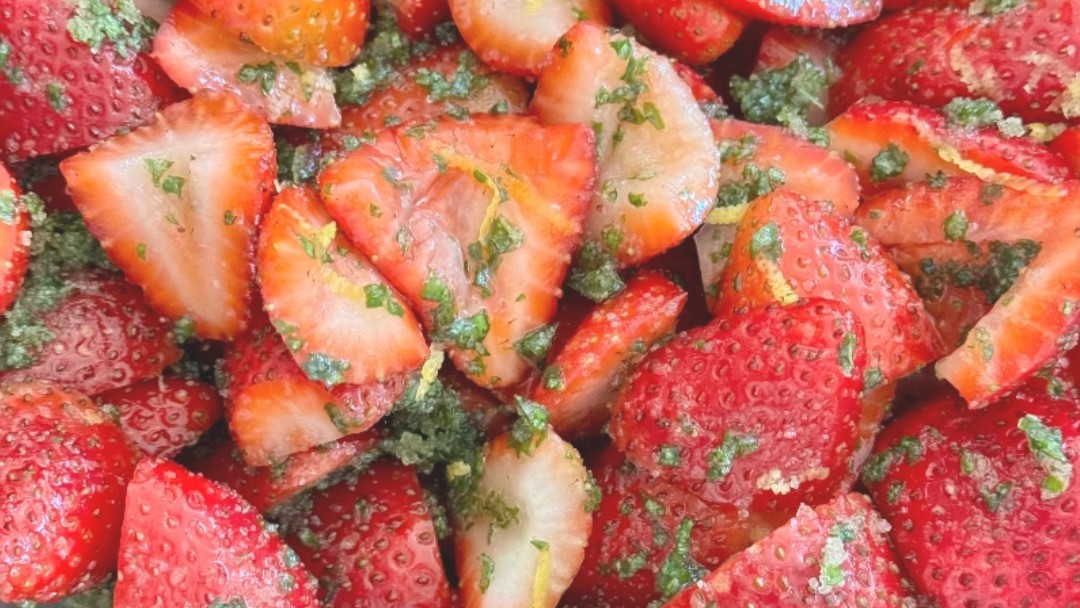
Make fragrant macerated strawberries with basil sugar, fresh lemon zest, and lemon juice for an easy summer dessert or brunch topping.
Fresh, juicy, and beautifully aromatic, this Fragrant Macerated Strawberries with Basil Sugar Recipe is an effortless way to showcase ripe seasonal berries. The strawberries are tossed with homemade basil sugar, fresh lemon zest, and lemon juice, creating a refreshing combination of sweet, herbal, and citrus flavors.
As the strawberries rest, the sugar gently draws out their natural juices and produces a glossy, flavorful syrup. No cooking is required, which allows the berries to retain their bright color and fresh flavor. The basil adds a subtle herbal note without overpowering the strawberries, while the lemon provides a lively finish.
Serve these macerated strawberries over gluten-free shortcake, pound cake, pancakes, waffles, cheesecake, yogurt, oatmeal, or vanilla ice cream. They are equally delicious served on their own with a spoonful of freshly whipped cream. This easy fruit topping is perfect for brunches, picnics, summer celebrations, and simple family desserts.
Directions
Step 1: Prepare the Strawberries
Rinse the strawberries gently under cool running water. Place them on a clean kitchen towel or paper towels and pat them completely dry.
Remove the green tops and hull the berries. Cut the strawberries into quarters, keeping the pieces relatively uniform so they macerate evenly. Set the prepared strawberries aside while making the basil sugar.
Step 2: Prepare the Basil Sugar
Place the granulated sugar and chopped basil in a small food processor, spice grinder, or mini chopper.
Pulse the ingredients 20 to 30 times, pausing to scrape down the sides of the container if necessary.
Continue processing until the basil is fully incorporated and the mixture resembles damp, lightly green sand. The basil sugar should be fragrant and should not contain any large pieces of basil.
If a food processor is unavailable, combine the sugar and finely chopped basil in a small bowl. Press and rub the basil into the sugar with the back of a spoon until the sugar becomes fragrant and lightly tinted.
Step 3: Combine the Ingredients
Transfer the prepared basil sugar to a medium mixing bowl.
Add the quartered strawberries, lemon zest, and fresh lemon juice. Stir gently with a spoon or flexible spatula until the strawberries are evenly coated.
Avoid stirring too vigorously. Ripe strawberries are delicate, and gentle mixing helps the pieces retain their shape while they release their juices.
Step 4: Macerate the Strawberries
Allow the strawberry mixture to sit at room temperature for at least 30 minutes. Stir the strawberries gently once or twice during the resting time to redistribute the basil sugar and developing syrup.
As the strawberries rest, the sugar draws moisture from the fruit. This process softens the berries slightly and creates a naturally sweet strawberry syrup.
For a softer texture, deeper flavor, and more syrup, allow the strawberries to rest for up to 2 hours. If the room is especially warm, cover the bowl and place it in the refrigerator during the additional resting time.
Step 5: Garnish the Strawberries
Stir the macerated strawberries gently before serving so the fruit is evenly coated with the syrup.
Taste the mixture. If desired, add a small amount of additional lemon zest for a brighter citrus flavor.
Garnish the strawberries with small fresh basil leaves or thinly sliced basil immediately before serving.
Step 6: Serve
Serve the macerated strawberries on their own or spoon them over gluten-free pound cake, angel food cake, shortcakes, pancakes, waffles, cheesecake, Greek yogurt, oatmeal, or vanilla ice cream.
For an elegant gluten-free strawberry shortcake, split gluten-free biscuits and fill them with lightly sweetened whipped cream and the macerated strawberries. Spoon some of the fragrant strawberry syrup over each serving.
The strawberries can also be layered with whipped cream and crumbled gluten-free cookies to create individual parfaits. Assemble the parfaits shortly before serving so the cookies do not become overly soft.
Step 7: Store
Transfer any leftover strawberries and syrup to an airtight container. Cover and refrigerate them for up to 24 hours.
The strawberries will continue to soften and release juice as they sit. For the freshest flavor and best texture, enjoy them on the day they are prepared.
Notes
The best macerated strawberries begin with ripe, in-season berries that are naturally sweet, fragrant, and juicy. Look for strawberries with a bright red color and fresh green leaves.
Dry the strawberries thoroughly after rinsing them. Excess water can dilute the basil sugar, lemon juice, and natural strawberry syrup.
Fresh sweet basil is an excellent choice for this recipe because its delicate herbal flavor complements the strawberries without overpowering them.
Finely chop the basil before combining it with the sugar. Smaller pieces blend into the sugar more evenly and release their aromatic oils more effectively.
When zesting the lemon, remove only the yellow outer layer. Avoid the white pith underneath because it can taste bitter.
Serve the strawberries after 30 minutes if you prefer firmer pieces of fruit. Allow them to rest for up to 2 hours if you prefer a softer texture and a more abundant syrup.
Although these strawberries may resemble a fruit compote, they are not cooked. Maceration softens the berries and creates syrup while preserving their fresh color and flavor.
For extra citrus flavor, add a little more lemon zest before serving. Avoid adding too much additional lemon juice because it may overpower the strawberries and make the syrup excessively tart.
Prepare the strawberries shortly before serving for the best texture. If they need to be made ahead, cover and refrigerate them, then allow them to stand at room temperature briefly before serving.
This recipe is naturally gluten-free. When serving someone with celiac disease or gluten sensitivity, check all packaged ingredients for appropriate gluten-free labeling and prevent cross-contact during preparation. Make sure any cakes, cookies, shortcakes, waffles, or other accompaniments are also appropriately labeled gluten-free.