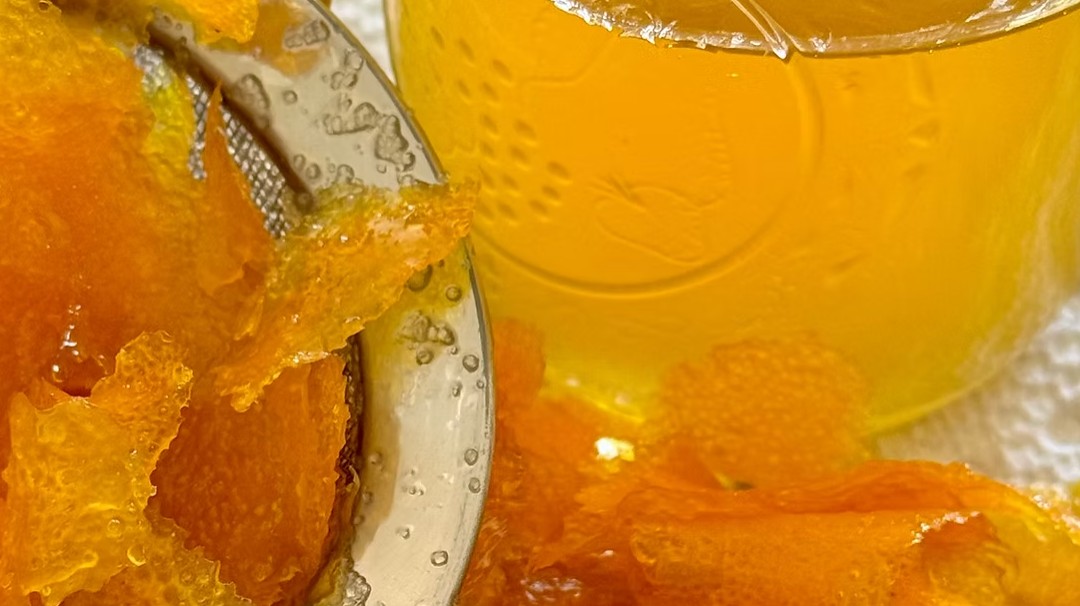
Make fragrant orange oleo saccharum with fresh orange peels and sugar for cocktails, mocktails, desserts, dressings, and citrus drinks.
Bright, aromatic, and richly flavored, this Fragrant Orange Oleo Saccharum Recipe transforms fresh orange peels and granulated sugar into a beautiful citrus oil syrup. As the ingredients rest together, the sugar draws fragrant essential oils from the peels, creating a concentrated syrup with the fresh aroma and complex flavor of ripe oranges.
Oleo saccharum has been used for centuries to bring citrus character to punches and other beverages. Unlike a standard orange simple syrup, this traditional preparation relies primarily on the flavorful oils in the peel rather than orange juice. The finished syrup adds sweetness, depth, and a pronounced orange fragrance to cocktails, mocktails, homemade sodas, desserts, salad dressings, and marinades.
Although the extraction process requires several hours, the hands-on preparation is quick and straightforward. For the best flavor, choose fresh organic, unwaxed oranges and remove only the thin orange portion of the peel. A short four-hour rest produces a lovely syrup, while a longer extraction of 12 to 24 hours creates a more concentrated citrus flavor.
Directions
Step 1: Wash and Dry the Oranges
Wash the oranges thoroughly under cool running water, gently rubbing their surfaces to remove any dirt or residue. Dry each orange completely with a clean kitchen towel. Starting with clean, dry fruit helps protect the freshness of the finished syrup and allows the sugar to cling to the peels more effectively.
Step 2: Remove the Orange Peels
Using a sharp vegetable peeler or paring knife, carefully remove the thin outer orange layer from each fruit. Work slowly and avoid cutting deeply into the white pith beneath the peel. A small amount of pith is not a concern, but too much can introduce an unpleasant bitterness that competes with the syrup’s bright citrus flavor.
Reserve the peeled oranges for juicing, snacking, baking, or another recipe. Since this preparation uses only the peels, it is an excellent way to capture additional flavor from the fruit without wasting the oranges themselves.
Step 3: Combine the Peels and Sugar
Place the orange peels in a large clean glass jar or nonreactive mixing bowl. Sprinkle the granulated sugar evenly over the peels, turning them as needed so the sugar reaches as much of their surface as possible.
Use a muddler or the back of a wooden spoon to gently press and rub the sugar into the peels. This action helps rupture the tiny oil glands on the surface of the orange skin and begins releasing the fragrant citrus oils.
If using a jar, seal it tightly and shake it vigorously for about 30 seconds. The goal is to coat the peels well, not to crush them into small pieces.
Step 4: Rest the Orange Peels
Cover the bowl tightly with plastic wrap, or keep the jar securely sealed. Leave the mixture at room temperature for at least 4 hours. For a stronger aroma and more concentrated flavor, allow the peels and sugar to rest for 12 to 24 hours.
During the resting period, the sugar will gradually draw moisture and essential oils from the orange peels. The mixture will change from dry, crystalline sugar to a glossy, fragrant golden-orange syrup. If using a jar, shake it occasionally to redistribute any undissolved sugar. If using a bowl, stir the mixture gently with a clean spoon.
Step 5: Check the Extraction
After the resting period, examine the mixture. The peels should appear shiny and slightly softened, and a fragrant syrup should have collected around them. Gently stir or press the peels again to encourage any remaining sugar to combine with the extracted citrus oils.
The exact amount of liquid can vary depending on the freshness, size, and oil content of the oranges. Fresh, aromatic oranges with firm peels generally produce the most flavorful results.
Step 6: Strain the Syrup
Set a fine-mesh sieve over a clean bowl or measuring cup. Pour the orange peel mixture into the sieve and allow the syrup to drain.
Press the peels gently with the back of a spoon to release as much flavorful liquid as possible. Avoid pressing so forcefully that pieces of peel or pith pass through the sieve. Discard the strained peels or add them to a compost bin.
Step 7: Store the Oleo Saccharum
Transfer the strained orange oleo saccharum to a clean glass jar or airtight container. Seal the container and refrigerate the syrup for up to one week.
Stir the syrup before each use. If some of the sugar crystallizes during refrigeration, let the container stand at room temperature for a few minutes and stir until the syrup becomes smooth again.
Step 8: Serve
Add orange oleo saccharum to cocktails, mocktails, sparkling water, iced tea, lemonade, or homemade soda. Begin with a small spoonful, taste, and add more as desired because the concentrated syrup can be intensely aromatic.
For desserts, drizzle it over pancakes, waffles, cheesecake, pound cake, ice cream, yogurt, or fresh fruit. It can also be brushed lightly over cake layers to add moisture and fragrant orange flavor.
Notes
Organic, unwaxed oranges are the best choice because the peels are the recipe’s primary ingredient. If organic fruit is unavailable, wash the oranges especially well before peeling them.
Choose oranges with firm, brightly colored, aromatic skins. Fruit with dry or shriveled peels may contain less flavorful oil and produce a milder syrup.
A Y-shaped vegetable peeler makes it easier to remove broad strips of orange peel without taking too much bitter white pith. A sharp paring knife also works when used carefully.
Do not grate the oranges with a fine zester for this preparation. Larger strips are easier to coat with sugar, muddle, and remove cleanly after the extraction period.
The four-hour resting time produces a useful citrus syrup, but a 12- to 24-hour extraction generally provides a deeper aroma and more concentrated orange flavor.
For a mixed-citrus variation, replace some of the orange peels with lemon, lime, or grapefruit peels. Grapefruit can add bitterness, so use it sparingly if you prefer a sweeter finished syrup.
To make a citrus vinaigrette, whisk a small amount of orange oleo saccharum with olive oil, vinegar, salt, pepper, and your preferred seasonings. The syrup can also add sweetness and citrus aroma to marinades for chicken, seafood, or roasted vegetables.
Orange oleo saccharum is traditionally used in punches and can bring a layered citrus flavor to an Old Fashioned, whiskey sour, spritz, or creamsicle-inspired cocktail.
Must be 21 years of age or older to purchase or consume alcoholic beverages. Please drink responsibly.
Store the syrup in a clean, tightly covered container in the refrigerator and use it within one week. Discard it if you notice mold, fermentation, an unpleasant odor, or another sign of spoilage.