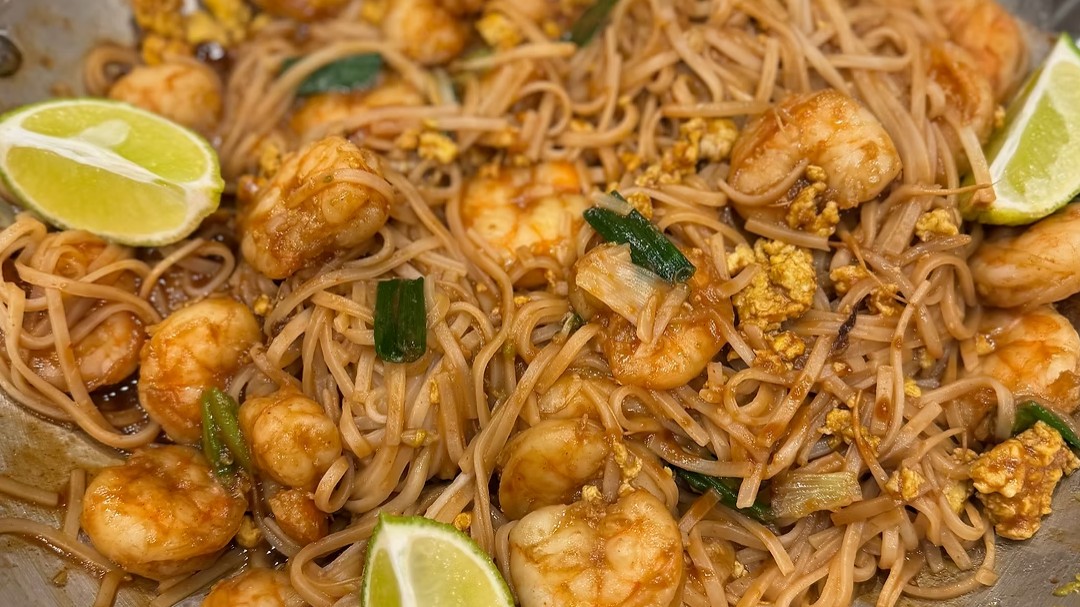
Make an easy gluten-free homemade Pad Thai with tender rice noodles, tamarind sauce, crisp vegetables, eggs, and your choice of protein in 25 minutes.
This Easy Gluten-Free Homemade Pad Thai Recipe brings the vibrant flavors of a favorite Thai restaurant right to your kitchen. Tender rice noodles are tossed with eggs, crisp bean sprouts, aromatic garlic, crunchy peanuts, and a rich tamarind sauce that balances sweet, tangy, savory, and spicy flavors.
Preparing the noodles until they are flexible but still slightly firm is the key to achieving the best texture. They finish cooking in the skillet, where they absorb the glossy homemade Pad Thai sauce without becoming overly soft. Serve the noodles as they are, or add shrimp, chicken, or tofu for a satisfying family dinner.
Ready in approximately 25 minutes, this flavorful gluten-free noodle dish is an excellent choice for busy weeknights. Fresh lime wedges, chopped peanuts, bean sprouts, and cilantro allow everyone to customize their serving with extra brightness, crunch, or heat.
Ingredients
For the Rice Noodles
1 package thin Pad Thai rice noodles
For the Pad Thai Sauce
1 1/2 tablespoons gluten-free tamarind puree
3 tablespoons packed brown sugar
2 tablespoons gluten-free fish sauce
1 1/2 tablespoons gluten-free oyster sauce
1/4 teaspoon cayenne pepper
1 tablespoon fresh lime juice
1 tablespoon gluten-free Sriracha, or more to taste
2 tablespoons creamy peanut butter
For the Stir-Fry
2 to 3 tablespoons oil, divided
1/2 onion, thinly sliced, or 1 medium shallot, finely chopped
2 garlic cloves, finely minced
2 large eggs, lightly beaten
1 1/2 cups bean sprouts
1/4 cup garlic chives, cut into 1 1/4-inch pieces
1/4 cup finely chopped peanuts, divided
Optional Protein Additions
1 pound shrimp, peeled and deveined
or
1 pound boneless, skinless chicken breast, thinly sliced
or
14 ounces extra-firm tofu, pressed and cubed
For Serving
Fresh lime wedges
Additional bean sprouts
Ground chili pepper or cayenne pepper
Extra chopped peanuts
Fresh cilantro, optional
Directions
Step 1: Soak the Rice Noodles
Place the rice noodles in a large heat-safe bowl. Pour in enough boiling water to cover the noodles completely. Soak them for approximately 5 minutes, or until they are flexible but remain slightly firm in the center.
Immediately drain the noodles in a colander and rinse them under cold running water. Set them aside. Do not soak the noodles until completely tender because they will continue cooking when combined with the sauce.
Step 2: Prepare the Pad Thai Sauce
In a small bowl, combine the tamarind puree, brown sugar, fish sauce, oyster sauce, cayenne pepper, lime juice, Sriracha, and peanut butter.
Whisk until the brown sugar dissolves and the peanut butter is thoroughly incorporated. The finished sauce should be smooth and slightly thick. Set it aside while preparing the stir-fry.
Step 3: Cook the Optional Protein
If using shrimp, chicken, or tofu, heat 1 tablespoon of the oil in a large wok or skillet over high heat.
Add the selected protein and cook until nearly done. Cook shrimp until pink and opaque. Cook chicken until lightly browned and it reaches a safe internal temperature of 165°F. Cook tofu until golden on the outside.
Transfer the cooked protein to a clean plate and set it aside. If preparing chicken, do not return it to a plate or surface that held the raw chicken.
Step 4: Sauté the Aromatics
Add the remaining oil to the wok or skillet as needed. Add the onion or shallot and cook for approximately 1 minute, stirring frequently.
Add the garlic and cook for another 30 seconds, or just until fragrant. Watch the garlic closely so it does not burn.
Step 5: Scramble the Eggs
Push the onion and garlic to one side of the skillet. Pour the beaten eggs into the open side.
Allow the eggs to set briefly, then scramble them with a spatula. Once the eggs are cooked, stir them together with the onion and garlic.
Step 6: Add the Noodles and Sauce
Return the cooked protein to the skillet, if using. Add the soaked rice noodles, bean sprouts, and prepared Pad Thai sauce.
Use tongs or two large spoons to gently toss the ingredients until the noodles are evenly coated.
Continue stir-frying for 1 to 2 minutes, allowing the noodles to finish cooking and absorb the sauce.
If the noodles appear dry or begin sticking together, add 1 to 2 tablespoons of water. Continue tossing gently until the sauce evenly coats the noodles.
Step 7: Finish the Pad Thai
Add the garlic chives and half of the chopped peanuts. Toss the ingredients together for approximately 30 seconds.
Remove the skillet from the heat promptly so the vegetables retain some of their fresh texture.
Step 8: Garnish and Serve
Divide the Pad Thai among four serving bowls. Garnish each serving with the remaining peanuts, additional bean sprouts, and fresh cilantro, if desired.
Serve immediately with fresh lime wedges. Squeeze the lime juice over the noodles just before eating, and add ground chili pepper or cayenne pepper for more heat.
Notes
Choose rice noodles labeled gluten-free, and verify the labels on every packaged ingredient. Fish sauce, oyster sauce, Sriracha, tamarind puree, and peanut butter may contain gluten-containing additives or face cross-contact during processing.
When cooking for someone with celiac disease or gluten sensitivity, prevent cross-contact by using clean cookware, utensils, preparation surfaces, and serving dishes.
Tamarind puree provides the characteristic sweet and tangy flavor of Pad Thai. Tamarind concentrate may be stronger, so it should not be substituted in the same quantity without adjusting it to taste.
Do not over-soak the rice noodles. They should be flexible but slightly firm when drained because they will continue softening in the skillet.
Pad Thai cooks quickly once the ingredients enter the hot pan. Measure and prepare all the ingredients before beginning the stir-fry.
Fresh garlic chives provide a traditional flavor, but green onions may be substituted if garlic chives are unavailable.
For vegetarian Pad Thai, use the tofu option and replace the fish sauce and oyster sauce with appropriately labeled gluten-free vegetarian alternatives.
For additional vegetables, add shredded carrots, thinly sliced red bell peppers, snow peas, or finely shredded cabbage.
For a nut-free variation, omit the peanuts and peanut butter. Use roasted sunflower seeds or pumpkin seeds for added texture and a suitable nut-free alternative to peanut butter in the sauce.
Verify all substitute labels for dietary suitability.
Store leftover Pad Thai in an airtight container in the refrigerator for up to 2 days. Keep the garnishes in separate containers for the freshest texture.
Reheat the noodles gently in a skillet over medium heat. Add a small splash of water and toss carefully until warmed through.