Classic Pavlova: A Light and Elegant Fruit-Topped Dessert
Discover the crisp shell, soft center, whipped cream, fresh fruit, seasonal toppings, and elegant appeal of classic pavlova.
Classic Pavlova: A Light and Elegant Fruit-Topped Dessert combines a crisp meringue shell, a soft marshmallow-like center, fluffy whipped cream, and colorful fresh fruit. The contrast between these textures makes every serving feel delicate, refreshing, and luxurious.
Although pavlova has an impressive appearance, much of its beauty comes from its simplicity. A pale meringue base creates the perfect backdrop for clouds of cream and jewel-toned fruit. Small cracks and gentle curves give the dessert a charming homemade character.
Pavlova is a beautiful choice for birthdays, brunches, holidays, dinner parties, and summer gatherings. Fruit and garnishes can be changed with the seasons, making this classic dessert suitable for celebrations throughout the year.
What Makes Classic Pavlova Special?
Pavlova is different from a traditional baked meringue because it is not meant to be crisp all the way through. Its exterior should feel light and delicate, while the center remains soft, tender, and almost marshmallow-like.
Whipped cream provides a smooth and creamy contrast to the crisp shell. Fresh fruit cuts through the sweetness with bright flavor and natural acidity. Together, these elements create a balanced dessert that feels satisfying without being excessively heavy.
Its rustic appearance is also part of its appeal. Small cracks are normal, and every pavlova develops its own shape and character. Once the surface is covered with cream and fruit, those natural imperfections contribute to its elegant presentation.
The Secret Behind Pavlova’s Signature Texture
A stable meringue is the foundation of a beautiful pavlova. Egg whites need a clean environment to expand properly, since even a small amount of grease or egg yolk can affect their ability to whip.
Sugar strengthens the meringue and helps create its smooth, glossy appearance. Fine caster sugar is especially useful because it dissolves more easily than coarser granulated sugar. Gradual incorporation encourages a silky texture and reduces the possibility of undissolved sugar remaining in the meringue.
Slow, gentle baking allows the exterior to dry and become crisp while protecting the soft center. Gradual cooling is equally important because a sudden change in temperature can contribute to cracking or collapse.
Why Weather Can Affect Pavlova
Meringue is sensitive to moisture in the air. Humid conditions can cause a finished pavlova to absorb moisture and lose some of its crispness. A cool, dry day usually provides the best environment for preparing and storing the undecorated shell.
The plain shell can be made in advance and kept in an airtight container at room temperature. Whipped cream and fruit should be added close to serving time because their moisture will gradually soften the meringue.
This softening is natural and does not make the dessert unpleasant, but freshly assembled pavlova offers the most noticeable contrast between the crisp exterior, tender center, creamy topping, and juicy fruit.
Choosing the Best Fruit for Pavlova
Fresh fruit brings flavor, color, and balance to pavlova. Tart or gently sweet fruit works particularly well because it complements the sweetness of the meringue.
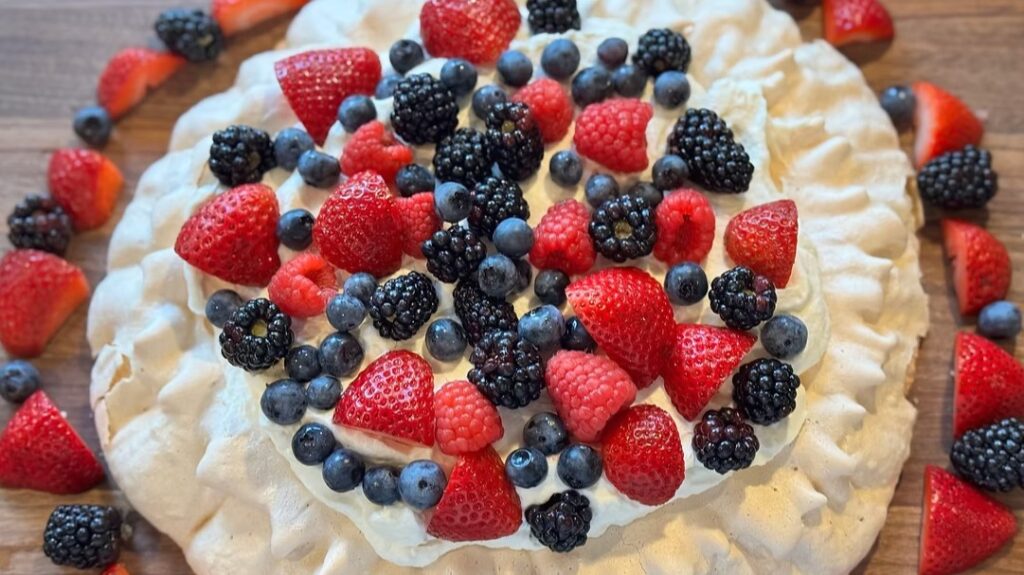
Strawberries, blueberries, raspberries, and blackberries create a classic mixed-berry topping. Their red, blue, and purple shades look striking against the white whipped cream.
Kiwi provides refreshing flavor and a vivid green accent. Mango, pineapple, and passion fruit can transform pavlova into a tropical dessert, while peaches add soft color and mellow sweetness.
Fruit should be ripe and flavorful but firm enough to retain its shape. After washing, it should be dried thoroughly to prevent unnecessary moisture from reaching the meringue.
Seasonal Topping Inspiration
A fruit-topped pavlova can reflect the colors and flavors of almost any season. Strawberries and blueberries are ideal for spring and summer celebrations, while peaches, mango, and passion fruit create a sunny tropical presentation.
For an elegant holiday dessert, red berries and sliced kiwi provide a naturally festive combination. A single type of fruit can create a simple, polished appearance, while a varied assortment produces a more abundant centerpiece.
Flavor can also be enhanced with a light drizzle of lemon curd, berry sauce, or melted white chocolate. These finishing touches should be used sparingly so the delicate meringue and fresh fruit remain the main attractions.
How to Create a Beautiful Presentation
Pavlova is most appealing when its decoration looks generous but relaxed. Whipped cream can be softly spread across the center, allowing some of the meringue’s raised edges and natural texture to remain visible.
Fruit can be arranged in clusters instead of rigid rows. Combining whole berries with sliced fruit creates visual depth, while passion fruit pulp or a light sauce adds color and movement.
A few carefully placed garnishes can elevate the presentation without making it look overly formal. The goal is to celebrate the dessert’s light, cloudlike appearance rather than conceal its natural shape.
Serving Pavlova for Celebrations
Pavlova makes an impressive centerpiece for a wide range of occasions. Its airy texture is welcome after a rich holiday dinner, while its colorful fruit topping makes it equally suitable for brunches, showers, birthdays, and outdoor summer gatherings.
The dessert is best assembled shortly before it is presented. This preserves the crispness of the shell and keeps the fruit looking fresh. A sharp knife and gentle pressure help create neat servings, although some cracking is expected as the delicate shell is cut.
Pavlova is naturally gluten-free, which can make it a suitable option for guests who avoid gluten. When serving someone with celiac disease or gluten sensitivity, all packaged ingredients should have appropriate gluten-free labeling, and cross-contact should be prevented.
A Timeless Dessert With an Elegant Finish
Classic Pavlova: A Light and Elegant Fruit-Topped Dessert is memorable for its combination of crisp meringue, tender center, smooth whipped cream, and vibrant fruit. Each component contributes a different texture while allowing the dessert to remain light and balanced.
Its versatility is another reason pavlova remains such a beloved choice. Seasonal fruit can completely change its appearance, while simple garnishes make it easy to coordinate with a particular holiday or celebration.
Whether topped with mixed berries, tropical fruit, or a carefully selected seasonal combination, pavlova brings color, elegance, and a sense of occasion to the table.
An elegant Classic Pavlova with a crisp meringue shell, fluffy whipped cream, and colorful fresh berries.
Discover the delightful differences between pavlova, Eton mess, and meringata. Each dessert offers a unique twist on the classic meringue treat, perfect for any celebration.
Introducing Cracked Cannoli Layers in a Mason Jar, a delightful twist on the classic Italian dessert that combines creamy ricotta filling, crispy pastry layers, and beautiful individual servings. Perfect for parties, holidays, and make-ahead entertaining.
Discover Italian Forest Fruit Sorbet, also called Sorbetto ai Frutti di Bosco, Mixed Berry Sorbet, or Wild Berry Sorbet, and explore its refreshing summer flavor. Italian Forest Fruit Sorbet captures the vivid color, refreshing texture, and naturally sweet-tart flavor of summer berries. Inspired by the Italian dessert known as sorbetto ai frutti di bosco, it brings together fruits such as strawberries, raspberries, blackberries, blueberries, and currants. Every berry contributes something distinctive. Strawberries provide familiar sweetness, raspberries add a floral aroma, blackberries bring depth, blueberries offer mellow fruitiness, and currants introduce a lively tart finish. Together, they create a vibrant frozen dessert that feels both rustic and elegant. Unlike ice cream and traditional gelato, fruit sorbet does not depend on milk or cream for its character. The fruit remains at the center of the experience, making this a light and refreshing choice for warm afternoons, garden parties, summer dinners, and special celebrations. Other Names for Italian Forest Fruit Sorbet Italian Forest Fruit Sorbet is known by several names. In Italy, it may be called sorbetto ai frutti di bosco, which translates to forest fruit sorbet. The variation sorbetto di frutti di bosco is also used and conveys essentially the same meaning. English menus, cookbooks, and dessert shops may identify it as Forest Fruit Sorbet, Forest Berry Sorbet, Mixed Berry Sorbet, Wild Berry Sorbet, Woodland Berry Sorbet, or Summer Berry Sorbet. Some menus retain the Italian wording and simply call it Frutti di Bosco Sorbet. The term Wild Berry Sorbet does not always mean the fruit was harvested in the wild. It is often used as a descriptive name for a blend of deeply colored berries. Likewise, Mixed Berry Sorbet is a broad name that may describe the same dessert even when the phrase “forest fruit” is not used. The exact name may change, but the central idea remains the same: a refreshing sorbet that showcases several complementary berry varieties. What Does Frutti di Bosco Mean? The Italian phrase frutti di bosco translates literally to “fruits of the forest.” It refers to an assortment of small berries rather than one fixed combination. Depending on the region and season, a forest fruit blend may include raspberries, blackberries, blueberries, strawberries, red currants, black currants, or other locally available berries. Different selections produce different levels of sweetness, acidity, fragrance, and color. In Italy, frutti di bosco is not limited to sorbet. The phrase may also appear on menus describing gelato, pastries, cakes, yogurt, sauces, preserves, and other berry-flavored foods. Sorbetto and the Italian Frozen Dessert Tradition Sorbetto is commonly displayed alongside gelato in Italian gelaterias, but the two frozen desserts offer distinctly different experiences. Gelato generally has a dairy base and a dense, creamy consistency. Sorbetto is centered around fruit and has a lighter, more refreshing character. Without cream softening the flavor, the berries become particularly expressive. Their natural sweetness, tartness, fragrance, and color define the dessert. Sorbetto may be enjoyed as an afternoon refreshment, a light dessert, or a palate cleanser between courses. Its clean fruit flavor is especially welcome after a rich or savory meal. The Character of Forest Berries Forest fruit sorbet has greater complexity than many single-fruit frozen desserts. Instead of highlighting only one flavor, it combines several berries that balance and enhance one another. Strawberries often form the sweet and aromatic foundation. Raspberries introduce brightness and a delicate floral quality, while blueberries contribute depth without adding too much acidity. Blackberries create a darker color and a rich fruit flavor. Currants provide a sharper note that prevents the blend from tasting overly sweet. When these fruits are combined, the result is layered, refreshing, and distinctly berry-forward. A strawberry-heavy blend will usually taste sweeter and softer. A combination featuring more blackberries and currants will have a deeper color and a stronger tart finish. This flexibility allows forest fruit sorbet to change with the season and the available fruit. Fresh and Frozen Berries Fresh berries are ideal when they are fragrant, ripe, and naturally sweet. Fruit harvested near peak ripeness can give sorbet an especially vivid aroma and a bright seasonal character. Frozen berries are also an excellent choice. They are convenient, widely available, and often frozen soon after harvesting. They make it possible to enjoy the flavor of forest fruit sorbet even when fresh local berries are not in season. A combination of fresh and frozen berries can offer the best of both options. The most important consideration is flavor. Because sorbet places the fruit at the center of the dessert, ripe and flavorful berries create the most satisfying result. The Importance of Balance Forest fruits contain different amounts of natural sugar, water, and acidity. These qualities influence both the flavor and texture of sorbet. Sweet strawberries may soften the tartness of currants, while raspberries can brighten a blueberry-heavy blend. Blackberries contribute richness, but their flavor may become dominant if they are not balanced with sweeter or more aromatic fruit. Citrus is often paired with forest berries because it sharpens their flavor and keeps the dessert tasting fresh. Lemon is particularly complementary because its acidity supports the berries without overpowering them. A well-balanced forest fruit sorbet should taste bright and fruity rather than excessively sweet. The tartness should be noticeable enough to refresh the palate while still allowing the natural sweetness of the berries to come through. Creating a Smooth Sorbet Texture Texture is one of the defining features of a memorable sorbet. It should be firm enough to hold a scoop but soft enough to melt smoothly on the tongue. Sugar affects more than sweetness. It also influences how the fruit freezes and helps prevent the dessert from becoming excessively hard or icy. The natural sugar and water content of the berries can cause the finished texture to vary slightly from one fruit blend to another. Churning helps create a finer consistency by breaking apart ice crystals during freezing. A manually frozen sorbet can also develop an enjoyable texture when the mixture is stirred periodically as it begins to firm.