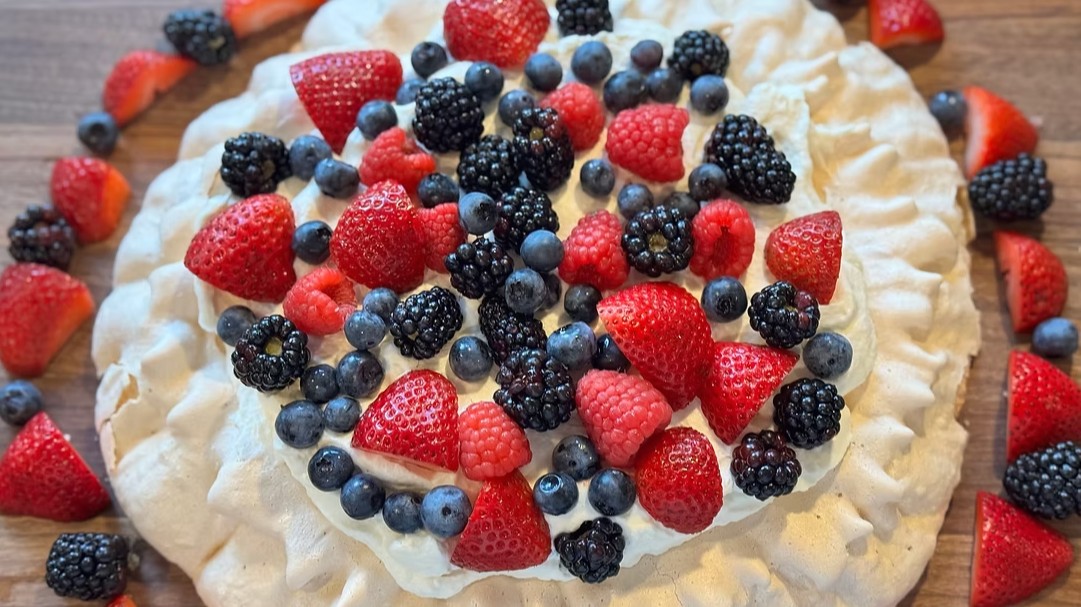
Make a classic pavlova with a crisp meringue shell, soft center, fluffy whipped cream, and colorful fresh fruit for an elegant dessert.
Light, elegant, and beautifully festive, this Classic Pavlova Recipe With Fresh Fruit and Whipped Cream features a crisp meringue shell with a soft, marshmallow-like center. A generous layer of lightly sweetened whipped cream and colorful fresh fruit makes every serving creamy, crisp, and refreshing.
The secret to a successful homemade pavlova is slow baking followed by gradual cooling. This gentle process helps create the dessert’s signature contrast between its delicate exterior and pillowy center.
Naturally gluten-free and easy to customize with seasonal fruit, this impressive pavlova is perfect for holidays, birthdays, brunches, dinner parties, and summer celebrations.
Directions
Step 1: Prepare the Oven
Preheat the oven to 300°F. Position an oven rack in the center and line a large baking sheet with parchment paper.
Step 2: Begin the Meringue
Place the egg whites in the clean, dry bowl of a stand mixer fitted with the whisk attachment. Beat on high speed until the egg whites are frothy and opaque. Add the cream of tartar and salt.
Step 3: Add the Sugar
Reduce the mixer speed to low. Gradually add the caster sugar, one spoonful at a time, allowing each addition to begin dissolving before adding the next.
Once all the sugar has been added, increase the speed to high. Continue beating until the meringue is thick and glossy and holds stiff peaks.
Add the vanilla extract and beat for 1 additional minute or until fully incorporated. The finished meringue should be smooth, shiny, and voluminous.
Step 4: Shape the Pavlova
Spoon the meringue onto the prepared baking sheet. Use a spatula to shape it into an 8- to 9-inch round or oval.
Form slightly raised edges around the perimeter and create a shallow well in the center. This well will hold the whipped cream and fresh fruit after the pavlova has baked and cooled.
Step 5: Bake the Pavlova
Place the baking sheet in the oven and bake at 300°F for 10 minutes.
Without opening the oven door, reduce the temperature to 250°F. Continue baking for 2 hours and 10 minutes or until the exterior feels dry and crisp.
Step 6: Cool the Pavlova
Turn off the oven and leave the pavlova inside with the door closed for at least 2 hours. This gradual cooling process helps prevent excessive cracking and allows the center to develop its soft, marshmallow-like texture.
Once the pavlova is completely cool, carefully transfer it to a serving platter.
Step 7: Prepare the Whipped Cream
Place the cold heavy cream, confectioners’ sugar, and vanilla extract in a chilled mixing bowl. Beat until soft peaks form.
Do not overwhip the cream. It should remain smooth, light, and fluffy.
Step 8: Add the Whipped Cream and Fruit
Spoon the whipped cream into the center of the cooled pavlova. Arrange the fresh fruit over the whipped cream, combining different colors and textures for a beautiful presentation.
Step 9: Serve the Pavlova
Serve the pavlova immediately after assembling. Slice it gently with a sharp knife and carefully transfer each serving to a dessert plate.
Notes
Room-temperature egg whites whip to a greater volume than cold egg whites.
Separate the eggs while they are cold, then allow the whites to reach room temperature before preparing the meringue.
Make sure the mixing bowl and whisk are completely clean and dry. Even a small amount of grease or egg yolk can prevent the egg whites from whipping properly.
Caster sugar dissolves more readily than regular granulated sugar, helping produce a smoother meringue.
Add the sugar slowly. Adding it too quickly may leave undissolved sugar in the meringue and affect the finished texture.
Do not open the oven door during baking. Sudden temperature changes may cause the pavlova to crack or collapse.
Small cracks are normal and add to the rustic appearance of a homemade pavlova.
The plain pavlova shell can be prepared one day ahead. Once completely cool, store it in an airtight container at room temperature in a cool, dry place.
Humidity may soften the meringue.
Add the whipped cream and fresh fruit shortly before serving. Refrigerate assembled leftovers promptly and enjoy them as soon as possible because the topping will gradually soften the crisp shell.
Strawberries, blueberries, raspberries, blackberries, kiwi, mango, peaches, and passion fruit all pair beautifully with pavlova.
For a tropical variation, top the pavlova with mango, pineapple, kiwi, and passion fruit. For an extra flourish, drizzle it lightly with lemon curd, berry sauce, or melted white chocolate.
This recipe is naturally gluten-free. When serving someone with celiac disease or gluten sensitivity, check all packaged ingredients for appropriate gluten-free labeling and prevent cross-contact during preparation.