
Create a beautiful pet-friendly garden with safe plants, secure fencing, shaded rest areas, paw-friendly surfaces, and practical landscaping tips.
A beautiful garden can be more than a place to grow flowers, herbs, and vegetables. With thoughtful planning, it can also become a safe outdoor retreat where pets can play, explore, and relax alongside the rest of the family.
Dogs, cats, and other animal companions experience gardens differently from people. They may chew leaves, investigate unfamiliar scents, dig beneath fences, drink from water features, or rest on surfaces that become dangerously hot. A pet-friendly garden anticipates these natural behaviors while balancing safety, comfort, and attractive landscaping.
Why a Pet-Friendly Garden Matters
Outdoor time can provide pets with exercise, mental stimulation, fresh air, and opportunities to explore. However, an ordinary garden may contain hazards that are easy to overlook, including toxic plants, cocoa mulch, sharp edging, unsecured tools, chemical treatments, hot paving, and escape routes.
Designing with pets in mind helps reduce these risks. It can also protect flower beds and vegetable gardens by directing running, digging, and exploration toward more appropriate areas.
Research Every Plant Before Adding It
Choosing appropriate plants is one of the most important parts of creating a pet-safe outdoor space. Many familiar flowers, shrubs, bulbs, and trees can be harmful if pets chew or swallow them.
Plant safety can vary among dogs, cats, horses, and other animals. Common names may also refer to more than one species, so confirm the botanical name before planting.
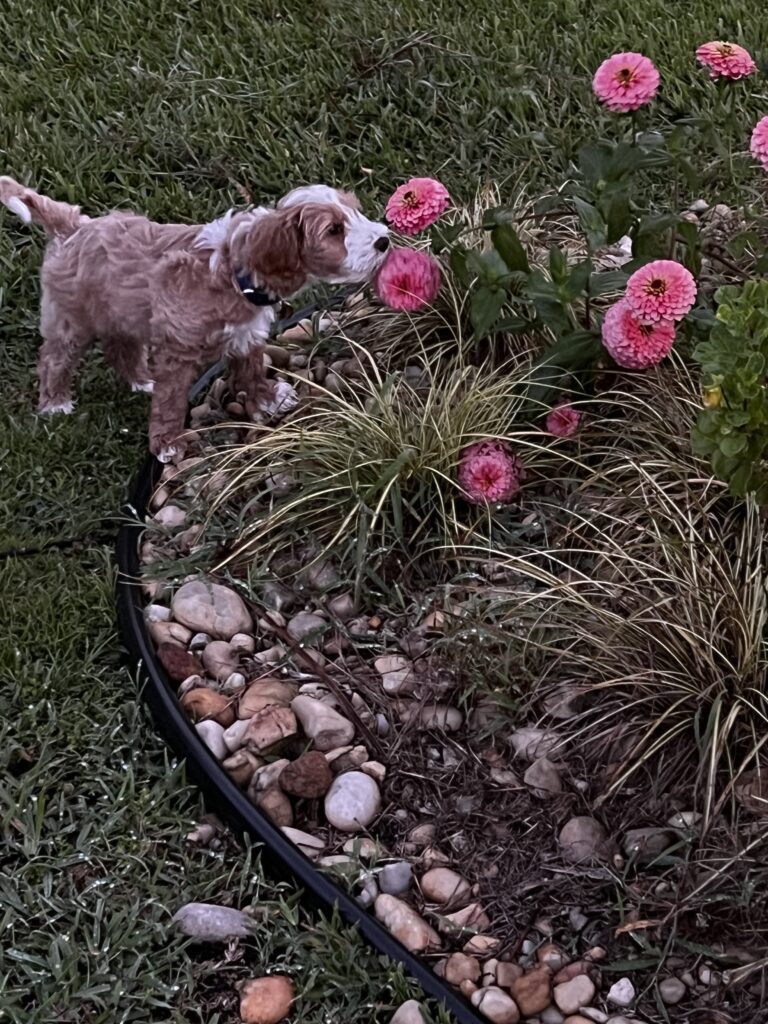
Depending on the animals in your household, suitable choices may include sunflowers, zinnias, snapdragons, basil, thyme, and rosemary. Roses are generally considered non-toxic, but thorny varieties should be positioned away from running paths and play areas.
Even plants classified as non-toxic may cause stomach upset when consumed. Discourage pets from chewing garden plants and contact a veterinarian promptly if you suspect an unsafe plant has been ingested.
Create Clear Paths and Play Areas
Pets are more likely to avoid delicate flower beds when the garden provides inviting places for movement and exploration. An open lawn, durable play area, or looping path can give dogs room to patrol, sniff, and exercise.
Use smooth, paw-friendly surfaces that do not become excessively hot. Avoid sharp gravel, splintered materials, exposed landscape staples, and edging with pointed corners.
Cats may enjoy secure elevated platforms, shaded observation areas, scratching surfaces, and containers planted with cat grass. Cats allowed outdoors should ideally use a secure enclosure or catio that provides enrichment without allowing them to roam.
Include Comfortable Places to Rest
Every pet-friendly garden needs quiet areas where animals can settle away from active play. A sheltered corner, covered patio, or shaded spot beneath a tree can provide a comfortable retreat.
Select outdoor furnishings that are sturdy and easy to clean. Check resting areas regularly for sharp objects, insects, damaged materials, and plants that have dropped potentially hazardous seeds, berries, or branches.
Provide Reliable Shade and Fresh Water
Pets need continuous access to shade and clean drinking water while spending time outside. Keep in mind that shade moves as the sun changes position, so a comfortable morning location may be exposed to full sun later in the day.
Trees, pergolas, umbrellas, shade sails, and covered patios can all provide protection. Place sturdy water bowls in shaded areas and refresh them frequently.
Watch for signs of overheating, including excessive panting, heavy drooling, weakness, vomiting, confusion, or collapse. Move an overheated pet to a cooler location and seek veterinary assistance promptly. Pets should never be left outdoors unattended for extended periods during hot weather.
Install Secure Boundaries
A secure fence can prevent pets from wandering into traffic, neighboring yards, or unfamiliar areas. Inspect the entire boundary regularly for loose boards, damaged gates, gaps, and objects pets might use to climb.
Dogs that dig may require additional reinforcement along the base of the fence. Gates should close securely, and latches should be positioned where clever pets cannot reach them.
A standard fence may not safely contain a cat. A fully enclosed outdoor structure can provide a more dependable alternative while protecting wildlife and preventing roaming.
Choose Mulch Carefully
Mulch helps conserve moisture, suppress weeds, and improve the appearance of planting beds, but some products are inappropriate for homes with pets.
Cocoa bean mulch should be avoided because it contains chocolate-related compounds that can be toxic to dogs if ingested. Moldy compost and certain discarded foods may also create serious health risks.
Ask your veterinarian about suitable materials for your individual pets. Whatever material you choose, discourage chewing and supervise animals that habitually eat mulch, bark, stones, or soil.
Use Garden Chemicals With Caution
Pesticides, herbicides, fertilizers, slug controls, and other garden products may be dangerous when swallowed, inhaled, or carried indoors on paws and fur.
Always read the entire product label and follow its instructions exactly. Keep pets away during application and for the full period stated on the label. Store every product in its original container inside a secure cabinet or locked shed.
Reducing chemical use can make garden management easier around pets. Hand weeding, mulching, physical barriers, careful plant selection, and other integrated pest-management practices may help address problems with less reliance on treatments.
Do not assume a product is harmless simply because it is labeled natural or organic. Confirm its suitability before using it where pets live or play.
Protect Flower Beds and Food Gardens
Running, digging, and curious noses can quickly damage young plants. Raised beds, low barriers, broad pathways, and clearly defined borders can help direct pets away from sensitive areas.
Place thorny plants, delicate seedlings, and tempting produce beyond easy reach. Secure compost bins and remove fallen fruits, nuts, mushrooms, and plant debris before pets can investigate them.
If you grow food, keep pet toileting areas separate from edible gardens. This improves cleanliness and makes routine garden care more manageable.
Add Safe Sensory Enrichment
A well-designed garden can provide valuable mental stimulation through scent, texture, sound, and movement. Pet-appropriate herbs, rustling plants, shaded observation areas, and varied walking surfaces can encourage calm exploration.
Choose each feature with your pet’s habits in mind. Ornamental grasses with sharp or barbed seed heads may become embedded in a dog’s skin, ears, eyes, or paws. Water features should be shallow or securely protected, easy to clean, and free from unsafe treatments.
Pollinator areas can still be included, but placing them away from primary play zones may reduce unwanted encounters with bees and other insects.
Consider a Designated Digging Area
Digging is a natural behavior for many dogs. A designated digging zone may be more effective than repeatedly trying to stop the behavior.
Fill a defined section with clean sand or loose soil and encourage your dog to use it by burying toys or treats near the surface. Position the area in partial shade and inspect it regularly for waste, sharp objects, and excessive heat.
Consistent redirection can help pets understand where digging is permitted while protecting lawns and planting beds.
Keep Tools and Supplies Out of Reach
Pruners, rakes, wire, plant supports, hoses, and power equipment can cause injuries when left unattended. Return tools to a locked shed, cabinet, or secure storage bench immediately after use.
Store fertilizers, pest-control products, bulbs, seeds, compost additives, and fuel separately from pet food and supplies. Clean up spills promptly and never leave open containers where an animal can investigate them.
Inspect the Garden Regularly
A pet-friendly garden requires ongoing attention. Plants grow, fences loosen, wildlife arrives, and seasonal weather creates new hazards.
Walk through the garden regularly to look for damaged fencing, unsecured gates, toxic weeds, mushrooms, exposed wires, sharp edging, standing water, hot surfaces, pest nests, fallen plant material, recently treated areas, and damaged equipment.
Frequent inspections make it easier to correct small problems before they become serious.
Building an Outdoor Space Pets Will Love
Creating a pet-friendly garden does not require sacrificing beauty, productivity, or personal style. Safe plant choices, secure boundaries, comfortable resting areas, fresh water, appropriate surfaces, and dedicated activity zones can all become part of an attractive landscape.
The best design reflects the individual animals using the space. Consider their size, age, mobility, health, temperament, and natural behaviors. A carefully planned garden can become a shared outdoor sanctuary where people and pets safely enjoy every season.