
Discover creative bain-marie substitutes using a microwave, saucepan, oven water bath, slow cooker, and other easy kitchen methods.
A bain-marie is one of the most useful techniques for gently heating delicate foods. Also known as a water bath or double boiler, it surrounds a container with warm water or steam, creating steady, indirect heat. This controlled environment helps chocolate melt smoothly, custards bake evenly, and sauces stay creamy without scorching.
You do not need specialized equipment to enjoy these benefits. A microwave, saucepan, roasting pan, slow cooker, or even a heatproof bowl can provide similar gentle heating. The best method depends on whether you are melting, warming, baking, or holding food at a consistent temperature.
These creative bain-marie substitutes make it easier to work with delicate ingredients using tools already found in most kitchens.
What Is a Bain-Marie?
A traditional bain-marie consists of one container placed inside or above another container holding hot water. The water softens the intensity of the heat and helps distribute it more evenly.
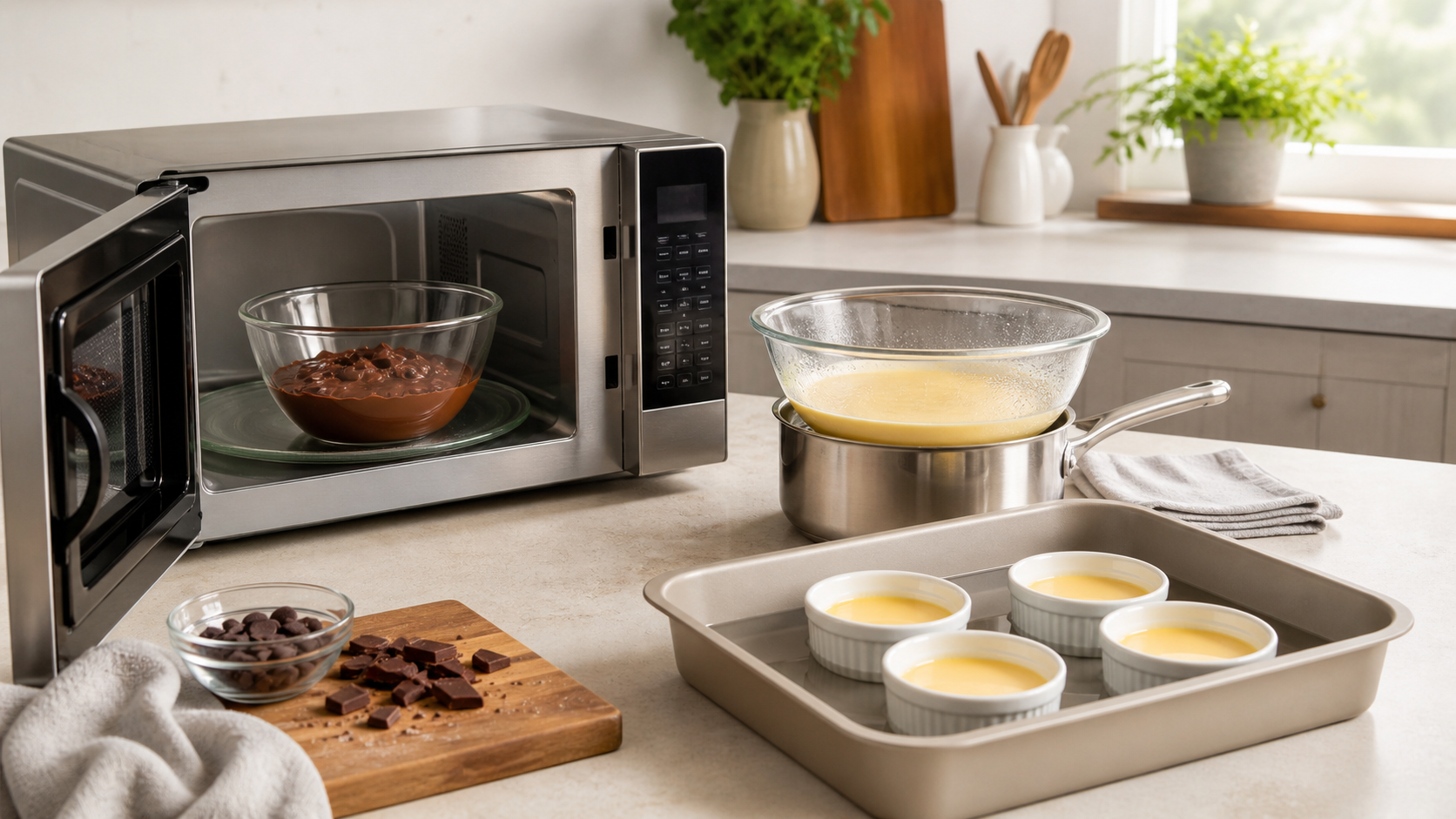
For stovetop cooking, a heatproof bowl may sit above a saucepan of gently simmering water. For oven baking, ramekins or a baking dish are placed inside a larger pan filled with hot water. Commercial kitchens also use bain-marie equipment to keep prepared foods warm without exposing them to intense direct heat.
The technique is especially valuable when working with ingredients that can curdle, separate, seize, scorch, or overcook quickly.
Using a Microwave for Gentle Heating
A microwave is one of the easiest substitutes when the goal is to melt or warm an ingredient rather than bake it in a water bath. It works particularly well for chocolate, butter, creamy sauces, and other foods that respond well to short periods of controlled heating.
The key is to use a microwave-safe container and a low or moderate power setting. Heating in short intervals and stirring between each interval allows residual heat to continue the process without overheating the food.
Microwave heating is not identical to a traditional bain-marie because it does not surround the container with water. However, careful temperature control can produce a similarly gentle result. It is often faster and creates fewer dishes, making it a practical option for small quantities.
Microwaves vary in power, so visual cues and frequent stirring are more dependable than relying on one fixed heating time.
Creating a Stovetop Double Boiler
A saucepan and heatproof bowl can form an effective homemade double boiler. Choose a bowl that rests securely over the rim of the pan without touching the water below. Glass or stainless steel bowls are commonly used, provided they are intended for heat exposure.
The steam rising from the water gently heats the bowl. The water should remain at a low simmer rather than a vigorous boil. Excessive heat can cause rapid temperature changes and allow too much steam to escape around the bowl.
This setup is ideal for melting chocolate, preparing delicate sauces, warming egg-based mixtures, or handling foods that require frequent whisking. It also gives the cook more control than direct stovetop heat.
Care is important when lifting the bowl because trapped steam can cause burns. Using dry oven mitts and tilting the bowl away from the body helps reduce the risk of contact with escaping steam.
Making an Oven Water Bath
An oven water bath is a dependable substitute for a dedicated bain-marie pan. It is commonly used for custards, cheesecakes, flans, bread puddings, and other dishes that benefit from gentle, moist heat.
A roasting pan, casserole dish, or deep baking pan can hold the smaller baking dishes. Hot water is then added to the larger pan, creating a protective buffer around the food as it bakes.
The water helps moderate the temperature near the edges of the baking dishes. This promotes more even cooking and can reduce cracking, curdling, and dry or rubbery textures.
For safer handling, place the roasting pan on the oven rack before adding the hot water. Avoid overfilling the pan, and make sure water cannot splash into the food. When baking is complete, remove the individual dishes carefully rather than attempting to carry a heavy pan filled with very hot water across the kitchen.
Using a Slow Cooker as a Water Bath
A slow cooker can provide the gentle, enclosed environment associated with a bain-marie. Heatproof jars, ramekins, or small dishes may be placed inside the cooker and surrounded with water when a suitable preparation calls for indirect heat.
The insulated design helps maintain a steady temperature without constant attention. This can be useful for warming sauces, preparing certain custard-style desserts, or holding food at a serving temperature.
Only heat-safe containers that fit securely inside the slow cooker should be used. The appliance lid should close properly, and the manufacturer’s guidance should always take priority when choosing containers and water levels.
A slow cooker may heat differently from an oven or stovetop setup, so it is best suited to foods that tolerate gradual temperature changes.
Turning a Roasting Rack Into an Improvised Bain-Marie
If a smaller baking dish is unstable inside a roasting pan, a roasting rack can help hold it above the bottom of the pan. A folded kitchen towel is sometimes used beneath ramekins to limit sliding, although it should remain fully contained in the water and away from exposed heating elements.
The purpose of the support is to create stability and prevent the smaller containers from shifting as the pan is moved. It can also reduce direct contact between the baking dishes and the hot metal surface.
This arrangement is especially helpful when baking several small custards or individual desserts at the same time.
Keeping Food Warm Without a Traditional Bain-Marie
A bain-marie is often used for holding food warm rather than cooking it. A large bowl filled with hot water can provide a simple alternative for a smaller bowl of sauce, melted chocolate, mashed potatoes, or another prepared food.
The inner bowl should sit securely without allowing water to spill into the food. Replacing the water when it cools helps maintain warmth, but the food must still be kept at a safe temperature if it will be held for an extended period.
For serving, an insulated slow cooker, warming tray, or covered heatproof dish may be more convenient. The right choice depends on the type of food, the length of time it will be held, and whether precise temperature control is needed.
Choosing the Best Bain-Marie Substitute
The microwave is generally the most convenient choice for melting or reheating small quantities. A saucepan and heatproof bowl provide greater control for delicate stovetop preparations that need stirring or whisking. An oven water bath is best suited to baked custards, cheesecakes, and similar desserts.
A slow cooker works well when gradual heat or extended warming is more important than speed. For buffet service, a warming appliance or a bowl set over hot water may provide the simplest solution.
No substitute is ideal for every task. Consider the ingredient, the amount of food, the level of temperature control required, and the safest way to handle the equipment.
Common Mistakes to Avoid
Direct contact between the upper bowl and simmering water can produce more heat than intended. This may scorch chocolate or overcook delicate mixtures. The bowl should be heated primarily by steam rather than by sitting in the water unless the specific preparation calls for direct water contact.
Water at a rolling boil can create excessive steam, unstable cookware, and rapid heating. A gentle simmer is usually more suitable for a homemade double boiler.
Moisture is another important consideration when melting chocolate. Water droplets and condensation can affect its texture. The bowl and utensils should be dry, and the bowl should be lifted carefully so condensation does not drip into the chocolate.
In an oven water bath, adding too much water makes the pan heavier and increases the risk of spilling. The baking dishes should also be arranged securely so they do not float, tip, or slide.
Simple Equipment Can Produce Professional Results
A bain-marie is a technique rather than a single piece of equipment. Its purpose is to soften and control heat, and that effect can be achieved in several ways.
A microwave offers speed and convenience. A heatproof bowl over a saucepan creates a reliable double boiler. A roasting pan becomes an oven water bath, while a slow cooker provides steady warmth for longer periods.
Understanding how indirect heat works makes it easier to select the safest and most effective method. With a few familiar kitchen tools, delicate sauces, melted chocolate, custards, and baked desserts can be prepared with greater confidence and control.