Gloves and Pruning Shears for Harvest: The Essential Tools Every Gardener Needs
Learn why gardening gloves and pruning shears are must-have harvest tools. Discover how to choose the right pair, harvest crops safely, protect your plants, and enjoy a cleaner, more productive garden.
Harvest season is one of the most exciting times in the garden. After weeks or even months of caring for your plants, it is finally time to gather fresh vegetables, herbs, fruits, and flowers. While harvesting may seem straightforward, using the right tools can make the experience easier, safer, and more rewarding.
Two of the most important items every gardener should keep close at hand are a comfortable pair of gardening gloves and a sharp pair of pruning shears. These simple tools do much more than make harvesting convenient. They protect your hands, help prevent damage to your plants, improve the quality of your harvest, and make every trip through the garden more enjoyable.
Whether you are harvesting tomatoes from a backyard garden, cutting fresh herbs for dinner, or gathering baskets of berries, the right gloves and pruning shears will quickly become your favorite gardening companions.
Why Gardening Gloves Matter
It is easy to overlook gardening gloves, especially when harvesting delicate crops. However, they provide valuable protection while making many gardening tasks more comfortable.
Gloves protect your hands from scratches, thorns, splinters, rough stems, and irritating plant sap. Plants such as blackberries, raspberries, roses, squash, and even tomato vines can leave your hands scratched or sore after a long afternoon in the garden.
A good pair of gloves also helps you maintain a better grip on baskets, buckets, and freshly picked produce. During warm weather, they absorb sweat and help prevent blisters caused by repetitive movements.
Another added benefit is cleanliness. Gloves help reduce the amount of dirt and natural oils transferred to freshly harvested fruits and vegetables, making cleanup a little easier once you bring your harvest indoors.
Choosing the Best Gardening Gloves
The best gloves are the ones that match the job you are doing. Different crops and gardening tasks call for different levels of protection.
Lightweight gloves are perfect for harvesting tender herbs, leafy greens, lettuce, spinach, basil, and flowers because they allow excellent flexibility and control.
Nitrile-coated gloves provide a secure grip, even when harvesting damp produce early in the morning. They are breathable, durable, and ideal for everyday garden use.
Leather gloves offer extra protection when working around thorny plants such as blackberries, raspberries, roses, and woody shrubs. Although they are thicker, they are incredibly durable and last for many growing seasons.
If you spend a great deal of time working among thorny plants, gloves with extended cuffs protect your wrists and forearms from scratches.
For early morning harvests when dew still covers the garden, water-resistant gloves help keep your hands dry and comfortable.
Why Sharp Pruning Shears Make a Difference
One of the most common mistakes gardeners make is pulling fruits and vegetables directly from the plant. While it may seem harmless, tugging on stems can damage branches, tear vines, and create openings where diseases and pests can enter.
Sharp pruning shears solve this problem by making clean, precise cuts that allow plants to recover quickly.
Instead of stressing the plant, a clean cut encourages healthy growth and often leads to continued flowering or fruit production throughout the season.
Pruning shears are especially useful when harvesting tomatoes, peppers, cucumbers, squash, pumpkins, melons, broccoli, cauliflower, Brussels sprouts, grapes, berries, herbs with woody stems, flowers, and fruit growing on trees.
Choosing the Right Pruning Shears
There are several styles of pruning shears, and each has its own purpose.
Bypass Pruners
Bypass pruners are the most popular choice for harvesting. Their curved blades slide past one another like a pair of scissors, creating clean cuts without crushing delicate stems.
Anvil Pruners
Anvil pruners feature one sharp blade that closes against a flat surface. They work best on dry or woody stems and are less suitable for harvesting fresh produce.
Precision Garden Snips
Precision snips are ideal for harvesting herbs, flowers, leafy greens, peppers, and delicate vegetables. Their narrow blades make it easy to reach into tight spaces without disturbing nearby growth.
Ratchet Pruners
Ratchet pruners require less hand strength because they cut in stages. They are an excellent choice for gardeners with arthritis or anyone who finds traditional pruners difficult to squeeze.
Keep Your Pruning Shears Clean and Sharp
Healthy plants begin with clean tools.
A dull blade crushes stems instead of cutting them cleanly, making plants more vulnerable to disease and slowing their recovery.
Sharpen your pruning shears regularly with a sharpening stone or blade sharpener. After every harvest, wipe away plant sap, dirt, and moisture before storing them.
Disinfect the blades between plants, especially when harvesting tomatoes, peppers, cucumbers, or fruit trees. This simple habit helps prevent diseases from spreading throughout your garden.
A quick wipe with rubbing alcohol is usually all that is needed to sanitize the blades.
The Best Way to Harvest Different Crops
Each plant has its own preferred harvesting method, and using pruning shears helps ensure the best results.
Tomatoes
Rather than pulling tomatoes from the vine, cut the stem just above the fruit. This prevents damage to neighboring tomatoes and protects the vine.
Peppers
Harvest peppers by cutting the stem, leaving a small portion attached to the fruit. This helps extend their freshness after picking.
Fresh Herbs
Cut herb stems just above a pair of leaves. This encourages the plant to branch out and produce even more flavorful growth.
Squash and Pumpkins
Always use pruning shears to cut through the thick stems. Twisting large fruits from the vine can damage both the fruit and the plant.
Cucumbers
A clean snip removes cucumbers without disturbing nearby vines, allowing the plant to continue producing.
Grapes
Cut entire grape clusters from the vine instead of pulling individual grapes.
Tree Fruit
Apples, pears, peaches, and plums are often easier to harvest with pruning shears, especially when stems are firmly attached to the branches.
Caring for Your Harvest Tools
A little maintenance goes a long way toward keeping your gardening tools in excellent condition.
After each harvest, wash reusable gloves if they are dirty and allow them to dry completely before storing them.
Clean pruning shears thoroughly, removing any plant residue from the blades and joints. Dry them well and apply a small amount of light oil to the moving parts to prevent rust.
Store both gloves and pruning shears in a clean, dry location where they are easy to find before your next harvest.
With proper care, quality gardening tools can provide reliable service for many years.
Stay Safe While Harvesting
Harvesting should be enjoyable, but it is important to use your tools safely.
Always lock pruning shears when carrying or storing them. Cut away from your body whenever possible, and wear gloves when harvesting thorny or prickly plants.
If you are reaching overhead into fruit trees or tall shrubs, consider wearing eye protection to guard against falling branches and leaves.
Taking short breaks during long harvesting sessions can also reduce hand fatigue and keep the experience comfortable.
Why These Two Tools Belong in Every Garden
Gardening gloves and pruning shears may seem like simple tools, but together they can completely transform the harvesting experience.
They protect your hands, reduce plant damage, create cleaner cuts, lower the risk of spreading disease, and help you harvest more efficiently. They also make gardening more comfortable, allowing you to spend more time enjoying your harvest and less time dealing with sore hands or damaged plants.
Whether you are growing vegetables in raised beds, maintaining a backyard orchard, or tending a collection of herbs on the patio, these two tools are among the smartest investments you can make.
The next time you head into the garden with a basket in hand, do not forget your gloves and pruning shears. They will help you harvest with confidence while keeping both you and your plants healthy throughout the growing season.
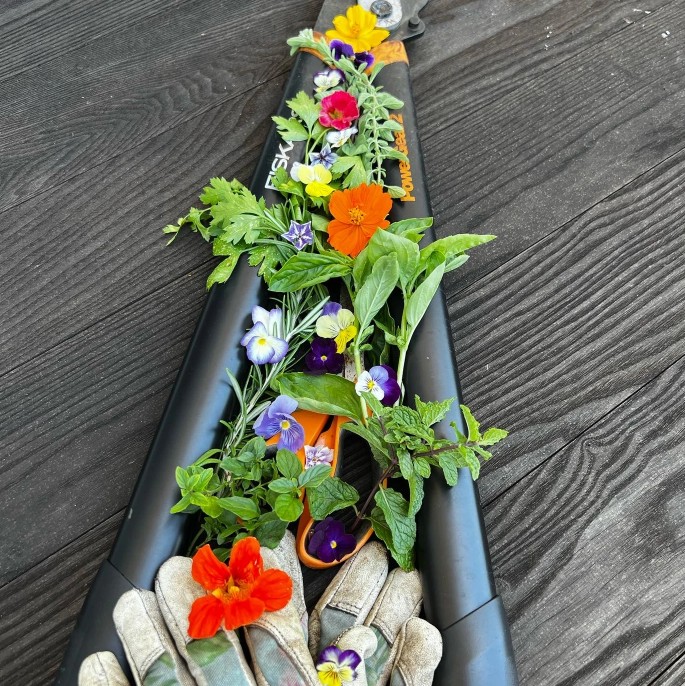
A garden tool harvest showcases freshly gathered herbs and vibrant edible flowers.
Learn how to harvest kale, peppers, and fresh herbs using garden clippers and a simple colander. Discover easy garden harvest tips to keep plants healthy, boost production, and enjoy fresh garden-to-table ingredients all season long. Harvesting fresh vegetables and herbs is one of the most rewarding parts of maintaining a home garden. Whether you are growing curly kale, sweet bell peppers, hot peppers, basil, parsley, rosemary, or thyme, knowing how to harvest them properly helps keep your plants healthy and productive throughout the growing season. One of the easiest and most practical ways to gather your harvest is with a pair of sharp garden clippers and a simple kitchen colander. While many gardeners use traditional harvest baskets, a colander offers several unique advantages. It is lightweight, easy to carry, allows loose soil to fall away naturally, and can go directly from the garden to the sink for washing fresh produce. If you are looking for an easy garden harvest method that saves time while protecting your plants, harvesting kale, peppers, and herbs with garden clippers and a colander is a simple solution that every gardener can appreciate. Why Proper Harvesting Matters Learning how to harvest vegetables correctly is just as important as learning how to grow them. Proper harvesting encourages plants to continue producing, reduces stress on stems and branches, and helps prevent unnecessary damage that can slow future growth. Garden clippers create clean, precise cuts that heal quickly, unlike twisting or pulling vegetables by hand. Clean cuts also reduce the risk of introducing diseases into your vegetable garden, especially when clippers are sanitized between plants. Regular harvesting keeps many vegetables and herbs actively producing, allowing you to enjoy fresh ingredients from your garden for weeks or even months. How to Harvest Kale Kale is one of the easiest leafy greens to grow because it produces continuously when harvested correctly. Rather than removing the entire plant, harvest the large outer leaves first while leaving the smaller center leaves untouched. This allows the growing crown to continue producing new foliage. Choose leaves that are dark green, crisp, and fully developed. Avoid removing more than one-third of the plant at one time, giving it plenty of energy to produce another flush of healthy leaves. Fresh garden kale is incredibly versatile and can be used in smoothies, salads, soups, casseroles, pasta dishes, stir-fries, and homemade kale chips. Harvesting kale regularly not only provides a steady supply of nutritious greens but also encourages stronger, healthier plants throughout the season. How to Harvest Garden Peppers Whether you grow sweet bell peppers, jalapeños, banana peppers, cayenne peppers, or colorful heirloom varieties, harvesting peppers correctly helps maximize production. Never pull peppers from the plant. Instead, use garden clippers to cut the stem about one inch above the pepper. Pulling can snap branches or damage developing fruit. Green peppers can be harvested early for a crisp texture, while allowing peppers to mature produces sweeter flavors and brilliant shades of red, orange, yellow, purple, or chocolate, depending on the variety. Frequent harvesting encourages pepper plants to continue flowering and producing new fruit well into the growing season. Fresh peppers are perfect for grilling, roasting, stuffing, freezing, dehydrating, making homemade salsa, adding to salads, or preserving through pickling. How to Harvest Fresh Herbs Fresh culinary herbs are among the easiest and most rewarding plants to harvest. Regular trimming actually improves growth by encouraging plants to become fuller and bushier. For the best flavor, harvest herbs during the morning after the dew has dried but before the afternoon heat begins. At this time, the essential oils responsible for flavor and aroma are often at their highest concentration. Popular herbs to harvest include basil, parsley, oregano, thyme, rosemary, sage, mint, cilantro, dill, and chives. Always trim stems just above a set of leaves rather than cutting randomly. This encourages branching and continuous production throughout the season. Fresh herbs can be enjoyed immediately or preserved by drying, freezing, or infusing them into oils, vinegars, and compound butters. Why a Colander Is the Perfect Harvest Basket Many gardeners already have the perfect harvest basket sitting in their kitchen. A colander offers excellent airflow that helps keep leafy greens cool while you continue harvesting throughout the garden. Its drainage holes allow loose soil and garden debris to fall away naturally, making cleanup much easier. Unlike solid buckets, a colander also prevents moisture from collecting around freshly picked vegetables and herbs, helping maintain their freshness until they are washed. Once harvesting is complete, simply rinse your produce directly in the same colander before bringing it into the kitchen. It is an inexpensive, practical tool that works beautifully for everyday harvesting. Garden Harvest Tips for Healthier Plants Harvest during the cooler morning hours whenever possible. Use clean, sharp garden clippers for every harvest. Harvest kale from the outer leaves inward. Cut peppers from the stem instead of pulling them. Never remove more than one-third of an herb plant during a single harvest. Inspect plants regularly for insects, diseases, or damaged foliage. Harvest often to encourage continuous vegetable production. Wash produce shortly after harvesting and store it properly for maximum freshness. Enjoy the Freshest Garden-to-Table Harvest There is something incredibly satisfying about walking into your garden with nothing more than a pair of garden clippers and a colander, then returning to your kitchen with a colorful collection of fresh kale, ripe peppers, and fragrant herbs. Homegrown produce offers exceptional flavor, beautiful color, and peak freshness that simply cannot be matched by store-bought vegetables. Every harvest represents weeks of care and attention, making each meal even more rewarding. Whether you are preparing a crisp salad, homemade soup, roasted vegetables, herb butter, fresh salsa, pasta dishes, or your favorite family recipe, harvesting directly from your garden allows you to enjoy ingredients at their absolute best. By harvesting regularly and using proper techniques, your kale, peppers, and herbs will continue producing throughout the growing season, providing a steady supply of delicious garden-fresh ingredients from your backyard to your table. Frequently
Discover how to harvest fresh arugula and chili peppers for the best flavor and continuous production. Learn expert harvesting tips, storage methods, and delicious ways to enjoy these garden favorites. This is a complete guide to a flavorful garden harvest. Fresh arugula and chili peppers are two of the most rewarding crops to grow in a home garden. Both are easy to cultivate, highly productive, and packed with bold flavor that enhances countless recipes. Whether you are growing them in raised beds, containers, or a traditional vegetable garden, harvesting them at the right time ensures the best taste, texture, and continued production throughout the growing season. A successful arugula and chili pepper harvest provides an abundance of fresh ingredients for salads, pizzas, sandwiches, pestos, sauces, soups, and countless gluten-free recipes. By understanding when and how to harvest these garden favorites, you can enjoy healthy, homegrown produce from spring through fall. When to Harvest Arugula Arugula is one of the fastest-growing leafy greens, often ready to harvest in as little as 30 to 40 days after planting. The leaves are at their most tender and flavorful when they reach approximately 3 to 6 inches long. Younger leaves have a mild, peppery taste, while mature leaves develop a stronger, more robust flavor. Rather than harvesting the entire plant, pick the outer leaves first while leaving the center intact. This “cut-and-come-again” harvesting method encourages continuous growth and allows the plant to produce fresh leaves for several weeks. Regular harvesting also helps delay bolting, especially during warmer weather. Once arugula begins flowering, the leaves become more bitter and less tender. When to Harvest Chili Peppers Chili peppers offer flexibility because they can be harvested at multiple stages of maturity. Many varieties are delicious while green, but allowing them to fully ripen often produces sweeter flavors, brighter colors, and increased heat. Depending on the variety, ripe chili peppers may turn bright red, orange, yellow, purple, or even chocolate brown. Fully mature peppers also contain more developed flavors that are perfect for cooking, drying, or making homemade hot sauces. Always harvest peppers using clean scissors or garden pruners instead of pulling them from the plant. This prevents broken stems and encourages the plant to continue producing new blossoms and fruit throughout the season. Why Regular Harvesting Matters Frequent harvesting benefits both crops by encouraging continued growth. For arugula, removing mature leaves stimulates the plant to produce fresh new foliage, extending the harvest window. For chili peppers, regularly picking ripe peppers signals the plant to produce more flowers and additional fruit, often resulting in a larger overall harvest before the end of the growing season. Healthy harvesting practices also improve air circulation around plants and reduce the chance of disease developing among crowded foliage. Delicious Ways to Use Fresh Arugula and Chili Peppers Freshly harvested arugula and chili peppers complement one another beautifully in the kitchen. Add peppery arugula to fresh salads, sandwiches, wraps, burgers, grain bowls, and gluten-free pizzas. Blend it into homemade pesto or stir it into pasta just before serving for a burst of fresh flavor. Chili peppers bring vibrant color and heat to salsas, marinades, soups, stir-fries, tacos, roasted vegetables, infused oils, and homemade hot sauces. They can also be dried, frozen, or pickled to preserve your harvest for future meals. Together, these garden favorites create a perfect balance of fresh, peppery greens and bold, spicy flavor. Storing Your Garden Harvest Proper storage helps maintain freshness after harvesting. Wash arugula gently in cool water and dry it thoroughly before storing it in a sealed container lined with paper towels. Properly stored, it will remain fresh in the refrigerator for several days. Chili peppers should be stored dry in the refrigerator, where they can last one to two weeks. For long-term storage, they can be frozen whole, dehydrated, fermented, or pickled without losing much of their flavor. Enjoy the Rewards of Your Garden Harvesting fresh arugula and chili peppers is one of the most satisfying moments of the gardening season. Their vibrant colors, bold flavors, and versatility make them valuable additions to any home garden. With regular harvesting and proper care, both crops will continue producing throughout much of the growing season, providing an ongoing supply of nutritious, garden-fresh ingredients for your favorite recipes. Whether you are creating crisp salads, flavorful sauces, spicy marinades, or gourmet gluten-free dishes, fresh arugula and chili peppers deliver exceptional taste straight from the garden to your table.
Learn how to enjoy your own colander harvest of fresh sage, chives, peppers, tarragon, and oregano. Discover harvesting tips, garden care, and delicious ways to use your homegrown herbs and vegetables. There is nothing quite like stepping into your garden with a pair of clean clippers and a sturdy colander, ready to gather a beautiful assortment of fresh herbs and peppers. A colander harvest is a simple yet practical way to collect your homegrown produce while keeping your harvest fresh and making cleanup easy. Whether you grow your plants in raised beds, containers, or a traditional garden, harvesting sage, chives, peppers, tarragon, and oregano together provides an abundance of fresh ingredients for countless homemade meals. Using a colander instead of a traditional basket offers several advantages. Its lightweight design makes it comfortable to carry through the garden, while the small openings allow loose soil, leaves, and insects to fall away as you harvest. Once you return indoors, you can rinse everything in the same colander, making the journey from garden to table both convenient and efficient. Why a Colander Harvest Is Perfect for Home Gardeners A colander harvest is more than a convenient way to collect vegetables and herbs. It encourages you to harvest regularly, which helps many garden plants remain healthy and productive throughout the growing season. Frequent harvesting stimulates new growth on many culinary herbs, keeping plants compact, lush, and full of tender leaves. Pepper plants also benefit from regular picking because removing mature peppers often encourages the plant to continue producing new fruit. The best time to harvest is during the morning after the dew has dried but before the afternoon heat arrives. At this time, herbs contain the highest concentration of essential oils, giving them exceptional flavor and fragrance. Always use clean, sharp garden clippers to make smooth cuts that minimize damage and promote healthy regrowth. How to Harvest Fresh Sage Sage is a beautiful perennial herb recognized by its soft gray-green leaves and rich earthy aroma. Harvest mature stems by cutting just above a pair of healthy leaves. This encourages branching and keeps the plant full and productive. Avoid removing more than one-third of the plant during a single harvest. Giving the plant time to recover ensures continuous growth throughout the season. Fresh sage is delicious in roasted poultry, pork dishes, stuffing, roasted vegetables, soups, brown butter sauces, herb butter, and homemade seasoning blends. It also dries exceptionally well for long-term storage. How to Harvest Chives Chives are one of the easiest herbs to grow and reward gardeners with continuous harvests. Instead of removing individual leaves, gather a small handful of stems and trim them approximately one to two inches above the soil. This simple harvesting method encourages rapid regrowth, allowing you to enjoy multiple harvests throughout the growing season. Fresh chives add a mild onion flavor to scrambled eggs, baked potatoes, salads, creamy dips, seafood, soups, compound butter, and homemade dressings. Harvesting Garden Peppers Whether you grow sweet bell peppers or spicy chili peppers, harvesting regularly encourages continued production. Rather than pulling peppers from the plant, use garden clippers to cut each pepper from its stem. This protects the branches from unnecessary stress and helps prevent accidental breakage. Many peppers can be harvested while green, while others develop sweeter flavors or increased heat as they mature into vibrant shades of red, orange, yellow, purple, chocolate, or nearly black. Fresh peppers are perfect for stir-fries, grilled vegetables, stuffed peppers, homemade salsa, pasta sauces, salads, soups, pizzas, casseroles, and homemade hot sauces. Harvesting Tarragon Tarragon is an elegant culinary herb known for its subtle anise flavor and delicate aroma. Harvest young stems throughout the growing season by cutting just above a leaf node. Frequent harvesting encourages fuller plants and provides a continuous supply of tender new leaves. Fresh tarragon complements roasted chicken, seafood, eggs, cream sauces, vinaigrettes, roasted vegetables, herb butter, and infused vinegars. It is especially popular in French-inspired cooking. Harvesting Oregano Oregano is one of the most productive herbs you can grow. Harvest stems several inches long by cutting just above a pair of leaves. This encourages branching and helps the plant produce even more flavorful foliage. For the strongest flavor, harvest oregano before it flowers, when its aromatic oils are most concentrated. Fresh oregano is a staple in Mediterranean cuisine and is commonly used in pizza, pasta sauces, roasted vegetables, grilled meats, soups, marinades, casseroles, and homemade herb blends. It also dries beautifully, making it an excellent herb for preserving. From Garden to Table A single colander harvest filled with sage, chives, peppers, tarragon, and oregano provides endless culinary inspiration. Blend chopped herbs into compound butter, season roasted vegetables, prepare homemade marinades, create fresh salad dressings, or roast peppers for flavorful sauces. Fresh herbs can also be preserved by drying, freezing in olive oil, or infusing them into vinegar. Peppers can be frozen, dehydrated, roasted, or fermented, allowing you to enjoy the flavors of your garden long after the growing season ends. Tips for a Successful Colander Harvest Harvest herbs during the cool morning hours for the best flavor and aroma. Use clean, sharp clippers for precise cuts that promote healthy regrowth. Avoid harvesting more than one-third of any herb plant at one time. Pick mature peppers regularly to encourage additional fruit production. Rinse herbs and peppers in your colander immediately after harvesting and dry them thoroughly before storing. Store fresh herbs in the refrigerator wrapped in a slightly damp paper towel inside an airtight container to help maintain freshness. Enjoy Your Own Colander Harvest Harvesting your own sage, chives, peppers, tarragon, and oregano is one of the most rewarding experiences for any gardener. A simple colander makes collecting, cleaning, and transporting your fresh harvest easy while keeping your herbs and vegetables in excellent condition. Every colander harvest represents the care you have given your garden and the fresh flavors that await in your kitchen. Whether you are preparing a family meal, preserving herbs for future recipes, or simply enjoying the beauty
Originally published
March 2026
Updated
August 2026
Reviewed by
Culibloom