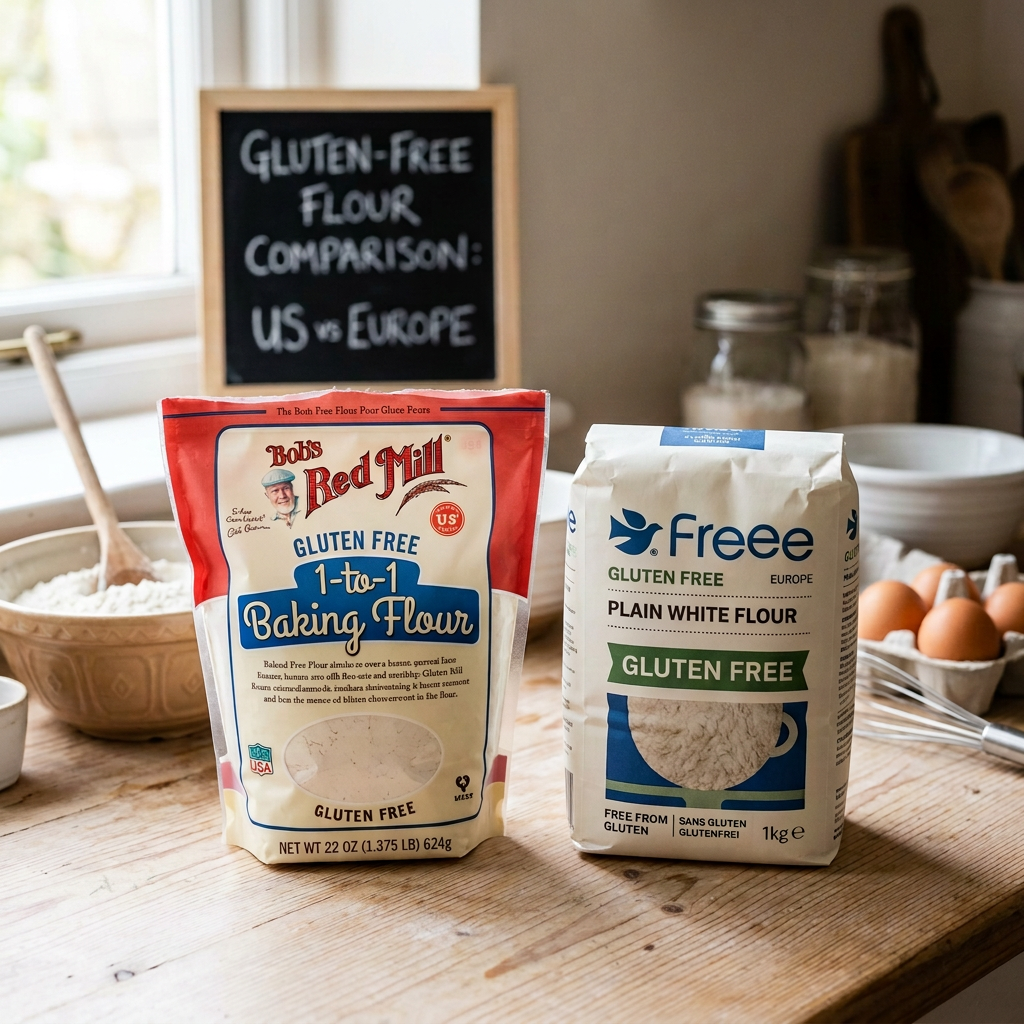

Explore gluten-free flour comparisons between the USA and Europe, including ingredients, binders, texture, hydration, labeling, and baking performance.
Gluten-free baking is popular on both sides of the Atlantic, but flour blends are not necessarily interchangeable. A recipe created with an American gluten-free flour blend may produce a different result when prepared with a European product, even when both packages describe the flour as an all-purpose or multipurpose blend.
Differences in ingredients, starch ratios, binders, milling, labeling, and measuring conventions can influence how much liquid a flour absorbs and how a baked good rises, browns, tastes, and holds together. Understanding these gluten free flour comparisons can make it easier to adapt international recipes and choose the right blend for cakes, cookies, breads, pastries, and other baked goods.
Geography Is Only Part of the Comparison
It is tempting to divide gluten-free flour into two simple categories: American and European. In practice, formulations vary considerably among brands within each region.
Some American blends are designed as convenient replacements for wheat flour, while others are made specifically for bread, pizza, pastry, or cake. European manufacturers also offer everything from neutral multipurpose blends to products developed for regional breads and pastries.
For that reason, the ingredient label is usually more useful than the country of origin. Two blends made in the same country may behave very differently if one contains mostly rice flour and starch while the other relies on buckwheat, corn, sorghum, legumes, or gluten-free wheat starch.
American Gluten-Free Flour Blends
Many American gluten-free flour blends are marketed as cup-for-cup or measure-for-measure replacements for conventional all-purpose flour. They commonly combine finely milled rice flour with ingredients such as potato starch, tapioca starch, cornstarch, or sorghum flour.
These blends are often formulated with a relatively neutral flavor so they can work in a broad selection of familiar baked goods, including cookies, muffins, quick breads, pancakes, and cakes.
Some American products include xanthan gum or another binder. This can make them convenient for recipes that need additional structure, but it also means that adding more gum without checking the label may produce a dense, sticky, or gummy texture.
A cup-for-cup claim does not guarantee identical results in every recipe. Yeast breads, laminated pastries, delicate cakes, and doughs that depend heavily on gluten development often need specialized formulas rather than a basic flour substitution.
European Gluten-Free Flour Blends
European gluten-free flour blends are equally diverse. Depending on the country, brand, and intended use, a blend may contain rice flour, corn flour, potato starch, tapioca starch, buckwheat, millet, chickpea flour, chestnut flour, or gluten-free wheat starch.
Some European products are created for a specific baking purpose rather than marketed as universal replacements. Flour intended for bread may contain a different balance of starches, proteins, fibers, and thickeners than flour developed for cakes or pastry.
Traditional regional ingredients can also appear in naturally gluten-free baking. Buckwheat is associated with specialties such as Breton galettes, while chestnut flour has a history in parts of France and Italy. These ingredients bring distinctive flavors, but their use in regional cooking does not mean that every commercial European blend contains them.
The Role of Gluten-Free Wheat Starch
One potentially surprising ingredient in some European gluten-free products is specially processed wheat starch. Wheat starch is separated from wheat protein and may be used in a product labeled gluten-free when the finished food meets the applicable gluten limit.
Gluten-free wheat starch can help provide a texture and flavor that resembles conventional baked goods. However, it is not suitable for anyone who must avoid wheat for reasons other than gluten, including a wheat allergy.
Bakers should therefore distinguish between “gluten-free” and “wheat-free.” These terms do not always mean the same thing. Reading the full ingredient and allergen statements is especially important when buying imported flour or baking for someone with multiple dietary restrictions.
Binders May Already Be Included
Without gluten, baked goods need other forms of structure. Xanthan gum, guar gum, psyllium husk, cellulose-based thickeners, and other ingredients may be used to support elasticity, moisture retention, and crumb stability.
Many American all-purpose blends contain xanthan gum, but plenty do not. The same variation exists among European products. It is safer to check the package than to assume that a blend includes or excludes a binder based on where it was made.
The type of binder matters as much as its presence. Xanthan gum can support cakes and cookies, while psyllium is frequently used in gluten-free bread because it helps dough retain moisture and gas. These ingredients are not automatically interchangeable in equal amounts.
If a recipe requests a particular binder, compare that instruction with the flour label before adding it. Using a blend that already contains a structural ingredient may require an adjustment.
Flour Texture and Milling Affect Results
The fineness of the flour can influence the texture of gluten-free baked goods. Finely milled rice flour generally produces a smoother batter and a less gritty crumb than coarsely milled flour.
However, milling quality should not be generalized strictly by region. Fine and coarse products are available in both the United States and Europe. Brand, grain variety, processing method, and intended use are more reliable indicators than geography alone.
If a flour feels noticeably coarse, allowing the batter to rest before baking may give the particles more time to hydrate. Whether this technique is appropriate depends on the recipe, since resting can also affect leavening and dough consistency.
Flavor Can Range From Neutral to Distinctive
Neutral flour blends are useful when the baker wants vanilla, chocolate, fruit, spices, or other featured ingredients to dominate. Rice flour and refined starches are often used to create this mild foundation.
Whole-grain and nut-based flours contribute more noticeable flavors. Buckwheat can taste earthy, millet slightly sweet, chickpea flour savory, and chestnut flour naturally rich and sweet. These ingredients can add complexity, but they may not suit every recipe.
A flavorful European blend may change a cake developed with a neutral American blend. Likewise, a highly refined American blend may produce a milder result in a rustic European bread. Neither style is inherently better. The right choice depends on the texture and flavor the recipe is intended to deliver.
Hydration Requirements Can Change
Different gluten-free flours absorb liquid at different rates. Whole-grain flours, legume flours, added fibers, psyllium, and some gums may require more moisture than a blend composed primarily of refined starches.
This is one reason an international recipe can produce batter or dough that looks different from the original. A thirsty flour blend may make the mixture dry, stiff, or crumbly. A starch-heavy blend may create a looser consistency or a fragile finished crumb.
When trying a new blend, make modest liquid adjustments and allow time for the flour to hydrate before making a final decision. Gluten-free dough frequently thickens as it rests. Large changes made too early can result in an overly wet batter.
Cups Versus Grams Matter
American recipes frequently use cups, while European recipes commonly list flour by weight. This difference can have a major effect on gluten-free baking because blends do not all weigh the same per cup.
A cup of one flour blend may contain a different amount of flour than a cup of another blend. Scooping directly from the bag can compact the flour and increase that difference.
Whenever a recipe provides gram measurements, use them. If only cups are available, consult the flour manufacturer’s stated serving weight instead of relying on a universal conversion. A kitchen scale offers greater consistency when adapting recipes across brands and countries.
Ingredient Names Can Cause Confusion
Ingredient terminology can vary between countries. Corn flour may refer to finely ground cornmeal in one place and cornstarch in another. Potato flour and potato starch are also different products and do not behave the same way.
Imported packages may use unfamiliar names for starches, gums, or leavening agents. Before making a substitution, determine what the recipe author and manufacturer mean by each term. Matching the ingredient’s function is more reliable than matching a name that appears similar.
Gluten-Free Labeling in the USA and Europe
The United States and European Union use closely aligned thresholds, but their regulations are not worded identically. In the United States, foods carrying a gluten-free claim must contain less than 20 parts per million of gluten under FDA requirements. In the European Union, the term “gluten-free” may be used when the food contains no more than 20 milligrams of gluten per kilogram. The EU also permits a regulated “very low gluten” statement for qualifying foods containing no more than 100 milligrams per kilogram. FDA gluten-free labeling guidance and EU Regulation No. 828/2014.
Meeting a gluten-content threshold does not tell a baker how the flour will perform. It also does not confirm that a product is wheat-free. Consumers should review gluten-free claims, ingredient lists, allergen statements, and cross-contact information according to their individual medical needs.
How to Adapt an International Gluten-Free Recipe
Start by comparing the new flour blend with the product used by the recipe developer. Look at the primary flours and starches, whether a binder is included, whether the product contains added fiber or protein, and whether it is intended for all-purpose baking or a specialized use.
Use weight measurements whenever possible and avoid making several changes at once. Observe the batter or dough after it has had time to hydrate. If an adjustment is needed, make it gradually and record what was changed.
The first attempt with an unfamiliar flour should be treated as a test bake. Texture, spread, rise, browning, and moisture retention can reveal whether the blend needs more liquid, additional structure, a different baking time, or a recipe designed specifically for that product.
Choosing the Best Gluten-Free Flour for Baking
There is no single best gluten-free flour for every baking project. A mild, starch-balanced blend may be ideal for tender cakes and cookies. A bread blend containing protein, fiber, or psyllium may be more effective for yeast dough. Buckwheat, millet, chickpea, or chestnut flour may be preferable when a distinctive flavor is part of the desired result.
Successful international gluten-free baking begins with reading the label and understanding the intended use of the product. Regional traditions can influence flour selection, but brand formulation, ingredient composition, and recipe design usually have a greater effect on performance.
With careful comparison, weight-based measuring, and small adjustments, bakers can work confidently with American and European gluten-free flour blends while achieving more consistent results.