
Discover gluten-free lunches for kids that are safe, nutritious, easy to pack, and filled with delicious foods they will actually enjoy.
Packing a gluten-free lunch for your child can feel like a daily puzzle. The food needs to be safe, satisfying, easy to carry, and appealing enough to come home in an empty lunchbox. Many parents also find themselves rotating the same few meals because reliable gluten-free options can seem limited.
Fortunately, gluten-free school lunches can be colorful, flavorful, and fun. A thoughtful mix of familiar favorites, nutritious sides, and easy-to-eat foods can help children stay energized while making lunchtime something they look forward to.
What Makes a Great Gluten-Free Lunch for Kids?
A satisfying lunch usually combines protein, carbohydrates, fruits or vegetables, and a source of healthy fat. This balance provides lasting energy and helps children remain focused throughout the school day.
Presentation matters too. Many children prefer foods that are colorful, easy to hold, and divided into small portions. Offering several simple choices can feel less overwhelming than packing one large item. Familiar foods can also be paired with a new fruit, vegetable, dip, or gluten-free snack to encourage variety without creating pressure.
Age, appetite, sensory preferences, and eating time should all influence what goes into the lunchbox. Younger children may do better with peeled fruit, bite-sized pieces, and containers they can open without assistance.
Easy Gluten-Free Sandwiches and Wraps
Sandwiches remain a convenient school-lunch option, and the growing selection of gluten-free bread and tortillas makes them easier to prepare. Turkey and cheese, chicken salad, egg salad, cream cheese and cucumber, or sunflower seed butter with fruit preserves can all become kid-friendly fillings.
Some gluten-free bread tastes better lightly toasted, which can also help it hold up until lunchtime. If your child dislikes the texture of gluten-free bread, try a gluten-free tortilla, lettuce wrap, rice cake, or corn tortilla instead.
Cutting sandwiches into smaller squares, strips, or playful shapes can make them more approachable. Keeping wet ingredients away from the bread until packing time can help prevent sogginess.
When using deli meat, spreads, condiments, bread, or tortillas, check the labels for gluten-containing ingredients and cross-contact warnings. Product formulations can change, so even familiar foods should be reviewed regularly.
Build-Your-Own Gluten-Free Snack Boxes
Snack boxes are popular because they turn lunch into a selection of small, manageable foods. They are also easy to adjust according to your child’s appetite and preferences.
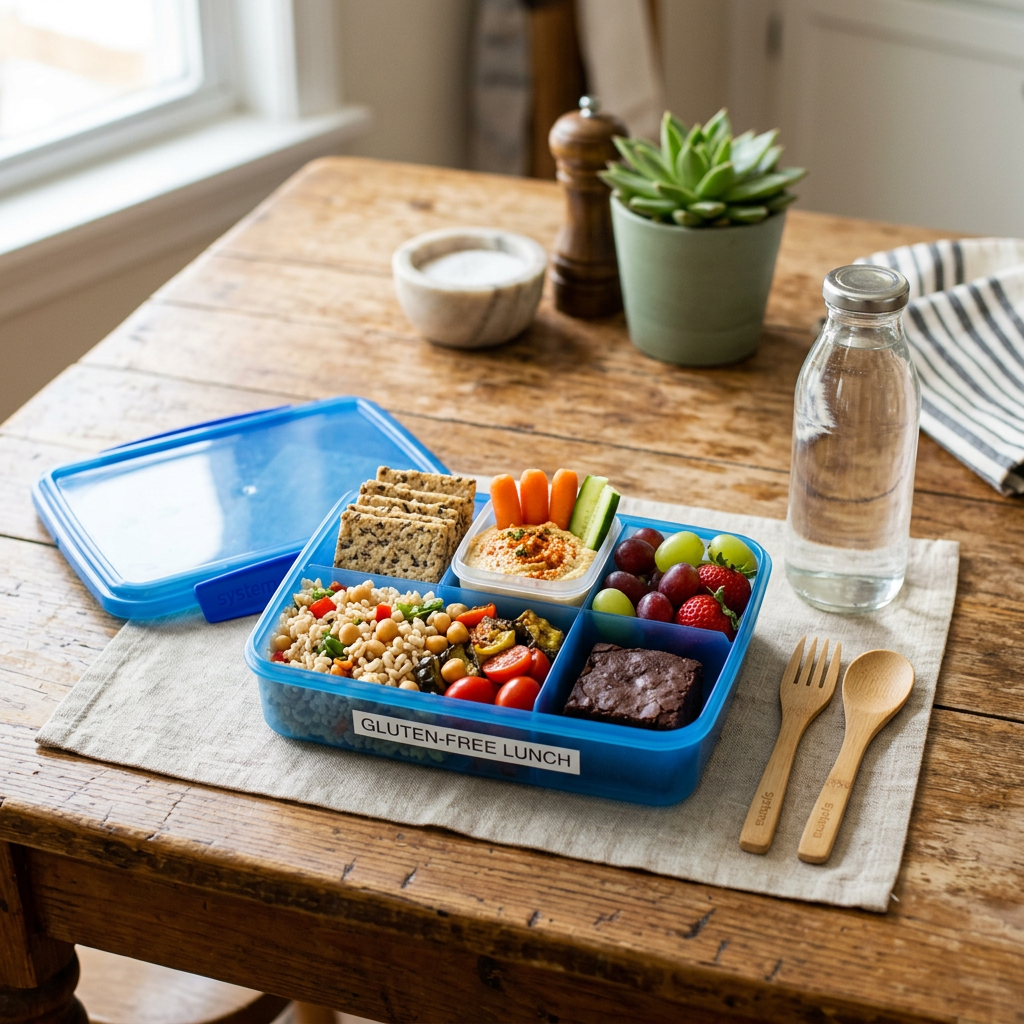
A balanced box might include cheese cubes, sliced turkey, a hard-boiled egg, hummus, gluten-free crackers, berries, grapes, cucumber slices, or bell pepper strips. A small gluten-free treat can make the meal feel special.
Try changing one or two items each week while keeping several dependable favorites. This provides variety without making the lunch feel unfamiliar. Reusable compartment containers can keep foods separated and help crisp items maintain their texture.
Warm Gluten-Free Lunches for Cooler Days
An insulated food container makes it possible to send comforting meals when the weather turns cold. Gluten-free macaroni and cheese, rice with chicken and vegetables, chili, soup, or gluten-free pasta with tomato sauce can offer a welcome alternative to sandwiches.
Preheat the insulated container with hot water according to its manufacturer’s directions, then add food that has been heated thoroughly. Keep the container closed until lunchtime. Following the school’s food-safety guidance and the container manufacturer’s instructions will help hot foods remain at an appropriate temperature.
Choose warm meals that are easy to eat within a short lunch period. Smaller pasta shapes, bite-sized vegetables, and tender pieces of meat are often more manageable for children.
Naturally Gluten-Free Foods Kids Enjoy
Specialty products can be convenient, but many everyday foods are naturally gluten-free. Rice bowls, corn tortilla tacos, baked potatoes, eggs, beans, fruit, vegetables, cheese, plain yogurt, and unseasoned meat or poultry can all provide the foundation for a satisfying lunch.
A rice bowl with chicken and vegetables, yogurt paired with fruit and gluten-free granola, or corn tortilla roll-ups with cheese are simple choices that do not depend entirely on packaged replacement foods.
Naturally gluten-free ingredients may also help control grocery costs. However, seasonings, sauces, flavored yogurt, granola, processed meats, and other packaged additions still require label checks.
Smart Gluten-Free Lunchbox Snacks
A well-chosen snack can provide extra energy during a long school day. Fresh fruit, yogurt, cheese, popcorn, gluten-free pretzels, homemade gluten-free muffins, applesauce, and seed-based snack bars are convenient possibilities.
Pairing a carbohydrate with protein or fat may help a snack feel more satisfying. Examples include fruit with cheese, gluten-free crackers with hummus, or yogurt with berries.
Check the school’s allergy policy before packing peanuts, tree nuts, or nut-based products. Sunflower seed butter can be a practical alternative, but its packaging should still be checked for gluten information and other allergens that affect your child.
Preventing Gluten Cross-Contact
For children with celiac disease, avoiding cross-contact is just as important as choosing foods without gluten-containing ingredients. Crumbs from shared cutting boards, toasters, utensils, spreads, and food-preparation surfaces can transfer gluten to an otherwise safe lunch.
Use clean preparation surfaces and utensils, and consider keeping dedicated gluten-free spreads or using squeeze containers to prevent crumbs from entering shared jars. Store gluten-free bread and snacks separately from gluten-containing foods when necessary.
Packaged foods labeled gluten-free must meet applicable labeling requirements, but families should continue following the guidance provided by their child’s healthcare professional. Teach children not to trade food at school and to ask an adult when they are unsure whether something is safe.
Keeping Cold Foods Safe
Use an insulated lunch bag with enough frozen cold packs to keep perishable foods chilled. Meat, cheese, eggs, yogurt, mayonnaise-based salads, and cut fruit should not remain warm for extended periods.
Wash reusable containers, water bottles, lunch bags, and utensils regularly. Follow school policies for refrigeration, food storage, and allergy management, especially when packing meals for a child with celiac disease or multiple food allergies.
How to Prevent Lunchbox Boredom
Even favorite foods can lose their appeal when served too often. Rotating the style of the meal is often more effective than constantly searching for entirely new foods.
A favorite protein might appear in a sandwich one day, a snack box another day, and a rice bowl later in the week. Seasonal fruit, different dips, colorful vegetables, and occasional warm lunches can provide variety while preserving familiar flavors.
Invite your child to help choose a few lunch items each week. Giving children limited choices, such as selecting between strawberries and grapes or between a wrap and a snack box, can increase their interest without making planning complicated.
A Simple Week of Gluten-Free Lunch Ideas
Monday might include a turkey and cheese sandwich on gluten-free bread with apple slices and yogurt. Tuesday could feature a snack box with cheese cubes, labeled gluten-free crackers, grapes, cucumbers, and hummus.
On Wednesday, send warm gluten-free macaroni and cheese in an insulated container with strawberries on the side. Thursday could include chicken and cheese in soft corn tortillas with carrot sticks and orange slices. Finish the week with a sunflower seed butter and fruit-preserve sandwich, popcorn, and a banana, provided those foods meet the school’s allergy guidelines.
These combinations can be adjusted for your child’s appetite, age, dietary needs, and favorite foods.
Helping Kids Feel Confident About Gluten-Free Eating
Children may feel self-conscious when their lunches look different from those of their classmates. Packing familiar foods in appealing ways can help gluten-free eating feel normal rather than restrictive.
Age-appropriate conversations can also help children understand why they need to avoid certain foods. Teach them to recognize trusted labels, avoid sharing or trading lunches, and speak with a teacher or caregiver if they have questions.
Most importantly, listen to your child’s feedback. An untouched lunch may indicate that the portion was too large, the packaging was difficult to open, the food changed texture, or there was not enough time to eat. Small adjustments can make a meaningful difference.
Gluten-free lunches do not have to be complicated. By balancing safety with flavor, variety, and convenience, parents can create meals that children will enjoy and feel confident eating. The best lunch is one that meets your child’s dietary needs and returns home mostly gone.
Here is to fresh flavors, beautiful gardens, and all the little moments that make cooking and growing so rewarding.
Sending joy and happiness from my garden and kitchen to yours,