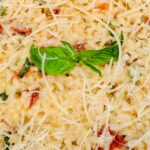
Gluten-Free Tomato Jam Pesto Pizza with Fresh Mozzarella brings sweet, savory, creamy, and herbaceous flavors together on one beautifully crisp crust. Tomato jam adds concentrated tomato flavor with a gentle sweetness, while basil pesto contributes freshness, garlic, and richness. Creamy mozzarella, juicy cherry tomatoes, Parmesan cheese, and fresh basil complete this colorful Italian-inspired pizza.
This gourmet pizza feels special enough for entertaining but remains approachable for a casual family meal. Its vibrant toppings make it particularly appealing during tomato and basil season, although good-quality prepared ingredients allow it to be enjoyed throughout the year.
A Sweet and Savory Pizza Combination
Tomato jam gives this pizza its distinctive character. Unlike an ordinary pizza sauce, it has a thicker texture, concentrated flavor, and noticeable sweetness. That sweetness creates an appealing contrast with the savory cheeses and fragrant pesto.
Basil pesto keeps the tomato jam from tasting overly sweet. Its combination of basil, garlic, cheese, and olive oil introduces fresh, savory notes that balance the entire pizza. Keeping the tomato jam and pesto visually distinct also makes the finished pizza more attractive, with ribbons of red and green appearing beneath the cheese.
The result is familiar enough to satisfy a traditional pizza craving while offering something more unexpected than an everyday tomato sauce and cheese combination.
Why Fresh Mozzarella Works So Well
Fresh mozzarella has a mild, milky flavor that allows the tomato jam and pesto to remain prominent. As it melts, it forms creamy pockets across the pizza instead of creating one heavy layer of cheese. This gives each slice a pleasing combination of crisp crust, soft cheese, and juicy tomatoes.
Because fresh mozzarella contains more moisture than low-moisture mozzarella, properly drained cheese is important for maintaining a crisp crust. Mozzarella pearls offer an easy way to distribute the cheese evenly, while torn mozzarella creates a more rustic presentation.
Parmesan adds a sharper, saltier element that complements the mellow mozzarella. Together, the two cheeses provide both creaminess and savory depth without overwhelming the fresh toppings.
The Freshness of Cherry Tomatoes and Basil
Cherry tomatoes add bright flavor and a juicy texture that contrasts with the concentrated tomato jam. Their natural acidity helps balance the richness of the cheese and pesto, while their color gives the pizza a fresh, garden-inspired appearance.
Fresh basil brings another layer of fragrance and reinforces the flavor of the pesto. Adding basil as a finishing garnish preserves its color and delicate aroma. A light drizzle of extra virgin olive oil can also give the finished pizza a polished appearance and a richer mouthfeel.
For those who enjoy a little heat, crushed red pepper provides a pleasant contrast to the sweet tomato jam. A small amount of flaky sea salt can emphasize the tomatoes, while freshly ground black pepper adds gentle warmth.
Choosing a Gluten-Free Pizza Crust
The crust forms the foundation of the pizza, so selecting the right one can make a noticeable difference. A homemade gluten-free crust offers control over the flavor and texture, while a dependable store-bought crust makes this pizza convenient for a weeknight meal.
Some gluten-free crusts are thin and crisp, while others are thicker and more bread-like. A thin crust allows the toppings to remain the main attraction. A thicker crust creates a heartier meal and provides more structure for the mozzarella and tomatoes.
Packaged gluten-free crusts can vary in their baking requirements, so it is helpful to follow the manufacturer’s recommendations. A thoroughly heated oven, pizza stone, or baking steel can encourage a crisper base, especially when using moist toppings such as fresh mozzarella and cherry tomatoes.
Preventing a Soggy Pizza
Moisture management is particularly important when working with gluten-free pizza crust. Thick tomato jam is preferable because it stays in place and contributes less excess liquid than a loose sauce.
Fresh mozzarella benefits from thorough draining before it is placed on the pizza. Cherry tomatoes can also release juice as they heat, so they should be fresh, firm, and free from excess surface moisture.
Using balanced amounts of tomato jam, pesto, cheese, and tomatoes helps protect the texture of the crust. Too many toppings can make even a sturdy crust difficult to crisp.
Serving Gluten-Free Tomato Jam Pesto Pizza
This pizza pairs beautifully with a simple green salad dressed with a bright vinaigrette. The acidity of the dressing balances the richness of the mozzarella and pesto. Roasted vegetables, grilled vegetables, or a light gluten-free soup also make satisfying accompaniments.
For entertaining, the pizza can be sliced into smaller portions and served as part of a casual appetizer spread. Its colorful appearance works especially well for garden parties, summer gatherings, family pizza nights, and relaxed holiday entertaining.
A light drizzle of balsamic glaze can enhance the sweetness of the tomato jam and add a tangy finish. This optional addition should be used sparingly so it does not overpower the basil pesto and fresh mozzarella.
A Pizza for Every Season
Tomato jam and pesto preserve some of the most appealing flavors of the garden, making this pizza enjoyable beyond peak tomato season. During summer, ripe cherry tomatoes and freshly picked basil highlight its freshness. In cooler months, prepared tomato jam and pesto bring welcome color and brightness to the table.
Its balance of convenience and presentation makes Gluten-Free Tomato Jam Pesto Pizza with Fresh Mozzarella an inviting choice for both everyday dinners and special occasions. The combination of crisp crust, sweet tomato jam, fragrant pesto, creamy cheese, and fresh garnishes creates a memorable pizza without relying on complicated flavors.
When serving someone with celiac disease or gluten sensitivity, check the labels on the pizza crust, tomato jam, pesto, Parmesan, seasonings, balsamic glaze, and other packaged products. Clean utensils, cookware, work surfaces, and serving tools can help prevent gluten cross-contact.
Here is to fresh flavors, beautiful gardens, and all the little moments that make cooking and growing so rewarding.
Sending joy and happiness from my garden and kitchen to yours,
A colorful Gluten-Free Tomato Jam Pesto Pizza topped with fresh cherry tomatoes and creamy cheese.
Discover what makes gluten-free cherry vanilla pandowdy special, from its juicy cherry filling and fragrant vanilla to its signature rustic pastry crust. Gluten-Free Cherry Vanilla Pandowdy combines juicy cherries, fragrant vanilla, and tender pastry in a dessert that feels both nostalgic and inviting. Its bubbling fruit filling and beautifully imperfect crust make it an appealing alternative to a traditional cherry pie. Pandowdy is known for its rustic appearance. Instead of preserving a smooth, perfectly shaped top crust, the pastry is broken as the dessert bakes, allowing the cherry juices to rise around the pieces. The result is a wonderful mixture of textures, including crisp golden edges, tender pastry, and pockets of crust flavored with warm cherry filling. With its vibrant color and comforting flavor, cherry vanilla pandowdy is well suited to summer gatherings, family dinners, holiday celebrations, and casual entertaining. It has the familiar appeal of homemade pie without requiring a polished presentation. What Is a Pandowdy? A pandowdy is a traditional baked American fruit dessert covered with pastry. It belongs to the same comforting family as cobblers, crisps, buckles, slumps, and fruit pies, but the treatment of its crust gives it a distinctive character. During baking, the top pastry is broken into rustic pieces and gently pressed toward the bubbling fruit. This technique allows the juices to flow between and over portions of the crust. Some pastry remains crisp and golden, while other sections absorb the flavorful fruit juices. The intentionally uneven surface is part of the dessert’s charm. A pandowdy is not expected to look perfectly arranged. Its casual appearance celebrates the bubbling fruit, caramelized pastry edges, and natural variations of a homemade dessert. The History Behind This Rustic Dessert Pandowdy has deep roots in early American home cooking. It was developed as a practical way to transform seasonal fruit and simple pastry into a satisfying dessert. Unlike decorative pies intended to showcase carefully arranged crusts, pandowdies were valued for their simplicity. The broken crust allowed fruit juices to flavor the pastry while creating a dessert that could be served directly from its baking dish. The exact origin of the name remains uncertain, but the word “dowdy” is often associated with the dessert’s intentionally disheveled appearance. What may look untidy compared with a formal pie is precisely what gives pandowdy its personality. Modern versions can feature apples, pears, peaches, berries, cherries, or combinations of seasonal fruit. Cherry and vanilla make an especially appealing pairing because vanilla softens the fruit’s tartness while enhancing its natural sweetness. Why Cherries and Vanilla Work So Well Together Cherries have a bold flavor that can range from candy-like sweetness to bright, mouth-puckering tartness. Their natural acidity keeps a baked dessert from tasting overly heavy, particularly when paired with buttery pastry. Vanilla adds warmth and aroma without overwhelming the fruit. It rounds out the sharper notes of tart cherries and gives sweet cherries a fuller, more dessert-like character. A small hint of lemon can make the cherry flavor feel even brighter, while a restrained touch of cinnamon contributes warmth without turning the dessert into a heavily spiced filling. Together, these flavors create a dessert that is rich enough for a holiday table but still fresh and colorful enough for summer entertaining. Choosing Cherries for a Pandowdy Fresh cherries are a wonderful choice when the fruit is in season. Sweet varieties contribute a rich, mellow flavor, while tart cherries create a brighter filling with a more pronounced contrast between sweetness and acidity. The sweetness of fresh cherries can vary considerably. Some fruit may have a deep, almost jammy quality, while other cherries taste crisp and tangy. This natural variation gives each homemade cherry dessert its own personality. Frozen cherries make it possible to enjoy the same comforting flavors throughout the year. They are especially convenient because they are often available already pitted. Properly handled frozen fruit can provide excellent color, flavor, and texture when fresh cherries are unavailable. A combination of sweet and tart cherries can also create a beautifully balanced filling. The sweet fruit adds richness, while the tart fruit prevents the dessert from becoming one-dimensional. The Appeal of a Gluten-Free Pastry Crust A thoughtfully prepared gluten-free crust can provide the flaky, buttery quality that makes pandowdy so satisfying. Different gluten-free flours and starches contribute different qualities to the pastry. Brown rice flour can provide structure, while tapioca flour and cornstarch help create a lighter texture. Certified gluten-free oat flour can add tenderness and a mild flavor that complements cherries and vanilla. Cold butter is another important part of the crust’s character. Small pieces of butter create pockets of richness and contribute to the crisp, layered texture of baked pastry. Gluten-free dough may be more delicate than traditional wheat-based pastry, but pandowdy is particularly forgiving. Small cracks and uneven sections blend naturally into the dessert’s rustic presentation. The crust does not need to look flawless to be delicious. When preparing food for someone with celiac disease or gluten sensitivity, every packaged ingredient should be checked for appropriate gluten-free labeling. Clean utensils, work surfaces, and baking equipment also help reduce the possibility of cross-contact. The Signature Pandowdy Crust The most memorable feature of a pandowdy is its broken top crust. As the dessert bakes, sections of pastry become surrounded by bubbling cherry juices. Some pieces remain elevated and crisp, while others soften slightly as they absorb the filling. The fruit juices may caramelize along exposed edges, creating concentrated pockets of cherry flavor. This combination of textures distinguishes pandowdy from both pie and cobbler. Pie generally has a continuous pastry crust, while cobbler is commonly topped with biscuits, dumplings, or batter. Pandowdy occupies its own delicious space, combining pastry with the relaxed appearance of a spoonable fruit dessert. Serving Cherry Vanilla Pandowdy Cherry vanilla pandowdy is especially inviting when served warm. A scoop of vanilla ice cream creates a contrast between hot fruit and cold, creamy ice cream. As it melts, the ice cream blends with the cherry juices and settles into the spaces between
Discover creamy Italian risotto with spinach and sun-dried tomatoes, featuring tender Arborio rice, savory Parmesan, and vibrant Mediterranean flavor. Creamy Italian Risotto With Spinach and Sun-Dried Tomatoes combines the comforting elegance of traditional risotto with colorful Mediterranean-inspired ingredients. Tender Arborio rice creates a luxurious foundation, while fresh spinach brings an earthy flavor and vibrant green color. Sun-dried tomatoes add concentrated sweetness and tang, creating a delicious contrast to the richness of Parmesan cheese. This vegetarian risotto feels sophisticated enough for holidays and dinner parties but comforting enough for an everyday family meal. Its creamy consistency and balanced flavor make it equally appealing as a main course or an elegant side dish. A Colorful Italian-Inspired Risotto Classic risotto is known for its simplicity, but spinach and sun-dried tomatoes give the dish an eye-catching appearance and greater depth of flavor. The pale, creamy rice highlights the deep green spinach and rich red tomatoes, making every bowl look warm and inviting. Spinach has a mild earthiness that pairs naturally with Parmesan and garlic. Sun-dried tomatoes provide a stronger flavor with sweet, tangy, and savory notes. Together, they transform a traditional rice dish into a memorable vegetarian meal. These contrasting ingredients also help balance the richness of the risotto. The spinach contributes freshness, while the acidity of the tomatoes prevents the dish from feeling too heavy. What Gives Italian Risotto Its Creamy Texture? The creamy consistency of risotto comes primarily from the rice. Short-grain Italian rice contains abundant starch, which is released as the grains cook. This starch forms the velvety sauce surrounding the rice. Arborio is the most familiar risotto rice because it is widely available and produces a rich consistency. Its plump grains become tender while retaining a slightly firm center, creating the classic texture associated with well-made risotto. Carnaroli and Vialone Nano are two other respected options. Carnaroli is known for maintaining its shape, while Vialone Nano absorbs surrounding flavors beautifully. Each variety produces a slightly different result, but all can provide the creamy texture that defines Italian risotto. The Rich Flavor of Sun-Dried Tomatoes Sun-dried tomatoes have a more intense flavor than fresh tomatoes because much of their moisture has been removed. Their natural sweetness and acidity become concentrated, giving them a bold character that works especially well in creamy dishes. Oil-packed sun-dried tomatoes have a soft texture and rich flavor. They blend naturally with tender rice while remaining distinct enough to provide bursts of tomato in every serving. Their tangy flavor complements savory Parmesan cheese and buttery rice. They also add a Mediterranean quality that pairs beautifully with herbs, leafy greens, seafood, chicken, and roasted vegetables. Fresh Spinach Adds Color and Balance Fresh spinach gives the risotto a lighter, more colorful personality. Baby spinach is particularly well suited to creamy dishes because it has tender leaves and a mild flavor. The spinach softens the richness of the cheese and rice without overpowering the other ingredients. Its bright green color also makes the finished dish more attractive, especially when contrasted with the red sun-dried tomatoes. Spinach and tomatoes are a familiar pairing in Italian-inspired cuisine. In this risotto, they create a balance of earthy, sweet, tangy, and savory flavors. Parmesan Creates a Savory Finish Parmesan cheese contributes saltiness, nuttiness, and depth. It complements the natural starchiness of the rice and gives the risotto a smooth, cohesive finish. Freshly grated Parmesan generally offers a more pronounced flavor and smoother texture than packaged pre-shredded cheese. A small amount added as a garnish can also enhance the appearance of the finished dish. Parmigiano-Reggiano provides a robust traditional flavor, while other aged Parmesan-style cheeses can offer a similar savory quality. The cheese should support the spinach and tomatoes rather than hide their distinctive flavors. White Wine Brings Brightness Dry white wine is often associated with classic risotto because its acidity balances the richness of butter and cheese. It also adds subtle aromatic notes that complement garlic, onion, spinach, and sun-dried tomatoes. Crisp, dry varieties tend to pair well with the savory ingredients in this dish. The wine should provide brightness rather than noticeable sweetness. Must be 21 years of age or older to purchase or consume alcoholic beverages. Please drink responsibly. Serving Ideas for a Complete Meal Creamy Italian Risotto With Spinach and Sun-Dried Tomatoes can be served as a satisfying vegetarian main course. A crisp green salad or platter of roasted vegetables offers a fresh contrast to its creamy texture. The risotto also makes an elegant accompaniment to roasted salmon, grilled chicken, sautéed shrimp, or steak. Its Parmesan and tomato flavors pair especially well with simply seasoned proteins. Asparagus, broccolini, green beans, mushrooms, and zucchini are natural vegetable partners. Fresh basil or parsley can reinforce the Italian-inspired flavor, while cracked black pepper adds mild warmth. An Elegant Choice for Entertaining The colorful presentation and luxurious texture of this risotto make it an inviting option for special occasions. It can complement a holiday menu, anchor a romantic dinner, or add Italian-inspired flair to a gathering with friends. Wide, shallow bowls showcase its relaxed, creamy consistency. A finishing touch of grated Parmesan, fresh herbs, black pepper, or extra virgin olive oil provides a polished appearance. For a balanced menu, begin with a light salad or vegetable appetizer. Finish the meal with fresh fruit, sorbet, panna cotta, or another delicate dessert. Comforting Flavor in Every Season This Italian risotto has year-round versatility. Its rich consistency feels cozy during autumn and winter, while the colorful spinach and tomatoes bring freshness to spring and summer meals. In cooler weather, it pairs beautifully with roasted mushrooms, winter vegetables, or hearty proteins. During warmer months, it complements grilled vegetables, seafood, and fresh salads. Creamy Italian Risotto With Spinach and Sun-Dried Tomatoes offers the perfect balance of comfort and elegance. The velvety rice, savory Parmesan, fresh spinach, and tangy tomatoes create a dish that is visually striking, deeply satisfying, and suitable for occasions throughout the year. Here is to fresh flavors, beautiful gardens, and all the little moments that make
Discover classic gazpacho, the perfect chilled summer soup filled with ripe tomatoes, cucumber, bell pepper, olive oil, and bright Spanish flavor. Few dishes capture the freshness of summer quite like classic gazpacho. Cool, colorful, and filled with the bright flavors of seasonal vegetables, this traditional Spanish soup is especially refreshing on warm days when a heavy meal feels unnecessary. Ripe tomatoes give gazpacho its vibrant color, natural sweetness, and distinctive summer flavor. Cucumber adds a cooling quality, while bell pepper, onion, scallion, and garlic provide layers of savory depth. Olive oil creates a smooth, lightly rich texture, and vinegar introduces the lively acidity that keeps the soup tasting fresh. Classic Gazpacho: The Perfect Chilled Summer Soup can be served as a light lunch, an elegant appetizer, or a colorful addition to a summer dinner. It is equally suited to casual outdoor meals, garden parties, picnics, and sophisticated seasonal entertaining. A Refreshing Spanish Tradition Gazpacho is strongly associated with Andalusia, the sun-drenched region of southern Spain. The area’s hot summers make chilled dishes particularly appealing, and gazpacho offers a delicious way to enjoy fresh produce without serving a warm or heavy meal. The earliest versions of gazpacho differed from the tomato-based soup most people recognize today. Over time, tomatoes and peppers became defining ingredients, giving the soup its familiar red color and bright vegetable flavor. Today, gazpacho is enjoyed throughout Spain and around the world. Recipes and serving styles vary, but the dish continues to be valued for its freshness, simplicity, and ability to showcase seasonal vegetables. Why Summer Produce Makes a Difference Gazpacho is at its best when tomatoes are naturally ripe, fragrant, and flavorful. Since the vegetables are served uncooked, their quality has a direct effect on the finished soup. Summer tomatoes provide the sweetness, acidity, color, and body that form the foundation of classic gazpacho. Tomatoes that feel heavy for their size and have a pleasant garden-fresh aroma are often excellent choices. Deep red varieties create the traditional appearance, while heirloom tomatoes can contribute distinctive colors and nuanced flavors. Cucumber brings a crisp, cooling element that balances the acidity of the tomatoes. Sweet red bell pepper adds color and a mild fruity flavor. Onion, scallion, and garlic complete the vegetable base with enough savory intensity to make the soup satisfying. The Flavor of Classic Gazpacho The character of gazpacho comes from the balance between ripe vegetables, vinegar, olive oil, and seasoning. No single element should overpower the others. Tomatoes provide the dominant flavor, but cucumber and bell pepper keep the soup tasting fresh and complex. Vinegar supplies the acidity needed to brighten the vegetables, while olive oil softens sharper flavors and gives the soup a smoother mouthfeel. Garlic and onion add depth, but their raw flavor can be assertive. When balanced properly, they provide a savory background without distracting from the sweetness of the tomatoes. Salt is also essential because cold foods can taste less seasoned than warm foods. A well-balanced gazpacho should be bright, refreshing, lightly tangy, and deeply flavorful. Smooth or Rustic Texture Gazpacho can be served with a silky consistency or a slightly rustic texture. Both styles highlight the fresh ingredients in different ways. Smooth gazpacho has an elegant presentation that works particularly well for dinner parties and formal summer meals. Straining the blended soup creates an especially refined texture and removes small pieces of skin or seeds. A rustic gazpacho retains tiny pieces of vegetables, giving the soup more body and a homemade appearance. This version is an inviting choice for casual lunches, outdoor gatherings, and family meals. Some people prefer gazpacho thin enough to sip from a glass, while others enjoy a thicker soup served in a bowl. The ideal consistency depends on personal preference and the way the gazpacho will be presented. Why Gazpacho Benefits From Chilling Serving gazpacho thoroughly chilled is an important part of its appeal. The cold temperature makes it refreshing, but refrigeration also gives the individual flavors time to blend. As the soup rests, the tomatoes, cucumber, pepper, onion, garlic, vinegar, and olive oil develop a more unified flavor. The stronger ingredients become better integrated, and the overall taste becomes rounder and more balanced. This resting time also makes gazpacho convenient for entertaining. It can be made in advance and kept cold until it is time to serve, reducing the amount of last-minute work required before a meal. Because cold temperatures can soften the perception of salt and acidity, gazpacho should be tasted after it has chilled. This helps ensure that the final flavor remains lively and well seasoned. Creative Gazpacho Variations Classic tomato gazpacho provides inspiration for many colorful seasonal variations. Different fruits and vegetables can change the flavor, color, and texture while preserving the refreshing character of the original dish. Yellow tomatoes create a sunny golden gazpacho with an elegant appearance. Depending on the variety, they may offer a milder or sweeter flavor than traditional red tomatoes. Watermelon introduces a juicy sweetness that works beautifully with cucumber, bell pepper, vinegar, and savory seasonings. Its refreshing flavor makes watermelon gazpacho particularly appealing during the hottest weeks of summer. Pineapple and mango bring a tropical personality to chilled gazpacho. Their bold sweetness pairs well with tangy and savory elements, creating a colorful option for brunches, outdoor parties, and seafood dinners. Avocado gives gazpacho a creamy, velvety texture. Its mild richness softens the acidity of tomatoes and vinegar while making the soup feel more substantial. Beautiful Garnishes for Gazpacho Garnishes add color, texture, and visual appeal to a bowl of gazpacho. Fresh vegetable garnishes also provide a preview of the flavors within the soup. Diced cucumber, tomato, bell pepper, red onion, or avocado can create a crisp contrast against a smooth base. Fresh herbs introduce fragrance and a touch of green, while a light drizzle of extra-virgin olive oil gives the surface an attractive sheen. Gluten-free croutons can add crunch for guests who enjoy more texture. Garnishes should be used thoughtfully so they enhance the gazpacho without covering