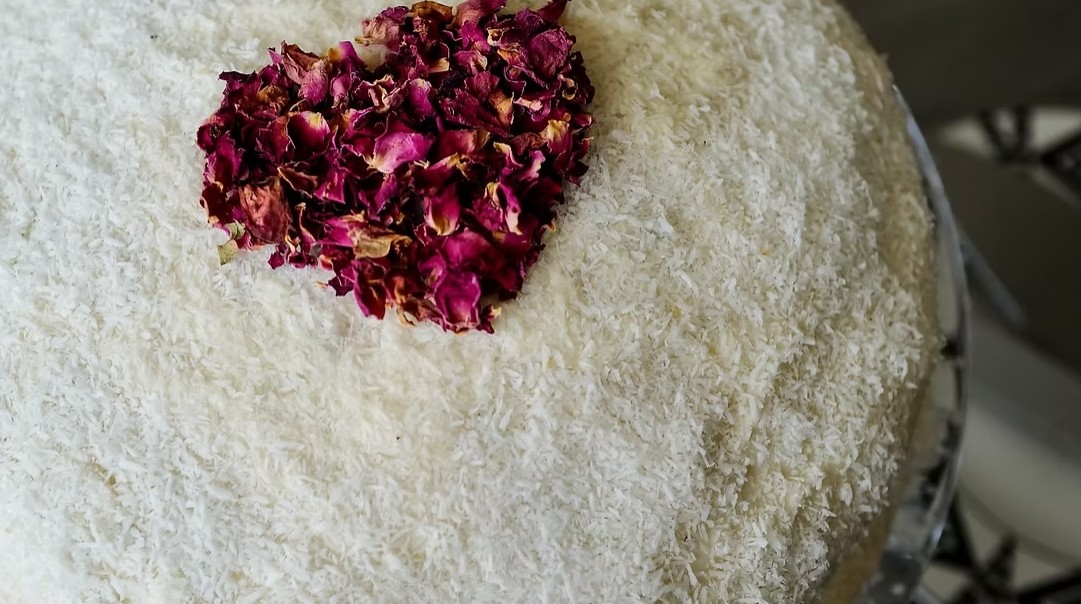
Make this easy gluten-free coconut layer cake recipe with two cake options and a rich homemade coconut cream cheese frosting.
Soft, moist, and filled with tropical flavor, this Easy Gluten-Free Coconut Layer Cake Recipe with Coconut Cream Cheese Frosting and Two Cake Options is an impressive dessert for birthdays, Easter, Mother’s Day, bridal showers, holiday gatherings, and other special occasions.
This recipe gives you two distinct ways to prepare the coconut cake. Cake Option 1 uses a customized blend of individual gluten-free flours, sour cream, coconut extract, and fresh lime zest. Cake Option 2 is a Southern-style variation made with gluten-free measure-for-measure flour, buttermilk, and almond extract.
Choose one cake option before you begin. Do not combine the ingredients from the two cake formulas. Both cakes are baked in two 8-inch round pans and finished with the same rich coconut cream cheese frosting.
Cake Option 1 produces delicate layers with a soft, tender crumb. Sweet rice flour adds structure, tapioca flour helps create a light texture, and sour cream supplies moisture and richness. Coconut extract and sweetened shredded coconut create a pronounced coconut flavor, while lime zest provides a fresh contrast.
Cake Option 2 offers the convenience of a prepared gluten-free flour blend. Buttermilk helps keep the layers tender, while vanilla and almond extracts complement the shredded coconut. Either version makes a beautiful layer cake with a creamy frosting and classic coating of coconut.
Directions
Step 1: Choose a Cake Option
Choose Cake Option 1 or Cake Option 2. Gather only the ingredients needed for your selected cake. Do not combine the ingredients from the two cake options.
If you choose Cake Option 1, select either softened butter or neutral oil. Also choose either whole milk or buttermilk. Do not use both ingredients from either pair.
Step 2: Prepare the Oven and Cake Pans
Preheat the oven to 350°F. Thoroughly grease two 8-inch round cake pans with butter or gluten-free nonstick baking spray.
Line the bottoms of the pans with parchment paper circles and lightly grease the parchment. Dust the pans with gluten-free flour, then tap out any excess.
Directions for Cake Option 1
Step 3: Combine the Individual Gluten-Free Flours
In a medium mixing bowl, whisk together the sweet rice flour, white rice flour, tapioca flour, brown rice flour, xanthan gum, baking powder, baking soda, and kosher salt.
Whisk thoroughly so the xanthan gum and leavening agents are evenly distributed. Set the bowl aside.
Step 4: Beat the Butter and Sugar
Place the softened butter and granulated sugar in a large mixing bowl. Using a hand mixer or stand mixer, beat for 3 to 4 minutes, or until the mixture is pale, light, and fluffy.
If you chose neutral oil instead of butter, beat the oil and sugar until thoroughly combined.
Step 5: Add the Eggs and Extracts
Add the eggs one at a time, beating well after each addition. Scrape down the sides and bottom of the bowl as necessary.
Add the vanilla extract and coconut extract, then mix until fully incorporated.
Step 6: Add the Sour Cream and Lime Zest
Add the sour cream and mix until the batter is smooth. Stir in the lime zest.
The lime zest brightens the coconut flavor and balances the richness of the cake without making the finished dessert taste strongly of citrus.
Step 7: Alternate the Dry Ingredients and Milk
Reduce the mixer speed to low. Add one-third of the dry ingredients, followed by half of your chosen whole milk or buttermilk.
Add another third of the dry ingredients, followed by the remaining milk or buttermilk. Finish with the last third of the dry ingredients.
Mix only until combined. Avoid overmixing because excessive mixing can produce a denser cake.
Step 8: Fold in the Coconut
Use a rubber spatula to gently fold the sweetened shredded coconut into the batter. Make sure the coconut is evenly distributed without overworking the batter.
Proceed to Step 13 to bake the cake layers.
Directions for Cake Option 2
Step 9: Cream the Butter and Sugar
Place the softened butter and granulated sugar in a large mixing bowl. Using a hand mixer or stand mixer, beat for 3 to 4 minutes, or until the mixture is pale, light, and fluffy.
Step 10: Add the Eggs and Extracts
Add the eggs one at a time, beating well after each addition. Scrape down the sides and bottom of the bowl as needed.
Add the vanilla extract and almond extract, then mix until incorporated.
Step 11: Combine the Dry Ingredients
In a separate bowl, whisk together the gluten-free measure-for-measure flour, baking soda, and salt.
Step 12: Finish the Southern-Style Batter
Reduce the mixer speed to low. Add one-third of the flour mixture to the butter mixture, followed by half of the buttermilk.
Repeat with another third of the flour mixture and the remaining buttermilk. Finish with the final third of the flour mixture.
Mix only until combined. Use a rubber spatula to gently fold in the shredded coconut.
Baking and Assembly Directions for Either Cake Option
Step 13: Bake the Cake Layers
Divide your chosen cake batter evenly between the prepared cake pans. Smooth the tops with an offset spatula or the back of a spoon.
Bake for 30 to 35 minutes, or until the tops are lightly golden and a toothpick inserted into the center of each cake comes out clean or with a few moist crumbs attached.
Step 14: Cool the Cake Layers
Let the cakes cool in their pans for approximately 15 minutes. Carefully run a thin knife around the edges of each pan.
Turn the cakes out onto wire racks and remove the parchment paper. Allow the layers to cool completely before adding the frosting.
Step 15: Prepare the Coconut Cream Cheese Frosting
Place the softened cream cheese and butter in a large mixing bowl. Beat until smooth and fluffy.
Add the coconut milk and continue mixing until fully incorporated. Gradually add the powdered sugar, 1 cup at a time, beating after each addition until the frosting is creamy and smooth.
Fold in the shredded coconut. The finished frosting should be rich, fluffy, and spreadable.
Step 16: Assemble the Coconut Cake
Place one completely cooled cake layer on a serving plate or cake stand. Spread approximately one-third of the coconut cream cheese frosting evenly over the top.
Position the second cake layer over the frosting. Spread the remaining frosting over the top and sides of the cake, smoothing it with an offset spatula.
Gently press additional shredded coconut over the top and sides until the cake is evenly coated.
Step 17: Chill and Serve
Refrigerate the assembled cake for at least 30 minutes before slicing. This brief chilling period helps the frosting set and makes the cake easier to cut into neat servings.
Use a sharp knife to slice the cake, wiping the blade clean between cuts. Serve the cake chilled or allow individual slices to stand briefly at room temperature for a softer texture.
Notes
Choose only one cake option. Cake Option 1 uses individual gluten-free flours, sour cream, coconut extract, and lime zest. Cake Option 2 uses gluten-free measure-for-measure flour, buttermilk, and almond extract. Do not combine the two cake formulas.
For Cake Option 1, choose either 1 stick of softened butter or 1/2 cup neutral oil. Do not use both.
Also for Cake Option 1, choose either 1/2 cup whole milk or 1/2 cup buttermilk. Do not use both.
Both cake options are baked in two 8-inch round pans at 350°F for 30 to 35 minutes. Both versions use the same coconut cream cheese frosting.
Use room-temperature eggs, milk, buttermilk, sour cream, butter, and cream cheese for smoother mixing and more even baking.
Measure the individual gluten-free flours using the spoon-and-level method. Spoon each flour into its measuring cup, then level the top without packing it down.
When making Cake Option 2, choose a gluten-free measure-for-measure flour formulated to replace wheat flour in an equal amount. Check the package to determine whether the blend already contains xanthan gum.
Do not overmix either cake batter after adding the dry ingredients. Mix only until the flour is incorporated, then gently fold in the coconut.
Allow the cake layers to cool completely before frosting. Warm cake can soften the cream cheese frosting and cause the layers to slide.
For a toasted finish, decorate the cake with toasted coconut flakes. Edible flowers or fresh berries may also be added immediately before serving.
Store the cake covered in the refrigerator for up to 5 days because the frosting contains cream cheese. For the best flavor and texture, allow individual slices to stand at room temperature for approximately 20 to 30 minutes before serving.
To freeze the unfrosted cake layers, let them cool completely, wrap them tightly in plastic wrap, and freeze them for up to 2 months. Thaw the wrapped layers before assembling the cake.
The fully frosted cake may also be frozen. Freeze it uncovered until the frosting is firm, then wrap it securely and place it in an airtight container. Thaw the cake overnight in the refrigerator.
When serving someone with celiac disease or gluten sensitivity, check all packaged ingredients for appropriate gluten-free labeling. This includes the flours, extracts, baking powder, baking soda, shredded coconut, powdered sugar, coconut milk, and nonstick baking spray. Prevent cross-contact by using clean pans, utensils, preparation surfaces, and equipment.