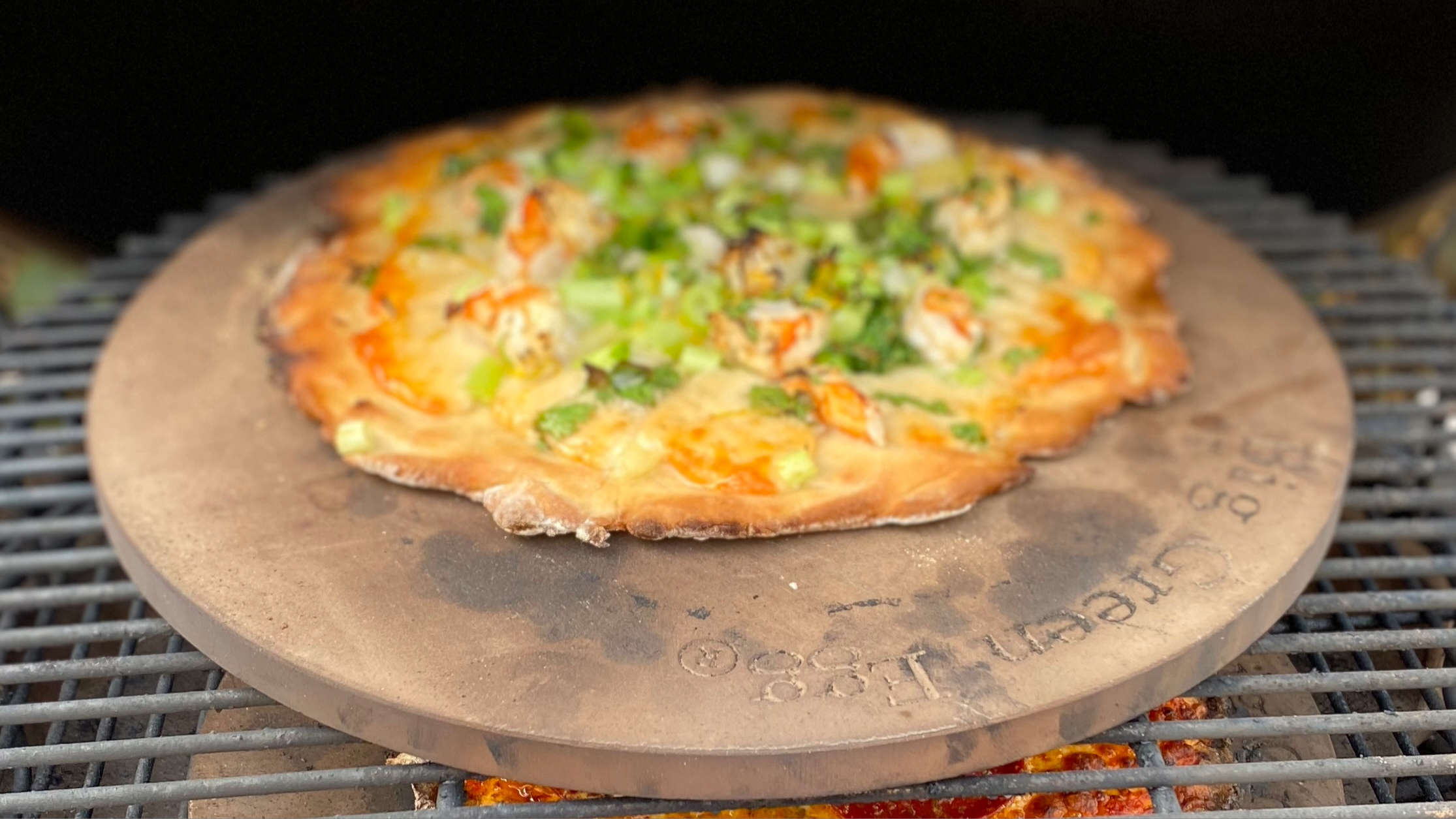
Make zesty gluten-free shrimp pizza with roasted lemon, Manchego, Fontina, scallions, and cilantro for a fresh and flavorful seafood dinner.
Bright, savory, and irresistibly cheesy, this Zesty Gluten-Free Shrimp Pizza with Roasted Lemon, Scallions, and Cilantro Recipe transforms pizza night into a restaurant-worthy meal. A crisp gluten-free crust is layered with nutty Manchego, creamy Fontina, sweet shrimp, and mellow roasted lemon, then finished with fresh scallions and cilantro.
Roasting softens the lemon’s sharp acidity and develops a lightly caramelized citrus flavor that complements the delicate shrimp without overwhelming it. Manchego adds buttery, nutty depth, while Fontina melts into a smooth and creamy layer beneath the seafood. Fresh scallions and cilantro brighten the finished pizza and balance the richness of the melted cheese.
This colorful seafood pizza is elegant enough for entertaining but simple enough for a weeknight dinner. Serve it with a crisp green salad, grilled asparagus, roasted vegetables, or sautéed spinach. It can also be sliced into smaller pieces and served as an appetizer for parties and special occasions.
Directions
Step 1: Preheat the Oven
Preheat the oven to 500°F, or follow the manufacturer’s temperature instructions for your pizza stone or baking steel. Place the stone or steel in the oven while it preheats so the baking surface becomes thoroughly hot. A properly heated surface helps the gluten-free pizza crust develop a crisp, golden exterior.
Step 2: Prepare the Pizza Dough
Lightly dust a clean work surface with gluten-free flour. Gently stretch or roll the room-temperature pizza dough into a 10- to 12-inch round. Avoid pressing all the air out of the outer edges so the crust can develop a lighter texture as it bakes.
Transfer the shaped dough to a pizza peel dusted with gluten-free flour. If you are not using a pizza peel and stone, place the dough on a parchment-lined baking sheet. Leave a narrow border around the edge for the crust.
Step 3: Add the Cheese
Sprinkle the grated Manchego evenly over the pizza dough, followed by the grated Fontina. Distribute both cheeses across the surface while leaving the outer border uncovered.
The Manchego provides a rich, slightly nutty flavor, while the Fontina melts into a smooth and creamy base that pairs beautifully with the shrimp and roasted lemon.
Step 4: Arrange the Shrimp and Roasted Lemon
Pat the shrimp dry if they contain excess moisture. Arrange them evenly over the cheese so each slice will have shrimp. Scatter the finely chopped roasted lemon across the pizza.
Keeping the toppings evenly distributed helps the shrimp cook consistently and gives every slice a balanced combination of seafood, cheese, and citrus.
Step 5: Bake the Pizza
Carefully slide the assembled pizza onto the hot pizza stone or baking steel. Bake for 10 to 14 minutes, or until the crust is golden brown and crisp, the cheeses are melted and bubbling, and the shrimp are opaque and fully cooked.
The exact baking time may vary depending on the thickness of the crust, the type of gluten-free dough, and the accuracy of the oven temperature. Watch the pizza closely near the end of the baking time to prevent the crust from becoming overly browned.
Step 6: Add the Fresh Garnishes
Carefully remove the pizza from the oven. Immediately sprinkle the sliced scallions and whole cilantro leaves over the top. The residual heat will gently soften the fresh garnishes while preserving their color and flavor.
Finish the pizza with a light sprinkling of kosher salt, adjusting the amount according to the saltiness of the cheeses.
Step 7: Rest and Serve
Let the pizza rest for 2 to 3 minutes before slicing. This short resting period allows the melted cheese to settle slightly, making the pizza easier to cut and serve.
Slice the pizza and enjoy it immediately while the crust is crisp, the cheeses are warm, and the fresh herbs are vibrant.
Notes
Rock shrimp have a naturally sweet flavor and tender texture, but small peeled shrimp or chopped medium shrimp may be used instead.
Frozen shrimp also work well. Thaw them completely and pat them dry with paper towels before placing them on the pizza. Removing excess moisture helps prevent the crust and cheese from becoming watery.
Allow refrigerated gluten-free pizza dough to reach room temperature before shaping it. Warmer dough is generally easier to stretch or roll without cracking.
Any high-quality homemade or store-bought gluten-free pizza dough may be used. Follow the package or recipe instructions if its recommended baking temperature differs from the temperature given here.
Roast the lemon in advance so it has time to cool before chopping. Roasting mellows its acidity and develops a softer, slightly caramelized citrus flavor.
Mozzarella, provolone, Gruyère, or Monterey Jack may be substituted for the Manchego or Fontina if desired. The flavor and melting texture will vary depending on the cheese selected.
For additional flavor, lightly brush the edge of the unbaked crust with garlic-infused olive oil. Fresh lemon zest or crushed red pepper flakes may also be sprinkled over the pizza after baking.
The roasted lemon, grated cheeses, sliced scallions, and prepared shrimp can be readied several hours in advance and refrigerated separately. Assemble and bake the pizza shortly before serving for the best crust texture.
Serve this shrimp pizza with a green salad, Caesar salad, grilled zucchini, roasted asparagus, sautéed spinach, or a cucumber and tomato salad.
Store leftover pizza in an airtight container in the refrigerator for up to 2 days. Reheat it in a 400°F oven for 5 to 8 minutes or in a hot skillet until the toppings are heated through and the crust becomes crisp again. Microwaving may soften the crust.
To grill the pizza, place it on a grill-safe pizza stone or pizza pan and cook it over indirect medium-high heat until the crust is crisp, the cheese is melted, and the shrimp are fully cooked.
Check the labels on the pizza dough, flour, cheeses, and all other packaged ingredients to confirm they meet your gluten-free requirements. Prevent cross-contact by using clean preparation surfaces, utensils, pans, and baking equipment.