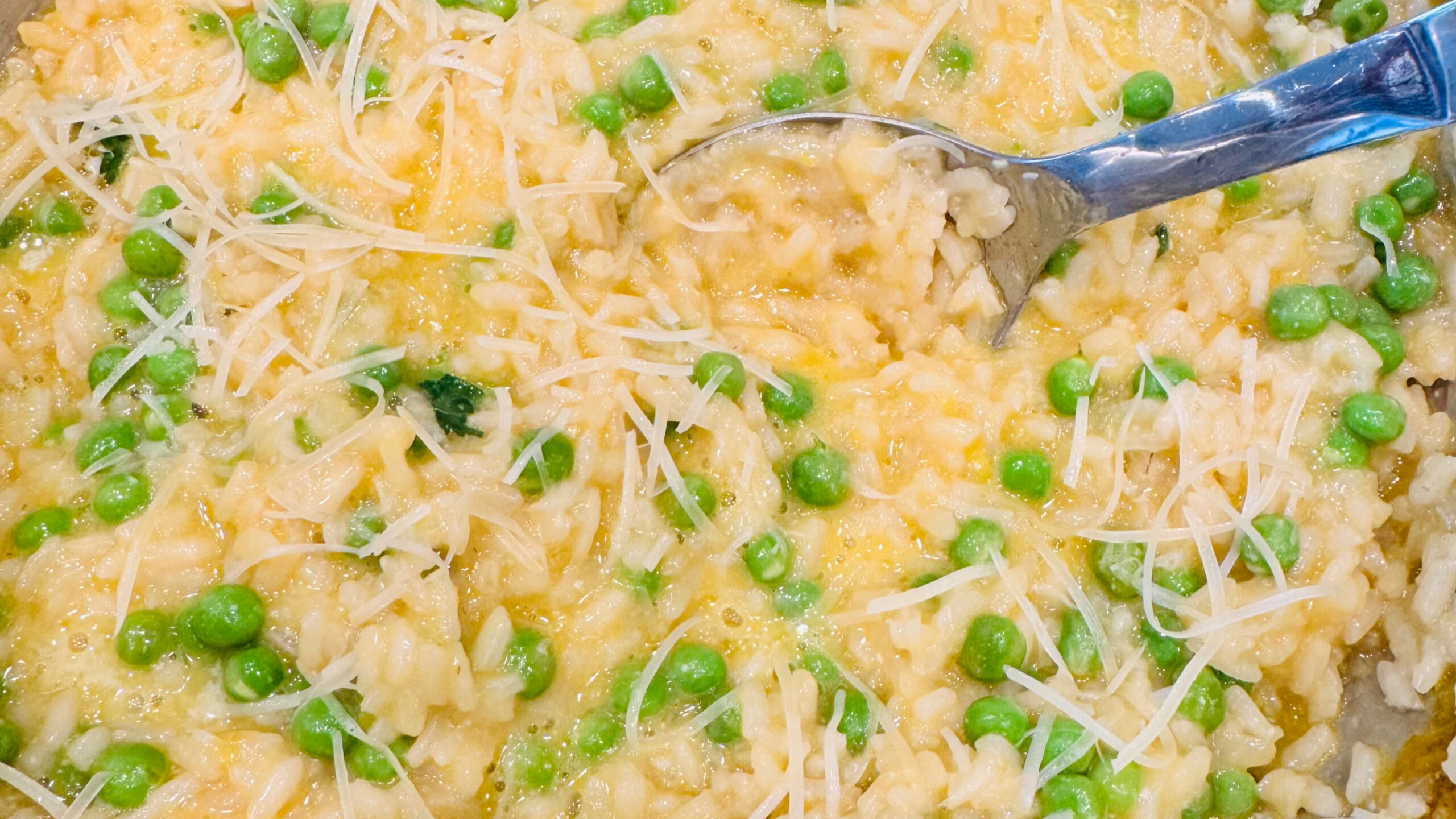
Make creamy spring pea risotto with Arborio rice, lemon, herbs, white wine, and savory pecorino cheese for an elegant seasonal meal.
Creamy, bright, and filled with fresh seasonal flavor, this Creamy Spring Pea Risotto with Lemon and Pecorino Recipe transforms a handful of simple ingredients into an elegant and satisfying dish. Tender Arborio rice is slowly cooked with warm stock until it develops its signature creamy consistency, while sweet green peas add color and a delicate spring flavor.
Fresh lemon zest and juice balance the richness of the butter and pecorino cheese with a lively citrus finish. Chopped Italian parsley or mint contributes another layer of freshness, making every spoonful feel comforting without becoming too heavy. A final sprinkling of grated pecorino or Parmesan gives the risotto a pleasantly salty, savory finish.
The secret to excellent homemade risotto is patience. Adding the warm stock gradually gives the rice time to release its natural starches while retaining a tender, slightly firm center. Beautiful enough for a spring celebration but approachable enough for a weeknight dinner, this versatile risotto can be served as a satisfying main course or an elegant side dish.
Prep Time: 10 minutes
Cook Time: 30 minutes
Resting Time: 3 minutes
Total Time: 43 minutes
Yield: 4 to 6 servings
Ingredients
1 cup shelled fresh English peas or frozen peas
3 cups chicken or vegetable stock or broth
2 tablespoons olive oil
1 small onion, finely chopped
1 cup Arborio rice
1/2 cup dry white wine
Zest of 1 lemon
Juice of 1 lemon
1/4 cup grated pecorino cheese or Parmesan, plus more for serving
2 tablespoons butter
2 tablespoons chopped Italian parsley or mint
Salt and freshly ground black pepper, to taste
Directions
Step 1: Warm the Stock
Pour the chicken or vegetable stock into a medium saucepan. Bring it to a gentle simmer, then reduce the heat to low. Keep the stock warm throughout the risotto-making process so that each addition maintains a consistent cooking temperature.
Step 2: Cook the Onion
Heat the olive oil in a large, heavy-bottomed saucepan over medium heat. Add the finely chopped onion and cook for 4 to 5 minutes, stirring occasionally, until it becomes soft and translucent. Do not allow the onion to brown because its flavor should remain delicate.
Step 3: Toast the Rice
Add the Arborio rice to the saucepan. Cook for 2 to 3 minutes, stirring with a wooden spoon, until the grains are evenly coated with the olive oil and appear almost completely white. Toasting the rice briefly helps the grains maintain their structure as they absorb the stock.
Step 4: Add the Wine
Pour the dry white wine into the saucepan. Cook while stirring until the wine has almost completely evaporated and the rice has absorbed its flavor. The sharp aroma of the alcohol should soften before you begin adding the stock.
Step 5: Add the Stock Gradually
Add about 1/2 cup of the warm stock to the rice. Cook, stirring frequently, until the liquid is almost completely absorbed.
Continue adding the stock about 1/2 cup at a time. Allow each addition to become nearly absorbed before pouring in more. Stir frequently, but not constantly, so the rice releases enough starch to become creamy without turning gluey.
Continue cooking until most of the stock has been incorporated and the rice is creamy and almost tender, about 16 minutes. Adjust the heat as needed to maintain a gentle simmer throughout the cooking process.
Step 6: Add the Peas
Stir the fresh or frozen peas directly into the risotto without precooking them. Add the remaining stock and continue cooking for about 2 minutes, or until the peas are heated through and tender.
Taste the rice to check its texture. It should be tender and creamy while retaining a slight bite in the center. The risotto should remain loose enough to spread gently when spooned into a shallow bowl.
Step 7: Finish the Risotto
Remove the saucepan from the heat. Stir in the lemon zest, lemon juice, grated pecorino cheese or Parmesan, butter, and chopped parsley or mint.
Continue stirring gently until the butter and cheese have melted into the rice. Taste the risotto, then season with salt and freshly ground black pepper as needed. Add the salt carefully because pecorino and Parmesan are both naturally salty.
Step 8: Rest the Risotto
Cover the saucepan and allow the risotto to rest for 2 to 3 minutes. This brief resting period lets the flavors settle while the butter and cheese create a cohesive, creamy finish.
Check the consistency before serving. If the risotto has thickened more than desired, stir in a small amount of additional warm stock until it becomes creamy and fluid again.
Step 9: Serve
Spoon the risotto into shallow serving bowls while it is still warm. Garnish each serving with additional grated pecorino or Parmesan cheese and, if desired, a small amount of chopped parsley or mint. Serve immediately for the best flavor and texture.
Notes
Fresh peas do not need to be precooked. Stir them directly into the risotto near the end of the cooking process so they retain their bright color and fresh flavor.
Frozen peas may be used without thawing. Add them directly to the risotto and cook until heated through and tender.
Keep the stock warm throughout the cooking process. Adding cold stock can interrupt the cooking and prevent the rice from cooking evenly.
Add the stock gradually and allow each addition to become almost completely absorbed before adding more.
Stir the rice frequently to release its starches, but avoid stirring constantly because excessive stirring can make the risotto gluey.
The finished risotto should be creamy and fluid rather than stiff or dry. If it becomes too thick, stir in a small amount of additional warm stock before serving.
Pecorino has a sharper, saltier flavor, while Parmesan provides a milder alternative. Taste the risotto before adding salt because both cheeses are naturally salty.
For a vegetarian version, use vegetable stock and select a cheese that meets your dietary preferences.
Risotto is best served immediately because it continues to absorb liquid and thicken as it rests.
Must be 21 years of age or older to purchase or consume alcoholic beverages. Please drink responsi