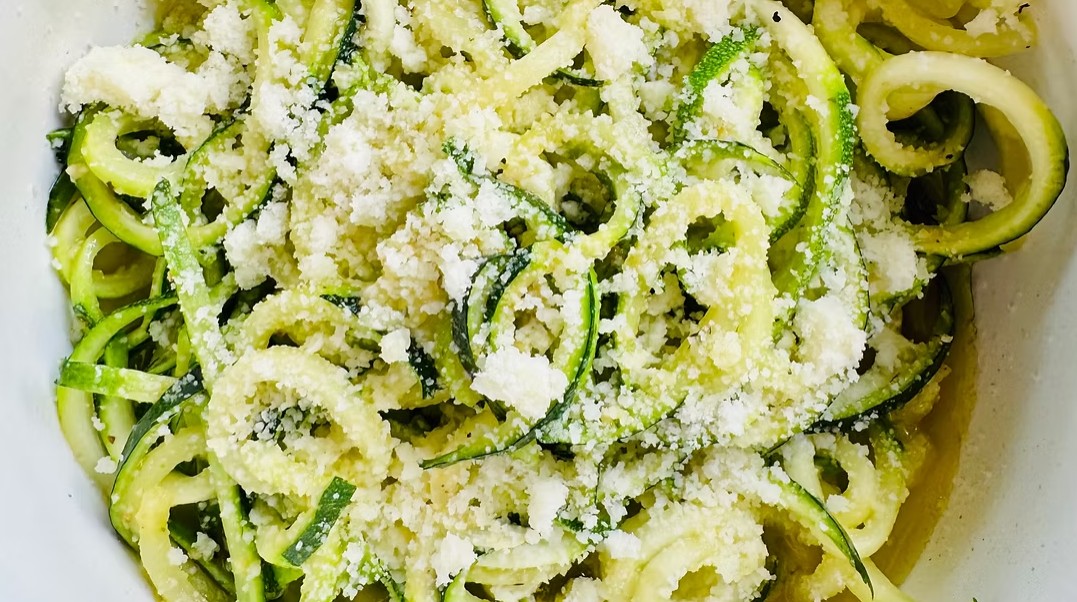
Make creamy Zucchini Noodles Cacio e Pepe with Pecorino Romano and black pepper. This easy gluten-free, low-carb Italian-inspired recipe is ready in 15 minutes.
Fresh, light, and irresistibly cheesy, this Creamy Zucchini Noodles Cacio e Pepe Recipe brings the classic flavors of the Roman favorite to a simple vegetable-based dish. Tender zucchini noodles are tossed with Pecorino Romano, freshly cracked black pepper, butter, and extra-virgin olive oil for a savory meal ready in just 15 minutes.
Traditional cacio e pepe means “cheese and pepper,” a fitting name for a dish centered around Pecorino Romano and black pepper. This version replaces traditional pasta with spiralized zucchini for a naturally gluten-free, low-carb alternative with plenty of salty, peppery Italian flavor.
The key to great zucchini noodles is controlling excess moisture and cooking them only briefly. A quick salting and drying step helps keep the zucchini tender-crisp rather than watery or overly soft.
Serve this easy zucchini noodle cacio e pepe as a light main course, vegetable side dish, or base for your favorite protein.
Prep Time: 10 minutes
Cook Time: 5 minutes
Total Time: 15 minutes
Yield: 4 servings
Ingredients
3 medium zucchini, spiralized into noodles
1 tablespoon extra-virgin olive oil
1 tablespoon unsalted butter
¾ cup finely grated Pecorino Romano cheese, plus additional for serving
1 teaspoon freshly cracked black pepper, plus additional for serving
2 to 3 tablespoons hot water, as needed
¼ teaspoon kosher salt, or to taste
Directions
Step 1: Prepare the Zucchini Noodles
Place the spiralized zucchini noodles in a colander and sprinkle lightly with kosher salt. Gently toss and let them rest for about 10 minutes to release excess moisture.
Transfer the zucchini noodles to a clean kitchen towel or paper towels and gently pat dry.
Step 2: Toast the Black Pepper
Heat the extra-virgin olive oil and butter in a large skillet over medium-low heat.
Add the freshly cracked black pepper and cook for about 30 seconds, stirring constantly, until fragrant.
Step 3: Cook the Zucchini Noodles
Add the zucchini noodles to the skillet and gently toss to coat them with the butter, olive oil, and black pepper.
Cook for 1 to 2 minutes, tossing frequently, until warm and tender-crisp. Remove the skillet from the heat.
Step 4: Finish with Pecorino Romano
Let the skillet rest off the heat for about 30 seconds. Gradually add the finely grated Pecorino Romano while continuously tossing the zucchini.
Add 1 tablespoon of hot water and continue tossing until the cheese forms a creamy coating. If necessary, add more hot water 1 teaspoon at a time until the desired consistency is reached.
Step 5: Season and Serve
Taste and adjust with additional salt or freshly cracked black pepper as needed.
Divide among four bowls and finish with additional Pecorino Romano and black pepper. Serve immediately.
Serving Suggestions
Creamy Zucchini Noodles Cacio e Pepe can be served as a light main course or an Italian-inspired side dish. Pair it with grilled chicken, garlic butter shrimp, seared scallops, roasted salmon, steak, or sautéed mushrooms for a more substantial meal.
For a lighter pairing, serve it with an arugula salad dressed with fresh lemon juice and extra-virgin olive oil. Roasted cherry tomatoes, asparagus, spinach, or mushrooms also complement the simple cheese and pepper flavors.
Notes
Freshly grated Pecorino Romano is recommended for the best flavor and texture.
Do not overcook the zucchini noodles. They need only 1 to 2 minutes in the skillet to become tender-crisp.
Pecorino Romano is naturally salty, so taste the finished dish before adding additional salt.
Freshly cracked black pepper provides a stronger aroma and more distinctive cacio e pepe flavor than pre-ground pepper.
Zucchini noodles are best served immediately. Store leftovers in an airtight container in the refrigerator for up to 2 days and reheat briefly in a skillet over low heat.
For a dairy-free variation, use dairy-free butter and a dairy-free Parmesan-style cheese alternative. The finished flavor will differ from traditional cacio e pepe.