Nasturtium Leaves: The Complete Guide to Growing, Harvesting, and Enjoying This Peppery Edible Garden Green
Learn how to grow, harvest, clean, store, and enjoy nasturtium leaves, a colorful edible garden green with a fresh, peppery flavor.
Nasturtium leaves bring beauty, flavor, and versatility to an edible garden. Their rounded shape, radiating veins, and fresh green color make them as ornamental as they are useful. Once harvested, the leaves offer a distinctive peppery flavor that can enliven salads, sandwiches, sauces, soups, and savory dishes.
Common garden nasturtiums, usually identified botanically as Tropaeolum majus, are warm-season plants available in compact, trailing, and climbing forms. Although they are frequently grown for their jewel-toned flowers, the leaves deserve just as much attention. Both young and mature leaves are edible, although their flavor and texture become stronger as they grow.
Nasturtiums are relatively easy to grow in garden beds, raised beds, containers, window boxes, and hanging baskets. With proper identification and food-safe growing practices, they can provide an abundant supply of flavorful leaves from late spring until cold weather arrives.
What Are Nasturtium Leaves?
Nasturtium leaves grow on plants belonging to the Tropaeolum genus. Common garden nasturtiums are unrelated to watercress, even though the word nasturtium is sometimes associated with both plants.
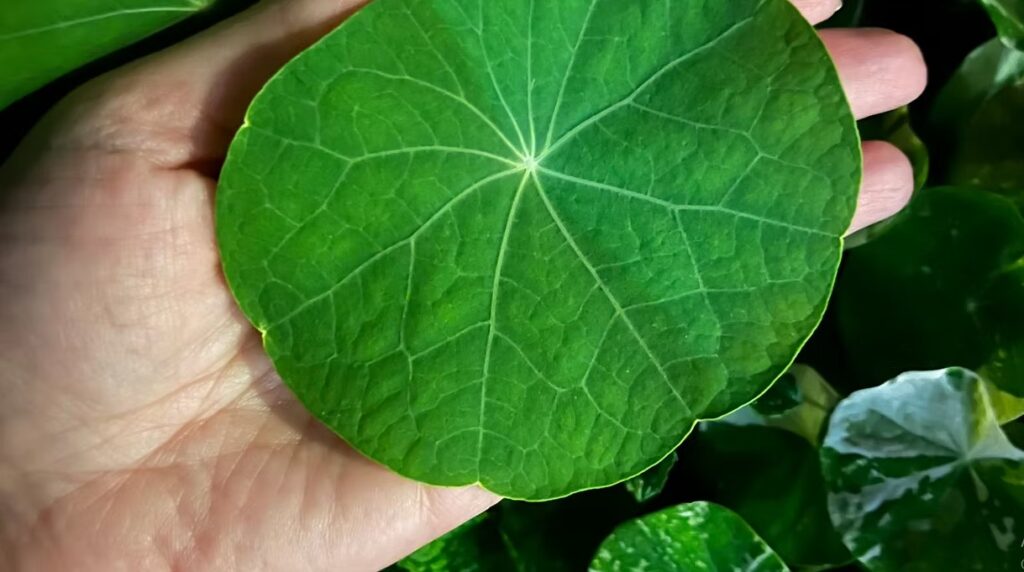
The leaves are generally round or slightly shield-shaped, with slender stems that attach near the center of the underside. Their pale veins spread outward in a pattern that resembles the spokes of an umbrella. Some gardeners compare the leaves to tiny lily pads.
Depending on the variety, nasturtium foliage may be solid green, blue-green, or variegated with cream-colored markings. The leaves range from small and delicate to broad and substantial, giving gardeners several culinary possibilities.
Garden nasturtiums are usually treated as annuals in climates with freezing winters. In warm, frost-free regions, some plants may survive longer. The variety, climate, and individual growing environment will influence the plant’s life cycle and overall performance.
Are Nasturtium Leaves Edible?
The leaves of correctly identified common garden nasturtiums are edible. Their flowers, flower buds, and immature seed pods are also commonly used for culinary purposes.
Always confirm a plant’s identity before eating any part of it. Common names can cause confusion, and not every unfamiliar plant with round leaves is safe to consume. The most dependable approach is to grow nasturtiums from clearly labeled seeds or transplants and retain the plant label for reference.
Do not eat nasturtiums purchased as ornamental plants unless you know they were grown without pesticides or other products that are not approved for edible crops. Avoid harvesting plants growing along roadsides, in public landscapes, near treated lawns, or in gardens where chemical use is unknown.
When trying nasturtium leaves for the first time, begin with a small quantity. Individual sensitivities and allergies are possible with almost any food.
What Do Nasturtium Leaves Taste Like?
Nasturtium leaves have a fresh, peppery flavor that is often compared to watercress, arugula, mustard greens, or radishes. Their intensity varies according to the age of the leaf, the cultivar, the weather, and the plant’s growing conditions.
Young leaves tend to be more tender and moderately peppery. Larger, older leaves can have a stronger flavor, a firmer texture, and occasional bitterness. Hot weather and environmental stress may intensify their pungency.
The flavor makes nasturtium leaves useful in dishes that need a bright, savory contrast. Mild and creamy ingredients such as potatoes, eggs, beans, cucumbers, avocado, yogurt, and soft cheeses help balance their peppery character.
Choosing Nasturtiums for Edible Leaves
Both compact and trailing nasturtiums produce edible foliage. The best choice depends on the available growing space and the way you want the plants to look in the garden.
Compact varieties are well suited to raised beds, small gardens, window boxes, and patio containers. Trailing varieties can spill over hanging baskets, window boxes, retaining walls, and the edges of raised beds. Climbing varieties can be trained along fences or trellises, although they may require occasional guidance and support.
Variegated nasturtiums provide especially decorative foliage. Their patterned leaves add visual interest to the garden and create attractive edible garnishes.
Choose seeds or transplants from a dependable supplier. Look for plants labeled with the botanical name Tropaeolum majus or another clearly identified edible Tropaeolum species.
How to Grow Nasturtiums From Seed
Nasturtiums grow readily from seed and generally prefer minimal root disturbance. Seeds can be sown directly in the garden around the local last frost date once conditions are suitable.
In climates with short growing seasons, seeds may be started indoors several weeks before the anticipated final frost. Plantable paper or fiber pots can help reduce root disturbance when the seedlings are transferred outdoors.
Follow the planting-depth and spacing recommendations on the seed packet because individual cultivars can have very different growth habits. Keep the soil evenly moist during germination, but do not saturate it.
If seedlings were started indoors, gradually introduce them to outdoor conditions before planting them in the garden. This adjustment period helps reduce stress from sunlight, wind, and temperature changes.
Sunlight and Soil Requirements
Nasturtiums generally grow best in full sun and well-drained soil. In regions with extremely hot summers, some afternoon shade can help protect the plants from prolonged heat stress.
The plants perform well in poor to average soil. Rich soil and excessive nitrogen can encourage abundant foliage while reducing flower production. This may not be a disadvantage if leaves are the primary harvest, but excessive fertilizer can create crowded, soft growth.
Good drainage is essential. Waterlogged soil can contribute to weak growth, yellow foliage, and root problems. If garden soil drains poorly, consider growing nasturtiums in raised beds or containers filled with a well-draining potting mix.
Watering Nasturtium Plants
Keep the soil consistently moist while seeds are germinating and seedlings are becoming established. Mature nasturtiums can tolerate short dry periods, but regular watering supports tender new growth.
Water when the upper layer of soil begins to feel dry. Apply water near the base of the plant instead of repeatedly wetting the foliage. Watering at soil level and allowing adequate airflow around the plants can help reduce persistent moisture on the leaves.
Container-grown nasturtiums may need more frequent watering than plants growing in the ground. Check containers regularly during hot, dry, or windy weather. Always allow excess water to drain freely.
Growing Nasturtiums in Containers
Containers are a practical choice for growing edible nasturtium leaves, particularly when garden space is limited. Container growing also makes it easier to control soil quality and separate edible plants from ornamentals that may receive different treatments.
Select a container with drainage holes and fill it with a well-draining potting mix. Compact nasturtiums work well in window boxes and patio pots, while trailing varieties can spill attractively from hanging baskets or large planters.
Climbing varieties may need a small trellis or another support. Position the support when the plant is young so the stems can be guided without excessive handling.
Use only fertilizers and pest-control products labeled for edible crops. Follow every package direction, safety precaution, and harvest restriction.
Caring for Nasturtium Plants
Nasturtiums are generally low-maintenance plants, but regular observation helps keep the foliage attractive and suitable for harvesting. Provide adequate spacing so air can circulate between plants.
Remove yellow, damaged, or diseased leaves when you notice them. Clean cutting tools before and after removing unhealthy growth, especially when disease is suspected.
Aphids, whiteflies, and mealybugs may occasionally gather on the stems or undersides of leaves. Inspect plants regularly, particularly before harvesting. Remove heavily infested leaves and choose pest-management methods appropriate for edible gardens.
Yellow leaves may be caused by natural aging, excessive moisture, poor drainage, heat stress, nutrient problems, pests, or disease. Examine the plant and its growing environment before adding fertilizer or applying a treatment.
When to Harvest Nasturtium Leaves
Nasturtium leaves can be harvested once the plant is established and producing vigorous, healthy growth. Small and medium leaves usually offer the best combination of tenderness and peppery flavor.
Harvest during the cooler part of the day, ideally after rain, irrigation, or morning dew has dried. Choose clean, undamaged leaves with fresh color. Avoid leaves that show signs of mold, disease, extensive insect feeding, or contamination from animals.
Use clean scissors or garden snips to cut individual leaf stems. Harvest from different sections of the plant instead of removing all the foliage from one area.
Regular light harvesting can encourage fresh growth. Avoid removing more leaves than the plant can replace, particularly when it is young, newly transplanted, or stressed by heat.
How to Clean Nasturtium Leaves
Inspect freshly harvested leaves and discard any that are damaged, diseased, or heavily infested with insects. Rinse the leaves carefully under cool running water to remove soil and small garden insects.
Dry them thoroughly with a clean kitchen towel or salad spinner. Excess moisture can encourage wilting and spoilage during storage.
Even when nasturtiums are grown organically or without synthetic pesticides, the leaves should still be washed before serving. Garden soil, insects, animals, irrigation water, and handling can introduce unwanted contaminants.
How to Store Nasturtium Leaves
Nasturtium leaves have the best texture and flavor when used soon after harvesting. If they need to be stored, make sure the cleaned leaves are thoroughly dry.
Place the leaves in a food-storage container lined with a clean paper towel. Cover the container and refrigerate it. The paper towel helps absorb excess moisture that could otherwise cause the leaves to deteriorate.
Storage time varies according to freshness, temperature, moisture, and handling. Inspect refrigerated leaves before using them and discard any that become slimy, moldy, discolored, or unpleasant-smelling.
Wait to chop the leaves until shortly before serving. Cutting them too early can encourage wilting and cause some of their fresh peppery flavor to fade.
Culinary Uses for Nasturtium Leaves
Nasturtium leaves can be used much like arugula, watercress, mustard greens, or tender culinary herbs. Their peppery flavor is strongest when they are served raw. Brief cooking softens their texture and creates a milder, more rounded taste.
Young leaves are usually tender enough to serve whole. Larger leaves are often better chopped, blended, stuffed, or lightly cooked.
Salads and Fresh Greens
Add young nasturtium leaves to salads for a lively peppery bite. Combine them with mild lettuces, spinach, cucumbers, tomatoes, radishes, roasted beets, apples, pears, citrus, or fresh berries.
A creamy or slightly sweet dressing can balance their intensity. Lemon vinaigrette, honey mustard dressing, buttermilk dressing, and yogurt-based dressings are especially complementary.
Begin with a few leaves and add more after tasting. Their flavor can vary considerably from one plant or harvest to another.
Sandwiches, Burgers, and Wraps
Use small nasturtium leaves as a flavorful alternative to lettuce in sandwiches, burgers, and wraps. They pair well with egg salad, chicken salad, tuna salad, roasted turkey, smoked salmon, grilled vegetables, avocado, and creamy cheeses.
The leaves can also be layered into tea sandwiches with cucumber and cream cheese. Add them shortly before serving so they remain fresh and crisp.
Pesto and Green Sauces
Nasturtium leaves can replace some or all of the basil, arugula, or other greens in pesto. Their peppery flavor can be strong, so combining them with parsley, basil, spinach, or another mild green creates a more balanced sauce.
Nasturtium pesto can be served with pasta, roasted vegetables, grilled chicken, fish, potatoes, sandwiches, or bread. The leaves can also be blended into chimichurri, salsa verde, herb vinaigrette, or a creamy green dressing.
Taste the sauce as it is blended and adjust the amount of nasturtium according to its intensity.
Compound Butter and Soft Cheese
Finely chop young nasturtium leaves and mix them into softened butter with lemon zest, fresh herbs, or a small amount of garlic. The finished compound butter can be served with warm bread, baked potatoes, corn, fish, chicken, or roasted vegetables.
Chopped leaves can also be folded into cream cheese, goat cheese, ricotta, or another soft cheese. Use the mixture as a sandwich spread, cracker topping, vegetable dip, or filling for edible nasturtium flowers.
Soups and Savory Bowls
Use whole or thinly sliced nasturtium leaves as a garnish for potato soup, tomato soup, vegetable soup, chilled cucumber soup, or gazpacho. Add the leaves immediately before serving to preserve their fresh color and peppery flavor.
Chopped leaves can also be scattered over grain bowls, rice dishes, lentils, beans, polenta, and roasted vegetables. Their pungency adds contrast to mild, earthy, or creamy ingredients.
Egg and Potato Dishes
Nasturtium leaves pair naturally with eggs and potatoes. Fold chopped leaves into scrambled eggs, omelets, frittatas, quiche fillings, or egg salad. Add them near the end of cooking to prevent excessive wilting.
Stir finely chopped leaves into potato salad, mashed potatoes, roasted potatoes, or warm potato dishes. Their peppery character can complement mustard-based dressings and creamy sauces.
Pasta, Risotto, and Cooked Grains
Toss sliced nasturtium leaves with hot pasta shortly before serving. The residual heat will soften them without completely removing their fresh flavor.
The leaves can also be stirred into risotto, couscous, quinoa, farro, or rice. They pair well with lemon, peas, asparagus, zucchini, mushrooms, Parmesan cheese, and fresh herbs.
Pizza and Flatbreads
Scatter young nasturtium leaves over pizza or flatbread after baking. Their peppery flavor works particularly well with goat cheese, ricotta, mozzarella, mushrooms, roasted vegetables, pears, and figs.
Adding the leaves after baking helps preserve their attractive shape and bright green color.
Stuffed Nasturtium Leaves
Large, flexible nasturtium leaves can be used as small edible wrappers. Fill them with herbed cheese, seasoned rice, cooked grains, finely chopped vegetables, or another prepared savory filling.
Nasturtium leaves are more delicate than cabbage or grape leaves, so handle them gently. Serve the filled leaves fresh or warm them only briefly to prevent tearing and discoloration.
Stir-Fries and Sautéed Dishes
Larger nasturtium leaves can be briefly sautéed with olive oil, garlic, and a small amount of salt. They may also be added to stir-fries during the final moments of cooking.
Heat softens the leaves and reduces some of their sharpness. Avoid prolonged cooking, which can diminish their color, texture, and distinctive flavor.
Dips, Spreads, and Yogurt Sauces
Finely chopped nasturtium leaves can be stirred into hummus, white bean dip, yogurt sauce, sour cream dip, or whipped feta. Combine them with lemon juice and mild fresh herbs for a bright accompaniment to vegetables, crackers, grilled foods, or roasted potatoes.
Add the leaves gradually and taste as you go because their peppery intensity can vary.
Edible Garnishes
Small nasturtium leaves make attractive edible garnishes for salads, appetizers, soups, cheese boards, savory pastries, and garden-inspired platters. Their rounded form and radiating veins add visual interest without requiring elaborate preparation.
Use only fresh, healthy leaves grown and harvested under food-safe conditions. Wash and dry them carefully, then add them shortly before serving.
Pairing Nasturtium Leaves With Flowers
Nasturtium leaves and flowers can be served together to create a colorful, entirely edible presentation. The flowers are generally milder than the leaves, allowing the two parts of the plant to provide different levels of peppery flavor.
Arrange the leaves and flowers over salads, cheese boards, savory tarts, pasta, or vegetable platters. Combining different leaf sizes and flower colors creates a natural garden-to-table presentation.
Flavor Pairings for Nasturtium Leaves
Creamy, salty, tangy, and mildly sweet ingredients help balance the leaves’ natural pungency. Goat cheese, feta, ricotta, cream cheese, eggs, potatoes, avocado, yogurt, and beans are especially compatible.
Bright dressings made with lemon, lime, or vinegar highlight their freshness. Honey, ripe fruit, caramelized onions, or roasted vegetables can provide subtle sweetness that rounds out their flavor.
Nasturtium leaves also pair well with chives, parsley, dill, basil, mint, and cilantro. Begin with a small quantity so their peppery character supports the other ingredients instead of overwhelming them.
Can Nasturtium Leaves Be Frozen?
Freezing changes the delicate texture of nasturtium leaves. Once thawed, the leaves are unlikely to work well in salads or as fresh garnishes.
Frozen leaves may still be useful in pesto, blended sauces, soups, or cooked dishes where their original texture is less important. Clean and dry the leaves thoroughly before freezing them in a food-safe container.
Nasturtium pesto and other prepared green sauces may freeze more successfully than whole leaves. Store them in small portions so only the needed amount must be thawed.
Growing Nasturtiums in an Edible Landscape
Nasturtiums combine ornamental appeal with culinary value, making them a natural choice for edible landscaping. Compact varieties can edge raised beds and pathways, while trailing forms soften the sides of containers and retaining walls. Climbing types add vertical color to fences and trellises.
Their colorful flowers attract garden visitors, including pollinators. Nasturtiums are also sometimes planted as trap crops because they can attract certain insects. However, they are not guaranteed to prevent pest damage or improve the health of neighboring plants.
Inspect nasturtiums and nearby crops regularly. If the plants attract a large pest population, manage the infestation before it spreads through the garden.
Can Nasturtiums Be Grown Indoors?
Nasturtiums can be started indoors, but maintaining mature plants inside can be challenging. They require strong light, adequate airflow, suitable temperatures, and enough room for their growth habit.
A bright window may not provide enough light for vigorous growth. A suitable grow light can help, but indoor plants still require careful watering and regular pest inspections.
For many gardeners, containers placed on a sunny patio, balcony, or outdoor windowsill provide better results during the growing season.
Saving Nasturtium Seeds
Allow selected flowers to remain on the plant if you want to collect seeds for future planting. The seed pods enlarge after flowering and can be gathered as they mature.
Dry and store seeds according to reliable seed-saving guidance for the particular variety. Keep in mind that hybrid nasturtiums may not produce plants identical to the parent. Different varieties growing close together may also cross-pollinate, creating variation in the next generation.
Do not confuse seeds intended for planting with immature pods harvested for culinary use. Proper identification, food-safe growing conditions, and an appropriate preparation method remain important.
Common Questions About Nasturtium Leaves
Do nasturtium leaves grow back after harvesting?
Healthy plants generally continue producing foliage after a light harvest. Leave enough mature foliage to support growth and avoid heavily cutting plants that are young, weak, newly transplanted, or environmentally stressed.
Are large nasturtium leaves edible?
Large nasturtium leaves are edible when they come from a correctly identified plant grown under food-safe conditions. They are often more strongly flavored and less tender than young leaves, making them better suited to chopping, blending, stuffing, or brief cooking.
Why are my nasturtium leaves turning yellow?
Yellowing may be related to normal aging, excess water, poor drainage, temperature stress, pests, disease, or unsuitable fertility. Examine the entire plant and its growing environment before selecting a treatment.
Can nasturtium leaves be eaten raw?
Young nasturtium leaves can be eaten raw after they have been correctly identified, harvested from a food-safe location, and washed thoroughly. Their fresh peppery flavor makes them especially useful in salads, sandwiches, wraps, and garnishes.
Do nasturtium leaves taste like the flowers?
Both the leaves and flowers have a peppery flavor, but the leaves are usually stronger. Nasturtium flowers tend to be milder and may have a slightly sweet or floral quality in addition to their peppery finish.
Are nasturtium leaves the same as watercress?
No. Garden nasturtiums belong to the genus Tropaeolum, while true watercress is Nasturtium officinale. They share a peppery flavor but are botanically different plants.
A Colorful Garden Green Worth Growing
Nasturtium leaves offer much more than attractive foliage. They provide a lively peppery flavor, a generous harvesting season, and numerous possibilities in salads, sandwiches, sauces, soups, pasta, egg dishes, and cooked meals.
The safest and most satisfying approach is to grow clearly identified nasturtiums specifically for culinary use. Plant them in well-drained soil, avoid treatments not intended for edible crops, harvest healthy leaves regularly, and wash them carefully before serving.
With their distinctive appearance and bold flavor, nasturtium leaves can transform an ordinary garden bed, raised bed, or patio container into a beautiful and productive part of the kitchen garden.
A vibrant nasturtium leaf displays its distinctive rounded shape and intricate vein pattern.
Learn how to plant, grow, and care for orange nasturtiums, including sunlight, soil, watering, container care, harvesting, and edible uses. Orange nasturtiums bring glowing color, rounded green leaves, and a relaxed cottage-garden appearance to beds, borders, containers, and edible landscapes. These cheerful flowers are especially attractive spilling over the side of a window box, filling an open space in a vegetable garden, or weaving through a sunny flower bed. Common garden nasturtiums belong to the genus Tropaeolum. The two types most often grown are trailing nasturtium, Tropaeolum majus, and compact bush nasturtium, Tropaeolum minus. Depending on the variety, the flowers may be soft apricot, golden orange, tangerine, salmon, or deep red-orange. Nasturtiums are valued for more than their beauty. Their flowers and leaves are edible and have a fresh, peppery flavor similar to watercress or arugula. The blossoms can add vivid color to salads, appetizers, pasta, and serving platters. Their easygoing nature also makes them an inviting choice for beginning gardeners. Are Orange Nasturtiums Annuals or Perennials? Nasturtiums are tender perennials in warm climates, but gardeners in colder regions usually grow them as annuals. They are sensitive to frost and generally continue growing and blooming until cold weather ends the season. In frost-free or very mild areas, nasturtiums may live longer and reseed readily. Gardeners in warm regions should monitor spreading plants and unwanted seedlings because nasturtiums can become vigorous under favorable conditions. Choosing the Right Orange Nasturtium Before purchasing seeds, decide whether a compact or trailing growth habit will work best in your garden. Compact varieties form tidy mounds that are well suited to garden borders, raised beds, small spaces, and patio containers. Many remain approximately 6 to 18 inches tall, although the final size depends on the cultivar and growing conditions. Trailing varieties produce longer stems that can spread across the ground or cascade from containers, window boxes, and retaining walls. They can also be guided onto a low support, but they do not have tendrils and may need help staying attached. For an especially colorful planting, look for named varieties with orange, apricot, peach, tangerine, or salmon-colored flowers. Check the seed packet for the plant’s mature size and habit rather than choosing by flower color alone. When to Plant Nasturtium Seeds Plant nasturtium seeds outdoors after the danger of frost has passed and the soil has begun to warm. In many regions, this means sowing them in late spring. Local frost dates and soil conditions are more useful than a fixed calendar date. Seeds can also be started indoors approximately four to six weeks before the expected final spring frost. Nasturtiums can be sensitive to root disturbance, so plantable paper or fiber pots may make it easier to move seedlings into the garden without disrupting their roots. Direct sowing is often the simplest option. The large seeds are easy to handle, and seedlings may emerge in approximately 7 to 10 days when temperature and moisture conditions are favorable. The University of Wisconsin recommends sowing seeds about ½ inch deep and placing plants approximately 10 to 12 inches apart, although spacing should also be adjusted for the selected variety. University of Wisconsin Horticulture Selecting the Best Location Nasturtiums generally flower best in full sun. A location receiving at least six hours of direct sunlight is a helpful starting point, but climate matters. Plants growing in regions with intense summer heat may benefit from protection during the hottest part of the afternoon. Partial shade can help reduce heat stress, but excessive shade may produce long, leafy plants with fewer blossoms. Watch how the plants respond and adjust container placement if flowering slows during extremely hot weather. Good air circulation is also beneficial. Avoid crowding plants tightly against one another, particularly in humid conditions. Soil and Fertilizer Requirements Nasturtiums prefer well-drained soil and often perform beautifully without rich amendments or frequent feeding. Highly fertile soil, especially soil containing abundant nitrogen, can encourage lush leaf production at the expense of flowers. Before planting, loosen compacted soil and correct serious drainage problems. Gardeners working with heavy clay or waterlogged ground may have better results growing nasturtiums in raised beds or containers. Routine fertilization is usually unnecessary unless the soil is extremely poor or a plant shows a confirmed nutrient deficiency. If a nasturtium produces many healthy leaves but very few flowers, excessive fertilizer may be part of the problem. Growing Orange Nasturtiums in Containers Orange nasturtiums make excellent container plants. Compact varieties create full mounds of foliage and flowers, while trailing varieties soften the edges of hanging baskets, window boxes, and tall planters. Choose a container with unobstructed drainage holes and fill it with a well-draining potting mix. Avoid using dense garden soil in containers because it may compact and hold too much water. Container-grown nasturtiums can dry more quickly than plants growing in the ground. Check the soil regularly, especially during hot or windy weather. Water when the upper portion of the potting mix begins to feel dry, then allow excess water to drain completely. Watering Nasturtiums Established nasturtiums tolerate some dryness, but regular watering supports stronger flowering. Water deeply enough to moisten the root zone, then allow the soil surface to begin drying before watering again. The goal is consistent but not saturated soil. Prolonged waterlogging can contribute to weak growth and root problems, while repeated severe wilting may reduce flowering. Direct water toward the soil instead of routinely soaking the foliage. Watering early in the day gives splashed leaves time to dry and may help limit disease problems in humid gardens. Encouraging More Orange Flowers Adequate sunlight, restrained fertilizer use, and regular moisture are the foundations of abundant nasturtium flowers. Harvesting blossoms or removing faded flowers can encourage the plant to continue producing buds rather than directing all its energy toward seed development. If a healthy plant has abundant foliage but few flowers, check its light and fertilizer conditions. Moving a container to a sunnier position or stopping unnecessary feeding may improve flower production. Very hot summer weather
Here, you will learn all about chive blossoms and parsley, including how companion planting helps both herbs thrive, the many benefits they bring to your garden, and the delicious ways to use them in everyday cooking. Whether you are creating a thriving kitchen garden or looking for fresh inspiration in the kitchen, chive blossoms and parsley are a versatile pairing that offers beauty, flavor, and abundant harvests throughout the growing season. There is something incredibly satisfying about walking into your garden, brushing your hand across a patch of fragrant herbs, and gathering a handful of fresh parsley alongside a few vibrant purple chive blossoms. Moments like these remind us that a garden is more than a place to grow food. It is a space where beauty, nature, and fresh ingredients come together to inspire every meal. Among the many herbs you can grow, chives and parsley are one of the easiest and most rewarding companion planting combinations. They thrive under similar growing conditions, complement one another beautifully, and provide fresh harvests from spring through fall. Their partnership benefits not only your kitchen but your entire garden by attracting pollinators, supporting beneficial insects, and helping create a healthier growing environment. Whether you are planting a large kitchen garden, filling raised beds, or growing herbs in containers on your patio, chive blossoms and parsley are a pairing that delivers season after season. Their fresh flavors elevate everyday meals, while their graceful appearance adds charm and color to any outdoor space. A Perfect Partnership in the Herb Garden Companion planting is the practice of growing plants together that naturally benefit one another. Some companion plants improve soil conditions, others attract pollinators, while some help reduce pest problems or make better use of available growing space. Chives and parsley check nearly every one of those boxes. Parsley grows in lush, leafy mounds that remain attractive throughout much of the growing season. Chives produce slender green leaves that eventually give way to beautiful globe-shaped blossoms in shades of lavender and purple. Together they create layers of texture and color that look just as lovely in ornamental gardens as they do in vegetable beds. Their similar care requirements also make them easy companions. Both appreciate fertile soil, regular watering, and plenty of sunshine, allowing gardeners to care for both herbs using the same routine. For anyone just beginning an herb garden, this combination is an excellent place to start. Why Companion Planting Matters Healthy gardens are built on diversity. Instead of growing a single crop in isolation, companion planting encourages a balanced ecosystem where plants, pollinators, and beneficial insects work together. Every herb contributes something unique to the garden. Parsley provides dense foliage that helps shade the soil and reduce moisture loss. Chives contribute their distinctive onion aroma while producing nectar-rich flowers that become gathering places for pollinating insects. Together they create an environment where plants thrive naturally. Rather than viewing herbs simply as ingredients for cooking, companion planting reminds us that every plant plays an important role in supporting the health of the entire garden. Chives Help Naturally Discourage Garden Pests One reason gardeners have planted chives throughout vegetable gardens for generations is their reputation for helping reduce certain insect problems. As members of the onion family, chives contain sulfur compounds responsible for their mild onion fragrance. While people enjoy this familiar aroma, many insects do not. Growing chives near parsley may help discourage aphids, Japanese beetles, spider mites, and several other common garden pests. Although companion planting is not a replacement for good garden management, it can become an important part of an organic gardening strategy by encouraging healthier plants and reducing stress caused by insect activity. Many gardeners also plant chives near tomatoes, carrots, strawberries, roses, peppers, and apple trees for the very same reason. Chive Blossoms Bring Your Garden to Life If there is one reason never to cut every chive flower before it opens, it is the incredible number of beneficial insects they attract. As spring transitions into early summer, chives produce clusters of soft purple blossoms that quickly become one of the busiest places in the garden. Honeybees eagerly gather nectar from the flowers while native bees move from bloom to bloom collecting pollen. Butterflies drift through the blossoms, adding movement and beauty to the landscape, while hoverflies quietly perform double duty by feeding on nectar as adults and helping control aphids during their larval stage. Watching these visitors move through your herb garden is one of the simple pleasures of gardening. Their presence also benefits nearby vegetables, fruit trees, berry bushes, and flowering plants that depend on pollination for healthy harvests. Growing Chives and Parsley Together One of the reasons these herbs are so popular is because they are wonderfully uncomplicated. Choose a location that receives at least six hours of sunlight each day. While chives love full sun, parsley appreciates a little afternoon shade during periods of intense summer heat, especially in warmer climates. Plant both herbs in fertile, well-drained soil enriched with compost. Rich organic matter encourages vigorous growth while helping retain moisture between waterings. Water regularly, keeping the soil evenly moist without allowing it to become soggy. Applying a layer of mulch around the plants helps regulate soil temperature, conserve moisture, and reduce weed growth. With only a little routine care, both herbs will reward you with months of fresh harvests. Beautiful in Every Garden Style One of the joys of growing herbs is their versatility. Chives and parsley look equally at home in formal herb gardens, rustic cottage gardens, raised beds, decorative borders, and patio containers. The upright foliage and cheerful blossoms of chives create natural height, while parsley fills the surrounding space with rich green leaves. The contrast between soft purple flowers and vibrant green foliage creates a timeless combination that looks attractive from spring until frost. Many gardeners intentionally plant these herbs near walkways or seating areas where their fragrance and colorful blooms can be enjoyed every day. Other Plants That Thrive
Learn how to grow healthy fig trees at home, including variety selection, planting, watering, pruning, winter protection, harvesting, and troubleshooting. Fig trees bring beauty, character, and remarkable flavor to a home garden. Their broad, deeply lobed leaves create a lush appearance, while their sweet fruit can be enjoyed fresh from the tree, dried, preserved, baked into desserts, or added to savory dishes. Once established in a suitable location, a fig tree can produce generously with relatively straightforward care. The common fig, botanically known as Ficus carica, is a deciduous shrub or small tree native to western Asia and the Mediterranean region. Although figs are associated with warm climates, gardeners in many cooler regions can grow them successfully by choosing a cold-tolerant variety, planting in a protected microclimate, or using a container that can be moved into shelter for winter. Successful fig growing begins with the right variety and location. Sunlight, drainage, seasonal warmth, winter temperatures, moisture, and pruning practices can all influence whether a tree develops healthy growth and fully ripened fruit. This complete fig tree growing guide explains how to select, plant, water, fertilize, prune, protect, harvest, and troubleshoot fig trees at home. Understanding How Fig Trees Grow A fig is not a conventional fruit with visible flowers. What appears to be the fruit is a hollow structure called a syconium. The tiny flowers develop inside this structure, which is why gardeners do not see blossoms covering a fig tree before fruit appears. There are several types of edible figs, but common figs are generally the most practical choice for home gardens. Most commonly sold home-garden varieties can develop fruit without cross-pollination, which means a single tree may produce a crop. Some specialized varieties require pollination by a particular fig wasp and may not produce properly in regions where that pollinator is absent. Buying a named common fig variety from a reliable regional nursery helps prevent this problem. Depending on the variety and climate, a fig tree may produce one or two crops. The early crop, known as the breba crop, forms on growth produced during the previous season. The main crop normally develops later on new growth. A cold winter or heavy pruning can eliminate the breba crop while still allowing the tree to produce a later crop on new branches. Choosing the Best Fig Variety for Your Climate Variety selection should be based on winter hardiness, summer heat, the length of the growing season, local humidity, and whether the tree will grow in the ground or a container. A variety that performs beautifully in a hot Southern garden may ripen too late in a cool Northern climate. Brown Turkey is a familiar and widely grown fig with brownish-purple skin and sweet flesh. It adapts to a range of conditions and can produce fruit on new growth after winter damage. Celeste produces small to medium fruit with light brown to violet skin and sweet flesh. Its relatively tight fruit opening can help limit problems caused by insects and excess moisture. It is especially popular in warm, humid regions. Chicago Hardy is frequently selected for colder climates because its roots can survive lower temperatures than those of many tender varieties when properly established and protected. Aboveground growth may still die back during severe winter weather, so the name should not be interpreted as a guarantee that every branch will survive extreme cold. Black Mission produces dark purple fruit with richly flavored pink or red flesh. It performs best where summers are warm and the growing season is sufficiently long. In colder areas, it may be better suited to container cultivation. Violette de Bordeaux produces smaller, dark-skinned figs with a rich flavor. Its naturally compact growth and suitability for pruning can make it an appealing option for containers and smaller gardens. Desert King is known for producing a dependable breba crop in climates with cooler summers. Because breba figs form on the previous year’s wood, winter protection and careful pruning are particularly important. Local performance is more valuable than a variety’s general description. A cooperative extension office, regional nursery, or experienced grower can help identify cultivars that reliably ripen before the first fall frost in your area. Selecting the Right Planting Location Fig trees produce their best growth and fruit in full sun. Choose a location that receives at least six to eight hours of direct sunlight, with more sun being beneficial in cool or short-season regions. A south-facing wall can create a warmer microclimate, protect the tree from cold winds, and help the fruit ripen. Good drainage is essential. Fig trees adapt to several soil types, but they should not remain in saturated ground. Standing water and prolonged soil saturation can contribute to root and crown problems. If the garden has heavy clay or a consistently high water table, consider planting on a raised mound or growing the tree in a large container. Allow enough room for the mature canopy and roots. The final size depends on variety, climate, pruning, and winter dieback, but an unrestrained fig can become a broad shrub or small tree. Avoid planting directly beside foundations, septic systems, drains, or paved areas where vigorous roots and spreading growth may become difficult to manage. In colder climates, select a sheltered area away from low spots where cold air collects. A position beside a south-facing masonry wall may provide additional warmth, although the tree still needs adequate airflow and space. When to Plant a Fig Tree In climates with mild winters, figs may be planted while dormant in fall or early winter. In colder regions, spring planting is generally safer. Wait until the danger of a hard freeze has passed so the young tree has an entire growing season to establish roots before winter. Container-grown trees offer more flexibility than bare-root plants, but they still require protection from extreme heat, drought, and sudden cold during establishment. Avoid planting during periods of frozen soil, waterlogged conditions, or intense summer heat. How to Plant a Fig Tree Before
Originally published
March 2026
Updated
August 2026
Reviewed by
Culibloom