Mexican Marigold Growing Guide: How to Grow, Care for, and Harvest This Aromatic Herb
Use this Mexican Marigold Growing Guide to learn how to grow, care for, harvest, dry, and overwinter aromatic Tagetes lucida.
Mexican marigold is a beautiful and useful herb that brings fragrance, flavor, and brilliant golden color to the garden. Its glossy green leaves release a warm, anise-like aroma when crushed, while clusters of small yellow flowers brighten the landscape from late summer into fall. The plant is especially valuable when many other herbs and flowers are beginning to fade.
This Mexican Marigold Growing Guide focuses on Tagetes lucida, the aromatic herb also known as Mexican tarragon, Mexican mint marigold, sweet mace, and Texas tarragon. The common name Mexican marigold is sometimes applied to other plants in the Tagetes genus, including Tagetes erecta and Tagetes minuta. Checking the botanical name before purchasing seeds or plants helps ensure you are growing the culinary herb described here.
Native to Mexico and parts of Central America, Mexican marigold thrives in warm conditions and is relatively easy to maintain once established. It can be grown in herb gardens, pollinator gardens, ornamental borders, raised beds, and containers. Gardeners in warm climates may enjoy it as a perennial, while those in colder regions can grow it as an annual or overwinter it in a protected location.
What Is Mexican Marigold?
Mexican marigold, or Tagetes lucida, is an aromatic herbaceous perennial in the Asteraceae family. It is generally grown as a perennial in USDA Hardiness Zones 8 through 11, although winter survival can vary with local temperatures, soil drainage, exposure, and the severity of individual winters. In colder climates, it is normally treated as a warm-season annual.
The plant typically develops an upright, branching habit and may reach approximately 18 to 30 inches tall under favorable conditions. Its narrow, glossy leaves have an aroma and flavor often compared to anise, licorice, or French tarragon. Small golden-yellow flowers appear in clusters near the ends of the stems, creating a cheerful display that attracts beneficial garden visitors.
Mexican marigold is particularly appreciated in hot climates where French tarragon may struggle. Although the flavors are not identical, its leaves can provide a pleasantly sweet, tarragon-like note in suitable culinary applications.
Choosing the Right Growing Location
Mexican marigold performs best in a warm, sunny location. Choose a site that receives at least six hours of direct sunlight each day. Plants may tolerate some light afternoon shade, particularly in regions with extremely hot summers, but excessive shade can produce weak, elongated growth and fewer flowers.
Good air circulation is also important. Allow enough room between plants and nearby vegetation for leaves to dry after rain or watering. Crowded, persistently damp conditions can increase the likelihood of fungal problems.
Mexican marigold works well near a patio, garden path, or seating area where its fragrance can be enjoyed. It can also be placed toward the front or middle of a sunny ornamental border, depending on the mature height of the surrounding plants.
Soil and Drainage Requirements
This adaptable herb can grow in sandy, loamy, or clay-based soil, but good drainage is essential. Mexican marigold does not perform well when its roots remain in saturated ground for extended periods.
Before planting, loosen compacted soil and incorporate finished compost if the soil is especially poor or difficult to work. Compost can improve structure and moisture management, but overly rich soil is unnecessary. Excessive fertility may encourage abundant foliage at the expense of sturdy growth and flowering.
If the planting area stays wet after rain, consider using a raised bed or container. A quality potting mix designed for outdoor containers generally provides better drainage than ordinary garden soil.
How to Start Mexican Marigold From Seed
Mexican marigold can be propagated from seed. In colder climates, seeds may be started indoors several weeks before the expected final spring frost. Use clean containers filled with a lightweight seed-starting mix, and keep the medium evenly moist but not waterlogged.
Provide warmth and bright light while the seedlings develop. Once they have produced several sets of true leaves, begin acclimating them to outdoor conditions. This gradual process, known as hardening off, helps reduce stress caused by sudden exposure to direct sun, wind, and changing temperatures.
Transplant seedlings outdoors after the danger of frost has passed and the weather has warmed. Mexican marigold is sensitive to cold, so planting too early may slow its growth or damage tender foliage.
Seeds can also be sown directly in prepared garden soil after frost danger has passed. Keep the seedbed consistently moist during germination and early growth. Thin crowded seedlings so the remaining plants have adequate access to light, air, water, and nutrients.
Planting Mexican Marigold in the Garden
Plant Mexican marigold at approximately the same depth it was growing in its nursery container. Dig a hole wide enough to accommodate the root system without bending or crowding the roots. After planting, gently firm the soil and water thoroughly to settle it around the root ball.
Spacing of approximately 12 to 18 inches works well for many plants, although final spacing should reflect the variety, growing conditions, and desired garden effect. Wider spacing can improve air circulation in humid climates.
A light layer of organic mulch can help retain moisture and limit weed growth. Keep mulch away from the base of the stems to reduce the possibility of excess moisture collecting around the crown.
Growing Mexican Marigold in Containers
Container growing is a convenient choice for patios, balconies, small gardens, and cold-climate gardeners who want to move plants indoors before frost. Choose a container with unrestricted drainage holes and enough space to support the plant’s mature root system.
Fill the container with a loose, well-draining potting mix. Garden soil is usually too dense for containers and may remain wet around the roots. Place the pot where the plant will receive plenty of sunlight.
Container-grown Mexican marigold generally requires more frequent watering than plants growing in the ground. Check the potting mix regularly, especially during hot, dry, or windy weather. Water thoroughly when the upper layer begins to feel dry, then allow excess water to drain completely.
Watering Mexican Marigold
Newly planted Mexican marigold needs consistent moisture while its root system becomes established. Water deeply enough to moisten the root zone, but avoid keeping the soil continuously saturated.
Established plants can tolerate occasional dry periods, although prolonged drought may reduce leaf quality, growth, and flowering. Water according to the soil, temperature, rainfall, wind, and whether the plant is growing in the ground or a container.
Direct water toward the soil rather than repeatedly wetting the foliage. Morning watering gives accidental splashes time to dry and can help discourage moisture-related disease.
Fertilizing for Healthy Growth
Mexican marigold is not usually a heavy feeder. Plants growing in reasonably fertile garden soil may need little or no supplemental fertilizer. Applying compost around the planting area at the beginning of the growing season is often sufficient.
Container-grown plants gradually use the nutrients available in their potting mix. If growth becomes weak or pale, a diluted, balanced fertilizer may be applied according to the product directions. Avoid overfertilizing because soft, excessive growth may be less sturdy and can reduce the plant’s natural concentration of fragrance and flavor.
Pinching, Pruning, and Deadheading
Pinching the tips of young stems encourages branching and helps produce a fuller plant. Use clean fingers or sanitized garden snips to remove the tender tip just above a set of leaves.
Regular harvesting also functions as light pruning. Removing small portions of leafy growth encourages the plant to produce additional branches, provided enough foliage remains to support healthy growth.
Deadheading spent flower clusters can maintain a neat appearance and may extend flowering. If you want to collect seed, allow some of the later flowers to remain on the plant and mature completely.
Plants that become tall or uneven can be trimmed lightly, but avoid removing a large percentage of the foliage at one time. Gradual pruning places less stress on the plant.
Flowers and Pollinator Value
Mexican marigold produces clusters of small, golden-yellow flowers that can continue into fall in favorable conditions. The late-season bloom makes it a helpful addition to gardens designed to provide a succession of flowers.
The blossoms may attract butterflies and other visiting insects. Pollinator activity varies by region, surrounding habitat, pesticide use, weather, and the availability of other flowering plants.
For a colorful and aromatic planting, combine Mexican marigold with compatible sun-loving herbs and flowers that prefer well-draining soil. Its upright green foliage and golden blooms pair beautifully with purple basil, sage, ornamental peppers, zinnias, and other warm-season plants.
Common Pests and Diseases
Mexican marigold is generally considered a low-maintenance herb, but it should still be inspected regularly. Slugs and snails may feed on tender seedlings, particularly in damp or shaded areas. Hand removal, habitat reduction, and appropriate garden barriers can help protect young plants.
Botrytis and other fungal problems may occasionally develop when plants remain wet, crowded, or poorly ventilated. Providing adequate spacing, watering near the soil, removing affected plant material, and avoiding unnecessary overhead irrigation can reduce favorable conditions for disease.
Aphids, spider mites, or other sap-feeding pests may occasionally appear, especially on stressed plants. Examine the undersides of leaves and the tips of new growth. Early detection often makes a small infestation easier to manage.
Harvesting Mexican Marigold Leaves
Leaves may be harvested after the plant is established and producing vigorous growth. Use clean scissors or garden snips to cut tender stem tips or individual leaves. Harvesting in the morning, after dew has dried but before the hottest part of the day, can help preserve freshness and aroma.
Take small amounts from different parts of the plant instead of cutting one section heavily. Leave enough healthy foliage for continued photosynthesis and growth. Frequent light harvesting usually encourages a bushier plant.
For the strongest flavor, collect leaves before the plant reaches full bloom. Leaves can still be harvested during flowering, but their flavor and texture may change as the season progresses.
Rinse harvested leaves only when needed and dry them gently before use or storage. If the plant has been treated with a garden product, follow the label carefully and confirm that the product is approved for edible herbs.
Harvesting the Flowers
Mexican marigold flowers can be collected when they are fully open and fresh. Select blossoms that are clean, undamaged, and free from signs of insects or disease.
Use only flowers from plants positively identified as Tagetes lucida and grown without products that make them unsuitable for culinary use. Flowers purchased from florists, garden centers, or ornamental displays may have been treated with chemicals that are not approved for edible crops.
Fresh flowers may be used sparingly as a colorful garnish or dried for later use. Because flavor intensity can vary, begin with a small amount.
Drying and Storing the Leaves
To dry Mexican marigold, gather clean, healthy stems and remove any damaged leaves. Arrange the leaves in a single layer on a drying screen or loosely bundle a few stems and hang them in a warm, dry, well-ventilated location away from direct sunlight.
The leaves should become completely dry and crisp before storage. Any remaining moisture can encourage mold. Strip the dried leaves from the stems and place them in a clean, airtight container.
Store dried Mexican marigold in a cool, dark, dry cupboard. Label the container with the plant name and harvest date. For the best fragrance and flavor, inspect stored herbs regularly and replace them when their aroma has noticeably faded or if any moisture, mold, or unusual odor develops.
Saving Mexican Marigold Seeds
Allow selected flower heads to remain on the plant until they are brown, dry, and mature. Collect the dried heads on a clear day and place them in a paper bag or open container to finish drying in a protected location.
Separate the slender seeds from the dried flower material. Discard any seeds that appear damaged, moldy, or immature. Store fully dry seeds in a labeled paper envelope or other breathable packet placed in a cool, dark, dry environment.
Seedlings grown from saved seed may show some variation, especially if different Tagetes species or varieties were flowering nearby.
Overwintering Mexican Marigold
In warm climates, Mexican marigold may survive winter outdoors as a perennial. Good drainage becomes especially important during cool, wet weather. A light layer of mulch may offer some root protection, but mulch should not be piled against the stems.
In colder regions, gardeners can treat the plant as an annual and start again from seed the following spring. Another option is to take healthy cuttings before frost or move a container-grown plant into a bright, protected indoor location.
Indoor plants may grow more slowly because of lower light levels. Water less frequently than during active outdoor growth, but do not allow the root ball to remain completely dry for long periods. Inspect plants for pests before bringing them indoors.
Culinary Uses and Flavor
Mexican marigold leaves have a sweet, aromatic flavor reminiscent of anise, licorice, and tarragon. They can be used in small amounts to flavor soups, sauces, poultry, fish, vegetables, teas, and herb vinegars. The herb is often used as a warm-climate alternative to French tarragon.
Add fresh leaves carefully because the flavor can become pronounced. Chopping the leaves releases more of their aromatic oils, so whole sprigs and finely chopped leaves may produce different levels of intensity.
Mexican marigold should be treated as a flavoring herb rather than consumed in large quantities. Some sources warn that members of the Tagetes genus can be harmful when eaten in excessive amounts. People who are pregnant, nursing, taking medication, managing a medical condition, or sensitive to plants in the Asteraceae family should consult an appropriate healthcare professional before using unfamiliar herbs.
Plant sap may also irritate sensitive skin, and contact followed by sun exposure can cause a reaction in some people. Wearing gloves while pruning or harvesting is a sensible precaution if you have sensitive skin.
A Fragrant Addition to the Herb Garden
Mexican marigold combines the appeal of an ornamental flower with the usefulness of a fragrant culinary herb. It offers glossy foliage, golden late-season blossoms, anise-like flavor, and a strong tolerance for warm growing conditions.
With generous sunlight, well-draining soil, thoughtful watering, and regular light harvesting, Tagetes lucida can become a dependable part of an edible or ornamental garden. Whether it is grown in a border, raised bed, pollinator planting, or patio container, this aromatic herb contributes beauty and fragrance from summer through fall.
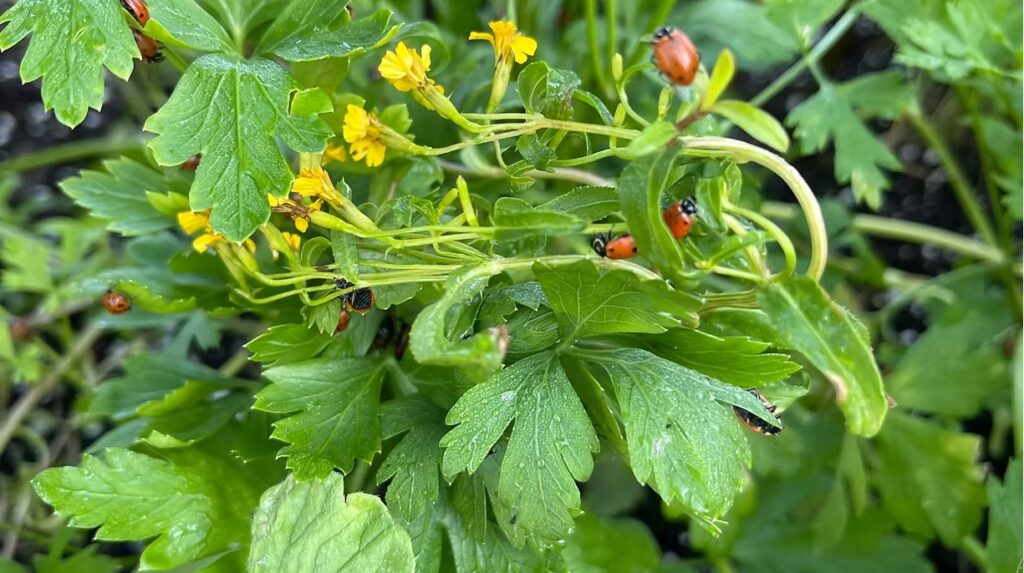
Ladybugs gather among the bright yellow flowers and rain-dappled leaves of a Mexican marigold.
Discover how to grow jalapeño peppers and oregano together in your garden. Learn planting tips, care requirements, harvesting methods, culinary uses, and the benefits of this delicious herb and pepper combination. Jalapeño and Oregano: A Flavorful Garden Combination If you enjoy growing ingredients that go straight from the garden to the kitchen, few combinations are as rewarding as jalapeño peppers and oregano. These two plants complement each other beautifully in both the garden and countless recipes. The mild heat of fresh jalapeños pairs perfectly with the earthy, slightly peppery flavor of oregano, making them staples in Mexican, Tex-Mex, Mediterranean, and Southwestern cooking. Not only do they create bold flavors together, but they also have similar growing requirements, making them excellent companion plants for home gardeners. Whether you have a large backyard, raised beds, or a few containers on a sunny patio, jalapeños and oregano can thrive with proper care. Why Grow Jalapeños and Oregano Together? Jalapeños and oregano share many of the same growing preferences. Both enjoy warm temperatures, full sun, and well-drained soil. Planting them together creates an attractive and productive garden space while giving you fresh ingredients throughout the growing season. Oregano forms a low-growing mat that can help shade the soil around pepper plants, reducing moisture loss during hot weather. Meanwhile, the upright jalapeño plants provide visual interest and make harvesting simple. Growing these two together also means you can step into the garden and gather everything needed for homemade salsa, grilled vegetables, marinades, pizza toppings, soups, and countless other dishes. About Jalapeño Peppers Jalapeños are one of the world’s most popular chili peppers. They typically measure 2 to 4 inches long and mature from green to bright red if left on the plant. Green jalapeños offer a fresh, crisp flavor with moderate heat, while fully ripened red peppers become slightly sweeter with a deeper flavor. Most jalapeños measure between 2,500 and 8,000 Scoville Heat Units, making them flavorful without being overwhelmingly spicy for many people. Healthy jalapeño plants can produce dozens of peppers throughout the growing season when harvested regularly. About Oregano Oregano is a hardy perennial herb in many climates and is prized for its aromatic leaves. It produces small oval leaves packed with essential oils that become even more flavorful when dried. Its earthy, warm, and slightly peppery taste makes oregano an essential ingredient in Italian, Greek, Mediterranean, and Mexican cuisine. Once established, oregano requires very little maintenance and often returns year after year. Growing Requirements Both plants thrive in similar conditions, making them easy to grow together. Choose a location that receives at least 6 to 8 hours of direct sunlight every day. Plant them in loose, well-drained soil rich in organic matter. While oregano tolerates poorer soils better than peppers, both benefit from compost worked into the planting area before planting. Maintain consistent watering during the growing season, allowing the soil to dry slightly between waterings. Jalapeños require more moisture than oregano, so avoid overwatering the herb while ensuring the peppers receive enough water during flowering and fruit production. Companion Planting Benefits Growing oregano near jalapeños offers several advantages. The fragrant oils released by oregano may help confuse certain insect pests while attracting beneficial pollinators when allowed to flower. Both plants make excellent companions for tomatoes, basil, onions, garlic, carrots, and marigolds, creating a productive and diverse vegetable garden. Their compact growth habits also make them ideal choices for container gardening. Harvesting Jalapeños Harvest jalapeños once they reach full size and have a glossy appearance. Most gardeners pick them while green, but leaving them on the plant allows them to ripen to red for a sweeter flavor. Use clean pruning shears or scissors to remove peppers rather than pulling them from the plant, which can damage stems. Frequent harvesting encourages continued pepper production throughout the season. Harvesting Oregano Harvest oregano by snipping stems just above a pair of leaves. Regular harvesting encourages bushier growth and prevents the plant from becoming woody. For the strongest flavor, harvest oregano just before flowering when the essential oils are most concentrated. Fresh oregano can be used immediately or dried for long-term storage. Culinary Uses Fresh jalapeños and oregano create an incredible flavor combination in many recipes. They work beautifully in homemade salsa, tacos, burritos, enchiladas, fajitas, chili, soups, grilled chicken, roasted vegetables, pizza, pasta sauces, marinades, salad dressings, and stuffed peppers. Blend fresh oregano with jalapeños, garlic, olive oil, lime juice, and cilantro to create a vibrant herb sauce for grilled meats or vegetables. Both ingredients also enhance homemade tomato sauces and garden-fresh pasta dishes. Health Benefits Jalapeños contain vitamins A and C, antioxidants, and capsaicin, the natural compound responsible for their heat. Oregano is rich in antioxidants and contains beneficial plant compounds that have been valued for centuries in traditional herbal practices. Together, these fresh garden ingredients provide flavor without adding excess calories, making them excellent additions to healthy meals. Growing in Containers Jalapeños and oregano perform exceptionally well in containers. Choose pots with adequate drainage holes and use a high-quality potting mix designed for vegetables and herbs. Place containers where they receive full sunlight and water consistently during hot weather. Container-grown plants are perfect for patios, balconies, decks, and small-space gardens. Common Problems Jalapeños may occasionally encounter aphids, spider mites, blossom end rot, or fungal diseases if overwatered. Oregano is generally resistant to pests but can develop root rot in consistently wet soil. Proper spacing, good air circulation, and careful watering help prevent most problems before they begin. Storage Tips Fresh jalapeños can be refrigerated for one to two weeks. They can also be frozen, pickled, or dehydrated for long-term storage. Fresh oregano keeps well in the refrigerator for several days when wrapped in a slightly damp paper towel. It can also be air-dried or frozen to preserve its flavor for future recipes. Frequently Asked Questions Can jalapeños and oregano grow in the same container? Yes. Use a container that is at least 14 to 18 inches wide with excellent drainage so both
Learn how to grow French tarragon with this complete beginner-friendly guide. Discover planting tips, care instructions, harvesting methods, companion planting ideas, culinary uses, and expert advice for growing this flavorful perennial herb. Welcome to the World of French Tarragon Have you ever tasted a dish at a fine restaurant and wondered what gave it that fresh, delicate flavor? There is a good chance French tarragon was one of the secret ingredients. Often called the “King of Culinary Herbs,” French tarragon has been a favorite of chefs for centuries because of its unique blend of sweet, herbal, and subtle licorice-like flavors. The wonderful thing about French tarragon is that you do not have to be a professional chef to enjoy it. This easy-to-grow perennial herb fits beautifully into backyard gardens, raised beds, containers, and even sunny patios. With just a little care, it will reward you with fresh, aromatic leaves that can transform everyday meals into something truly special. Whether you dream of creating a charming kitchen garden, love experimenting with fresh herbs in your recipes, or simply enjoy growing beautiful edible plants, French tarragon is an herb that deserves a place in your garden. In this guide, you will discover everything you need to know about planting, growing, harvesting, and using French tarragon so you can enjoy its incredible flavor for years to come. What Makes French Tarragon So Special? French tarragon (Artemisia dracunculus var. sativa) is much more than another leafy herb. It is considered one of the finest culinary herbs in the world and is a cornerstone of classic French cooking. Its slender, dark green leaves release a delightful fragrance when brushed or harvested. The flavor is unlike any other herb, offering hints of anise, fennel, vanilla, and pepper with a light sweetness that complements a wide variety of dishes without overpowering them. Unlike many herbs that are grown from seed, authentic French tarragon does not produce viable seeds. Instead, it is propagated through cuttings or by dividing mature plants. While this may seem unusual at first, it ensures that every new plant maintains the same exceptional flavor that has made French tarragon famous around the world. Why You Will Love Growing French Tarragon French tarragon is one of those herbs that quietly earns a permanent place in your garden. It is attractive, easy to grow, and incredibly rewarding throughout the growing season. Gardeners love French tarragon because it: Produces flavorful leaves for months. Returns year after year in many climates. Requires very little maintenance once established. Thrives in both garden beds and containers. Tolerates short periods of drought. Adds beauty and fragrance to herb gardens. Pairs well with many vegetables and flowering herbs. If you enjoy harvesting fresh ingredients just steps from your kitchen, French tarragon is an excellent choice. A Beautiful Addition to Any Garden French tarragon has a graceful appearance that blends naturally into almost any garden design. Its slender leaves sway gently in the breeze, adding movement and texture among vegetables, flowers, and other herbs. Growing about 18 to 30 inches tall, it stays neat without becoming invasive or taking over nearby plants. This makes it an ideal choice for raised garden beds, decorative herb borders, cottage gardens, and container displays. Because of its tidy growth habit, French tarragon also mixes beautifully with flowering herbs like lavender, chives, sage, and thyme, creating a garden that is both attractive and practical. Where French Tarragon Grows Best Like many Mediterranean herbs, French tarragon enjoys sunshine and well-drained soil. Choose a location that receives at least six hours of direct sunlight each day. In regions with especially hot summers, providing afternoon shade can help keep the leaves tender and reduce heat stress. Good airflow is another important ingredient for success. Giving plants plenty of room helps prevent fungal diseases and keeps foliage healthy throughout the season. If your garden tends to hold water after rain, consider planting French tarragon in a raised bed or container where drainage is easier to control. Healthy Soil Creates Healthy Herbs One of the biggest secrets to growing beautiful French tarragon is providing the right soil. Rather than rich, heavy soil that stays damp, French tarragon prefers soil that drains quickly. Loose, sandy, or loamy soil enriched with compost creates the ideal growing environment. A soil pH between 6.5 and 7.5 allows plants to absorb nutrients efficiently while developing the concentrated essential oils that give the leaves their distinctive aroma and flavor. If your soil is heavy clay, mixing in compost and coarse sand before planting can make a tremendous difference. Planting Your French Tarragon Since French tarragon is not grown from seed, most gardeners begin with a healthy nursery plant. Planting is simple. Dig a hole about twice the width of the root ball and slightly deeper than the container. Blend compost into the surrounding soil before placing the plant into its new home. Position the crown level with the soil surface, gently fill the hole, and water thoroughly. Leave about 18 to 24 inches between plants so they have plenty of room to grow and receive good air circulation. Before long, fresh green shoots will begin appearing as your plant settles into its new location. Caring for Your Plant Throughout the Season French tarragon asks for very little in return for the wonderful harvest it provides. Water regularly while the plant is becoming established. Once mature, allow the soil to dry slightly between waterings. This herb actually performs better when the roots are not constantly wet. A light application of compost each spring is usually all the fertilizer it needs. Too much fertilizer encourages rapid leafy growth but can reduce the rich flavor that makes French tarragon so desirable. Adding a thin layer of mulch helps conserve moisture, suppress weeds, and protect the roots during winter. Just remember to keep mulch a few inches away from the crown of the plant. Wonderful Companion Plants French tarragon is a friendly addition to many vegetable gardens and herb beds. It grows
Marigolds are among the most popular flowers in home gardens, and for good reason. Their brilliant blooms, dependable performance, and easy-going nature make them a favorite for gardeners of every experience level. Whether planted in flower beds, vegetable gardens, raised beds, borders, or decorative containers, marigolds provide months of vibrant color while attracting beneficial pollinators and adding life to the landscape. Native to Mexico and Central America, marigolds have been cultivated for centuries and are prized not only for their beauty but also for their versatility. These cheerful annuals bloom continuously from late spring until the first frost, thriving in hot weather when many other flowers begin to fade. With shades ranging from bright yellow and golden orange to deep red and mahogany, marigolds create a stunning display throughout the growing season. One of the greatest advantages of growing marigolds is how little maintenance they require. They are fast-growing, adaptable to a variety of soils, and reward gardeners with an abundance of blooms from a relatively small amount of care. Whether you are designing your first flower garden or adding seasonal color to an established landscape, marigolds are an excellent choice. Why Grow Marigolds? Marigolds offer much more than beautiful flowers. They are reliable performers that thrive in sunny gardens and adapt well to many growing conditions. Their long blooming season and compact growth habit make them suitable for almost any outdoor space. Gardeners appreciate marigolds because they are easy to grow from seed, tolerate summer heat exceptionally well, bloom continuously for months, attract bees and butterflies, make excellent companion plants for vegetables, grow beautifully in containers and raised beds, require minimal maintenance, and produce long-lasting cut flowers. Types of Marigolds Although all marigolds belong to the Tagetes genus, several popular varieties offer different sizes, flower forms, and growing habits. African Marigolds African marigolds (Tagetes erecta) are the largest of the common marigold varieties. They produce large, globe-shaped blooms in brilliant shades of yellow, orange, cream, and gold. These impressive plants typically grow between 18 and 36 inches tall, making them perfect for the back of flower borders or as eye-catching focal points in the landscape. French Marigolds French marigolds (Tagetes patula) are compact, bushy plants covered with dozens of colorful flowers. Their blooms may be single or double and often feature striking combinations of yellow, orange, red, and mahogany. Growing only 8 to 15 inches tall, they are ideal for edging walkways, filling containers, and planting throughout vegetable gardens. Signet Marigolds Signet marigolds (Tagetes tenuifolia) have delicate, fern-like foliage and produce hundreds of small daisy-shaped flowers throughout the season. Unlike many other marigolds, their petals are edible and have a pleasant citrus flavor, making them a beautiful addition to salads, desserts, and herb gardens. The Best Growing Conditions for Marigolds Marigolds perform best when planted in locations that receive plenty of sunshine and have well-drained soil. They are remarkably adaptable but produce their most abundant flowers when their basic growing requirements are met. Choose a location that receives at least six to eight hours of direct sunlight each day. Full sun encourages compact plants with continuous flowering and vibrant blooms. Marigolds prefer well-drained soil that is moderately fertile. Sandy or loamy soils work especially well, although they will tolerate average garden soil. If your soil is heavy clay, incorporating compost before planting will improve drainage and promote healthier root development. Water newly planted marigolds regularly until they become established. Mature plants are fairly drought tolerant, but they perform best when watered deeply whenever the top inch of soil becomes dry. Avoid allowing the soil to remain constantly wet, as excessive moisture may lead to root rot. Planting Marigolds Marigolds are among the easiest annual flowers to grow from seed. Seeds germinate quickly in warm soil, often sprouting within five to ten days. Plant seeds about one-quarter inch deep after all danger of frost has passed. Once seedlings develop several sets of true leaves, thin them to provide adequate airflow and room for growth. French marigolds should generally be spaced six to ten inches apart. African marigolds benefit from twelve to eighteen inches of spacing, while Signet marigolds grow well when planted eight to twelve inches apart. Fertilizing Marigolds Marigolds are not heavy feeders and usually perform exceptionally well with very little fertilizer. In many gardens, adding compost before planting provides all the nutrients they need throughout the growing season. If fertilizer is desired, apply a balanced fertilizer sparingly once or twice during the summer. Excess nitrogen encourages leafy growth at the expense of flower production, resulting in fewer blooms. Deadheading for Continuous Flowers Removing faded blooms throughout the growing season encourages marigolds to continue producing flowers until frost. This simple maintenance task also keeps plants looking neat and healthy. Regular deadheading redirects the plant’s energy toward developing new buds rather than producing seeds, extending the overall flowering season. Marigolds as Companion Plants Marigolds have long been valued in vegetable gardens as companion plants. Their bright flowers attract pollinators while also drawing beneficial insects that help maintain a healthy garden ecosystem. Many gardeners enjoy planting marigolds alongside tomatoes, peppers, cucumbers, beans, squash, eggplants, basil, and herbs. While marigolds should not be viewed as a complete solution for pest management, they contribute to greater biodiversity and support beneficial insect populations that naturally help keep gardens balanced. Pollinators Love Marigolds The colorful blooms provide nectar and pollen for numerous pollinating insects throughout the growing season. Common visitors include honeybees, native bees, butterflies, hoverflies, lady beetles, and parasitic wasps. These beneficial insects assist with pollination while helping control unwanted garden pests. Growing Marigolds in Containers Marigolds thrive in containers, making them an excellent choice for patios, balconies, porches, and small outdoor spaces. Choose containers with drainage holes and fill them with a quality potting mix. Position containers where they will receive full sunlight for most of the day, and water whenever the soil begins to dry. Container-grown marigolds often bloom just as abundantly as those planted directly in the garden. Common Problems
Originally published
March 2026
Updated
August 2026
Reviewed by
Culibloom