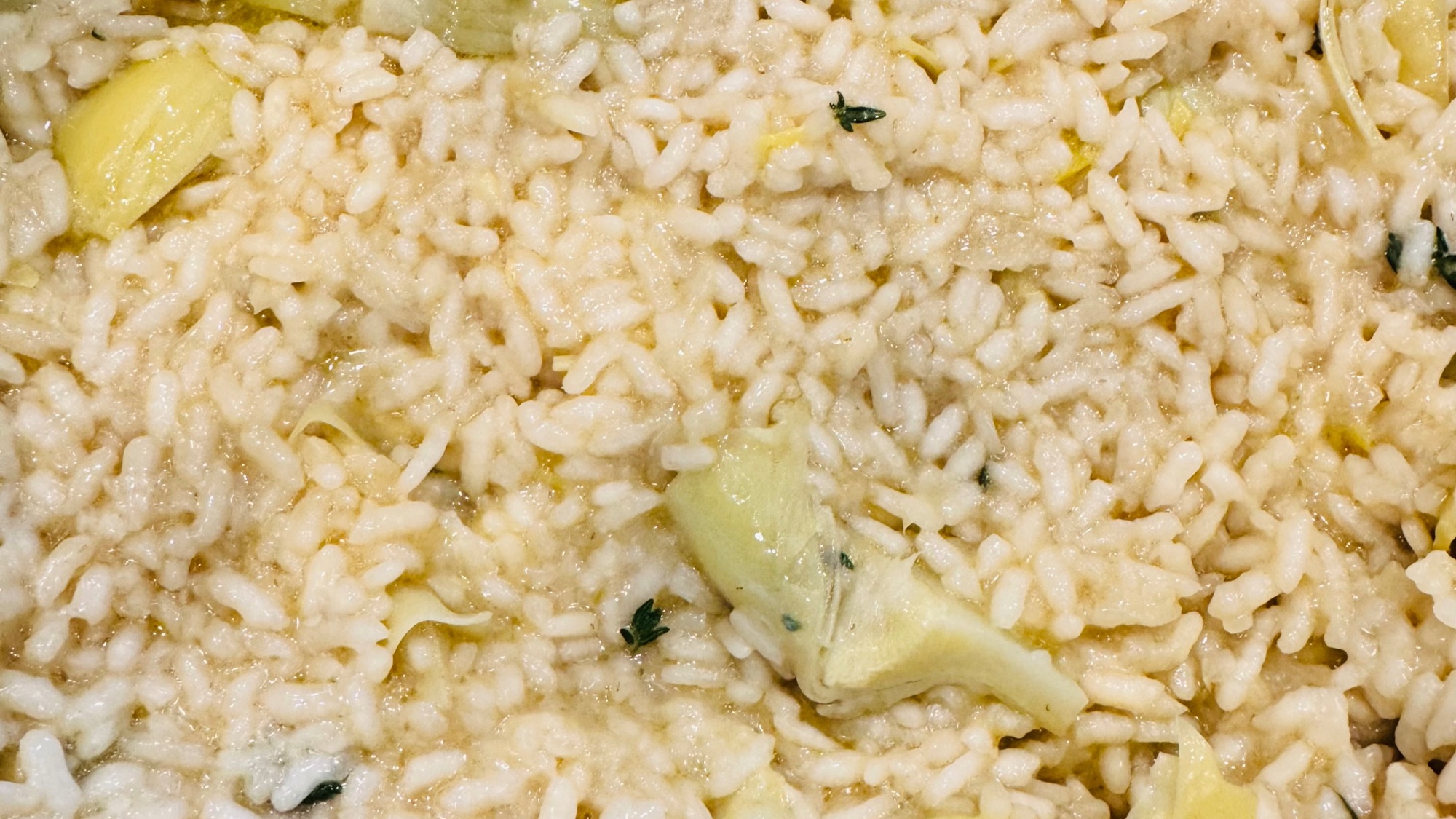
Make creamy artichoke risotto with Arborio rice, tender artichoke hearts, Parmesan, Asiago, thyme, and butter for an easy Italian-inspired dinner.
Creamy Artichoke Risotto with Parmesan and Asiago is an elegant Italian-inspired dish made with tender Arborio rice, savory artichoke hearts, fresh thyme, and two flavorful cheeses. Slowly adding warm vegetable stock allows the rice to release its natural starches, creating the signature silky texture of classic risotto without relying on heavy cream.
Artichoke hearts add a delicate earthy flavor that pairs beautifully with nutty Parmesan and slightly tangy Asiago cheese. A generous finish of butter brings everything together, giving the risotto a glossy, restaurant-style consistency. This creamy artichoke risotto is satisfying enough to serve as a vegetarian main course, yet versatile enough to accompany roasted chicken, grilled seafood, or a crisp green salad.
Prep Time: 10 minutes
Cook Time: 25 minutes
Total Time: 35 minutes
Yield: 4 servings
Ingredients
1 1/2 cups Arborio rice
1 14-ounce can artichoke hearts, thoroughly drained and quartered
3 cups vegetable stock, plus additional hot water if needed
1 small shallot, finely chopped
1/4 cup freshly grated Asiago cheese
1/4 cup freshly grated Parmesan cheese
1/2 stick 1/4 cup unsalted butter, divided
1 teaspoon fresh thyme leaves or 1/2 teaspoon dried thyme
Kosher salt, to taste
Freshly ground black pepper, to taste
Directions
Step 1: Warm the Vegetable Stock
Pour the vegetable stock into a medium saucepan and warm it over low heat. Keep the stock hot but below a simmer while preparing the risotto. Using warm stock helps the Arborio rice cook evenly without repeatedly lowering the temperature of the rice.
Step 2: Sauté the Shallot
Melt 2 tablespoons of the butter in a large, heavy-bottomed skillet or saucepan over medium heat. Add the finely chopped shallot and cook for 2 to 3 minutes, stirring frequently, until softened and translucent. Avoid browning the shallot so its flavor remains delicate.
Step 3: Toast the Arborio Rice
Add the Arborio rice directly to the skillet. Stir continuously for 1 to 2 minutes, coating the grains in the butter. The rice should become slightly translucent around the edges while remaining opaque in the center.
This brief toasting step helps the rice maintain its structure as it cooks while developing a richer, nuttier flavor.
Step 4: Gradually Add the Stock
Add about 1/2 cup of the warm vegetable stock to the rice and stir frequently until most of the liquid has been absorbed.
Continue adding the stock about 1/2 cup at a time, allowing most of each addition to absorb before adding the next. Keep the heat at a gentle simmer and stir regularly to encourage the Arborio rice to release its starches.
Step 5: Add the Artichokes and Thyme
After approximately half of the stock has been incorporated, gently stir in the drained artichoke hearts and thyme.
Continue gradually adding the remaining warm stock and cooking until the rice is creamy and tender but still has a slight firmness in the center. The entire rice cooking process should take approximately 18 to 22 minutes.
Because different batches of Arborio rice absorb slightly different amounts of liquid, add a small amount of hot water if the rice needs additional cooking after the 3 cups of stock have been incorporated.
Step 6: Finish with Butter and Cheese
Remove the risotto from the heat while it is still slightly loose and creamy. Stir in the remaining 2 tablespoons butter, Asiago cheese, and Parmesan cheese until melted and fully incorporated.
The finished risotto should spread gently when spooned onto a plate rather than sitting in a firm mound.
Step 7: Season and Serve
Taste and season with kosher salt and freshly ground black pepper as needed. Keep in mind that both Parmesan and Asiago contribute saltiness, so season only after the cheeses have been incorporated.
Serve immediately while the risotto is warm, creamy, and silky.
Notes
Three cups of vegetable stock produces a rich, concentrated risotto, but Arborio rice can vary in how much liquid it absorbs. Keep a little hot water available during the final minutes of cooking in case the rice needs additional liquid to become tender.
Drain the canned artichoke hearts thoroughly before adding them to the risotto. Excess packing liquid can dilute the flavor and alter the finished consistency.
Fresh thyme provides the brightest herbal flavor, although dried thyme works well when fresh is unavailable.
Freshly grated Parmesan and Asiago melt more smoothly than pre-shredded cheeses and create a silkier finished risotto.
For the best consistency, remove the risotto from the heat while it still looks slightly looser than you ultimately want. The rice continues absorbing liquid as it rests and will thicken quickly.
Leftover artichoke risotto can be refrigerated in an airtight container for up to 3 days. Reheat gently over low heat with a splash of vegetable stock or water to restore some of its creamy consistency.
This risotto pairs beautifully with roasted chicken, grilled shrimp, seared scallops, salmon, roasted vegetables, or a simple green salad.