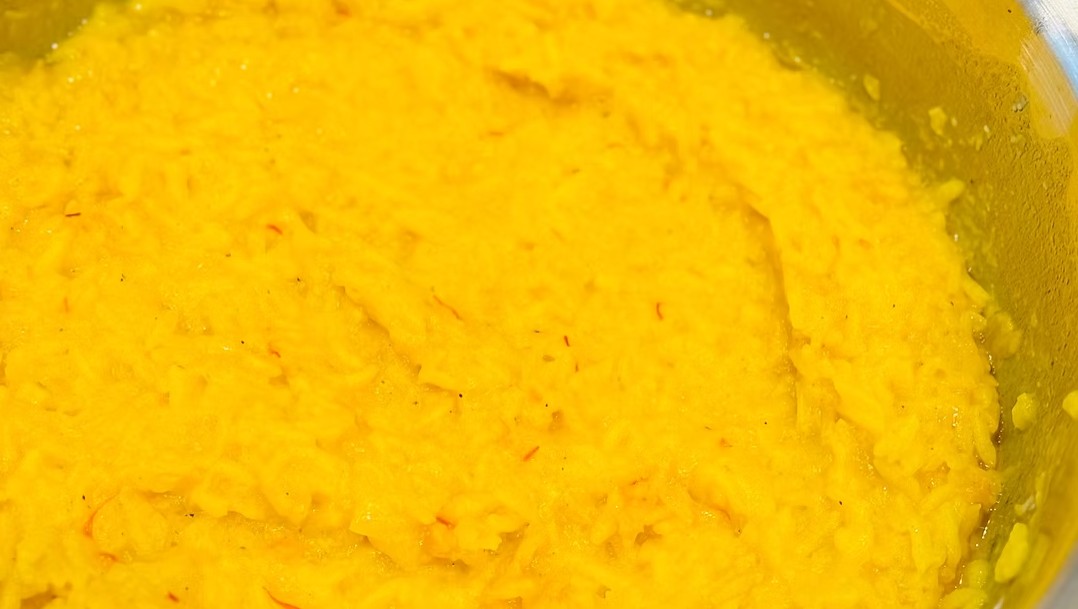
Make luxurious saffron risotto with creamy Arborio rice, fragrant saffron, white wine, butter, and Parmigiano-Reggiano cheese.
Luxurious Saffron Risotto, also known as Risotto alla Milanese, is one of Italy’s most celebrated comfort foods. This elegant, naturally gluten-free dish features creamy Arborio rice slowly cooked with warm broth, infused with fragrant saffron, and finished with butter and finely grated Parmigiano-Reggiano cheese.
Saffron gives the risotto its distinctive golden color, delicate floral aroma, and refined flavor. The secret to achieving the proper texture is adding the hot broth gradually while stirring frequently. This gentle technique encourages the rice to release its natural starches, producing a silky consistency without the addition of cream.
Serve this authentic saffron risotto as a luxurious side dish with roasted meat, poultry, seafood, or vegetables. It is also rich and satisfying enough to become the centerpiece of a special dinner. With simple ingredients and careful attention at the stove, this classic Italian recipe delivers restaurant-quality flavor at home.
Directions
Step 1: Warm the Broth
Pour the chicken broth or vegetable stock into a medium saucepan. Place it over low heat and keep it hot throughout the preparation of the risotto. The broth should be steaming gently, but it does not need to boil.
Using hot broth helps the rice cook evenly because each addition maintains a consistent temperature in the risotto pan. Adding cold or room-temperature broth can interrupt the cooking process and make it more difficult to achieve the desired creamy texture.
Step 2: Sauté the Shallots
Heat the extra-virgin olive oil in a large, heavy-bottomed saucepan or Dutch oven over medium heat. Add the finely minced shallots and cook for approximately 2 minutes, stirring frequently.
The shallots should soften and become slightly translucent without developing much color. If they begin to brown, reduce the heat so their delicate flavor does not become bitter or overpower the saffron.
Step 3: Toast the Arborio Rice
Add the Arborio rice to the softened shallots. Cook for approximately 3 minutes, stirring frequently so that every grain becomes coated with the olive oil.
The rice should remain pale, although the outside of each grain may begin to look slightly translucent.
Toasting the rice briefly adds depth of flavor and helps the grains maintain their structure as they absorb the wine and broth.
Step 4: Add the Wine and Saffron
Pour the dry white wine into the pan and add the saffron threads. Stir constantly, scraping across the bottom of the pan to prevent the rice from sticking.
Continue cooking until the wine has been almost completely absorbed. As the mixture cooks, the saffron will begin releasing its vibrant golden color, delicate floral aroma, and subtly earthy flavor into the rice.
Step 5: Gradually Add the Broth
Add approximately 1/2 cup of the hot broth to the rice. Stir frequently and allow the rice to absorb nearly all the liquid before adding another 1/2 cup.
Continue adding the broth in small portions, stirring regularly after each addition. Maintain a gentle simmer and adjust the heat as needed. The rice should cook steadily without boiling vigorously or drying out completely.
After approximately 12 minutes of adding the broth, begin tasting the rice regularly. Continue the process until the broth has been incorporated and the rice is tender but retains a slight firmness at the center. The risotto should look creamy and flow gently when spooned rather than sitting in a stiff mound. Total cooking time will typically be 25 to 30 minutes.
Step 6: Season the Risotto
When the rice has reached the proper consistency, season it with the fine sea salt and freshly ground black pepper. Stir well, taste, and adjust the seasoning if necessary.
Remember that Parmigiano-Reggiano contributes additional saltiness, so avoid adding too much salt before incorporating the cheese.
Step 7: Finish with Butter and Cheese
Remove the pan from the heat. Immediately add the unsalted butter and stir until it has completely melted into the rice.
Add the finely grated Parmigiano-Reggiano cheese and stir vigorously until the cheese melts and the risotto becomes glossy, rich, and silky. This final step creates the luxurious finish associated with traditional Risotto alla Milanese.
If the risotto becomes too thick, stir in a small amount of the remaining hot broth, if available, until it reaches a soft, flowing consistency.
Step 8: Serve Immediately
Spoon the saffron risotto into warmed serving bowls or shallow plates. Garnish each portion with additional freshly grated Parmigiano-Reggiano cheese, if desired.
Serve immediately while the rice is hot and creamy. Risotto continues to absorb liquid and thicken as it rests, so it should be brought to the table as soon as it is finished.
Notes
For the richest flavor, use authentic Parmigiano-Reggiano cheese and grate it shortly before adding it to the risotto. Pre-grated cheese may contain anti-caking ingredients and may not melt as smoothly.
Arborio rice contains the starch needed to create risotto’s signature creamy consistency. Do not rinse the rice before cooking because rinsing would remove some of that valuable surface starch.
Keep the broth hot throughout the cooking process. Cool broth lowers the temperature of the rice each time it is added, which can lead to uneven cooking and a less creamy finished dish.
Stir the risotto frequently but gently. Regular stirring helps release starch from the rice, while excessively vigorous or constant stirring during the entire cooking process can damage the grains and create a heavy texture.
Saffron threads provide better flavor and color than many inexpensive powdered saffron products. For the best results, choose fragrant, deep-red threads from a reputable source.
The precise amount of broth absorbed can vary according to the pan, heat level, and rice. Use the texture and tenderness of the rice as your guide rather than forcing the risotto to absorb every drop if it is already properly cooked.
Vegetable stock may be substituted for chicken broth to make this a vegetarian saffron risotto. Choose a mild stock that will complement rather than overpower the delicate saffron.
For gluten-free preparation, verify that the broth, stock, wine, cheese, and all other packaged ingredients carry appropriate gluten-free labeling. Prevent cross-contact when preparing the dish for someone with celiac disease or gluten sensitivity.
Leftover risotto will lose some of its flowing texture in the refrigerator. Store it in an airtight container and refrigerate it promptly. Reheat it gently with a splash of broth, although freshly prepared risotto will always have the best consistency.
Must be 21 years of age or older to purchase or consume alcoholic beverages. Please drink responsibly.