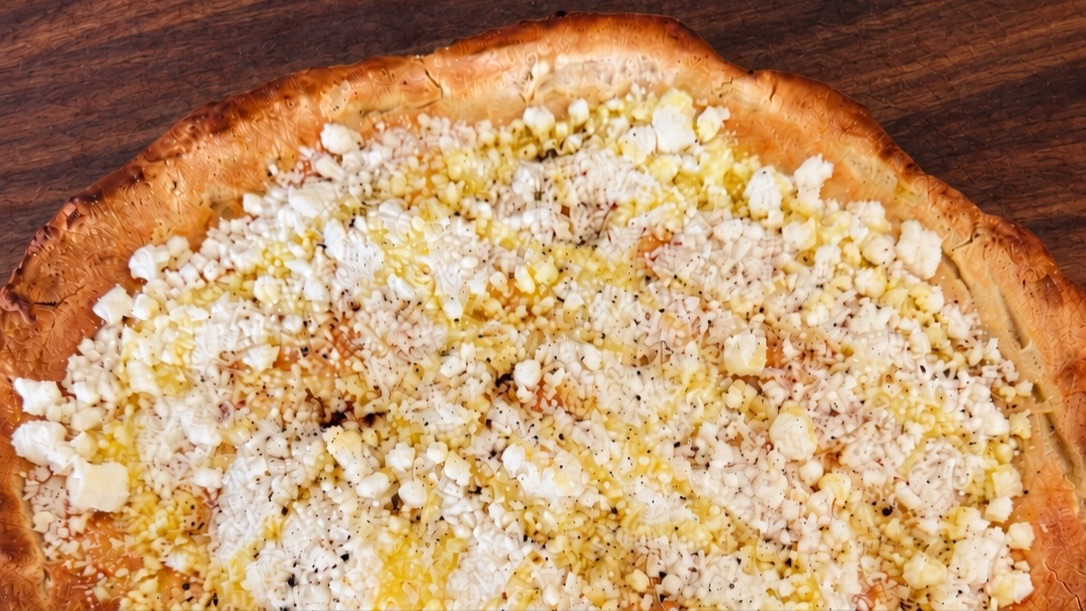
Make this Crispy Gluten-Free Cacio e Pepe Pizza Recipe with Pecorino Romano, Parmesan, freshly cracked black pepper, olive oil, and a simple crushed ice technique for a crisp crust and creamy cheese finish.
This Crispy Gluten-Free Cacio e Pepe Pizza Recipe takes the simple, bold flavors of classic Italian cacio e pepe and turns them into an easy pizza with a crisp gluten-free crust. Freshly grated Pecorino Romano, Parmesan, and plenty of freshly cracked black pepper create a savory, peppery topping, while a drizzle of extra virgin olive oil finishes the pizza with richness and flavor.
What makes this pizza especially distinctive is the crushed ice technique. A small amount of finely crushed ice is scattered over the center of the dough before baking. As the ice melts in the very hot oven, it creates a light layer of moisture across the surface of the crust. That moisture helps keep the center from becoming overly dry and provides just enough residual steam for the finely grated cheese to soften when it is added immediately after baking.
The cheese is intentionally added after the crust comes out of the oven rather than before baking. Pecorino Romano and Parmesan are both hard, aged cheeses, and prolonged exposure to a 500°F oven can cause them to become dry, hard, or oily. Adding them to the hot crust allows them to soften gently while maintaining their sharp, savory flavor.
This gluten-free cacio e pepe pizza is simple enough for an easy dinner but elegant enough to serve as part of a pizza night or casual gathering. Because the ingredient list is short, freshly grated cheese and freshly cracked black pepper make a noticeable difference in the finished pizza.
Directions
Step 1: Preparation
Preheat the oven to 500°F.
Place a large, heavy baking sheet upside down in the oven while the oven preheats. Preheating the baking sheet gives the gluten-free pizza dough an immediately hot surface to bake against, helping the bottom of the crust become crisp rather than soft.
Allow the oven and baking sheet to become fully heated before assembling the pizza.
Step 2: Prepare the Cacio e Pepe Cheese Mixture
Add the freshly grated Pecorino Romano, Parmesan, and 1 teaspoon freshly cracked black pepper to a small bowl.
Gently toss the ingredients together until the pepper is evenly distributed throughout the cheese.
Set the cheese mixture aside while you prepare the pizza dough.
Use finely grated cheese for this recipe. The finer texture allows the cheese to soften quickly when it comes into contact with the freshly baked crust.
Step 3: Shape the Gluten-Free Pizza Dough
Place a sheet of parchment paper on your work surface and lightly dust it with gluten-free all-purpose flour or white rice flour.
Place the gluten-free pizza dough in the center.
Using lightly floured hands, gently press and stretch the dough into an approximately 11-by-16-inch oval. Keep the center relatively even while leaving the outer edge slightly thicker to create a defined crust.
Gluten-free pizza dough can be more delicate than traditional wheat-based dough, so gently press and stretch rather than pulling aggressively.
If the dough begins sticking to your hands, lightly dust your fingertips with additional gluten-free flour.
Step 4: Add the Crushed Ice
Sprinkle 2 tablespoons of finely crushed ice evenly over the center of the shaped pizza dough, keeping the outer 1-inch border completely free of ice.
Scatter the ice in small, evenly distributed pieces instead of placing it in piles.
As the pizza bakes, the ice melts quickly and creates a thin layer of moisture across the center of the dough. This helps prevent the surface of the crust from becoming overly dry while creating enough residual moisture to help the cheese soften when it is added after baking.
Keeping the outer border free of ice allows the edge of the pizza to become crisp and golden.
Use only the specified 2 tablespoons of crushed ice. Adding too much can introduce excessive moisture and leave the center of the gluten-free crust soft or underbaked.
Step 5: Bake the Pizza Crust
Carefully remove the preheated baking sheet from the oven.
Using the parchment paper to support the dough, carefully transfer the pizza onto the hot baking sheet.
Return the baking sheet to the oven and bake for 8 to 10 minutes, or until the gluten-free crust is fully cooked and golden brown around the edges.
The center of the crust should be set and cooked through rather than wet or doughy.
Because gluten-free pizza dough formulas vary, begin checking the pizza around the 8-minute mark. A thicker dough may require slightly longer.
Step 6: Add the Cacio e Pepe Topping
Remove the baked pizza from the oven.
Immediately sprinkle the Pecorino Romano, Parmesan, and black pepper mixture evenly over the hot pizza, leaving about 1/2 inch of the outer crust uncovered.
Allow the cheese to sit on the hot crust for about 1 minute.
The heat of the pizza and the small amount of remaining surface moisture will gently soften the finely grated cheese, creating the creamy, savory effect that gives this pizza its cacio e pepe character.
Do not return the pizza to the oven after adding the cheese.
Step 7: Finish and Serve
Lightly drizzle the pizza with extra virgin olive oil.
Finish with additional freshly cracked black pepper if desired.
Slice the pizza while it is still hot and serve immediately.
The pizza is at its best when the crust is freshly baked and crisp and the Pecorino Romano and Parmesan are still warm and soft.
Notes
Freshly grated Pecorino Romano is the primary cheese in this recipe and provides the sharp, salty flavor traditionally associated with cacio e pepe. Parmesan adds a slightly milder, nutty flavor that balances the stronger Pecorino Romano.
Because Pecorino Romano is naturally salty, additional salt is generally not needed. Taste the cheeses before deciding whether any extra seasoning is necessary.
Freshly cracked black pepper is essential to the flavor of cacio e pepe. A medium or coarse grind works especially well because it provides both aroma and small bursts of pepper throughout the pizza.
For an even more aromatic pepper flavor, you can briefly warm the cracked pepper in a dry skillet over medium-low heat for about 30 seconds before adding it to the cheese mixture. Do not allow the pepper to burn.
Use finely grated cheese rather than thick shreds. Finely grated Pecorino Romano and Parmesan soften much more readily from the residual heat of the baked pizza.
Pre-shredded cheeses are not ideal for this recipe because they may contain anti-caking ingredients that can prevent the cheese from softening as smoothly.
The crushed ice technique works best with finely crushed ice rather than large cubes. Small pieces melt quickly and distribute moisture more evenly across the center of the dough.
Keep the 1-inch outer border of the pizza free of ice so the crust can develop a crisp, golden edge.
The cheese should be added only after the pizza crust has finished baking. Baking the hard cheeses for the entire cooking time at 500°F can cause them to dry out, become overly firm, or release excess oil.
If your gluten-free pizza dough requires a par-bake according to its recipe or package directions, follow those specific instructions before proceeding with the topping method. Gluten-free pizza doughs vary considerably in moisture level and structure.
A pizza stone or pizza steel may be used in place of the inverted baking sheet. Preheat it thoroughly according to the manufacturer’s instructions before baking.
If your parchment paper is not rated for 500°F, use a parchment product that is approved for high-temperature baking or transfer the shaped dough according to the directions recommended for your pizza stone, steel, or baking surface.
For the crispiest crust, do not let the shaped dough sit for an extended period after adding the ice. Add the ice immediately before transferring the pizza to the oven.
This pizza is best served as soon as it is finished. As the pizza cools, the aged cheeses will naturally become firmer.
For serving, pair the pizza with a simple arugula salad, citrus salad, tomato salad, roasted vegetables, or lightly dressed greens. Fresh, bright side dishes complement the rich Pecorino Romano and black pepper without overpowering the pizza.
Store any leftover pizza covered in the refrigerator. For the best reheated texture, warm slices in a hot skillet or oven rather than the microwave. Dry heat helps restore some crispness to the gluten-free crust.